
Financial anxiety rarely comes from one big mistake. More often, it’s the quiet accumulation of small uncertainties: not really knowing what’s in your account, avoiding your banking app after a slightly expensive weekend, mentally calculating bills without ever writing them down properly, and carrying that low-level background hum of feeling like you’re “behind” even when nothing urgent is actually wrong.
Your twenties tend to intensify all of this. It’s a decade that’s constantly framed as transformative — the time when you’re meant to figure everything out: your career, your finances, your relationships, your future. But in reality, most people are still in motion. Income is inconsistent or just starting to grow, the cost of living keeps shifting, career paths are rarely linear, and priorities change faster than long-term plans can settle.
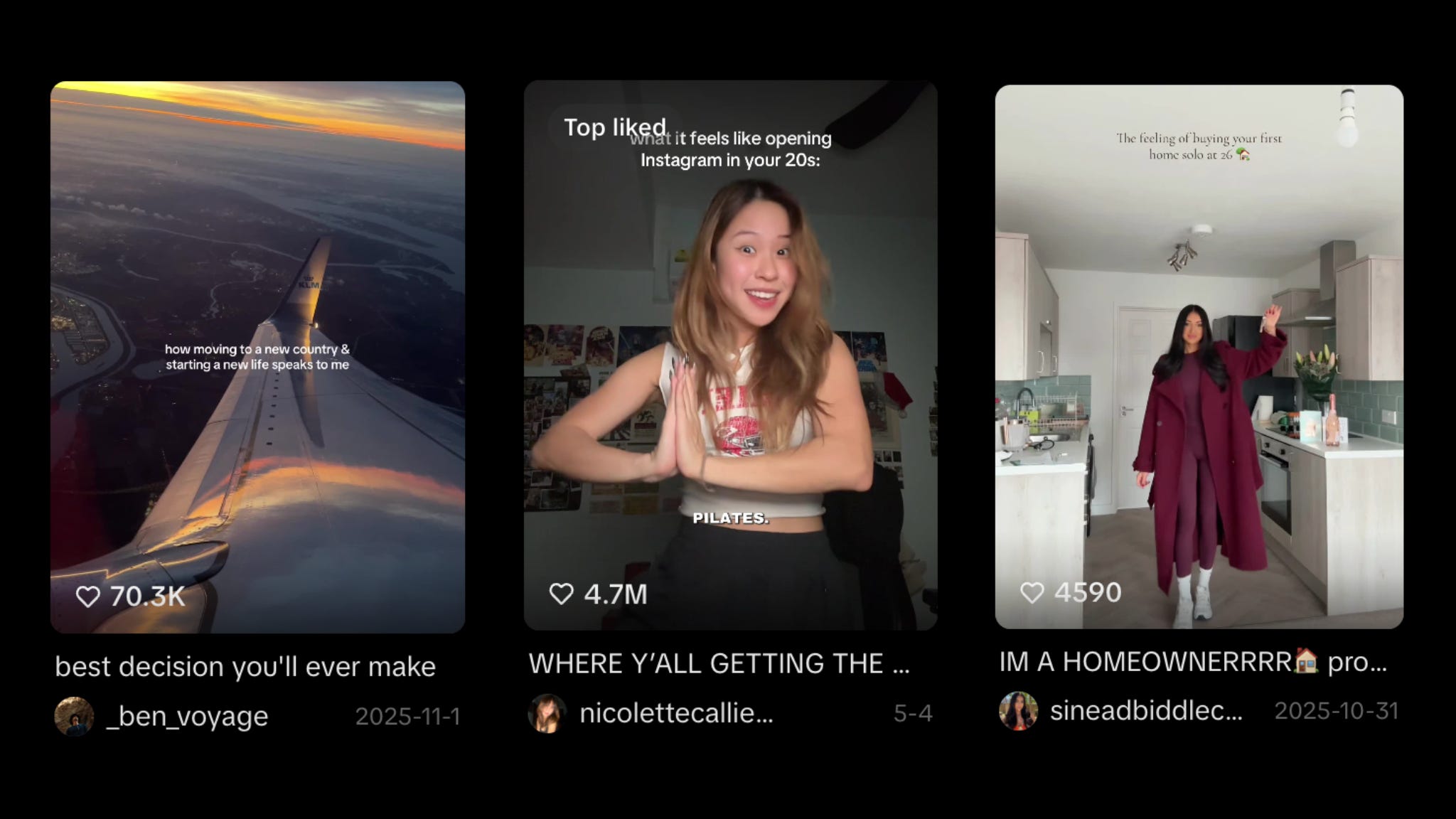
At the same time, it’s almost impossible to ignore comparison. Social media quietly turns financial life into a highlight reel — friends buying houses, people “just deciding” to move overseas, or someone your age seemingly skipping straight into the milestones you were told would come later.
In Australia, the idea of the “Australian dream” has traditionally been quite straightforward: buy a home, establish stability, and often raise a family within that foundation. For generations, it functioned almost like an unspoken roadmap — work hard, save consistently, and home ownership would eventually follow.
For many people entering the housing market today, that pathway feels far less guaranteed. The benchmarks have shifted. Even with higher savings efforts and longer periods of financial preparation, owning a home is being pushed further out of reach for a growing number of younger Australians.
As a result, the definition of the “Australian dream” is beginning to evolve, along with questions about whether the original version still holds up in the current climate.
This change is also reflected in lending and housing trends. Westpac data indicates that around one in five first-home buyer loans issued nationally in the past year went to borrowers over the age of 40, while the average age of a first-home buyer has increased to 34 — nearly two years older than in 2020.1
Other research shows a similar pattern. Findings from the Australian Housing and Urban Research Institute suggest that even among Australians aged 55 to 64, more than half are still paying off a mortgage, highlighting how home ownership is increasingly extending later into life.2
At the same time, younger Australians are rethinking how they build wealth altogether. Instead of waiting to enter the property market, many are focusing earlier on alternative pathways such as ETFs, index funds, and superannuation, treating these as their primary tools for long-term financial growth.3
“younger people prioritize mental health, personal fulfillment and meaningful experiences over a singular focus on career longevity and progression.“
Alongside this financial shift, there’s also a cultural one. The idea of a single, uninterrupted career path leading directly to retirement is being reconsidered. Instead, a growing number of younger people are embracing “micro-retirements” — intentional breaks taken between jobs or stages of work life. As explained by Guy Thornton, founder of Practice Aptitude Tests, this reflects a generation that places greater emphasis on wellbeing, work-life balance, and meaningful experiences. Rather than deferring travel, rest, or personal passions until traditional retirement age, these breaks are becoming more normalised earlier in life, especially among Gen Z, who prioritise mental health and fulfilment alongside career progression.4
Because of all of this, more people are quietly redefining what financial stability actually looks like. It’s no longer just about owning a home by a certain age, but a broader mix of priorities that look different from the traditional path:
investing earlier, instead of focusing solely on saving for property
prioritising flexibility over long-term rigidity
choosing travel, breaks, or micro-retirements instead of postponing life for decades
There isn’t a single correct timeline anymore. And increasingly, it feels like there never really was one — just an expectation that worked for a different economic reality.
In that context, financial shame becomes less and less useful. Most people aren’t “behind”; they’re simply navigating a system that looks very different from the one previous generations were planning around.
What’s helped me personally isn’t trying to achieve financial perfection or follow extreme discipline. It’s been building small, repeatable habits that make money feel less emotionally charged and more visible, predictable, and quietly stable in the background.
The goal isn’t control — it’s clarity.
So in this post, I’m sharing the habits that have been reducing my financial anxiety in my mid-twenties, in case they’re helpful for you too.
Helpful resources for you:
track all your favourite films and shows using a media tracker template.
organise all your reading and books with my Book Notion template
earn cash shopping with your favourite brands online with TopCashback
In case you’ve missed out, here are a few popular posts loved by you:
Long-form content
The rest of this post is for paid subscribers, and here’s what you can expect:
An exclusive list of mindset shifts that are helping me spend less but still enjoy my twenties.
List of resources I’ve never shared before that save me money in my twenties
List of courses I recommend doing in your twenties
Access to my full archive of previous pay-walled content.
An exclusive growing collection of community Q&As, where I respond to reader questions (and you’re always welcome to send your own). Here are past questions I’ve answered in my paid newsletter:
It’s $7 for the month (the price of a cup of coffee), but the knowledge you might learn might change your career, productivity and life in between for the better, just like it did for me!
Comments
Nothing yet. Say the first thing.
Sign in to join the conversation.