
For 12 seasons, every Dodger home game has begun with the same unmistakable voice.
Todd Leitz is the public address announcer at Dodger Stadium—the “Voice of God,” as the job is affectionately known. His basso profundo voice, among the deepest of the deep, has become part of the soundtrack of Dodger baseball. But Todd is much more than the guy who introduces the starting lineups. He’s a serious student of the game and I try to get together with him a couple of times a year to talk baseball.
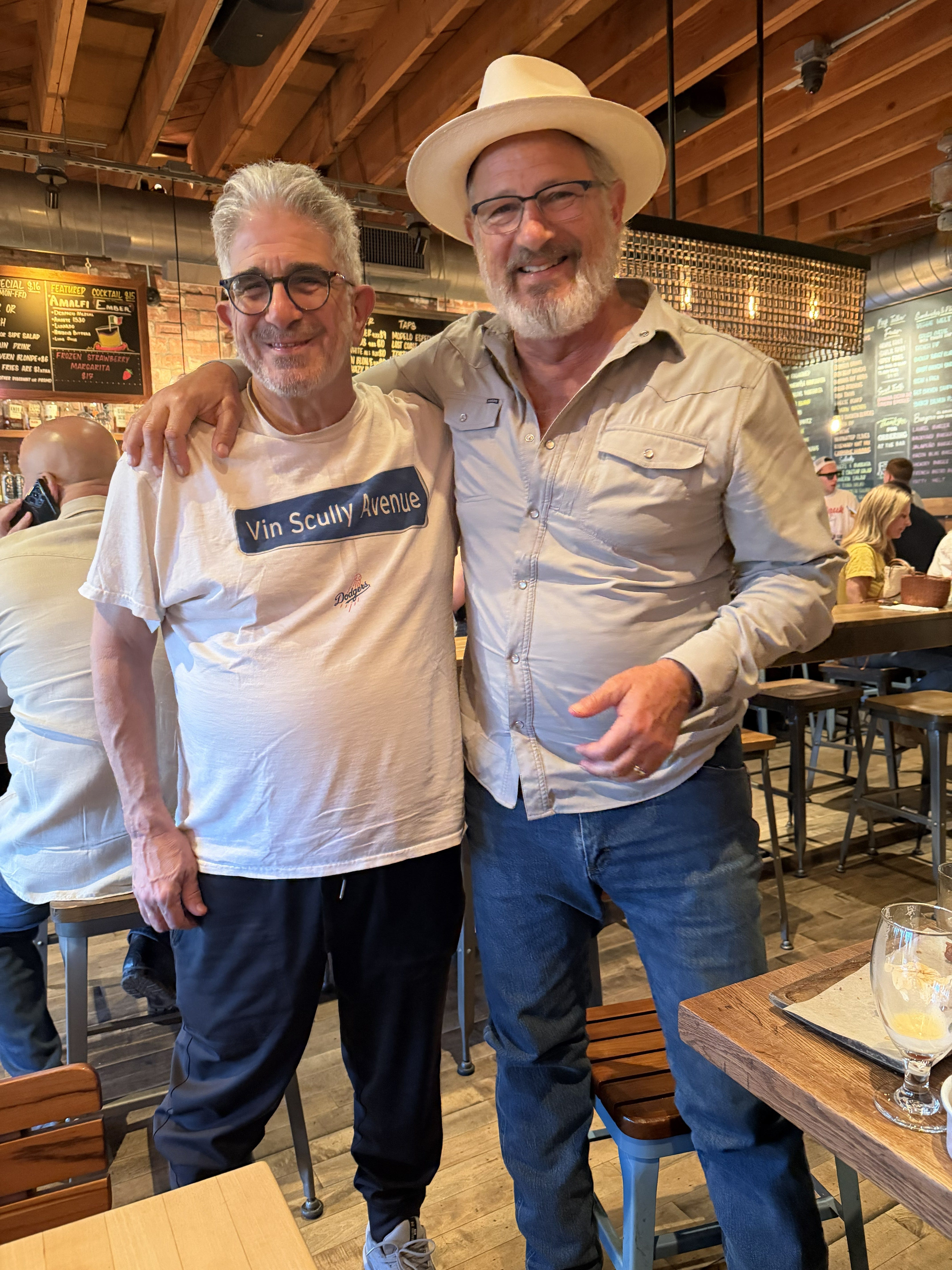
We finally connected over burgers and beer at a neighborhood bar in Studio City during the Dodgers’ recent June road trip. As we caught up on our lives and talked baseball, we kept an eye on the Dodgers game that night in Pittsburgh on MLB Gameday. Before long, our conversation drifted back to last October’s World Series and what it was like to experience it from one of the most unusual seats in baseball.
“I have a ritual before every game,” Todd told me. “By about 6:20 I’ve finished my welcome announcements. I take a walk, stretch a little, and then I make sure I have a really good, long pee.”
There is a reason.
“I never get up to the bathroom during a game.”
Todd has now been behind the microphone for the two longest World Series games ever played, both at Dodger Stadium and both lasting 18 innings. In 2018, the game lasted 7 hours and 20 minutes. In 2025, it lasted 6 hours and 39 minutes.
“I drink coffee before I get to the ballpark and water during the game,” he said. “People bring us food, but I don’t really want to eat because I don’t want food in my mouth when I have to make an announcement. Somehow, maybe it’s mind over matter, I make it through.”
The physical challenge, though, isn’t the hardest part. “It’s stressful because you’re dying for your team to win, but you have to stay completely professional.”
One moment still makes him laugh. “I remember the 14th-inning stretch,” he said.” (At the 14th inning, everyone stands up again and sings Take Me Out to the Ballgame a second time.) “People were laughing because nobody ever expects a 14th-inning stretch.”
When Freddie Freeman ended the 2025 marathon with his walk-off home run, Todd finally exhaled. “I just collapsed back into my chair and said, ‘Thank God.’”
His work wasn’t quite finished. Every game ends with one last announcement—the final score, attendance, and a brief goodbye to the fans as they head to the parking lot. “We call it my ‘night-night’ announcement,” Todd said. “After that game, when I finished the ‘night-night’ I said, ‘See you later today,’ because it already was tomorrow.”
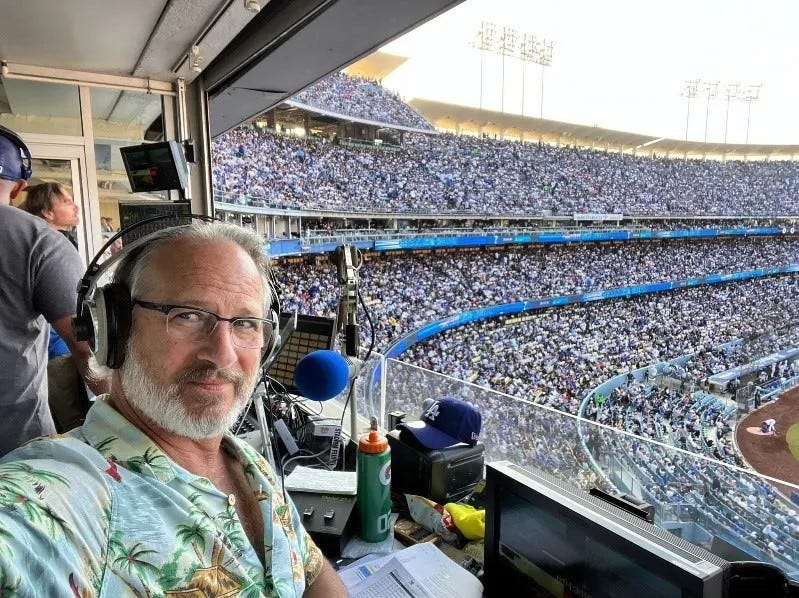
Most fans probably assume the public address announcer simply reads names over the speakers. Todd explained that’s not quite true. “There are three official parts of every Major League game,” he said. “The umpires, the official scorer, and the public address announcer.”
I had never heard that before.
“The public address announcer officially puts a pinch-hitter into the game. Once I announce the pinch-hitter, that’s it.”
He learned early in his career that this was a serious thing. One day he announced a pinch-hitter before the home plate umpire had officially signaled the change. The next day his producer told him the umpiring crew wanted to see him. Instead of being nervous, Todd said he was excited. He had always wondered what the umpires’ locker room looked like.
“I went down to their locker room,” Todd recalled. “They’re all in their underwear stretching. One guy’s on the floor with an exercise band. They said, ‘Hey kid, don’t announce the batter until we signal you.’”
Even after more than a decade, the job still demands constant concentration. “Now that I’m on social media,” he laughed, “people catch every mistake.”
One recent slip became impossible to hide. “When Emmet Sheehan came out to throw the ceremonial first pitch, I introduced him as Emmett Smith.” Baseball fans noticed immediately and pointed it out to him on Facebook and Instagram.
Todd has witnessed countless unforgettable moments from the press box, but one still leaves him shaking his head.
In Game 4 of the 2025 NLCS against the Brewers, Shohei hit three home runs and struck out ten batters. One of the homers left Dodger Stadium over the right field bleachers. “When Shohei hit that home run,” he said, “everyone in the booth just grabbed their heads. We were saying, ‘What the hell did we just see?’ You knew right then it was one of those moments people would remember forever.”
While everyone else watches the game unfold, Todd quietly keeps his own meticulous scorecard. It’s not required as part of his job, but he records every game with remarkable care. “I’m in the catbird seat,” he said. Someday, those scorecards—especially from the two 18-inning World Series games—may become little pieces of baseball history themselves.

As our conversation wound down, we stopped talking and turned our attention back to the game on my phone. Pittsburgh had the tying run on base in the bottom of the ninth. Todd and I watched silently as the Dodgers recorded the final out.
It felt fitting. Even after spending hours talking baseball, we’d rather watch it.
Before we left, I asked Todd what it’s like to spend nearly every summer evening at Dodger Stadium.
He didn’t hesitate. “Every single minute I’m there,” he said, “it’s a privilege.”
Comments
Nothing yet. Say the first thing.
Sign in to join the conversation.