
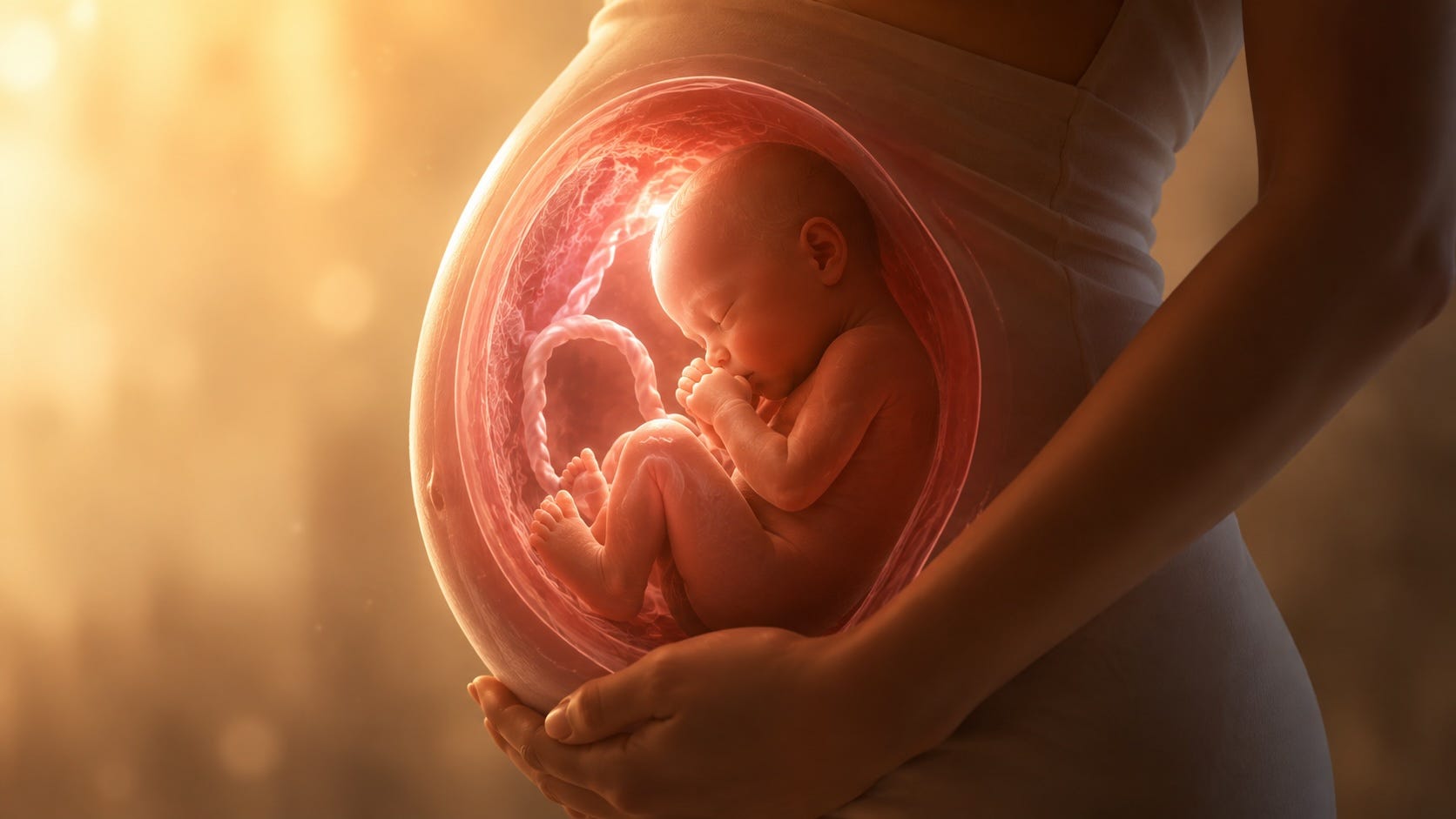
Earlier this week, the governor of Massachusetts signed a new law removing the state’s previous statutory medical restrictions on abortions after 24 weeks. Under the old law, abortions after 24 weeks were permitted only for specified medical reasons involving the life or health of the mother or serious fetal diagnoses. The new law allows abortions after 24 weeks based upon the professional judgment of the physician, with no express gestational cutoff in the statute.
Pro-life groups in Massachusetts reacted strongly to the new law, calling attention to the disturbing reality of late-term abortion. Modern medicine regularly saves babies born at 24 weeks, and advanced NICUs are now successfully treating some babies born as early as 22 weeks. By the later stages of pregnancy, we are talking about children who can survive outside their mother’s womb.
After the Supreme Court overturned Roe v. Wade in 2022, abortion laws and practices changed dramatically. Each state began establishing its own laws regarding abortion, some severely restricting the practice and others expanding access. At the same time, women began traveling across state lines for abortions, while telehealth and pharmaceutical abortion increasingly moved abortion out of clinics and into homes.
The Guttmacher Institute, an abortion research organization, tracks abortion data across the country. The individual numbers are interesting, but I don’t want us to miss the larger story: even after Roe v. Wade was overturned, abortions in America increased. This reminds me that the pro-life movement must take a holistic, multifaceted approach. It’s not enough to change a Supreme Court ruling; we must persuade individual people about the sanctity of human life in the womb while compassionately caring for people facing unplanned pregnancies.
We live in a pro-justice generation, one that desires to create a more just world. Advocates for legal abortion often call their work “the fight for reproductive justice,” meaning that women should have the freedom to decide whether or not to have a child, including access to abortion. But I believe this use of the word justice leaves out one of the people involved—the unborn child.
My conviction is simple: abortion is unjust. I want to persuade men and women, young and old, near and far, that a society that allows unborn children to be intentionally killed is not becoming more just. It is becoming less just.
Here’s my case.
We have to start with the right definition of justice. Our definition of justice must ultimately flow from God’s definition of what is righteous, holy, and good. Biblical justice includes at least three important components.
1. Equal Treatment: Biblical justice begins with the equitable and impartial application of God’s moral law. This conviction is built on two biblical doctrines: the imago Dei and God’s moral law. Every human being is made in the image of God and therefore deserves dignity, respect, and protection (Genesis 1:26-27). Scripture repeatedly warns against showing partiality or applying one standard to one group of people and another standard to someone else (Leviticus 19:15; James 2:1-9). God’s character and commands provide the objective foundation for determining what is right and wrong.
2. Special Advocacy: Biblical justice requires those with money, power, and influence to use those resources to help the vulnerable. Biblical justice starts with equal treatment, but it doesn’t stop there. Scripture repeatedly commands God’s people to care for those who are unable to protect or provide for themselves—the poor, the widow, the orphan, the immigrant, the sick, and the hurting. Proverbs 31:8-9 commands us to “speak up for those who have no voice,” while Isaiah 1:17 tells God’s people to “pursue justice” and “defend the rights of the fatherless.”
3. Radical Generosity: Biblical justice calls God’s people to live generously toward others. We often think about generosity only as an issue of compassion, or perhaps as an idolatry issue—keeping money from becoming a god we worship. But Scripture presents generosity as an expectation for those whom God has blessed. Deuteronomy 15:7-11 commands God’s people to open their hands generously to the poor, and 2 Corinthians 8:13-15 describes Christians willingly using their abundance to meet the needs of others. A just community is one where people willingly use their time, money, opportunities, and strength for the good of others.
So how does this biblical justice framework apply to abortion?
First, legalized abortion is unjust because it does not equally apply the protection of the law to every human life.
The child developing in the womb is biologically human and alive. The philosophical and legal debate is not really over whether the unborn child is biologically human, but whether that human life possesses the same moral value and deserves the same legal protection as human life outside the womb. Christians have both theological and scientific reasons to answer yes.
Psalm 139 describes God forming us in our mother’s womb. Modern technology allows us to watch that development with incredible detail as the child grows, moves, and develops organs and limbs. Advances in neonatal medicine have pushed the boundaries of viability earlier and earlier.
The question, then, is why dependency should determine value. As a father of six, I can testify that on the first day after a child is born, a baby is still completely dependent on others for food, care, and protection. And let’s be honest—a newborn child dramatically changes your sleep, your budget, and your calendar!
But we would never argue that parents should be free to kill a newborn because the child is needy, dependent, or inconvenient. We give that baby the full protection of the law because that child is a human being made in the image of God who deserves to live. Why should that protection disappear simply because the same child is still inside the womb?
Friends, let me be clear: a society that allows the intentional destruction of human life in the womb is unjust because it does not equally protect all human life.
Second, legalized abortion is unjust because it allows the strong to use their power against the weak.
Abortion turns the biblical vision of justice upside down. Biblical justice calls people with strength, resources, and influence to use those things to protect the weak. Abortion gives the person with power the legal authority to end the life of the person with none.
God commands His people in Proverbs 31:8-9 to “speak up for those who have no voice, for the justice of all who are dispossessed.” The unborn are literally those who have no voice. They cannot vote, give money, hire lawyers, organize protests, or advocate for themselves.
Of course, the unborn are not the only people Christians should advocate for. As I’ve said many times before, Christians should use their voice, resources, and power to care for all who are weak, vulnerable, and marginalized. We should care for the poor, the widow, the elderly, the immigrant, the orphan, the historically marginalized—and the unborn.
These convictions belong together. They are not competing beliefs. If we believe the strong should use their strength to help the weak, then we will support the single mother who is struggling and fight for the life of the unborn child in her womb. Both are valuable to God. Both deserve our compassion, protection, and advocacy.
Third, legalized abortion is unjust because it places the freedom of adults above the lives of children.
Rather than building a generous society where adults give their lives away for the sake of their children, we are building a selfish society where children give away their lives for the sake of adults. This is backward. Children’s lives are not valuable only when they are wanted or when their arrival fits conveniently into the plans of adults.
Children have intrinsic value because they bear the image of God. This means the circumstances surrounding a pregnancy do not determine the value of the child, nor does the physical health of the child. We don’t determine the worth of human beings based on whether they were planned, wanted, healthy, or convenient.
The legal value of a child cannot be determined by the personal value the parents place on that child. If that were our standard, we would have no coherent basis for laws against child abuse, neglect, or infanticide. Human value must be objective, not dependent upon how another person feels about us.
A just society should be one where adults sacrifice their money, time, energy, preferences, and convenience for the sake of children—not one where children sacrifice their lives for the preferences of adults. Preborn human life is just as valuable as newborn human life.
In summary, a follower of Jesus who prays for a more just world should pray for a world without abortion. We should pray that abortion becomes both illegal and unthinkable in our nation. But before we finish, I want to address some of the most common arguments used to defend legalized abortion.
While we’re at it, let’s examine a few of the most common arguments used to support legalized abortion in the United States and why I believe they fall short. Let’s reason together, friends, and think clearly about what we are saying and the implications of our arguments.
This argument emphasizes the bodily autonomy of the mother. And bodily autonomy is an important principle. But the problem is that bodily autonomy has never been an absolute right when exercising that freedom threatens the health or life of another person.
We already have many laws that limit what we can do with our bodies because our choices affect other people. A drunk driver could say, “My body, my choice,” about his decision to drink excessively and then get behind the wheel. But we restrict that freedom precisely because other human lives are involved.
We make laws all the time that limit personal freedoms for the sake of protecting our neighbors. The central question in abortion, then, is whether another human life is involved. If the child in the womb is a human life deserving protection, then there are not merely one but two bodies involved in the decision.
It is unjust to protect the individual freedom of one person at the expense of the life of another.
I understand the instinct behind this argument. We live in a pluralistic society where people disagree about morality, religion, and countless personal decisions. Generally speaking, giving people freedom to make their own choices is a good thing.
But that principle always has limits when our choices threaten other people.
You wouldn’t say, “I personally don’t like driving 150 MPH down I-35, but if someone else wants to do it, that’s their choice.” Why not? Because driving 150 MPH is not simply a personal decision. It puts other people in danger.
We don’t legalize every personal choice simply because someone wants to make it. We regularly restrict choices that harm others. The same principle applies to abortion. If the preborn child is a human life worthy of protection, then the decision to have an abortion is not merely a matter of personal preference—it necessarily involves the life of another person.
It is obviously true that pregnancy places physical burdens on women that men do not experience. Women carry babies, give birth, and often experience consequences from pregnancy that men never will. Christians should acknowledge that reality rather than minimizing it.
But this argument still does not address the central moral question: what is the unborn child? If abortion ends a human life, then the sex of the person making the argument doesn’t determine whether the argument is true.
Men also have real responsibilities in pregnancy and parenting. Our legal system already recognizes this through child-support laws, and I would gladly support stronger expectations for fathers who abandon their responsibilities. The answer to difficult pregnancies should not be less responsibility from men—it should be more responsibility from men.
The solution to the burdens women carry in unplanned pregnancies is not abortion. It is more support for mothers and more responsibility from fathers.
At our church, we are passionate about both of these goals. We support our local pregnancy resource center, and we call men to get married, support their children, sacrifice for their families, and live unselfishly for the good of others. We do what is best for children when we encourage mothers and fathers to fulfill their God-given responsibilities, not when we pit men against women.
Biologically, this claim is difficult to sustain. From conception, a new living human organism exists and begins developing through the normal stages of human life. Within the first weeks of pregnancy, development occurs at an astonishing pace, and cardiac activity can be detected around six weeks of gestational age.
We know when limbs and organs develop. We can watch babies move through ultrasound technology. And modern medicine can now care for extremely premature babies at stages of development that would have been unimaginable just a generation ago.
But our everyday behavior reveals something deeper too. When a woman wants her baby, we don’t describe what is inside her as merely “a clump of cells.” We throw baby showers. We announce the pregnancy. We choose names. We put ultrasound pictures on refrigerators and post them on social media.
And when a mother miscarries, we do not respond as though she has merely lost some tissue. We grieve with her because she has lost a child.
I have officiated funerals for children who died late in pregnancy. Those families were recognizing something they already knew to be true: they had lost a child. Their grief was real because the life was real, and they were putting their hope in God’s resurrection power.
This argument says, in part, that abortion restrictions disproportionately affect poor women because wealthy women will always have the resources to travel somewhere abortion is available. Therefore, outlawing abortion allegedly creates an unjust system where one set of choices is available to the wealthy and another to the poor.
But this misunderstands justice.
The fact that wealthy people may find ways around a law is not an argument for eliminating the law. Wealthy people sometimes avoid consequences for all kinds of illegal behavior because they have better lawyers, more resources, and greater influence. That doesn’t mean we should legalize harmful behavior so everyone has equal access to it.
The solution to unequal enforcement of a good law is more equal enforcement, not eliminating the law.
If abortion intentionally ends an innocent human life, justice requires protecting that life regardless of the income level of the parents. And if we want to talk about reproductive justice, then our definition must include justice for everyone involved—the mother, the father, and the preborn child.
This criticism is repeated often, but it ignores the enormous investment Christians make every year in pregnancy centers, prenatal care, adoption, foster care, benevolence, parenting support, food assistance, housing, counseling, and direct financial assistance to mothers and children.
That doesn’t mean Christians have done everything perfectly. We haven’t. And every church should continually ask whether we are doing enough to make it possible for women in difficult circumstances to choose life.
But even if Christians were doing nothing—which is certainly not true—that still would not make abortion morally acceptable. An accusation of Christian hypocrisy is not an argument for the morality of abortion.
At my own local church, one of our significant community partners is Agape Women’s Clinic. Our church family gives money, supplies, volunteer hours, encouragement, and practical help to expecting mothers, fathers, and newborn children.
And this is exactly how it should be. Christians should never merely say, “Don’t have an abortion,” and then disappear. We should be the first people to say, “Choose life, and we will walk with you.” We should put our money, homes, calendars, churches, and lives behind our convictions.
In 1979, the year I was born, Mother Teresa of Calcutta received the Nobel Peace Prize. In her acceptance speech, she said the following:
“The greatest destroyer of peace today is the cry of the innocent unborn child. For if a mother can murder her own child in her own womb, what is left for you and for me to kill each other? Even in the scripture it is written: Even if mother could forget her child—I will not forget you—I have carved you in the palm of my hand. Even if mother could forget, but today millions of unborn children are being killed. And we say nothing. In the newspapers you read numbers of this one and that one being killed, this being destroyed, but nobody speaks of the millions of little ones who have been conceived to the same life as you and I, to the life of God, and we say nothing, we allow it. To me the nations who have legalized abortion, they are the poorest nations. They are afraid of the little one, they are afraid of the unborn child, and the child must die because they don’t want to feed one more child, to educate one more child, the child must die.”
—Mother Teresa, Nobel Peace Prize Acceptance Speech
I couldn’t agree more. Mother Teresa was not talking about financial poverty. She was describing the moral poverty of a prosperous society that has enough resources to care for its children but lacks the willingness to sacrifice for them.
I am grateful that the abortion rate in the United States remains well below its historic peak in 1980 and 1981. But the recent increase in abortions reminds us that our work is far from finished. Overturning Roe v. Wade was significant, but changing one Supreme Court decision was never going to be enough.
We must persuade hearts, change laws, support mothers, call fathers to responsibility, strengthen marriages, support pregnancy resource centers, encourage adoption and foster care, and build churches where people facing unexpected pregnancies know they will not walk alone. We must combine conviction with compassion and truth with generosity.
A follower of Jesus who prays for a more just world should pray for a world without abortion. We should pray for a society where abortion becomes not only illegal but unthinkable—a world where mothers are supported, fathers take responsibility, churches live generously, and every human life is welcomed as a precious gift from Almighty God.
May the Lord hear our prayers and move us to use whatever influence, resources, and strength He has given us to protect the weak, care for the vulnerable, and speak up for those who have no voice.
No posts
Comments
Nothing yet. Say the first thing.
Sign in to join the conversation.