
Every artist dips his brush in his own soul, and paints his own nature into his pictures.
- Henry Ward Beecher
This post is to show you some of the paintings (good and bad) that have sprouted and to share where I am going with this (+ Werner Herzog, so what's not to like).
Some of the lessons learned from pursuing photography for over 8 months have been:
You can't go zero-to-one in more than one thing at a time. This is something crucial. If you're going 0->1 in something you gotta lock in. Two obsessions are one too many. Learned this the hard way when I was both training for a triathlon and trying to design posters this summer. Never done either before and both required a new skillset1. At a point in the summer, I was forced to choose and it went the way of the tri. So, I adopted photography for creative expression and put off design for a later day. This meant I couldn't live up to the promise I made.
The only rituals that matter are the ones you pursue when it's not convenient to do so. I am confident that when you practice rituals (as Ted Giaoa defines them), the only ones that change you, ground you and define you are the ones when there is extreme pressure to stop but you did it anyway. This realization came when I moved from Waterloo to Boston. It was comfortable to practice all my rituals in Loo (fitness, writing, reading, projects, etc.). But being in Boston threw a spanner into all that. I had to really fight for time and mental bandwidth. The pruning reinforced the ones that mattered at the time and discarded the rest.2
Creative being is creative seeing. Spencer Chang excellently notes in his essay creative seeing that creative acts / "creativity" (wherever you wish to draw the line) start with creative seeing. A curious mind about the world and a "resonance of each moment". Both require attention and attunement. This goes in tandem with (6).
Technical difficulty is a forcing function when you have conviction. I've found that when you're utterly convinced of some goal, you should choose the most reasonably difficult path. Why film photography? Because it forces me to choose. Scarcity is a forcing function. Because of this forcing function, I now know about the chemistry of film, film characterisitic curves, exposure settings, visual ratios and display settings, how lenses affect the photo, DPs decision making in lens selection and so much more.3 This obviously applies to more than just photography. For learning languages (another goal of mine), I've dropped the Duolingo streak and picked up books and podcasts in the target language. The gamified approaches work great to bootstrap your interest and / or knowledge. But if you know where you want to go, there's no substitute for elbow grease.
Art and filmmaking is a mass culture. Engineering and Silicon Valley is a speed culture. In his essay Addicted to Speed, Nat Eliason notes how we define progress "When we're considering the momentum of our work or life, we're really considering the mass of what we’re working on and the speed at which we’re doing it. And if we're deficient in one, we can make up for it with the other." There are two sides to me that make progress with different variables of the momentum equation. Building a product or getting users onto your platform is about shipping. Shipping fast and consistently. A speed culture. But art and film can't be shipped. You need sensitivity to find resonance. To bring gravity to your stories you need the weight of lived experience. Both require the compounding effects of time. A mass culture. This is not to say that one is better than the other rather that they are different ways of delivering value.4
A photograph is a window into a story. A great photographer has to be invested in the stories there. It’s not enough to have mastery over your gear. It’s not enough to deftly hold a piece of equipment and point and shoot. It's not enough to take beautiful shots. Fan Ho (the Poet with a Camera) said "Truly good photographs are not taken with the camera. They come from inside you, your eyes, your brain, your heart, not some cold piece of equipment." This is the key lesson I've learned in this craft. Photography is not about taking the picture. It's about seeing the picture. To see that there is something to say here. And to do something about it.5
... there was nothing about camerawork that any intelligent person couldn't learn in half a day
- Orson Welles, BBC Archive
I would highly recommend watching this interview of Orson Welles by Huw Wheldon of the BBC. In it, Welles talks about how his cinematographer for Citizen Kane (Gregg Toland) convinced him that there was nothing special to the technicalities of cinematography. Welles's ignorance about what's possible and not possible with a camera allowed him to make great technical advances and achieve spectacular shots in Kane. He did so without ever having handled a camera before.
So cultivating mass is not about become technically proficient. You *do* need that. But more importantly, cultivating mass is about finding style. Finding resonance. Finding your voice. In true Orwellian style, I fully intend to do this without stepping into a film school.6 Here's a rough outline of how I intend to do so
My 3 Pillars
There are 3 pillars I have outlined for myself as necessary to make movies.
Writing
Photography
Design
By this I mean I should A) be technically proficient in all of them (i.e be familiar and ready with industry-standard tooling) B) have a large body of work in them and finally C) have a definite style in each one (see next subsection).
I don't have any markers or an objective, verifiable goalpost where I can say "Once I cross this, I will know I'm good" for any of these three. But I know that I need to go through a large volume of work in all 3 at least to have something to say.
Bridging the taste gap
Now I do want to storyboard like Fincher. I want to write like Sorkin. I want to dream like Villeneuve. I want to tell stories like Wong Kar Wai. But there's a clear gap. "The taste gap". Ira Glass beat me to it. It's the gap between what you have made and what you had pictured. What you can create and what your taste admires. And to be a creative professional, you need to cross this gap. I believe this is the only path to discovering your style. 7
Once again quoting Spencer Chang
You also have to develop a taste. Creation is the act of bringing something nonexistent into reality. You have to have strong opinions about how the world should work. You have to think that things should be a certain way, that you prefer this color over that, this form of walking over another, this sense of beauty over theirs, this way of approaching the world over some other. Taste gives you the capability and the urgency to imagine.
So how do I see myself developing taste? Its these 4.
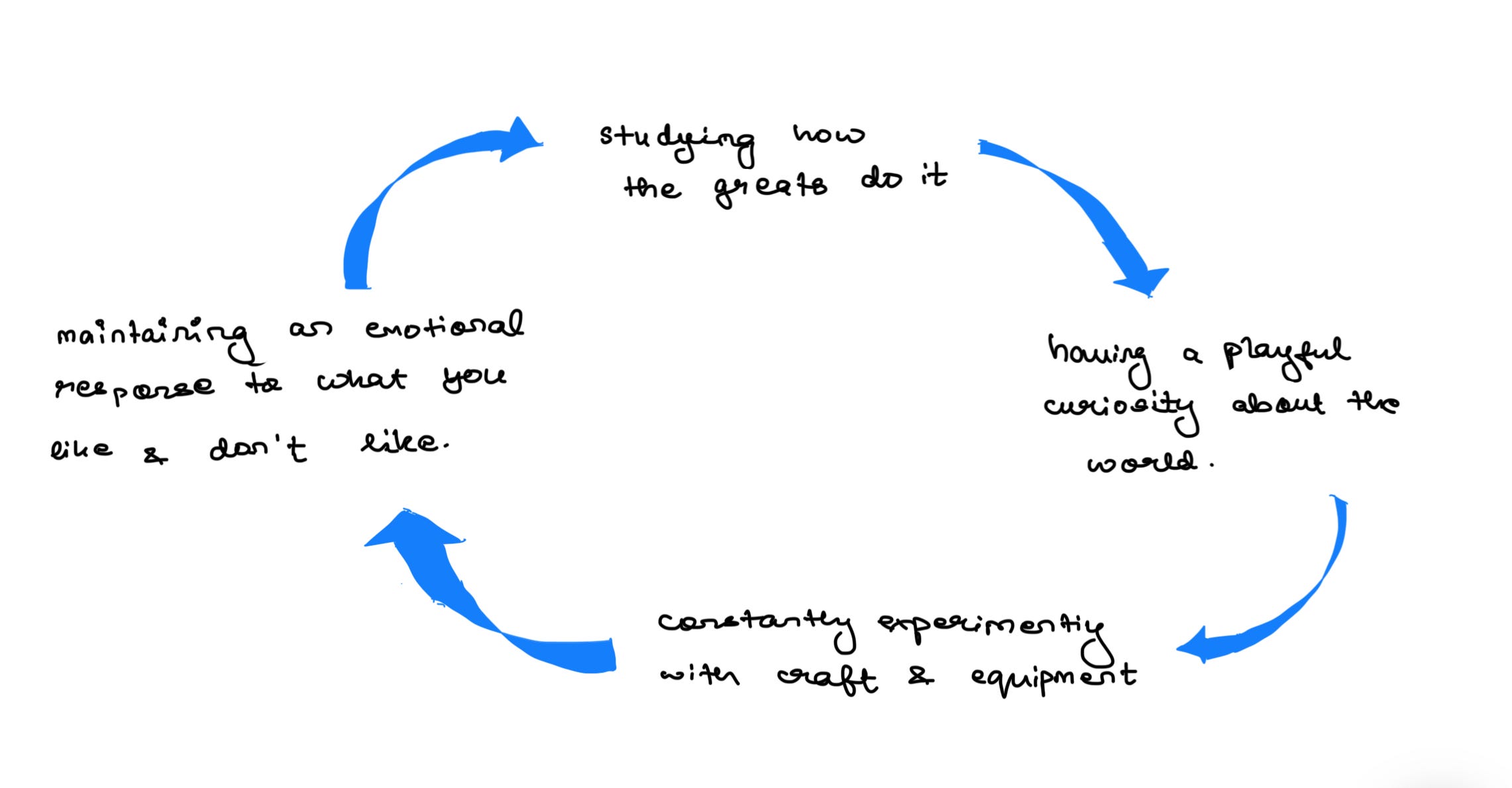
Although this looks like going in a circle, it's actually a spiral. These effects only come from going through a huge volume of work. Your sensitivity sharpens. And you can enunciate clearly.
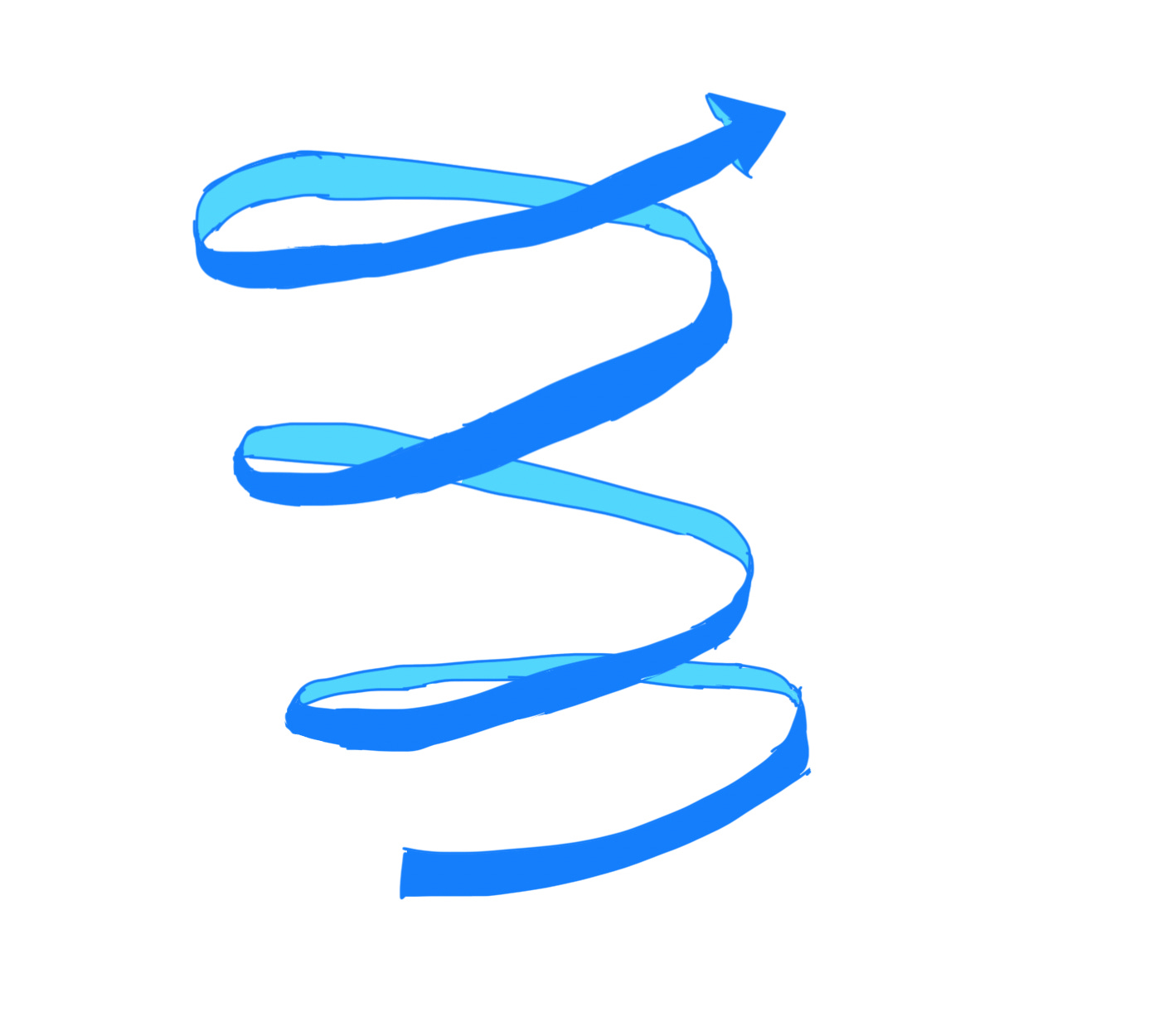
Eventually, this spiral bridges the taste gap.8
Finding Stories
This goes back to point #6 I made. The next step is to engage and display some stories. For the most part, I've tried to be invisible and capture what I see. 2025 will be about stepping in and out of the frame. We all have stories to tell and lived experiences to share. Going forward, I need to seek these out.
Finally, I would like to emphasize that this act of cultivating mass is not simply an excuse for saying it comes later. It is both a commitment to being patient with your stories and a promise to deliver the ones that have taken root.
Give us adequate images. We, we lack adequate images, our civilization doesn't have adequate images. And I think our civilization is doomed, is gonna die out like dinosaurs if it does not develop an adequate language or adequate images.
- Werner Herzog
In this short documentary, Werner Herzog Eats His Shoe, Herzog talks about us lacking in "adequate images". By this, he means the kinds of images that "take a life of their own". Ones that aren't just pretty or eye-catching but some that you can sit with for a while and not feel the need to speak. One such example is his documentary on the Krafft's - The Fire Within.9
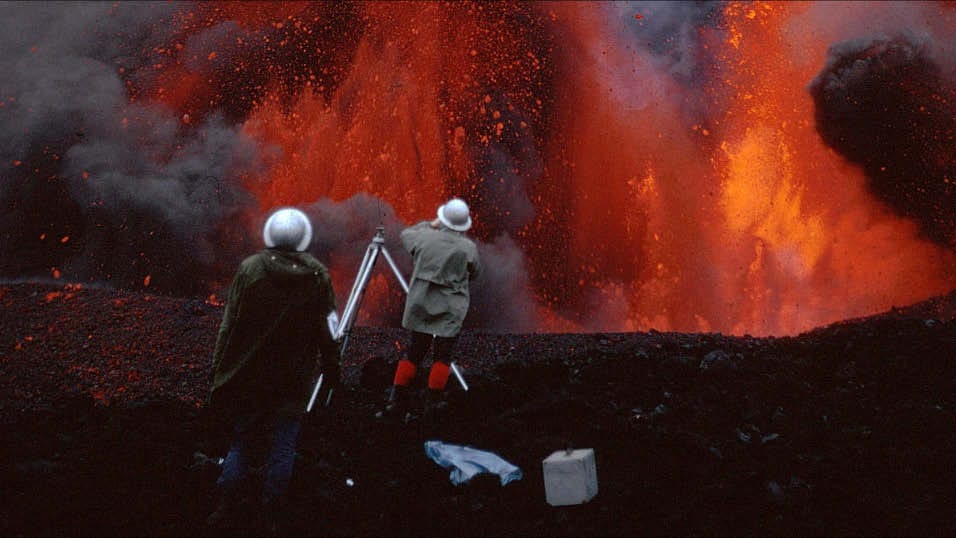
Imagine seeing this series of images with a heavy-duty accompaniment of Bach and Verdi. And this was all archival footage. No narrative. No fabrication. No mis-en-scene. WYSIWYG. But what you get is something beyond awe and astonishment. The word sublime comes to mind. It's the feeling of being small in front of something vast and grand. But this smallness does not diminish you, rather it elevates you. You feel something out of your body. That's a key marker. Having 'subliminity'. I aspire to do more of what Herzog does in my photography going forward. Something that places you out of your body. For a brief while at least.
Once again I concede, that I haven't pieced together a comprehensive definition. It's rather comme-ci-comme-ca when it comes to describing things that have a profound impact on me. Sometimes there are not enough words. However the principle of a "grammar of adequate images" still stands. It is a valuable tool when approaching scenes and stories. Are you questioning something deeper than what you see?
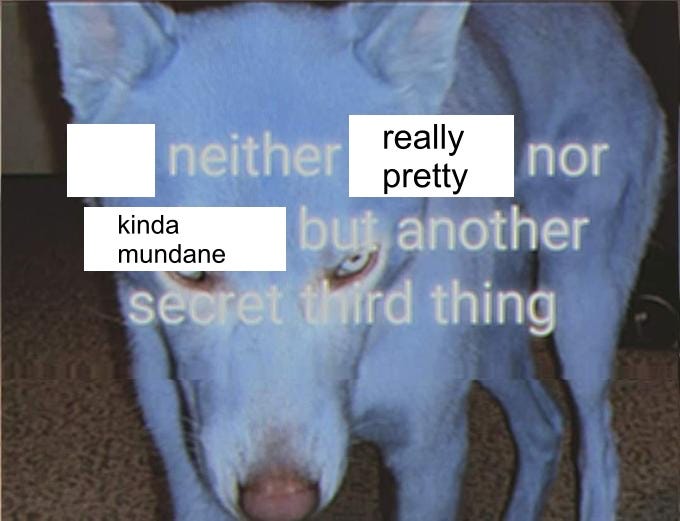
I've come around to strongly resonate with this approach to life, cinematography and filmmaking. I will be questing to take more "adequate images".
Let me show you some of my most treasured pictures that I have taken.10
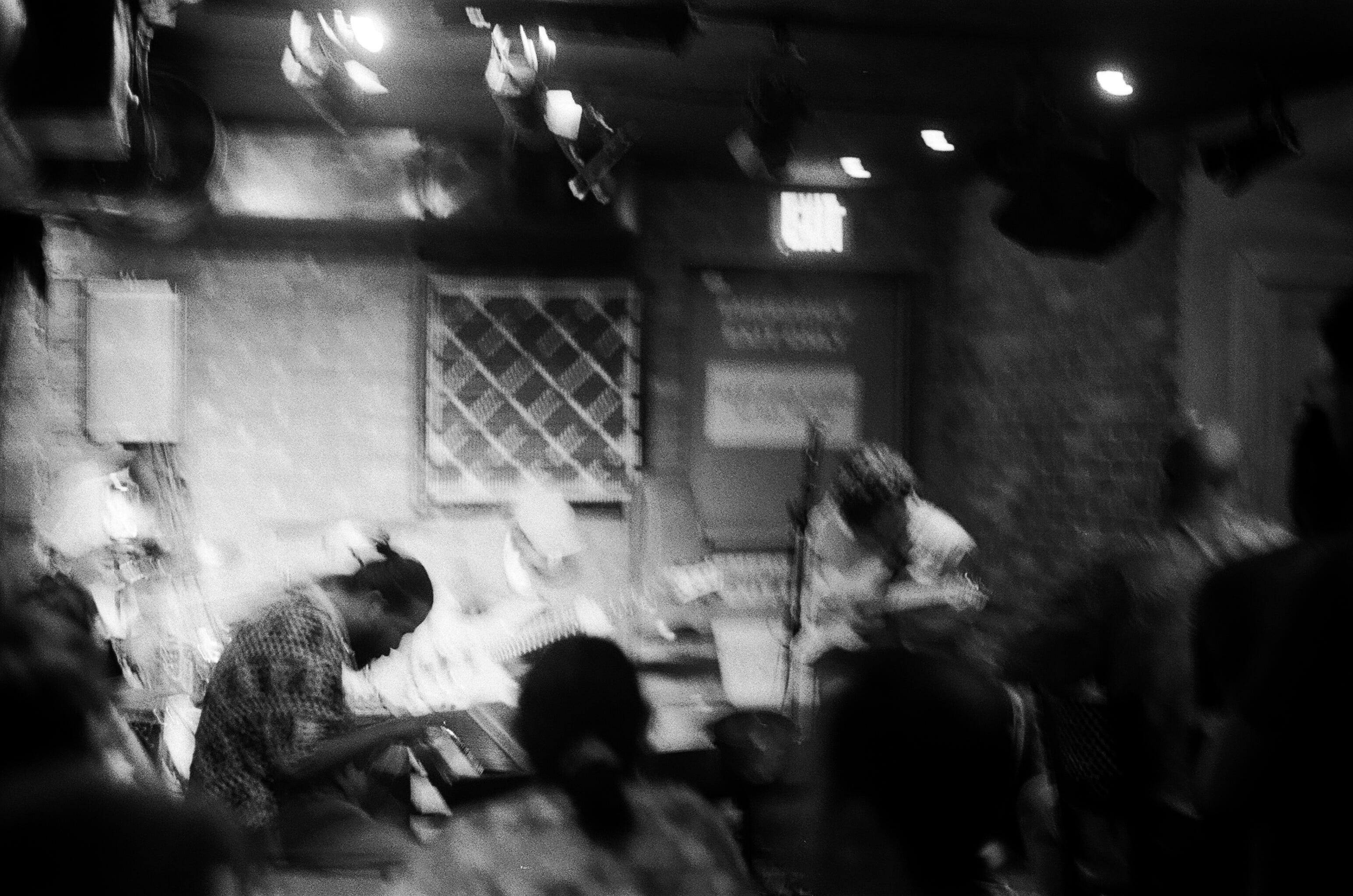
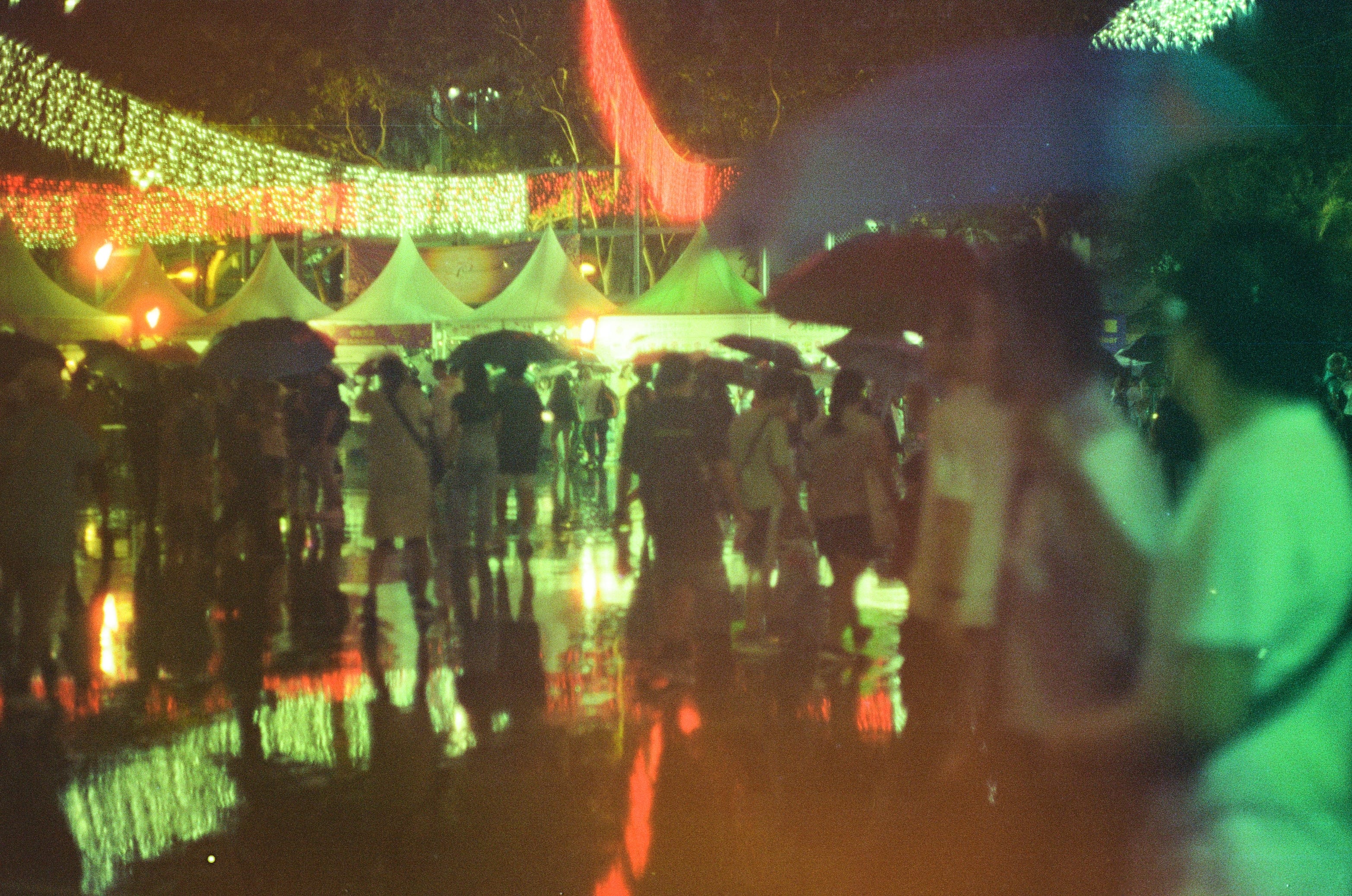
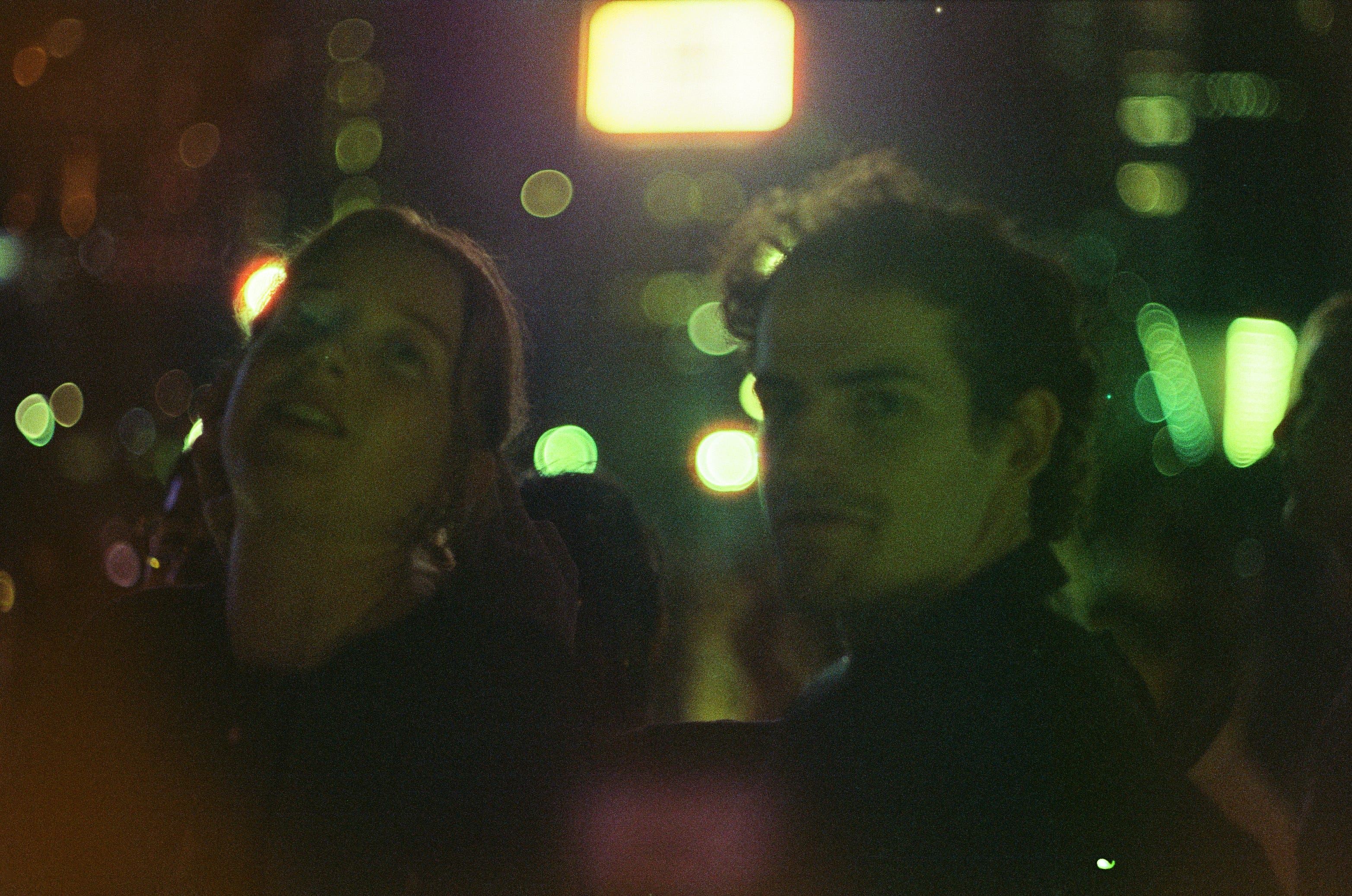
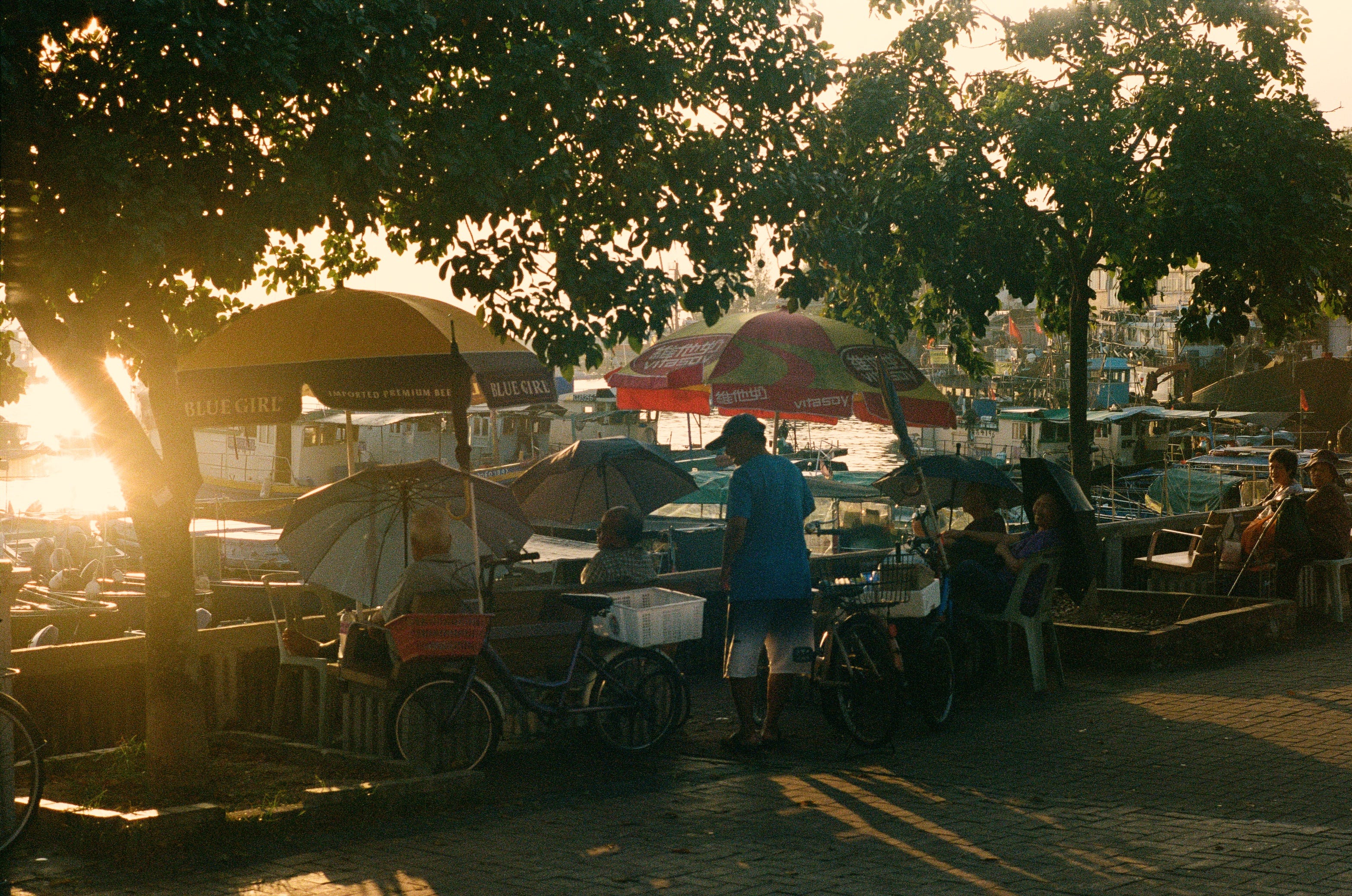
When I ask myself what style I have? There's nothing yet that comes to mind. All I know is that I want to make something that treats with the people in the movies. To examine the lives they live and how extraordinary, almost fantastical elements can spring from the ordinary. Something kinetic. Bracing and vital almost as life itself. I believe I have found the emotional response at the source of taste.
The most interesting dwellings in this country, as the painter knows, are the most unpretending, humble log huts and cottages of the poor commonly; it is the life of the inhabitants whose shells they are, and not any peculiarity in their surfaces merely, which makes them picturesque;
- Henry David Thoreau, Walden
So to answer "What kind of movies do I want to make ?" These kind. The humble logs of the poor commonly. To examine these lives of the inhabitants.
With that said, I will make a commitment to direct a short film before the turn of the decade. (Dec 31st, 2030).
There's one I really want to make. I’m already working on the screenplay. Tentatively called “The Option” after David Friedman's namesake piece. Of course, I can’t jump headfirst into making that movie I want to. As my friend Devin would say, “To make a great clay pot, you can either try making a lot of little clay pots before it or you can just imitate another great clay pot”. This is about making little clay pots.
So I put this Batsignal out there. Do reach out to me if you're interested in doing this too. Filmmaking is a uniquely collaborative art and I want to find other artists to collaborate with. These are still early days for me and I have a long way to go. But the little clay pots are coming.
See you there.
P.S. Thanks to Julian and Shresta for reading drafts of this and providing feedback.
"skillset" sounds so fancy for a tri. I literally just needed to start doing some endurance training lmao
Discarding a ritual doesn't mean it's not working, it means it's not the most effective for your goals now.
I will be making and publicly posting a Commonplace list with all these links.
Paul Thomas Anderson directed his debut 'Boogie Nights' at 26. Ridley Scott directed his debut 'The Duelists' at 40. Both went on to become legendary directors.
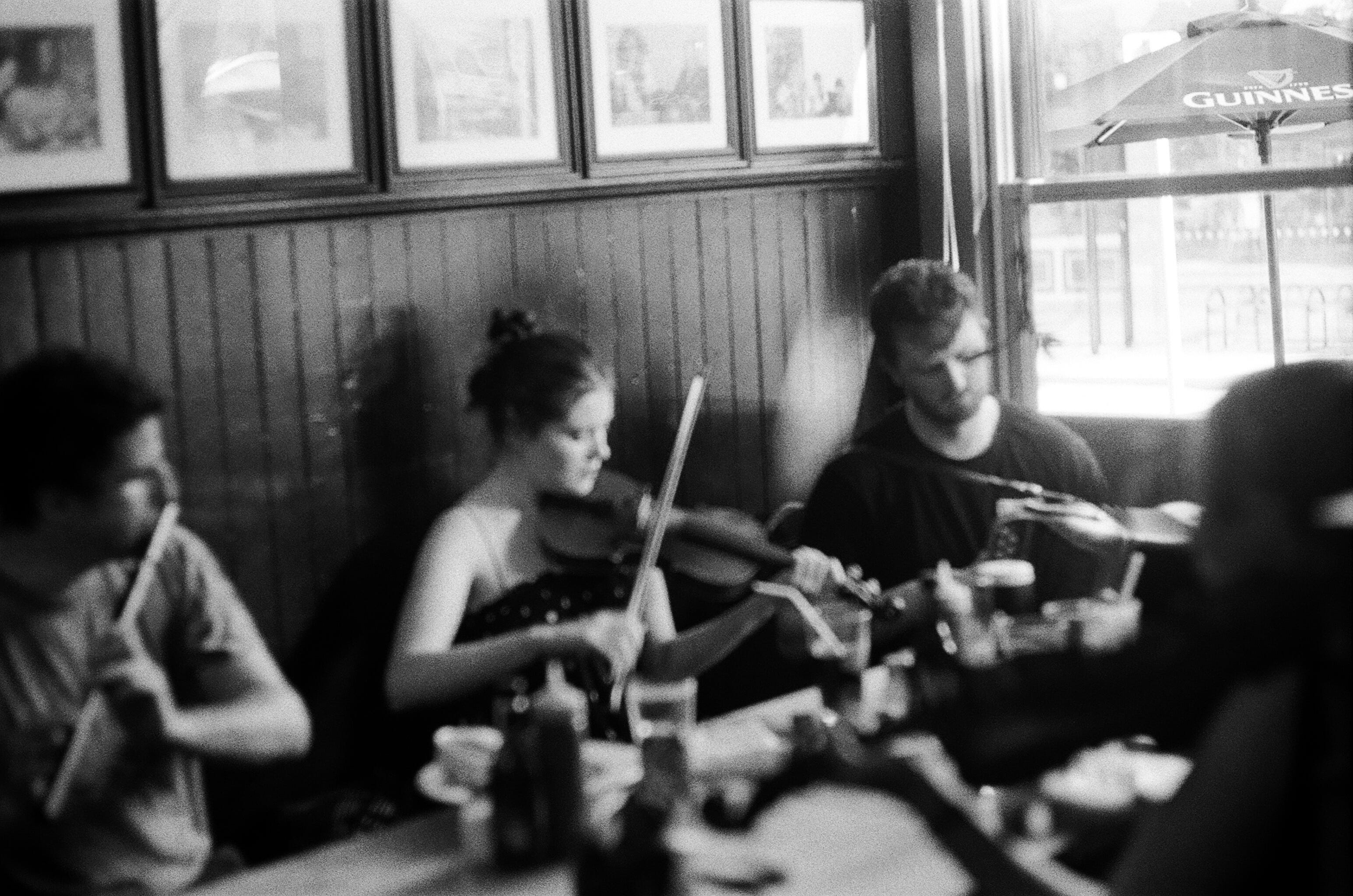
An example would be the following pic. This was done in the early days and I made a bunch of mistakes with this roll. But I visited this Irish pub in Boston and there was a folk band there. From the initiative of taking pictures, I got to talking to them and learned about their instruments and even got their contacts to send the photos to.
I mean this metaphorically of course. Obviously, it would be cool to *actually* check one out. See what's what.
There is a salient difference between style and *aesthetic*. I will be writing about this soon. To me it's the difference between art and 'content'. Aesthetic is cheap, superficial and ephemeral. You don't need much to have an aesthetic. Style is uniquely personal. Style requires you to make a decision on the perspective of the world.
While writing I realized that these diagrams are extremely similar to "Carefully curating your environments" in the Socratica Toolbox. I believe the same principle applies to both finding style and finding great people. They compound within the cycle.
The Fire Within was a documentary about the Krafft's. A husband-and-wife couple who dedicated their careers to capturing active volcanoes around the world.
Not my most beautiful, mind you. My most *treasured*.
Comments
Nothing yet. Say the first thing.
Sign in to join the conversation.