
I spent the last few weeks with a state government department that runs a network of more than 50,000 devices. It is one of the largest networks in the country, it underpins a service people depend on every day, and it is kept running by a genuinely good team practising good old engineering.
While that team gets on with the job, the rest of the industry talks about almost nothing but AI.
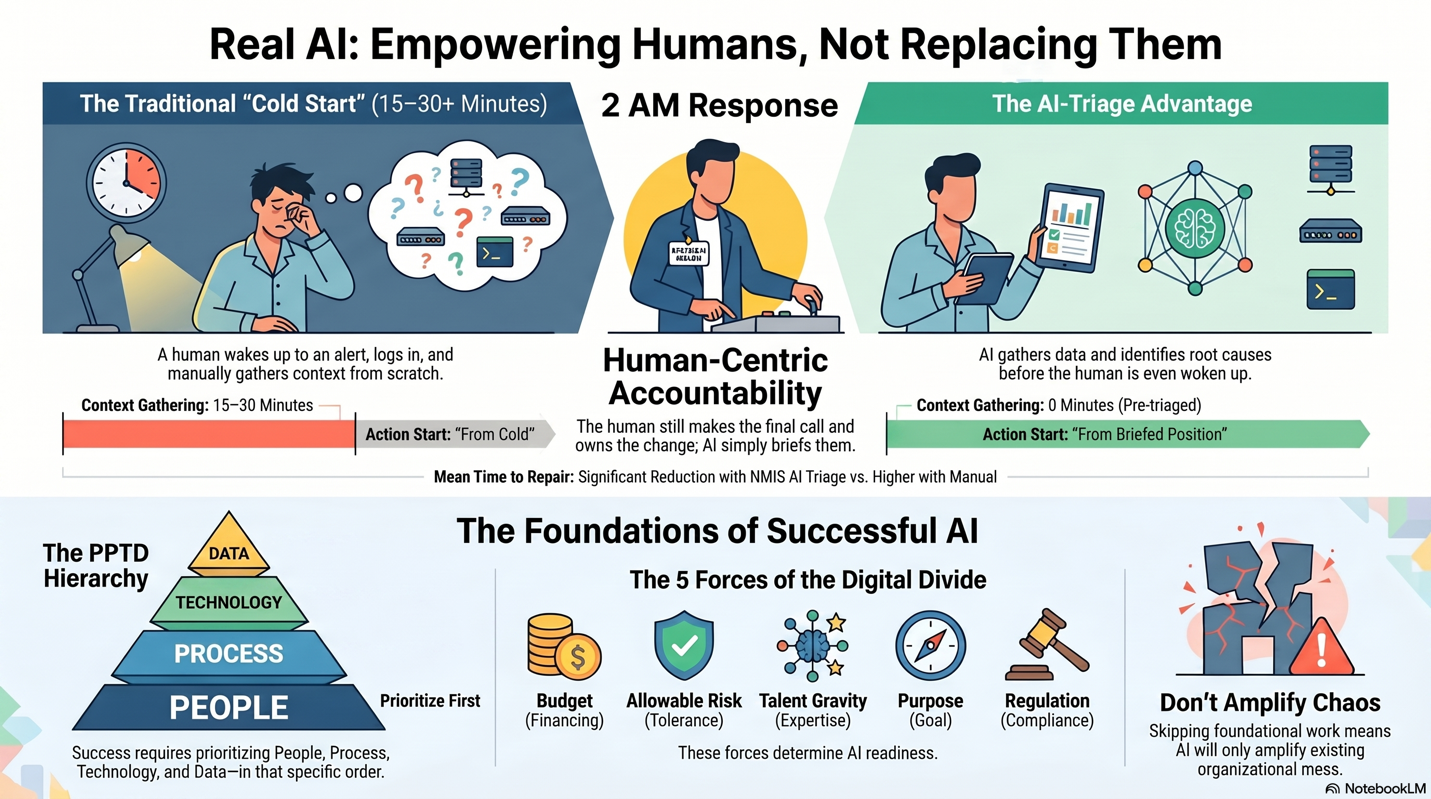
So here is the thing nobody selling you a platform wants to say out loud. AI cannot attend the change advisory board. AI cannot be in the room at 2am making the emergency change. AI cannot carry the accountability when a critical service is down and people are waiting on an answer. People do that. People, process, technology, and data drive outcomes.
This is not an anti-AI article. It is the opposite. It is a real-AI article. There are real use cases where AI helps, and I have built some of them. But to see them clearly you have to first cut through the noise.
The Silicon Valley clans are fighting over who has the best technology and who is going to make the most money. That is fine, that is what they do. The problem is the layer underneath them: the vendors selling AI snake oil, wrapping empty use cases in confident language and hoping nobody presses too hard on the detail.
Let me be precise, because this matters. This is not a complaint about good companies with good products that add real value. There are plenty of those and I happily work with them. This is about the opposite. The outfits whose use cases evaporate the moment you ask “show me this working in production, against real risk, at real scale.”
For most large organisations, the honest answer is that production AI is some way off, and a lot of work needs to happen first. Governance. Acceptable risk. Data sovereignty. What is allowed, by whom, under what controls. That is a delicate conversation and it cannot be rushed by people pushing technology for technology’s sake. Rushing it is how you end up with an expensive pilot, a nervous risk committee, and nothing in production.
So if AI cannot attend the CAB or make the 2am change, what is it good for? It makes the human ready to do those things better.
Here is a concrete example from work I have done with NMIS.

Without AI, the sequence at 2am looks like this. NMIS detects a critical fault and raises an alert. The event escalates. Eventually a human is woken up. Now, half awake, they start from cold: log in, work out what is actually happening, pull the data together, form a theory, and only then begin to act. That is 15 to 30 minutes, maybe longer, just to get the context and start thinking clearly.
With NMIS AI Triage in place, the sequence changes. By the time that same human is woken up, the issue has already been triaged. The data has been collected. They are handed a likely root cause and a set of recommended actions to consider. That is an immediate 15-minute saving, and likely a lot more.
When you are half awake at 2am, that difference is enormous. The human still makes the call, still carries the accountability, still owns the change. But they start from a briefed position instead of a cold one. Fifteen-plus minutes off every 2am incident is a real, defensible reduction in mean time to repair. (I have written about this in more detail in The AI Agent That Handles the 2am Alert and Using AI for Automated Triage and Impact Analysis.)
Notice what AI did and did not do. It did not replace the engineer. It did not make the decision. It removed the cold start. That is the shape of real AI: it lifts the human into a better position to do the things only a human can do.
If the use case is that clear, why is it not everywhere already? Because organisations are not standing on level ground. There is a digital divide, and it is wider and more interesting than “companies with money and companies without.”
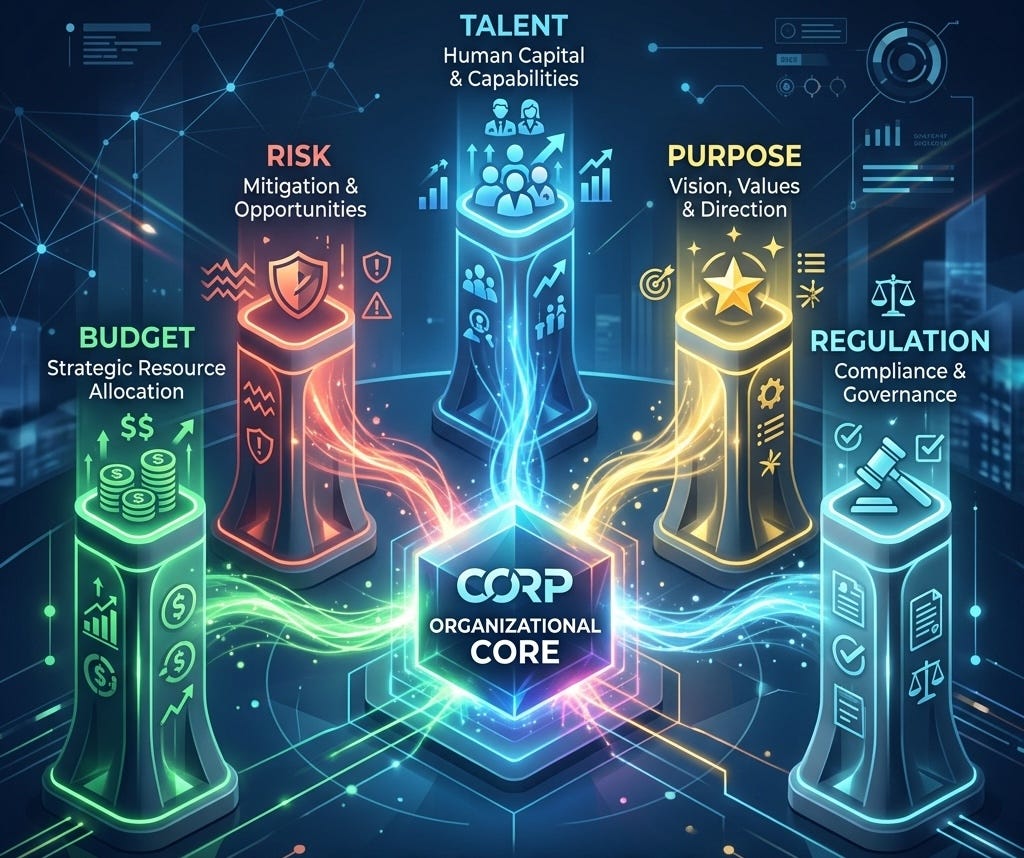
Five forces decide where an organisation sits on that divide, and how realistically it can adopt AI at all.
Budget. How much of the top and bottom line does technology actually drive, and therefore how much can the organisation spend on technology and on the salaries of the people who run it. A bank and a local council are not playing the same game.
Allowable risk. Risk appetite varies enormously by sector. An airline can tolerate far less than a retailer. Less allowable risk means slower, more careful adoption, and rightly so.
Talent gravity. Can the organisation attract the talent it needs. Some employers are simply more attractive to skilled people than others, and AI capability lives or dies on the people you can hire.
Purpose and social relevance. People increasingly want their work to mean something. An organisation with a genuine purpose pulls talent toward it. One widely seen as detracting from society is fighting gravity no matter what it pays.
Regulation and compliance. This sits above and beyond risk appetite. Data sovereignty, critical infrastructure obligations, sector-specific rules. These can dictate not just whether you use AI, but how, where, and on whose hardware.
Here is the part worth sitting with. The interesting case is not the under-resourced organisation that simply cannot afford it. It is the well-funded one that scores badly on the other forces. The big-budget, heavily-regulated organisation that is low on talent gravity, trying to work out AI, has a harder problem than money alone can solve. That is the real digital divide facing our industry, and it deserves an article of its own. I will come back to it.
So what should you actually do, right now, if you run a large and important environment?
Do not rush. Slow is smooth, and smooth is fast.
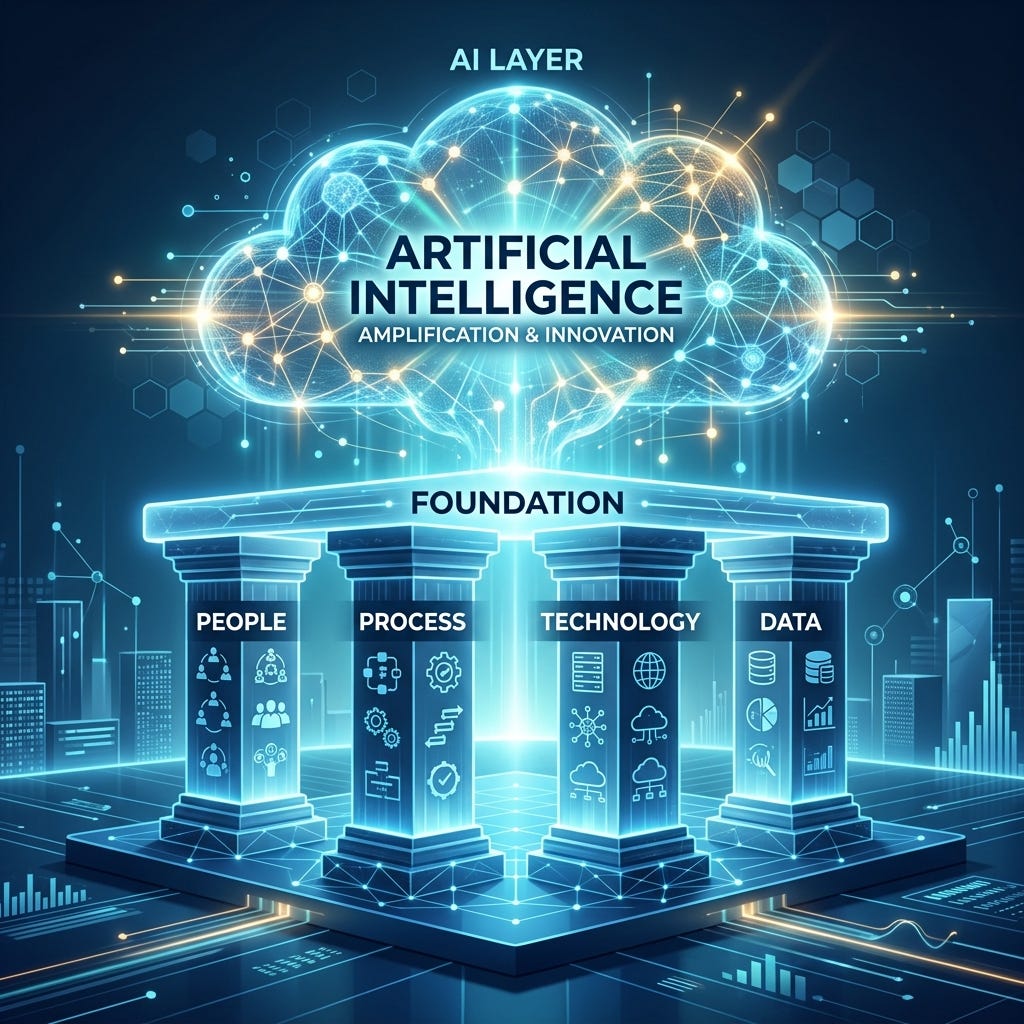
What keeps a 50,000-device network running is not the latest technology. It is the combination of people, process, technology (and data). I call data out deliberately, because it is the part most often taken for granted and the part AI depends on most. Get those four right, in that order of attention, and AI has something solid to stand on. Skip them and AI has nothing to amplify except your chaos.
Then do the one thing that matters most. Before you buy anything, write down your three most expensive 2am tasks. The cold start. The triage backlog. The impact analysis that takes an engineer twenty minutes you do not have. That list is your AI roadmap: prove each one against real work, and build out from there.
AI is real. The good use cases are real. But the work, the accountability, and the judgement remain human. The organisations that win are not the ones that move fastest. They are the ones that get people, process, technology, and data right, then let AI make their people better at the things only people can do.
That is real AI. Everything else is just someone trying to sell you more things.
No posts
Comments
Nothing yet. Say the first thing.
Sign in to join the conversation.