
Welcome to Second Helping, the weekly newsletter that analyzes food trends and news — written by Good Food digital producer Elina Shatkin.
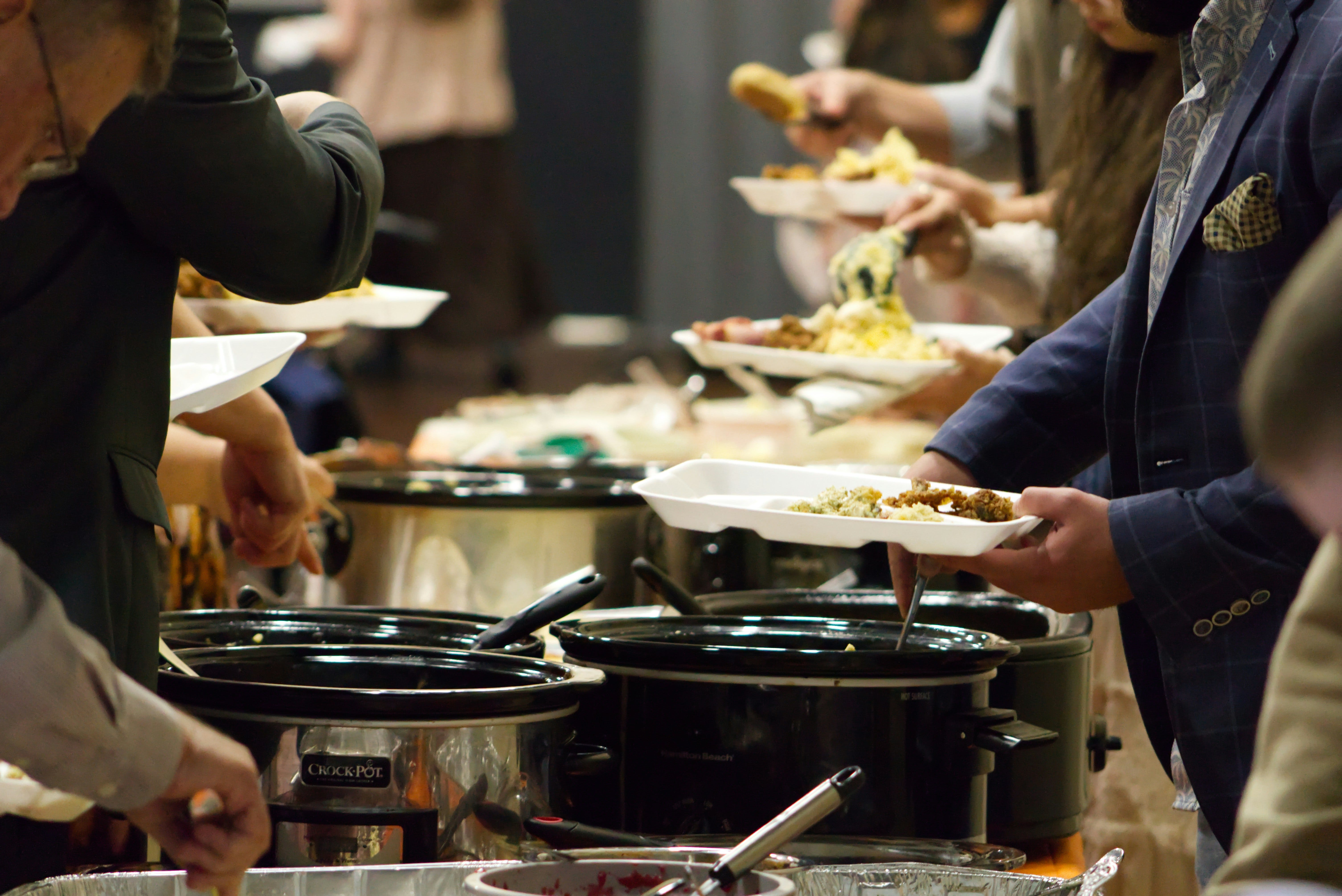
From the CEO who got caught stuffing mince pies into the pockets of his Armani suit to the person who decided to thaw a bloody brisket in their cubicle, office potlucks can bring out people’s weirdest tendencies. These are their stories. Pro Tip: Don’t go bananas over a bread pudding made with pound cake.
What’s the latest from explosive diarrhea summer?
A grim milestone: Two people have died from the cyclosporiasis outbreak. Both of them lived in Michigan and had “significant underlying health conditions.” These are the first known deaths related to the outbreak. In addition, 517 people have been hospitalized.
As of today, nearly 23,000 people in 47 states have gotten sick from cyclospora. That breaks down to 10,468 laboratory-confirmed cases and another 12,255 unconfirmed or probable cases that the CDC is investigating. The math changes constantly so these numbers could go up by the time Second Helping hits your inbox. The What’s causing the outbreak? We don’t totally know.
Yes, some cases — but not all of them — can be traced to iceberg lettuce grown by Taylor Farms in Mexico and shipped to various places, including Taco Bell. (The company initiated a recall on July 17.) But several people who experienced explosive diarrhea and tested positive for cyclosporiasis did NOT eat this iceberg lettuce. So there are other vectors for transmission.
Marion Nestle wrote about how “Lettuce-gate” raises the issue of systemic failures in our food safety system. She and Helena Bottemiller Evich also discussed the topic on a bonus episode of Good Food.
How can you keep track of all this? I like Bill Marler’s blog. He’s a lawyer who handles food poisoning cases. He has been a guest on Good Food several times to talk about tainted baby formula, the Netflix documentary Poisoned: The Dirty Truth About Your Food, and offenders in our food chain. Marion Nestle also recommends e-FoodAlert run by Phyllis Entis aka the bug lady, a retired food safety microbiologist.
MOST IMPORTANT: How do you protect yourself? DO NOT EAT BAGGED SALADS RIGHT NOW! These salad mixes are super convenient, because they contain different veggies, they have a massive cross-contamination risk. And for the next little bit, be wary of lettuce .
Since 2010, Big Food has sued the governments of six countries 239 times to block public health food policies. Most of the time, it has lost but by wasting time, money and resources, it has kinda won.A sweeping investigative project involving more than a dozen news outlets around the globe found that Coca-Cola, PepsiCo, Mondelez and other processed food giants have filed suit in Brazil, Colombia, India, Mexico, the UK, and the US to fight things like sugar taxes, junk food ad limits, and front-of-package warning labels, sometimes with absurd tactics. A Pepsi bottler in Mexico once argued in court that soda was safer than the local water.
The cases add up to 595 combined years of litigation. Some cases in Brazil have dragged on for nearly two decades with no end in sight. Judges have rejected most of the industry’s arguments but the point was never to win. The aim was to bleed cash-strapped health agencies dry and scare off any government that might want to regulate junk food.
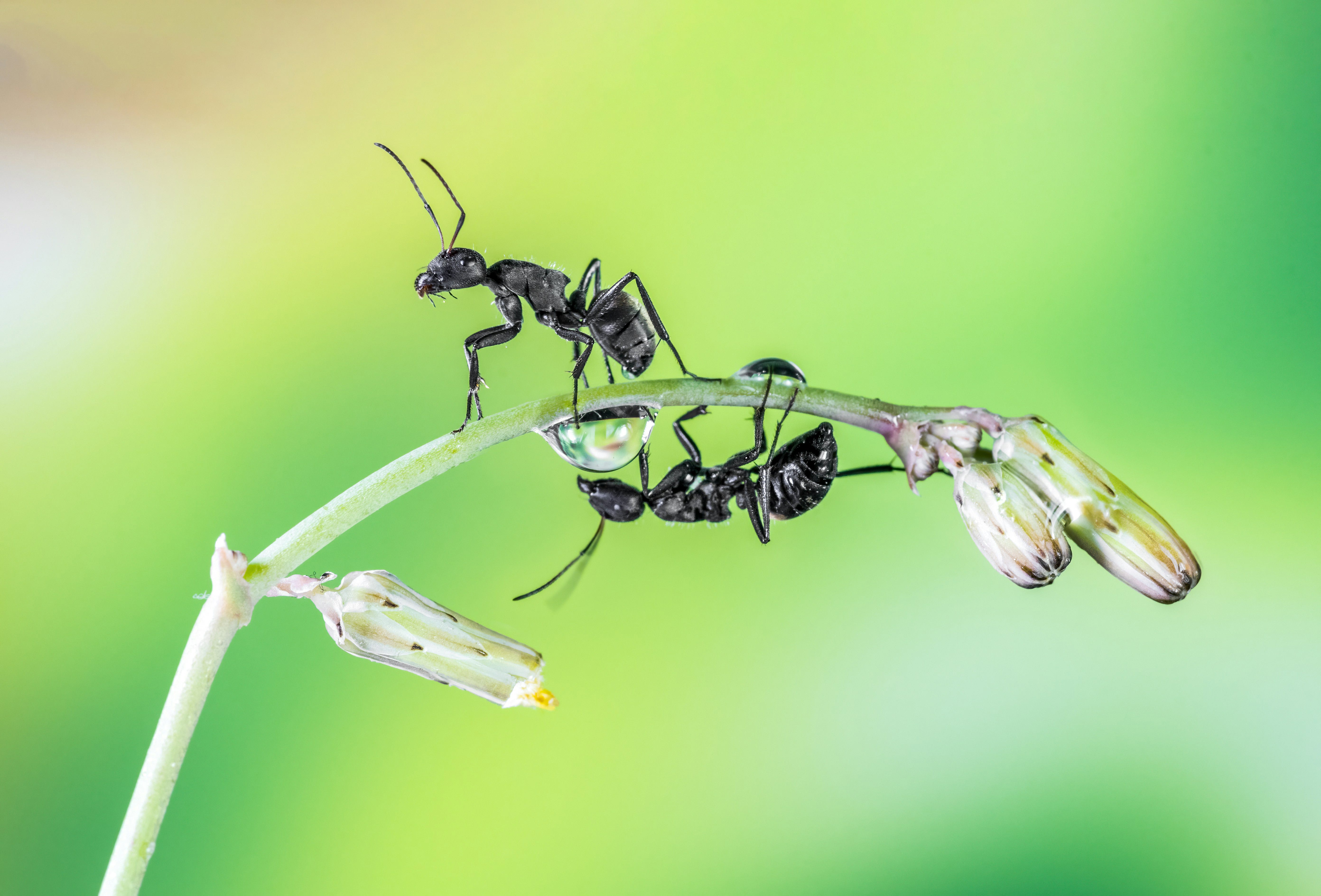
“Waiter, there’s an ant in my sorbet!” It’s no borscht belt joke, it’s the dish at the heart of a criminal case in South Korea. The chef at Restaurant Evett, a two-Michelin starred spot in Seoul’s Gangnam District, is in hot water for serving a sorbet topped with dried black ants. No one was tricked. The ants were listed as a menu option, and the restaurant says approximately 60% of guests chose them.
That’s a problem because under South Korean law, only 10 insect species are approved for use as food ingredients. Ants aren’t one of them. Prosecutors have asked a court to sentence the restaurant owner to one year in prison. The court will announce its decision September 2. In the meantime, you’ll have to make do with mealworm froyo and silkworm pupae gelato.
Cancer doesn’t care what political party you belong to. That’s Chris Jones’s pitch. He’s running for secretary of agriculture as a Democrat in staunchly red Iowa. If voters are listening, it’s probably because of the water.
Iowa now has the second highest cancer rate of any state in the country. Unlike most states, where rates have leveled off or dropped, Iowa’s keeps climbing. (Author and Iowa native Austin Frerick touches on the state’s hog barons and the environmental destruction they have wrought in his book Barons: Money, Power, and the Corruption of America’s Food Industry.)
Jones, along with many others, points to chemical pesticides and fertilizers used by farmers — specifically nitrates and glyphosate, the active ingredient in Roundup, the world’s most common weedkiller. He’s not the only one making that connection.
Businessman and farmer Zach Lahn won the Republican primary for governor, in part, by acknowledging the state’s water crisis and connecting the dots between agriculture and cancer.
Whether that’s enough to actually move votes come November remains to be seen.
MAHA’s SNAP soda crackdown just hit a wall. Preventing people who are enrolled in the federal food aid program from using their benefits to buy soda and candy was one of the Trump administration’s signature agenda items. Several states applied for — and received — federal waivers to impose these restrictions. But a judge just tossed out those waivers in five states (Colorado, Iowa, Nebraska, Tennessee and West Virginia), throwing the initiative’s future into question. Reviving it now would take federal legislation, and there’s not much appetite in the Senate for that. Why? Because it’s Farm Bill season.
The Farm Bill is typically a five-year package that covers everything from farm subsidies to crop insurance to SNAP. The last Farm Bill expired in 2023. Since then, Congress has passed three one-year extensions. The latest is set to expire on September 30. Politicians are waging a delicate, closely-fought battle to shape the final bill. Nobody wants to tack on a controversial junk food ban and risk sinking the whole thing.
In July, Rand Paul tried to force the issue by proposing an amendment to Bernie Sanders’ Childhood Diabetes Reduction Act, which adds warning labels to foods high in added sugar or ultra-processed ingredients. Paul’s own MAHA allies tabled it because they’d rather protect the warning-label bill than throw hands in the SNAP fight. For now, the SNAP soda ban is stuck in political limbo — popular in theory, falling flat in practice.
BTW the latest draft of the Farm Bill was released last week by the US Senate’s agriculture committee. If you’re a masochist or an insomniac, enjoy these scintillating 983 pages!
You’re not imagining it. Your shopping cart is getting hammered from every direction. Tomato prices are up roughly 20% over the past year thanks partly to a tariff on imports from Mexico, where many of our tomatoes originate, while lettuce jumped about 32%. Fertilizer and refrigerated-truck rates have spiked more than 20% amid fallout from the Iran war. That conflict has also increased fuel costs, which makes transporting produce (and everything else!) significantly more expensive. And it could get worse.
In Brazil, which is a major global produce supplier, prices for tomatoes, carrots, and potatoes have already more than doubled this year. Analysts are also bracing for a powerful El Nino, one that threatens crop losses and further price increases.
Pistachio prices are going up due to the extreme heat the San Joaquin Valley experienced this spring. The unprecedented high temperatures disrupted the pollination process by triggering male flowers to spread pollen before female flowers had opened for the year. Growers in Fresno, Kern and Tulare counties reported a combined $800 million loss and 337,714 acres of damage. Decreased supply + steady demand = higher prices.
There is one bright spot. Canned and frozen produce has barely budged in price so if you’re on a tight budget, the freezer aisle might be your best bet right now.
American farmers are staring down a sixth straight year of losses in 2027, with the American Farm Bureau projecting $32 billion in losses across major row crops next year, up from $31 billion in 2026. Corn, soybean, wheat, and cotton growers are all losing money per acre. It’s not just row crops. Potato acreage just hit its lowest level since 1952, and prices have fallen well below the cost of production.
The culprits are familiar: High input costs, low commodity prices, and volatile fuel and fertilizer markets made worse by the Iran conflict. Congress has already sent tens of billions in emergency aid. Trump recently asked for another $11 billion. But for now, the farm economy keeps shrinking.
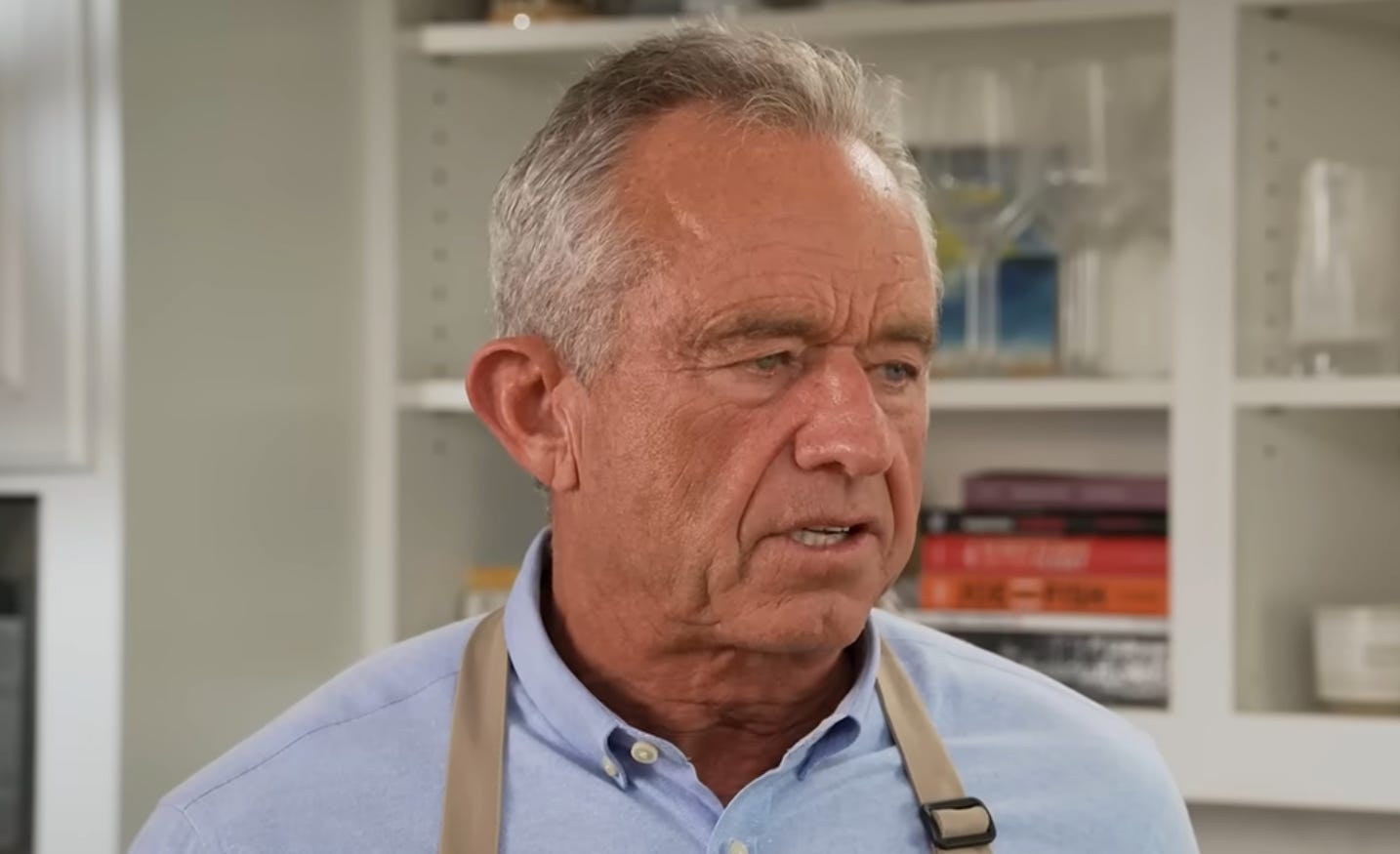
RFK Jr. has a new gig. When he's not questioning vaccine safety or promoting raw milk or falsely claiming the US had the "highest death rate" from COVID of any country, he's hosting a cooking show. Designed to prove that healthy eating doesn't have to break the bank, The Real Food Show focuses on recipes budgeted at $5 or less per serving.
The first episode, which debuted July 30, starred Kennedy and celebrity chef Andrew Gruel whipping up salmon cakes. Future episodes will feature chef Robert Irvine and a rotating cast of guests. Whether a YouTube cooking show moves the needle on obesity and chronic disease is an open question but at least someone at the Department of Health and Human Services is having fun.
No posts
Comments
Nothing yet. Say the first thing.
Sign in to join the conversation.