
A comedian said something recently that made a lot of people laugh.
It also made a lot of people uncomfortable.
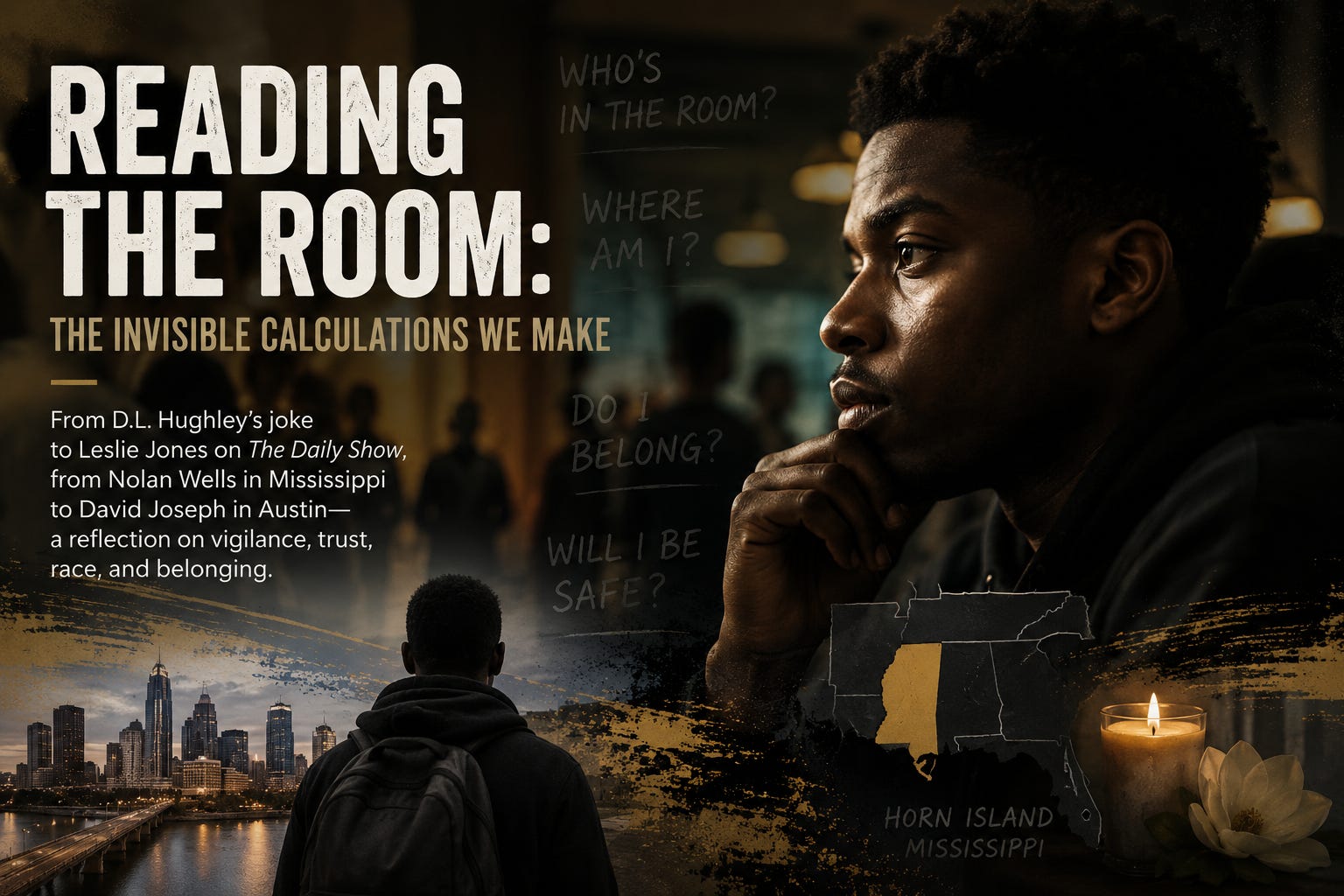
D.L. Hughley was talking about Nolan Xavier Wells, an 18-year-old Black college football player from Mississippi who disappeared after a July 4, 2026 outing to Horn Island with a group of white friends.
There have been a number of recent deaths of young Black men who went on trips with groups of white friends and never made it home. We still don’t know all the facts in every case, and each deserves to be investigated on its own.
Then he made a joke.
“You never hear about a group of Black folks going on vacation with one white friend... and the white friend doesn’t make it home.”
People laughed.
Leslie Jones recently echoed a similar sentiment on The Daily Show, using comedy to expose something much deeper than the punchline.
Because good comedians often aren’t just telling jokes. They’re revealing truths that people struggle to say out loud.
The joke isn’t really about vacations.
It’s about trust.
Or, perhaps more accurately, the absence of it.
One of the things I’ve noticed over the years is that many of my Black and Brown friends navigate the world with a quiet vigilance.
It’s so ordinary that we rarely talk about it.
When we enter a restaurant, we notice who else is there.
When we travel, we think about where we’re going.
When we’re pulled over, we rehearse conversations before they happen.
When we’re the only person of color in a room, we instinctively begin reading the room.
It’s not because we expect something bad to happen every time. Ok, maybe we do.
But because enough things have happened—to us, to our families, to people who look like us—that paying attention feels wise.
Sometimes it’s exhausting, invisibile, and almost always, it’s misunderstood.
Ironically, I’ve also experienced the opposite.
I’ve traveled with groups of Black and Brown friends while one white friend joined us.
Without discussing it, there was a shared awareness.
We wanted to make sure he felt comfortable, sfe, and included. We want them to have a good experience.
We do it because hospitality and their experience mattered.
That’s a different kind of calculation. One rooted in care rather than self-protection.
This isn’t about suggesting that every white friendship is unsafe.
It isn’t.
Some of the deepest friendships in my life cross racial lines.
This is about acknowledging something different.
Many Black Americans have learned to carry an extra layer of awareness wherever we go.
It’s a healthy intentionality, not paranoia, because history teaches, experience teaches, and stories teach.
Sometimes our own. Sometimes those of people we love.
That’s part of why last week’s events in Austin felt so heavy.
A 17-year-old Black teenager was killed by police.
The investigation is still unfolding, and it’s important that it be thorough and fair.
But regardless of where that investigation ultimately leads, one truth is already beyond dispute.
Another family is grieving.
Another community is asking difficult questions.
Another generation is wondering whether anything has really changed.
I couldn’t help but think about David Joseph.
Also seventeen.
Killed by an Austin police officer in 2016 while experiencing a mental health crisis.
Ten years apart.
Many of the same conversations.
For me, that’s what “reading the room” has always meant.
It isn’t simply noticing who agrees with you.
It’s paying attention to the emotional landscape people carry with them before they ever walk through the door.
Some people enter a room expecting to belong.
Others enter wondering whether they will.
Some people expect to be trusted.
Others have learned that trust must be earned over and over again.
Those aren’t personality differences.
They’re lived experiences.
This is one of the reasons I created Djembe.
We make visible the invisible calculations we often carry alone.
Because once those calculations become visible, curiosity becomes possible, empathy becomes possible, and trust becomes possible.
One of the most powerful questions we can ask another person isn’t,
“Do you agree with me?”
It’s much simpler.
“What are you carrying into this room that I can’t see?”
Because until we understand the invisible calculations other people are making...
We’ll keep wondering why we’re having such different conversations about the same world.
Stay curious. Build trust.
— Kazique
If this conversation challenged your thinking, I’d love for you to stick around.
Join a growing community exploring curiosity, courage, trust, belonging, leadership, psychology, AI, and what it means to be fully human.
Subscribe for weekly essays and Notes, or Upgrade for exclusive audio experiences, courses, and resources.
No posts
Comments
Nothing yet. Say the first thing.
Sign in to join the conversation.