
The [Central Intelligence] Agency office with the greatest current SERE familiarity was the Office of Technical Services (OTS), in which were located a unit of organizationally-oriented psychologists whose interests in interrogation extended back almost fifty years…. The antecedents of this unit had overseen much of the MKULTRA interrogation research in the 1950s and 1960s, published still-relevant classified papers on the merits of various interrogation techniques, contributed heavily to a 1963 KUBARK Counterintelligence Interrogation Manual and its derivative 1983 Human Resources Manual, assisted directly in early interrogations, and (with OMS) provided instruction in the Agency’s Risk of Capture training. Bureaucratic tensions between OMS and OTS (and their antecedent offices) extended across 50 years, and again were at a peak in 2002.— Terrence DeMay, Chief, CIA Office of Medical Services, September 2007 (Link, see PDF pg. 12, parentheses in original, bracketed material added for comprehension)
MKULTRA was a CIA program that ran from 1953 to 1973. It had its precursors inside the CIA in the top secret programs titled “Bluebird,” “Artichoke,” and in the U.S. Navy’s “Chatter” program. MKULTRA birthed other associated programs: MKNAOMI (which concerned CIA development of biological weapons with Army researchers at Ft. Detrick), MKSEARCH, MKCHITWIT, etc. The aim of most of these programs was to discover ways to control the minds of individuals and groups via use of drugs (like LSD), hypnosis, sensory deprivation, electric shock, and various other forms of medical and psychological manipulation and torture.
One of the most notable aspects of the 1970s and 1980s revelations about the MKULTRA program was its use of unethical and illegal experiments on human subjects. The press has repeatedly turned to the more lurid aspects of those experiments, such as Operation Midnight Climax’s drug experiments on unwitting prostitutes and their johns, or Ewen Cameron’s diabolical “psychic driving” sleep laboratory. As important as it is to expose the immorality of these experiments, the main emphasis of MKULTRA really lies elsewhere.
The most practical use of MKULTRA methods — their raison d’être — was their use in interrogation of enemy agents and attempts to program CIA or military assassins. This aspect of MKULTRA was thoroughly examined in 1979 in the first major book on the subject, John Marks’ The Search for the Manchurian Candidate. Arguably less “practical,” but certainly considered for use by the CIA and Pentagon, was the use of MKULTRA techniques for torture of prisoners, to force submission and gain compliance. The predecessor of this aspect of the program was the CIA’s Project Artichoke. After MKULTRA was established in 1953, Artichoke continued, primarily as an operational covert program of brainwashing potential Agency assets, agents, and suspected spies.
As far back as the mid-1950s, notorious CIA MKULTRA researcher, Dr. Louis Jolyon West, conducted research at military survival schools in an effort to construct a theory-based, empirical program that could be used to “brainwash” prisoners — in other words, to bend prisoners to the will of U.S. authorities for intelligence “exploitation.”1
These military survival schools were later assembled under Pentagon auspices as the Survival, Evasion, Resistance, and Escape training program, known by its acronym SERE. It was the military’s SERE program — particularly its use of a “mock torture” component meant to psychologically inoculate military and intelligence personnel against possible torture interrogations — that later provided the blueprint for the set of “enhanced interrogation” techniques used by the Bush/Cheney administration in its “war on terror.”2
A full discussion of CIA’s favored torture methods derived from MKULTRA was included in their 1963 in-house interrogation “KUBARK” manual. (KUBARK was the CIA’s cryptonym for itself.) Under the label of “Coercive Counterintelligence Interrogation of Resistant Subjects,” the CIA detailed its use of isolation, deprivation of food and sleep, sensory deprivation, use of drugs, hypnosis and “threats and fear.” The KUBARK manual is full of quotes and references to MKULTRA researchers.3 Its techniques were subsequently reproduced in the CIA’s 1983 "Human Resource Exploitation Training Manual.”
Public interest in MKULTRA has never really dissipated, though the U.S. government rarely has anything new to say on that subject. Recently, cleverly orchestrated government leaks have suggested there is some new treasure trove of MKULTRA documents to be released. So it was with some anticipatory hullaballoo that a Congressional committee recently announced it would hold a hearing on the subject of MKULTRA.
On Tuesday, June 30, 2026, the House Oversight Committee’s Task Force on the Declassification of Federal Secrets held a well-advertised hearing on “Mind Control and Accountability: Uncovering the Truth of the CIA’s MKULTRA Project.” Despite its title, the hearing had very little to say about “uncovering the truth” about MKULTRA. The treasure trove of new documents was not revealed, but it was suggested they would pertain to CIA interest in or programs related to forgery.
If you want to know whether or not MKULTRA has continued since its pronounced demise in the mid-1970s, all one has to do is look at the recent “enhanced interrogation” program implemented by George W. Bush, Dick Cheney, George Tenet and Donald Rumsfeld during the misbegotten post-9/11 “war on terror.”
During this hearing, the word “interrogation” was mentioned twice, both times in the most general fashion. The word “torture” came up a number of times, though with only one exception it was solely in reference to the “psychological torture” that unwitting CIA experimental subjects suffered during the decades-long CIA mind control experiments.
Basically, Representative Anna Paulina Luna, chair of the committee, used the hearings to push Trump-MAGA beliefs about a supposed COVID cover-up, and an alleged mash-up between NIH officials, Dr. Fauci and the Chinese government at the Wuhan lab. This outcome was foretold in an essay on the eve of the hearings by the National Security Archive (NSA), the repository of many of the CIA’s MKULTRA files. “Declassification Task Force Should Focus on Real Secrets, Not Conspiracy Theories,” the NSA wrote.
As a matter of fact — as I have both argued and demonstrated in a series of articles over the past nineteen years — the MKULTRA program had profound influence on U.S. interrogation practice, and aspects of that program continue to exist today. The torture revealed at Guantanamo’s various prisons, and at the CIA’s worldwide secret “black sites” was derived from techniques studied in some detail by the CIA’s MKULTRA and Artichoke programs.
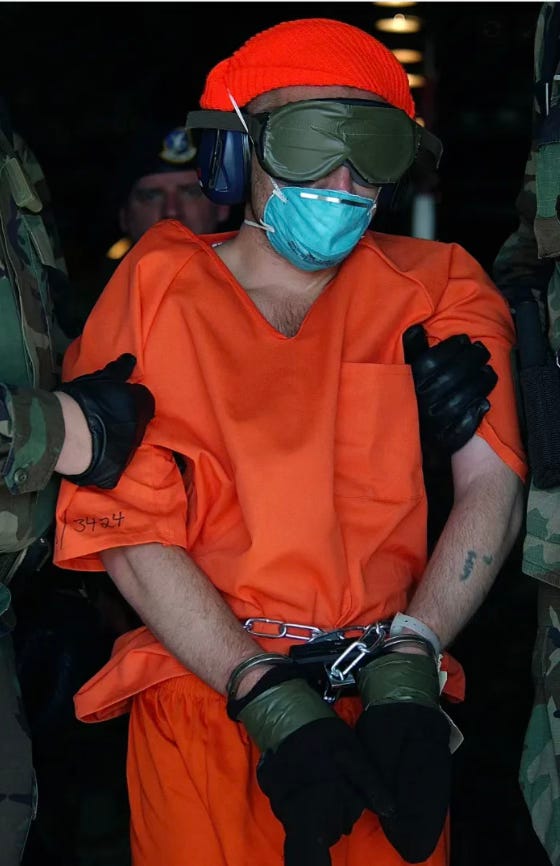
Additionally, I have written before about how the U.S. Army’s field manual for use in interrogations still includes instructions on using isolation, sensory and sleep deprivation, and the induction of fear, among other MKULTRA-style techniques, while loosening previous restrictions on the use of “mind-altering” drugs in interrogations. While the UN Committee on Torture, charged with policing the UN treaty on torture to which the U.S. is a signatory, has criticized the U.S. for using techniques that can cause psychotic breakdowns in prisoners, the UN’s protests have failed to generate even a modicum of interest in either the U.S. mainstream press or its supposed Internet alternatives.
The present article will summarize the evidence for my claims about the influence of MKULTRA on recent and current U.S. interrogation policies, and the failure of the House committee to adequately present the evidence freely available to them.
There were three witnesses called to testify before the House committee, but only two had any expertise on the CIA and MKULTRA. Their printed opening statements and related submitted material (if any) is linked to their names in this essay. There was Stephen Kinzer, Senior Fellow in International and Public Affairs at Brown University, and the author of Poisoner in Chief: Sidney Gottlieb and the CIA Search for Mind Control. Gottlieb was the man who directed the MKULTRA program. Kinzer also wrote The Brothers: John Foster Dulles, Allen Dulles, and Their Secret World War. Allen Dulles was, as most people know, the long-time director of the CIA through most of the 1950s and early 1960s, until he was fired by John Kennedy after the Bay of Pigs fiasco. After Kennedy was assassinated, Dulles became a key figure on the government’s Warren Commission.
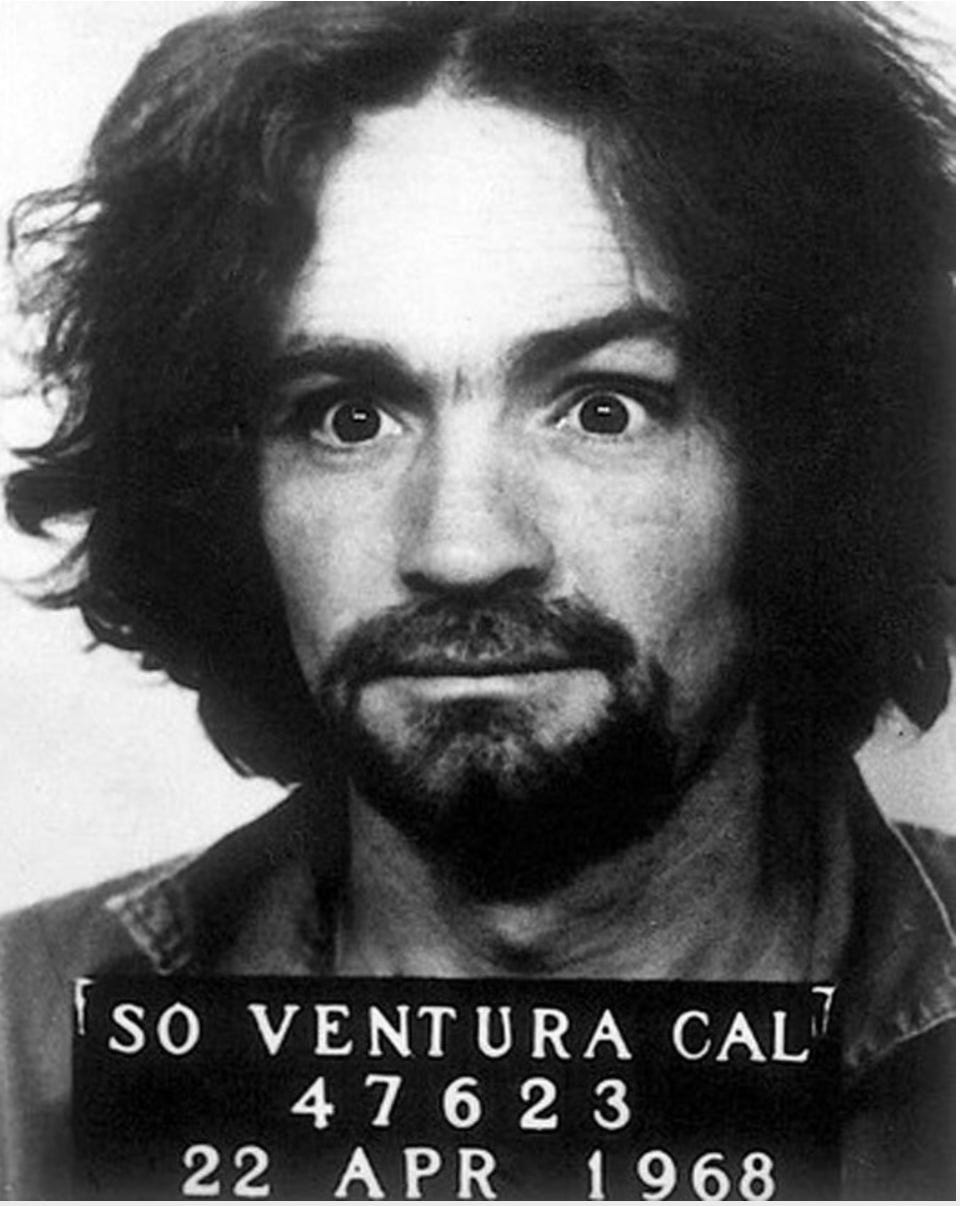
The other MKULTRA expert was Tom O’Neill, author (along with contributions by Dan Piepenbring) of Chaos: Charles Manson, the CIA, and the Secret History of the Sixties. O’Neill’s research led him to discover links between CIA-MKULTRA doctor Louis Jolyon West, Charles Manson, and San Francisco’s Haight-Ashbury Medical Free Clinic during the heady days of 1967’s “summer of love.”
Both Kinzer and O’Neill are respected researchers and authors. Their work, often brilliant, has provided much of value, and not just about MKULTRA, but about the actions of the national security state as a whole, the elites who run it, and the weirdness of the entire enterprise. Their contributions to the House session are worth listening to. But the framework of the 90 minute hearing, the five minute limit on their opening statements, and the restriction of MKULTRA-knowledgeable witnesses to two, meant the hearing would always be an exercise in some futility, or at best, a “limited hangout.”
The third witness was Dr. Elizabeth Ginexi, Ph.D., a former Senior Program Director at the National Institutes of Health, who resigned last year after Trump and Elon Musk’s DOGE instituted mass layoffs at NIH and gutted a number of research grant programs. Ginexi has an interesting — even an important — story to tell, but it has nothing to do with the CIA or MKULTRA. She appears to have been there mainly to act as a foil for Luna and her GOP associates’ real agenda: to push the idea of a massive cover-up over the origins of COVID, the pandemic shutdowns, and the government’s vaccine program. In other words, the trumped-up interest in the MKULTRA cover-up was meant to buttress conspiratorial claims about a cover-up around the origin of COVID and the handling of the pandemic.
I’m not going to waste much time here on that subject, but a flavor of that portion of the hearing can be ascertained when GOP Representative Eli Crane, conjuring the days of McCarthyesque inquisition, asked Ginexi (at time stamp 46:00 on video): “Do you — do you deny that the NIH tried to cover up the origin of COVID?”
It is enough to note here that there is zero conclusive scientific evidence about the origin of SARS-Cov-2 (COVID).4 Claims around such evidence are a U.S. psyop to smear China as responsible for one of the worst pandemics of our time (all while at the same time claiming there was no real pandemic necessitating strenuous public health measures such as masking or social distancing — listen to Rep. Crane at 46:16. I know, he’s totally illogical, but that’s right-wing propaganda for you.)
The House hearing was not all for naught. The public was introduced to the MKULTRA topic outside of its ideologically segregated space as so-called conspiracy theory. There was the imprimatur of elected government officials standing behind it. Listeners learned some valuable information about unethical experiments that included use of hallucinogens, and even ended often enough in the death of unwitting subjects. The bizarre connections between Louis Jolyon West and Jack Ruby have now gone mainstream. Unfortunately, the way all this was presented implied that these government excesses and crimes were something that ended in the 1970s, though that surely was neither Kinzer nor O’Neill’s intention.
As I said above, the hearing was likely to be an exercise in some futility, and the insufficiency of its aims nowhere became clearer than when following up on multiple questions as to whether or not the criminal activities of MKULTRA are continuing to the present day. It’s not that the committee members and the witnesses were wrong in what they said about the CIA program. It’s more a matter of what they didn’t say, or perhaps didn’t know.

In his opening statement, Stephen Kinzer remarked: “This task force could also consider trying to determine whether some new incarnation of MKULTRA exists today” (see video timestamp 12:55). Whether or not the task force will follow up Mr. Kinzer’s suggestion is another story. But before the cameras, the GOP representatives postured at least as if they were concerned. (The Democratic Party members of the committee boycotted the session, abandoning their own invited “minority” invitee, Dr. Ginexi, who had to fend off the GOP Covid conspiracy charges alone as best she could.)
At one point, Representative Eric Burleson asked Stephen Kinzer how the legacy of MKULTRA bore upon any potential future use of such programs. Kinzer’s reply was equivocal.
Burleson: “Did the [MKULTRA] program continue and do you think that the program in some aspect is still continuing today?” (video 41:18)
Kinzer: You’re asking if the program continued after 1973 when it was halted supposedly?
Burleson: That’s right.
Kinzer: I honest— That’s a question I'm asked at almost every appearance I do. Is it happening today? Did it continue? I don’t know. I can’t imagine that it didn’t though because the technology that they worked to establish over 20-25 years and spent more money on than any operation the CIA had ever conducted was successful. Uh, I imagine it’s being used. I have no evidence of it being used. So it’s a complete assumption.
A bit further on in the hearing, Rep. Lauren Boebert posed a similar question:
Boebert: Do you think we’re still experimenting on prisoners or people in prison today? (video 56:44)
Kinzer: I don’t have any information about that. Okay. Um I’m - I’m hoping there’ll be another book about what’s happening now.
Subsequently, Representative Burchett was remarking about how the CIA had lied about its mind control research and abuses in the past, so he wondered how we could know about current activities. Stephen Kinzer replied:
Kinzer: I - I think there is a definite air of urgency and total secrecy. Um, if the - if any current research is going on and if it’s conducted in any comparable level of secrecy to the original MKULTRA, it’s very deeply secret (video, 1:10:35)…. All I mean to say is that I think if there are such projects going on inside the US government, uh, there - there might be a sense that, uh, we can do this without any hostile supervision. (video, 1:11:31)

A bit further on, Tom O’Neill had more to say on the topic.
O’Neill: Um, again, today it’s all speculation, but um, back then they were, um, trying to use psychological, uh, means to see what you could — how you could influence people’s thoughts. Um, and Mockingbird played into that, which if people don’t know, that was where they had, uh, CIA assets or co-opted people in the media who would write basically propaganda and uh try to control the thoughts and - and - and beliefs of the population to what the CIA needed and, um, is it still going on today? I- I- I would be surprised if it wasn’t (video, 1:16:01)
Boebert listened to Tom O’Neill, and answered not with comprehension but with ideological purpose, leveraging CIA crimes and cover-up on mind control to press her anti-communist, anti-China propaganda. “Sure,” Boebert said, “I think we saw it even during COVID with, uh, all of the NA — NIH funding that went, uh, to COVID, um, and - and the Wuhan lab and - and then everything that came out of that, um, trying to make people believe in something that wasn’t there.” (video, 1:16:36)
This back and forth exchange may have satisfied many people, but it seemed to have entirely missed the point. If you want to know whether or not MKULTRA has continued since its pronounced demise in the mid-1970s, all one has to do is look at the recent “enhanced interrogation” program implemented by George W. Bush, Dick Cheney, George Tenet and Donald Rumsfeld during the misbegotten post-9/11 “war on terror.”
The story of the U.S. embrace of torture after 9/11 is a long and twisting tale. There were two Congressional investigations that examined it, both of which are worth reading. But much of the history remains censored, or is still not known. In addition, the fact remains that these atrocities are still ongoing. Abu Zubaydah, the original CIA guinea pig for the CIA’s post-9/11 torture program — otherwise known as the “enhanced interrogation” or Rendition, Detention, and Interrogation (RDI) program — remains a “forever prisoner” in the U.S. gulag at Guantanamo Bay, along with fourteen other prisoners, some waiting to stand trial in the U.S. judicial travesty known as the Military Commissions. Others, like Zubaydah, remain incarcerated without charge, including some who have long been slated for eventual release.
It’s been over seven years since I first posted a synthetic analysis of the Bush-era torture program, and readers are encouraged to read the most up-to-date version of that tale at this link. But the essential points of that research are these:
Less than a week after the 9/11 terror attack, George W. Bush issued a Memorandum of Notification (MON) signed by President Bush, specifically authorizing the CIA to direct “operations designed to capture and detain persons who pose a continuing, serious threat of violence or death to U.S. persons and interests or who are planning terrorist activities.” According to the U.S. Senate Intelligence Committee Report on the CIA Rendition program, Bush’s MON “made no reference to interrogations or interrogation techniques” (pg. 11). Much of the torture abuse that took place in the CIA black site detention centers were unauthorized excesses accompanying the power given to CIA officers in their efforts to “capture and detain” “war on terror” suspects.

But there was a second torture program. Its primary purpose was experimental, mixing elements of the military’s SERE program with aspects of the KUBARK protocols derived from MKULTRA research. This program was the brainchild of psychologists (and I suspect psychiatrists) in the CIA’s Office of Technical Services (OTS). According to a September 2007 memoir by Terrence DeMay,5 the now deceased former chief of the CIA’s Office of Medical Services (which assisted CIA interrogators at the black sites,) there was within OTS “a unit of organizationally-oriented psychologists whose interests in interrogation extended back almost fifty years.”
According to DeMay, there was a direct connection between this “unit” and the work done by MKULTRA.
The antecedents of this unit had overseen much of the MKULTRA interrogation research in the 1950s and 1960s, published still-relevant classified papers on the merits of various interrogation techniques, contributed heavily to a 1963 KUBARK Counterintelligence Interrogation Manual and its derivative 1983 Human Resources Manual, assisted directly in early interrogations, and (with OMS) provided instruction in the Agency’s Risk of Capture training. (PDF, pg. 12)
The OTS-run program, which became operational in spring or summer 2002, was known as the Rendition, Detention and Interrogation, or RDI, Program. It operated as a special access program within the Special Mission Division (SMD) of the CIA’s Counterterrorism Center (CTC). In documents, it was also referred to at times as the Rendition Group, and the Rendition and Detention Group.
The other CIA program, associated with CIC’s implementation of Bush’s MON, was run totally out of CTC, and was not organized around the use of “enhanced interrogation.” The latter program had little oversight. Most famously, one of its prisoners, Gul Rahman, died of hypothermia in the CIA’s “Salt Pit” black site because of lack of any medical attention. How unlike the OTS program, which was meticulously overseen by lawyers, doctors and psychologists. No prisoner was ever left unobserved as the torture was itself an elaborate controlled experiment. In the end, the experiment was folded into the mainstream CTC detention program, especially after some pushback from within CIA itself about the RDI program’s value and legality.
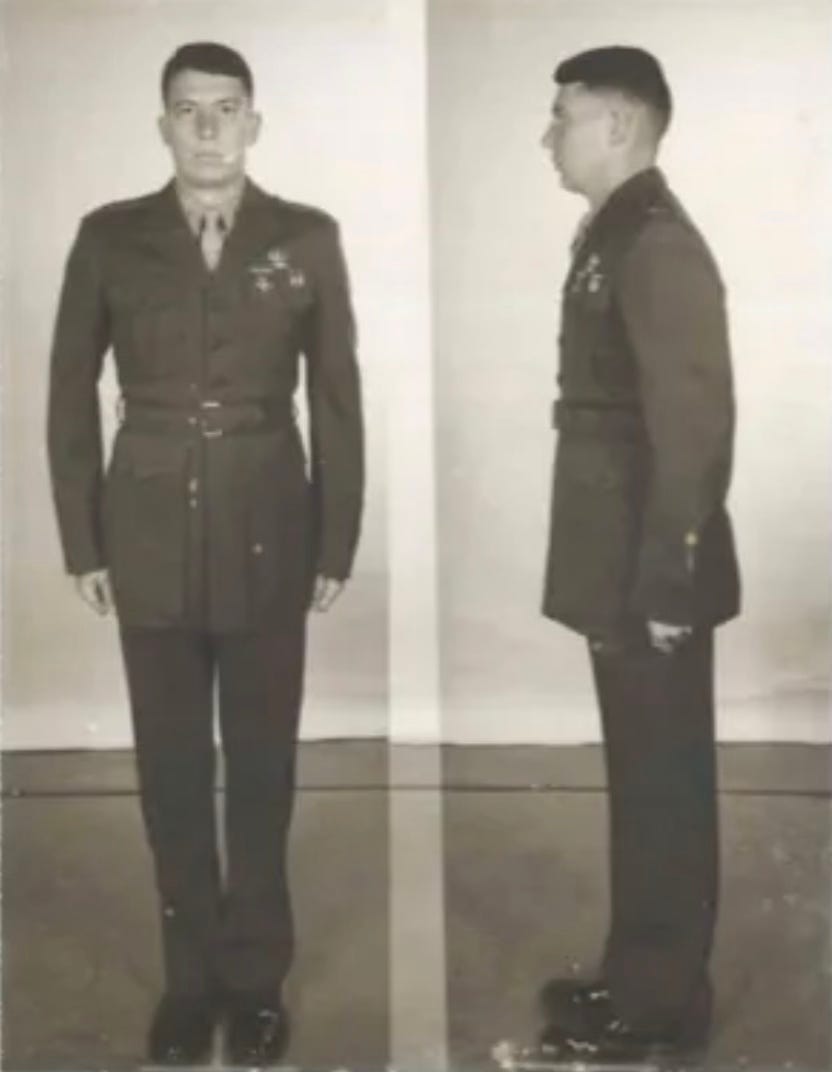
While it still existed, the OTS-originated RDI program had at its head a living link to the heady days of MKULTRA torture in Latin America in the 1980s. According to the 2014 Senate Intelligence Committee report into the CIA’s rendition and interrogation program, Charlie Wise (whose name was redacted in the Senate report) was given the title of High-Value Detainee Interrogator and Team Chief of the RDI program (pg. 19)
According to a January 2020 article by Julian Borger at The Guardian, inside the hearing rooms of the Military Commissions at Guantanamo, Wise was known by the code name NX2. James Mitchell, one of the SERE military psychologists who, under contract to the CIA’s Office of Technical Services, helped develop and implement the CIA’s interrogation/torture program, called Wise “the new sheriff.” Borger said Wise had “honed his craft carrying out interrogations for the Contra rebels in Nicaragua in the 1980s.”
According to the Senate report, Wise “was involved” in Human Resource Training (HRE) the CIA conducted in Central America in the 1980s to combat insurgencies in Nicaragua, Honduras and El Salvador. The HRE training manual “incorporated significant portions of the KUBARK manual” (Senate report, pg. 19) as regarded training and the conduct of interrogations.
According to an article at the National Security Archive:
The language of the 1983 "Exploitation" manual drew heavily on the language of the earlier [KUBARK] manual, as well as on Army Intelligence field manuals from the mid 1960s generated by "Project X" — a military effort to create training guides drawn from counterinsurgency experience in Vietnam. Recommendations on prisoner interrogation included the threat of violence and deprivation and noted that no threat should be made unless the questioner “has approval to carry out the threat." The interrogator is able to manipulate the subject's environment,” the 1983 manual states, “to create unpleasant or intolerable situations, to disrupt patterns of time, space, and sensory perception.” [material in brackets added]
A 1997 report on the School of the Americas, a U.S. Army program to train Latin American military and police personnel, provided more details on the HRE manual scandal:
The 1983 manual, officially titled the "Human Resource Exploitation Training Manual," first surfaced at a classified Select Committee on Intelligence hearing on June 16, 1988. This hearing was prompted by allegations by James LeMoyne in his 1988 New York Times article, “Testifying to Torture,” that the United States had taught Honduran military officers who used torture….
Under questioning, however, [Richard Stolz, Deputy Director for Operations at the CIA] acknowledged that the agency taught the Hondurans that in dealing with prisoners they should deny them sleep, make them stand up, keep them isolated….
The most graphic part of the Interrogation Manual is the section discussing “coercive techniques.” This section recommends arresting suspects early in the morning by surprise, blindfolding them, and stripping them naked. Suspects should be held incommunicado and deprived of any kind of normal routine in eating and sleeping. Interrogation rooms should be windowless, soundproof, dark and without toilets.
It’s not known exactly what Wise did as part of the HRE program, but according to the 2014 Senate report on the CIA’s rendition and torture program, “The CIA inspector general later recommended that he be orally admonished for inappropriate use of interrogation techniques” (pg. 19). Whatever the crime and whatever the punishment, it did not keep Charlie Wise from being given a leadership role in the CIA’s torture experiment after 9/11. (Charlie Wise’s role in the program, his competition with James Mitchell over implementation of the program, and Wise’s own supposed unhappiness with the program in general is matter for a separate article.)
The main point here is that there was an operational-personnel link between the Bush/Cheney torture program and CIA officers who were actively implementing the MKULTRA-KUBARK interrogation protocols in earlier decades.
According to sparse news reports, Wise left the RDI program in 2003, and subsequently died of a heart attack soon thereafter.
While we do not know to what degree the interrogation abuses of the past remain active in the present day, there is one important MKULTRA remnant that still guides U.S. interrogation policy when it comes to “national security.” It exists inside the 2006 Army Field Manual (AFM) 2-22.3 on “Human Intelligence Collector Operations.”
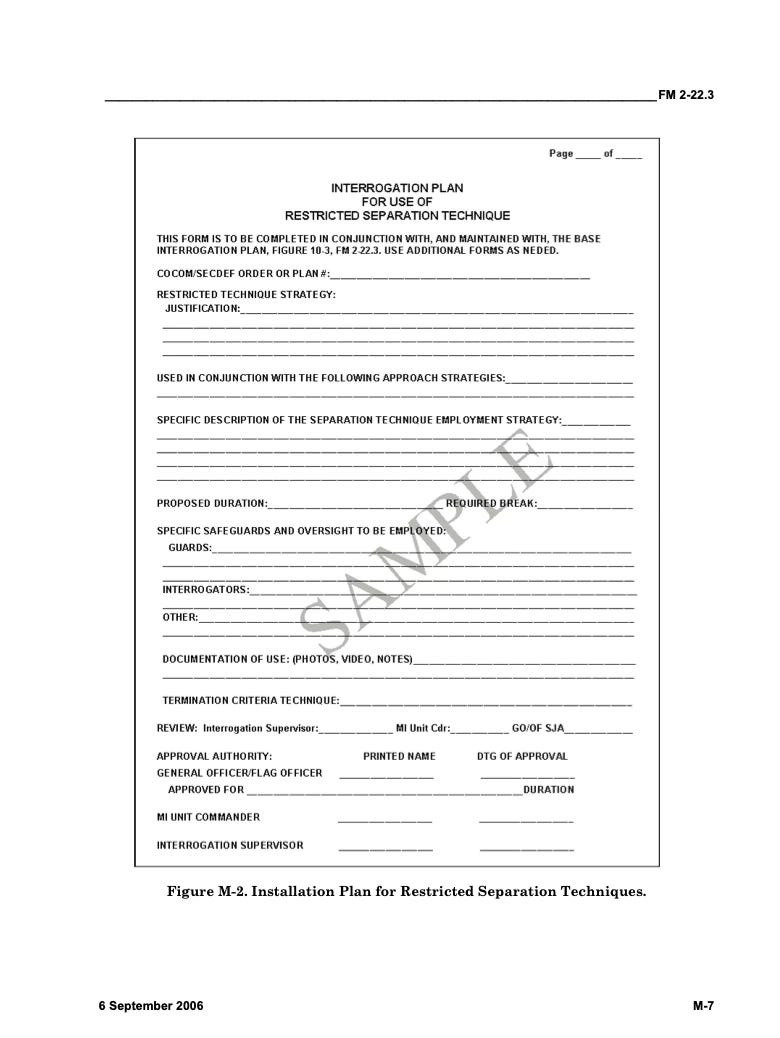
When Barack Obama became U.S. president in January 2009, he famously rescinded the Bush/Cheney-era legal memos legitimizing the CIA’s “enhanced interrogation” program. Instead, he insisted that national security interrogation adhere to U.S. Army’s field manual on interrogations (AFM 2-22.3).
According to Obama’s Executive Order 13491, “Effective immediately, an individual in the custody or under the effective control of an officer, employee, or other agent of the United States Government, or detained within a facility owned, operated, or controlled by a department or agency of the United States, in any armed conflict, shall not be subjected to any interrogation technique or approach, or any treatment related to interrogation, that is not authorized by and listed in Army Field Manual 2-22.3.”
This language was later given the force of law in the McCain-Feinstein Amendment to the 2016 Congressional National Defense Authorization Act (NDAA). The McCain-Feinstein Amendment had bipartisan support, and human rights organizations, which only a few years before had criticized the AFM for containing instructions tantamount to torture and/or cruel and inhumane interrogation techniques, backed it almost unanimously.
Few people seriously looked at what the AFM actually contained. As I explained in a June 2015 article at my former blog, Invictus:
The main section of the manual includes coercive methods of interrogation, including psychological techniques to induce fear, to tear down the ego and self-esteem of prisoners, to tear down their resistance to interrogation by inducing “hopelessness and helplessness,” and allowing use of drugs on prisoners, so long as the drugs don't cause “lasting or permanent mental alteration or damage.”
The manual includes “techniques” like “Fear Up,” “Futility,” and “Emotional Ego Down.” But the worst “approaches,” meant for use only against legally unprivileged detainees, e.g. those who could not claim Prisoner of War status according to Geneva protocols, were gathered in a special Appendix to the AFM.
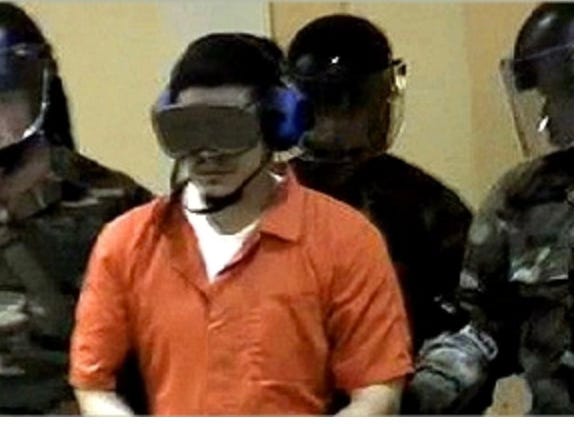
This AFM appendix, numbered “M,” described the use of a “restricted interrogation technique — Separation” on detainees. But this was not simply a technique to use solitary confinement or segregation of prisoners. A close reading showed that Appendix M was an “omnibus” approach, and included limiting detainees to only four hours of sleep per night for a 30 day period. It also allowed, despite claiming otherwise, for the use of sensory deprivation (what the Army calls “Field Expedient Separation”), with use of black-out goggles and special mittens and ear muffs meant to reduct or erase sensory inputs.
The dangers that accompanied the Appendix M torture protocol were so apparent even to Department of Defense officials at Ft. Huachuca, where the language of the protocol was worked out, that the manual itself advised that these kinds of interrogations cannot occur without the “presence of qualified medical personnel for emergencies” (AFM, pg. M-6). When you have to have doctors or nurses on call during an interrogation, you know that you are not in the land of humane interrogations anymore. You have entered the territory of war crimes.
Together with the use of the other AFM techniques, especially “Fear Up,” Appendix M was in fact Dr. Louis Joylan West’s Debility, Dependency and Dread (DDD) protocol, derived seventy years ago from MKULTRA experiments, including the observations and/or experiments conducted on survival school or SERE inductees’ mock-torture training (which included waterboarding), resurrected in the language of Pentagon bureaucratese.
Debility: the induction of physical weakness. In the AFM case, the prisoner was weakened via sleep deprivation, reduction of food rations (or provision of unpalatable food rations), environmental manipulations (rooms kept too hot or too cold), etc.
Dependency: prisoners were meant to feel their survival and very emotional state depended upon their captors, who were all-powerful. The AFM called for the total isolation of prisoners for up to 30 days. In reality, as with the 30-day limit on sleep deprivation, these 30-day limitations could be endlessly extended with the approval of command officers.
Dread: The use of profound sensory deprivation was known to produce psychotic levels of anxiety in many prisoners. In addition, the threats of violence and manipulation of phobias as part of the Fear-Up interrogation technique, assured that the fear and dread of imprisonment under military or CIA control was absolute.
This DDD formula was created by MKULTRA scientists, implemented in more than one CIA-originated interrogation manual, and now exists in the bipartisan, “lawful” Army Field Manual promoted by liberal past president Barack Obama and GOP torture “opponent,” the late Senator John McCain. While waterboarding and confinement in small coffin-like box — two techniques included in the CIA’s “enhanced interrogation” program — were outlawed in the AFM, the core MKULTRA- DDD program remained intact.
As recently as 2021, an article in Army Times, without mentioning Appendix M, argued that “prohibited actions” proscribed in the Army Field Manual, such as “waterboarding, mock executions and electric shocks,” be “expanded to include all of the CIA’s ‘enhanced interrogation techniques’ and any other ‘cruel, inhuman, or degrading treatment’ identified in Senate reports from 2008 and 2014.” But this argument apparently fell on deaf ears in the Pentagon.
In summary, there is more than enough evidence to answer the question about the existence or perpetuation of MKULTRA today. Yes, the program and its influence still exists, or did at least until January 2009, and its influence is maintained by the military and CIA intelligence agents who have been instructed in its use, and who still, I think we can be sure, continue to evaluate its effects and fine-tune its inhumane and bizarre techniques.
Interestingly, federal law enforcement agencies are exempt from adherence to the Army Field Manual regulations. I’m not sure what the rationale behind this exemption from the McCain-Feinstein amendment is, but it’s in the very language of the final written statute.
(5) INTERROGATION BY FEDERAL LAW ENFORCEMENT.—The limitations in this subsection shall not apply to officers, employees, or agents of the Federal Bureau of Investigation, the Department of Homeland Security, or other Federal law enforcement entities. [42 U.S.C. § 2000dd-2]
It is a scary thought when you consider that back in 2010, the FBI published its fifth version of their manual, “Cross Cultural Rapport-Based Interrogation.” The manual on “intelligence-oriented interrogations in overseas environments” repeatedly referenced advice from the two CIA torture manuals, the 1963 KUBARK Counter-intelligence Manual and the 1983 Human Exploitation Resource Manual.
The FBI document quoted the 1983 manual twice. While not referenced by name in the body of the document, the HRE manual was noted in the footnotes. One quote from the 1983 torture document describes “the principle of generating pressure inside the source without the application of outside force. This is accomplished by manipulating him [the prisoner] psychologically until his resistance is sapped and his urge to yield is fortified” (pg. 14, material in brackets added, bold in original). This is a direct quote from the HRE manual.
Meanwhile, the KUBARK manual is repeatedly mentioned in the body of the FBI work. “There are two purposes of screening according to the KUBARK Manual,” the FBI “primer” states (pg. 4). According to the FBI, the “wise Interrogator” will follow “KUBARK Manual guidance.” Indeed, “prudent Interrogators... are driven by the intractable need to obtain the desired information from whatever source is liable to give it up” (pg. 13).
I was not the only commentator to recognize that the FBI was encouraging interrogation abuse. In their article on the manual, “FBI Interrogation Primer Encourages Prisoner Isolation,” the ACLU wrote, “The FBI must send an unequivocal message to its agents and its international partners that it is committed to non-coercive interrogations and will not tolerate prisoner abuse.”
To date, there is no clear evidence that the specific 2011 "Cross-Cultural, Rapport-Based Interrogation" guide was ever replaced with any similarly titled document.
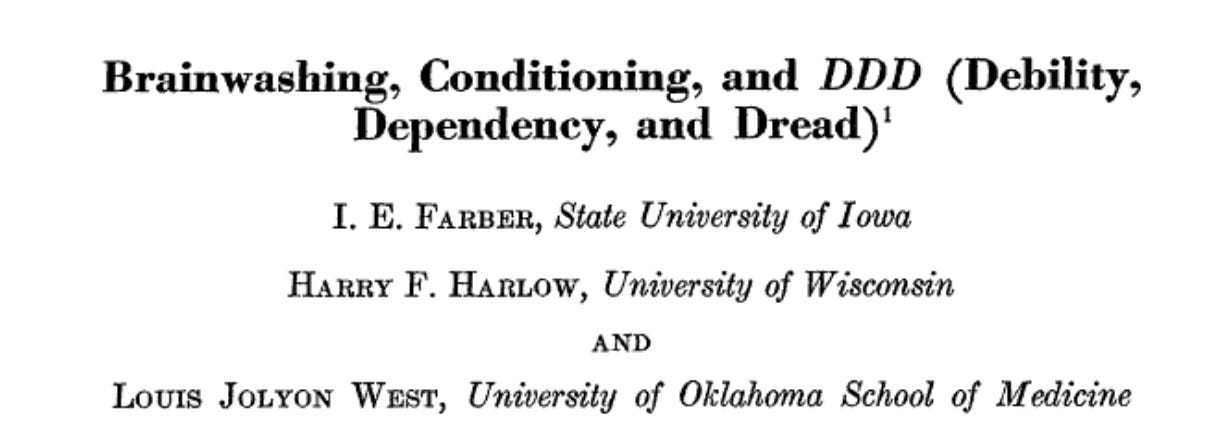
West’s research, conducted along with psychologists Harry F. Harlow and I.E. Farber, was published in the December 1957 edition of the journal Sociometry. Their work was published with the title, “Brainwashing, Conditioning, and DDD (Debility, Dependency, and Dread).” The first footnote in their essay describes the research connection to the U.S. military:
This paper is a revision and elaboration of a report for the Study Group on Survival Training, sponsored by the Air Force Personnel and Training Research Center, March, 1956, of which the authors were members. The initial report was prepared by the first two authors, and the research for the revision was supported in part by the United States Air Force under Contract No. AF 41(657)-75 monitored by the Director, Officer Education Research Laboratory, Maxwell Air Force Base, Alabama, with the third author as Chief Investigator. Permission is granted for reproduction, translation, publication, use, and disposal in whole and in part by or for the United States Government.
For more information on Dr. West, see Tom O’Neill and Piepenbring’s 2019 article, “Inside the Archive of an LSD Researcher with Ties to the CIA’s MKULTRA Mind Control Project.” For an in-depth assessment of West’s intervention in the case of Lee Harvey Oswald’s killer, Jack Ruby, see Max Arvo’s essay, Jack Ruby: A Review and Reassessment - Part 3.
My efforts to track down the paperwork associated with Air Force contract AF 41(657)-75 were unsuccessful.
According to the Executive Summary of the 2008 Senate Armed Services Committee Inquiry into the Treatment of Detainees in U.S. Custody, pg. xiii:
During the resistance phase of SERE training, U.S. military personnel are exposed to physical and psychological pressures (SERE techniques) designed to simulate conditions to which they might be subject if taken prisoner by enemies that did not abide by the Geneva Conventions. As one JPRA instructor explained, SERE training is “based on illegal exploitation (under the rules listed in the 1949 Geneva Convention Relative to the Treatment of Prisoners of War) of prisoners over the last 50 years. The techniques used in SERE school… include stripping students of their clothing, placing them in stress positions, putting hoods over their heads, disrupting their sleep, treating them like animals, subjecting them to loud music and flashing lights, and exposing them to extreme temperatures. It can also include face and body slaps and until recently, for some who attended the Navy’s SERE school, it included waterboarding.
As an aside, during the Iraq War and the revelations of U.S. use of torture, it was the assertion of the liberal media, human rights organizations, and U.S. government investigators (such as the Senate Armed Services Committee quoted just above) that the SERE program was based on alleged torture techniques practices by China’s communist government during the Korean War. These claims of Chinese torture led me to investigate those allegations. (See this 2008 ACLU release as an example of such claims.) At the time, I wanted to confirm the issue of the tortured confessions.
As it turned out, I discovered the allegation was a CIA and Pentagon lie meant to delegitimize the coherent and powerful statements by U.S. military prisoners that the U.S. had indeed, as both China’s and North Korea’s government claimed, used biological weapons during the Korean War. Moreover, I even discovered that U.S. Air Force and Marine Corps personnel involved in these attacks were secretly told to talk freely about what they knew should they be captured. The Chinese had no need to use torture, even if they were thinking of such use. See “‘False’ Confessions Cover-up: U.S. Told Airmen Who Admitted Germ War in Korea They Could Reveal Information If Captured.”
Besides Louis Jolyon West, other known MKULTRA researchers quoted by the CIA in its KUBARK interrogation manual, or listed in its bibliography, include Martin T. Orne, Lawrence Hinkle, Harold Wolff, Margaret Singer, and arguably (since he denied CIA association, but attended conferences with other known MKULTRA researchers), John C. Lilly.
As an aside, as noted by the National Security Archive, I obtained the most up-to-date and least redacted version of the KUBARK manual in 2014, and the NSA has posted it at their website.. I used a Mandatory Declassification Request, or MDR, to obtain it. The procedure is somewhat different than that of a FOIA request.
Some will vilify me for this statement, others applaud, and the vast middle of the public will wonder if it’s possible to ever know who is right. These following recent links help cover the various positions for interested readers: The view from the White House (Trump’s version of events); a critique of “the Controversies Surrounding the Lab-Leak Theory of COVID-19” from a South Korean academic; and a mainstream science journal article dismissing certain theories of the origin of COVID, including one of China’s own theories. These sources are not by any means exhaustive.
Comments
Nothing yet. Say the first thing.
Sign in to join the conversation.