
One of the many incredible parts of being a parent is re-discovering your favorite stories alongside your kiddo and experiencing your child’s fresh take on the magic. Harry Potter. The Lord of the Rings. Star Wars. The Chronicles of Narnia. The Golden Compass. And that’s just the beginning.
Currently, Star Wars reigns supreme in my household!
In honor of Luke Skywalker, this month, I’m bringing you a Q&A with Ohio State psychology Professor Kurt Gray about the storytelling formula that underlies Star Wars and every other incredible adventure mentioned above: the hero’s journey. What’s most interesting to me about Kurt’s work is the insights he has uncovered about reframing your own life story. Thinking about your life as a hero’s journey following a protocol his team developed can increase both your resilience and your sense of meaning.
But before we get to that Q&A, here are my monthly recommended watches and reads…
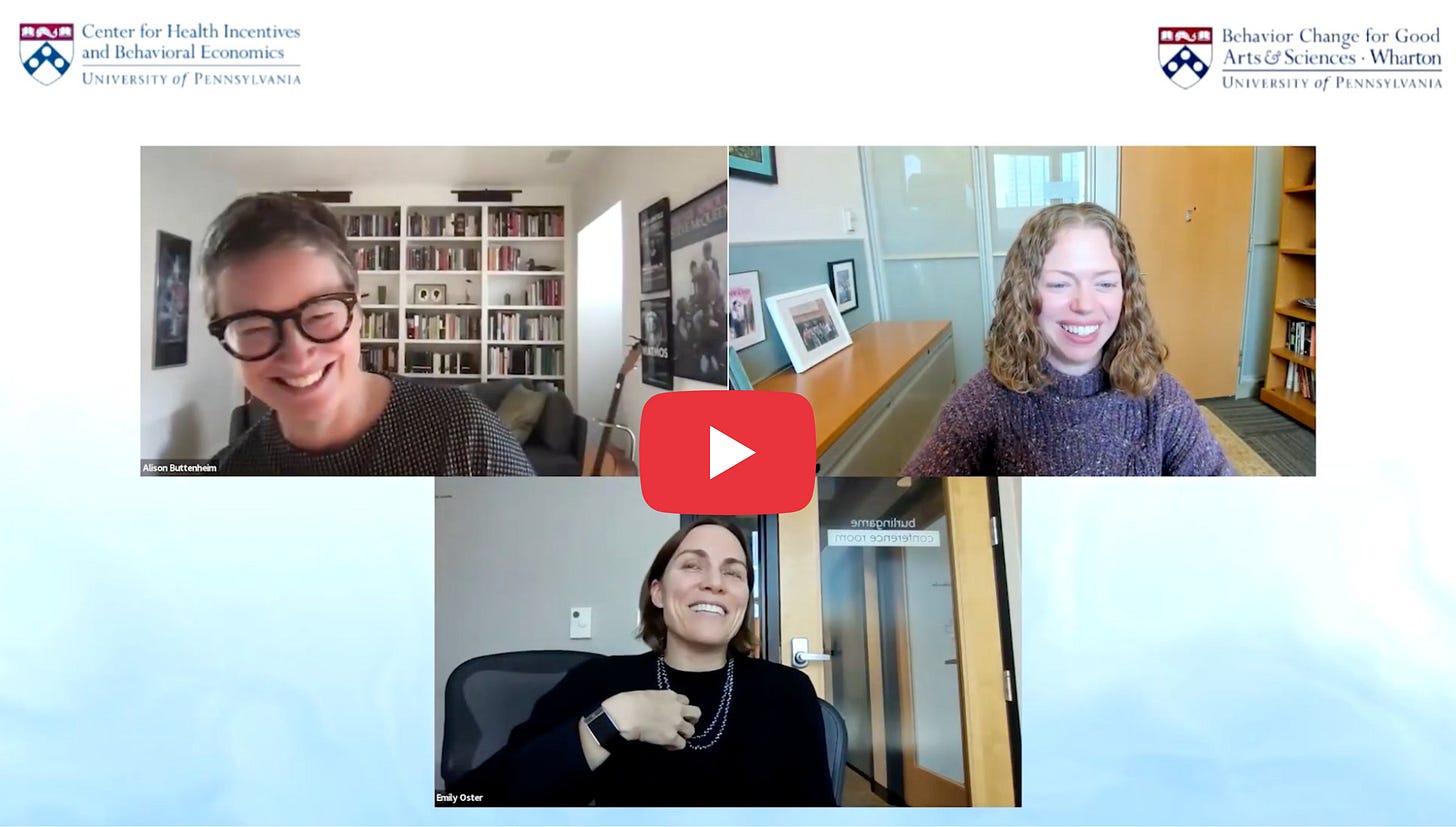
An Interview with Emily Oster: I recently co-hosted a Zoom conversation with Emily Oster, the bestselling author, Brown professor, and CEO of ParentData. We discussed how to communicate successfully about science. The event attracted over 400 live attendees, and now you can watch our conversation on YouTube.
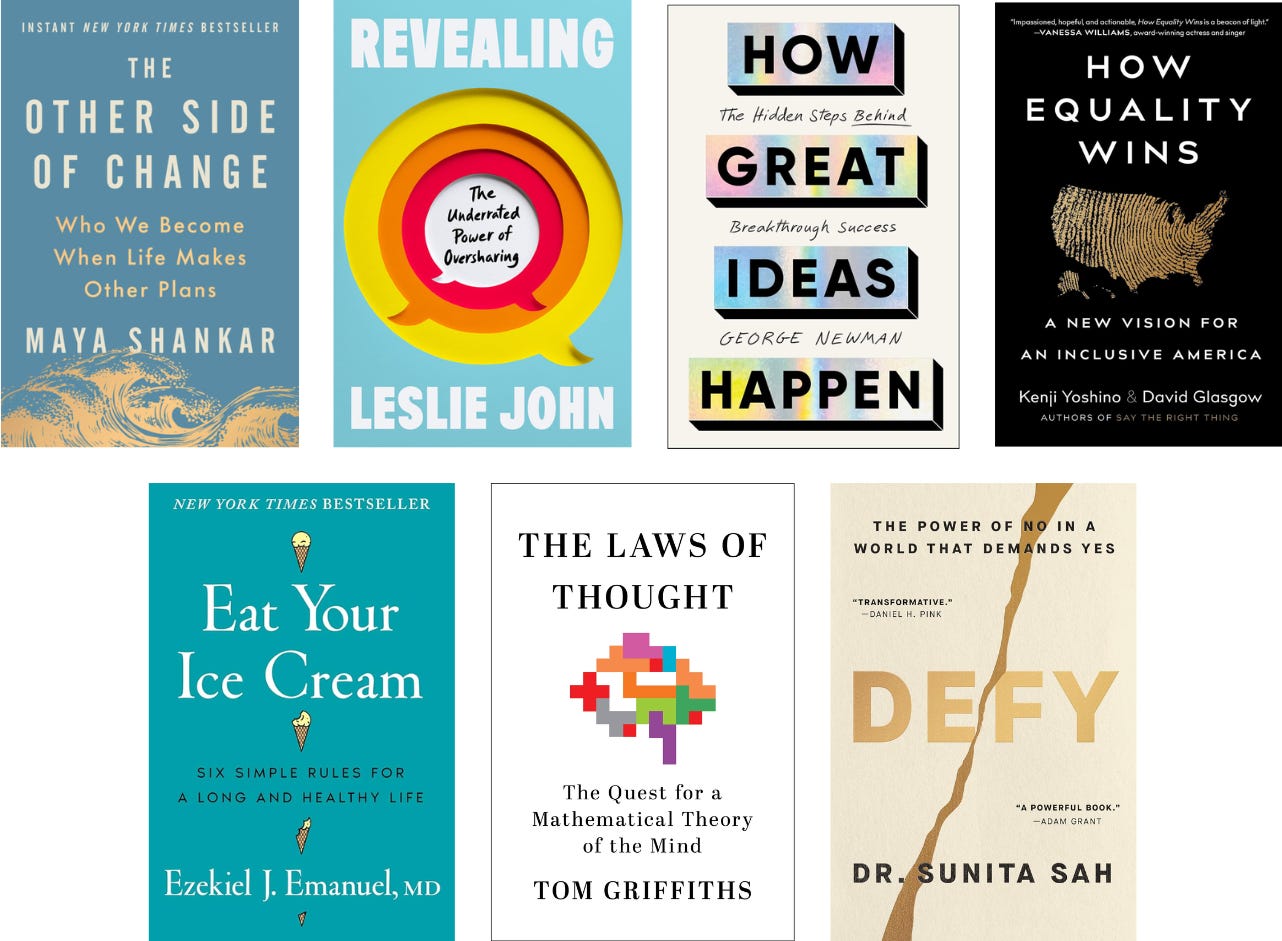
January and February brought a slew of great new books by my friends and colleagues. I highly recommend picking up a copy of Maya Shankar’s THE OTHER SIDE OF CHANGE, Leslie John’s REVEALING, George Newman’s HOW GREAT IDEAS HAPPEN, Kenji Yoshino and David Glasgow’s HOW EQUALITY WINS, Zeke Emanuel’s EAT YOUR ICE CREAM, and Tom Griffith’s THE LAWS OF THOUGHT. Oh, and Sunita Sah’s DEFY has just been released in paperback!
This month’s Q&A from Choiceology is with Ohio State psychology Professor Kurt Gray. He explains what a “hero’s journey” is and how understanding this concept—formulated in the 20th century by a mythologist named Joseph Campbell—can help you build resilience and find more meaning in your life.
Me: Could we start with a description of what a hero’s journey is? I know your research team boiled it down to seven key elements.
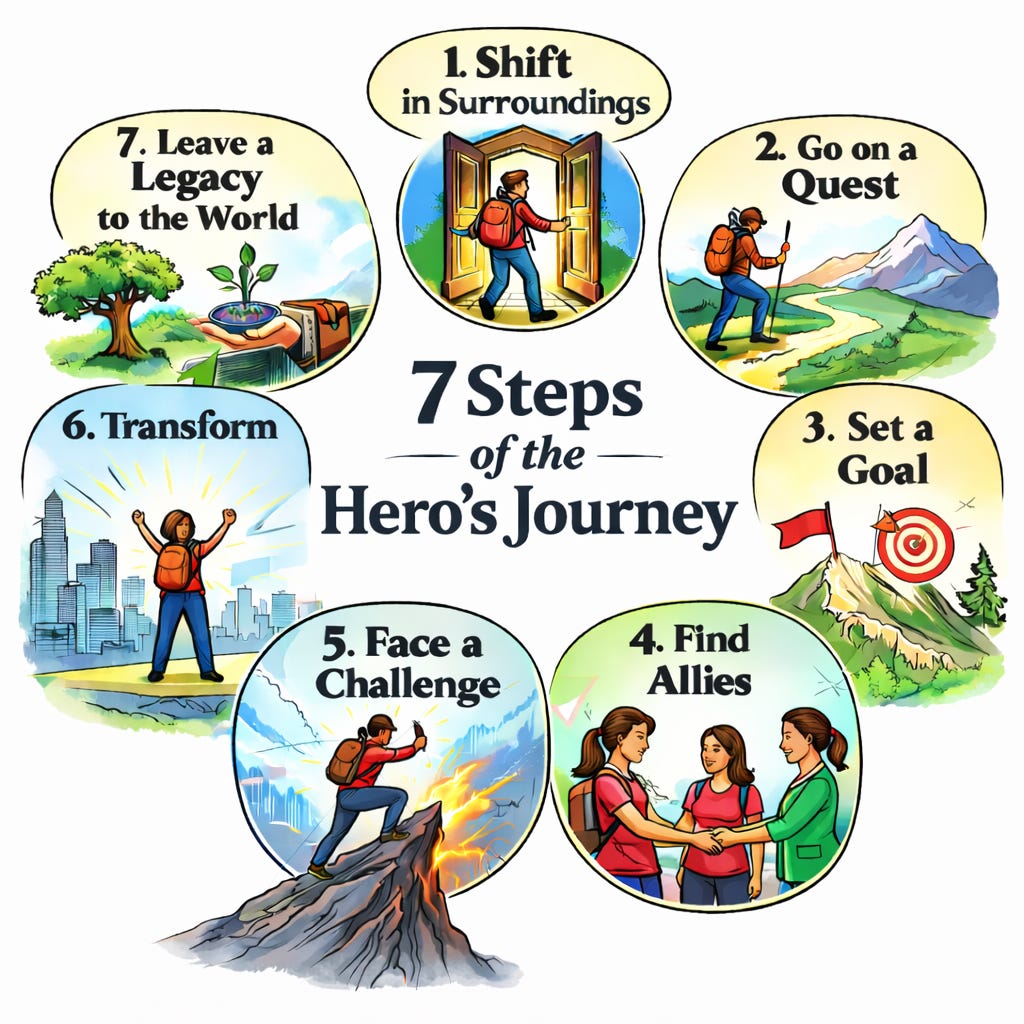
Kurt: Yeah, so the concept of “the hero’s journey” was originally formulated by a mythologist named Joseph Campbell. And he had an archetype of, I think, 22 steps that heroes went through in epic journeys, from Beowulf to the Ramayana. My research team thought that was too many, and some of them were too weird, like “the magic flight” – that seemed not so applicable to the real world. So, we narrowed it to seven steps. So, you have your hero, and (1) they shift their surroundings (in The Lion, the Witch and the Wardrobe, they find a wardrobe and go through it). (2) They go on a quest. (3) They have a goal. (4) They find allies. (5) They face a challenge. (6) They transform themselves. And (7) they leave a legacy to the world.
Me: You mentioned a couple of famous stories in that answer. What other stories would people be familiar with that follow this formula?
Kurt: So many of the stories people care about follow this structure. In fact, George Lucas, when he came up with Star Wars, got a copy of Joseph Campbell’s book and explicitly made Star Wars a hero’s journey. So, Luke Skywalker is the protagonist. He has a shift in surroundings when he leaves his home because he meets the droid who says “Help me, Obi-Wan.” Now he’s on a quest to help Princess Leia. He finds allies in Leia and Han. He faces a challenge, notably Darth Vader. He transforms himself by finding the force and becoming a Jedi, and then he has a legacy in that he saves the whole universe. And we have this in The Hunger Games. We have this in The Lord of the Rings. Comic books. It doesn’t matter the genre; they all basically follow this script.
Me: Thank you for mapping that out. It’s helpful and fun to see how this formula shapes so many of our favorite stories. In your research, you’re focused on what it means for a person to see their own life in terms of a hero’s journey. Could you explain that idea?
Kurt: The whole core of this research idea is, one, we tell stories to each other to entertain, but we also tell stories about our lives to make our lives seem meaningful and coherent to ourselves. So, thinking about your life as a hero’s journey is just taking a series of events and constructing a narrative around them. For me, I grew up in Canada, and I had a shift when I came to America. I had a challenge in grad school, and so on. Anyone can do this. You can see your life following the seven elements of a hero’s journey, and once you do that, then you begin to see yourself as a hero, and that makes your life more meaningful and more like an epic tale of excitement rather than just a series of events that happened to you.
Me: That’s a great summary and nicely hints at a key point of your research. Can you describe some of the studies you’ve run about the impact of getting a person to see their life as a hero’s journey?
Kurt: Of course. We ran a bunch of studies to get at this idea. Before I start, I want to take a step back and say that the realization we had when we came into this project was that anyone’s life can be made more heroic or interesting or meaningful depending on the shape of the narrative that they tell themselves. Early on, we just wanted to show and test whether people who saw their lives as more akin to a hero’s journey felt like their lives were more meaningful. So, we developed a scale that tapped each of the seven elements. One question that might tap the shift is “I frequently have new experiences.” We found that the higher you rated your life in terms of a shift, or challenge, or legacy, the more meaningful you felt your life was and the less you felt depressed day-to-day.
Me: I remember your first couple of studies focused on that scale, but then I think you went beyond just measurement of how people perceive their lives and tried to actually change the way people tell their stories, right?
Kurt: Right. We know that correlation isn’t causation. And so, just because you see your life as a hero’s journey and that is connected with your sense of meaning, it doesn’t mean the perception of a hero’s journey caused those feelings. So, we developed something we call a “re-storying intervention,” which involves encouraging people to see their lives as more like a hero’s journey and testing if that shifted their feelings of meaning. We gave people those seven elements, encouraged them to see their lives along those elements, and then stitched it all together into an overarching life narrative. And then we had them rate their feelings of meaning in life.
Me: It’s such an interesting study, and I know you found that this intervention increased people’s sense of meaning and their resilience. What do you think is driving the effect here? Why does seeing your life through the lens of a hero’s journey increase a person’s sense of meaning and their resilience in the face of a challenge?
Kurt: I think there’s a boring answer and a heroic answer.
The boring answer is: The elements of a hero’s journey are things that we have long known to be tied to a meaningful life. Allies: People with friends feel their life is more meaningful and feel less depressed because loneliness is really bad for your mental health.
But the heroic answer is: That the framing of a hero’s journey makes your life seem culturally meaningful. Now, what does that mean? Well, we all live in a culture, and cultures make meaning by telling stories. We can go back to Joseph Campbell and say that the most meaningful stories are those with a hero’s journey. So, it stands to reason that making your life a hero’s journey resonates with our cultural ideals of what a good life is.
Me: What advice or recommendations do you have based on this research?
Kurt: I think there are two things you can do differently. One is just changing your mindset. If you’re thinking of yourself as a hero on a journey, that alone can give you more meaning. The second is making choices that make it easier to see your life as a hero’s journey. We can all agree that if I climbed Everest, that’s a little more hero’s journey than if I binge on Netflix shows. So, try to think about which choice you would include on a hero’s journey. It doesn’t have to be physically heroic. It could be that I’m volunteering. I’m helping people. I’m building a legacy, right? I’m rescuing a cat. Just something where there’s some legacy and allies and challenges.
Me: That’s great advice, and I think it’s a good place to wrap up. I’m so grateful for your time and your wonderful research, Kurt.
This interview has been edited for clarity and length.
To learn more about Kurt’s work, listen to the episode of Choiceology where we dig into his research on the hero’s journey, or order a copy of one of his excellent books OUTRAGED: Why We Fight About Morality and Politics and How to Find Common Ground or THE MIND CLUB: Who Thinks, What Feels, and Why It Matters.
That’s all for this month’s newsletter. See you in March!
Katy Milkman, PhD
Professor at Wharton, Host of Choiceology, an original podcast from Charles Schwab, and International Bestselling Author of How to ChangeP.S. Join my community of ~100,000 followers on social media, where I share ideas, research, and more: LinkedIn / Twitter / Instagram / BlueSky / Threads
No posts
Comments
Nothing yet. Say the first thing.
Sign in to join the conversation.