
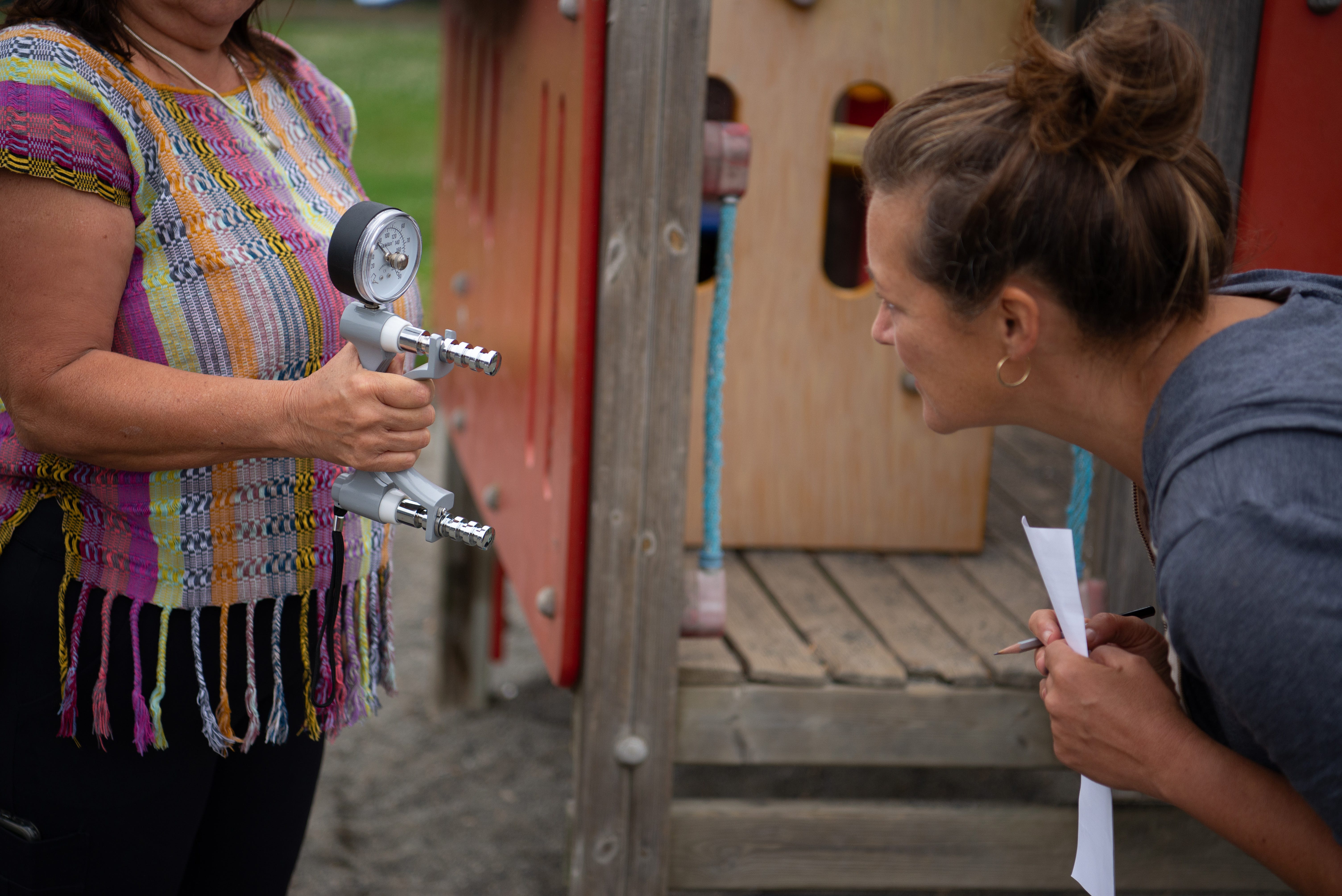
So, I’m going to write about frailty in this article. I don’t want to be one more alarmist, shrill, doomsday voice in your day, but this is an important topic and there are ways of addressing frailty that can shut off some of these taxing alarm bells. Please read on relaxedly. And first, meet my Gram.
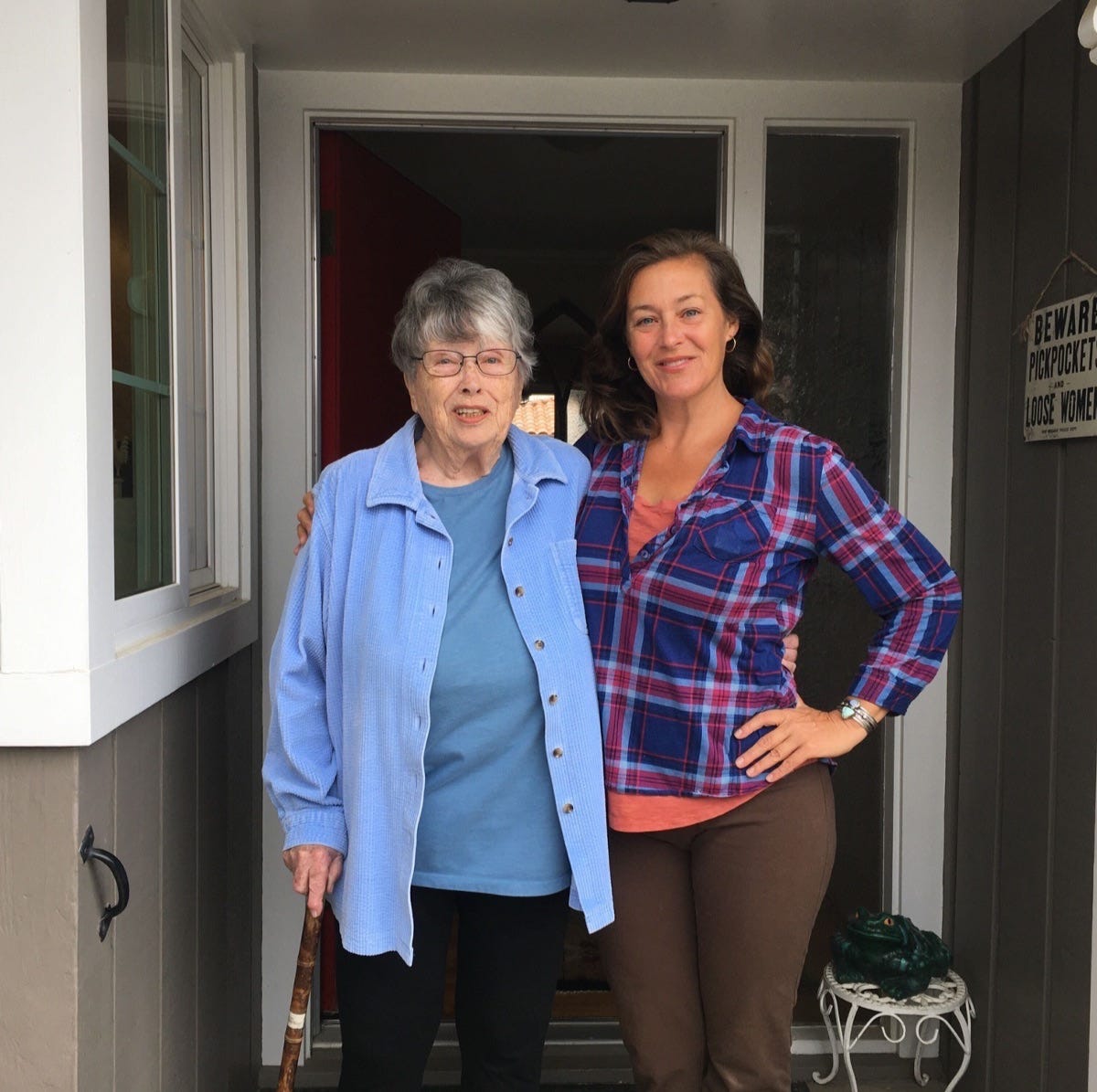
My Gram, age 93
I just flew to spend the weekend with my grandma, for her ninety-third birthday. We celebrated with a barbecue in her yard, watched Cabaret on DVD, and spent the next day thrifting.
Other than water aerobics in her (not the) sixties and seventies, she has never exercised in the way many of us do now. She’s never lifted weights, and (don’t tell her I told you this) gossiping isn’t cardio. Still, her jobs as a pharmacy clerk and then as a middle school lunch lady, kept her on her feet for most decades. She doesn’t have a smartphone or a computer, and her hobbies—cooking, sewing, and decorating—regularly get her up and out of the chair. She’s been physically active in terms of her activities of daily living.
Her feet have been a bother to her all her adult life (I wrote this book to her), which has affected how her knees and hips work and feel too. A handful of her joints have been operated on.
At 93 years, Gram’s lifespan, her total number of years lived, is great. Her healthspan, the portion of those years spent in good physical and mental health, is also pretty good. Joint issues aside, she still lives on her own, drives herself to meet friends for cards and lunches, runs her errands, cleans her house, can’t pass up a garage sale, and works in her now small but beautiful flower garden. She and I have a two-person book club (some of our reads are listed below). She’s living her life the way she wants to, which is very important to aging well.
Her joyspan—the number of years you enjoy living (coined by gerontologist Dr. Kerry Burnight in her book by the same name)—is also good. She’s social and busy. While her healthspan has been challenged with joint issues, her joyspan has helped keep her alive and content.
Sounds pretty great, right? So what does it mean that my Gram also qualifies as frail?
Frailty and pre-frailty
First, let’s define frailty. It’s essentially the opposite of resiliency, or how well your body responds to stress. Let’s say your body is stressed by an infection or an injury. A resilient body deals with the stressor and returns to baseline quickly. A frail one will experience a disproportionate decline, and recover slowly or incompletely.
Frailty is often framed as an inevitable and dangerous companion of aging. When I worked in the gerontology lab as an undergrad, determining frailty was important because it predicted risk for things like falls and disability—lifespan stuff. As more researchers become interested in aging (or, let’s be real: anti-aging), there are now studies show that for many, frailty starts in middle age. About 40 percent of adults may be pre-frail in their 40s.
This is the list used to determine both frailty (a score of 3 or more) and pre-frailty (a score of 1–2):
Unintentional weight loss (≥10 lbs/4.5 kg in the past year)
Exhaustion (self-reported)
Low physical activity
Slow walking speed
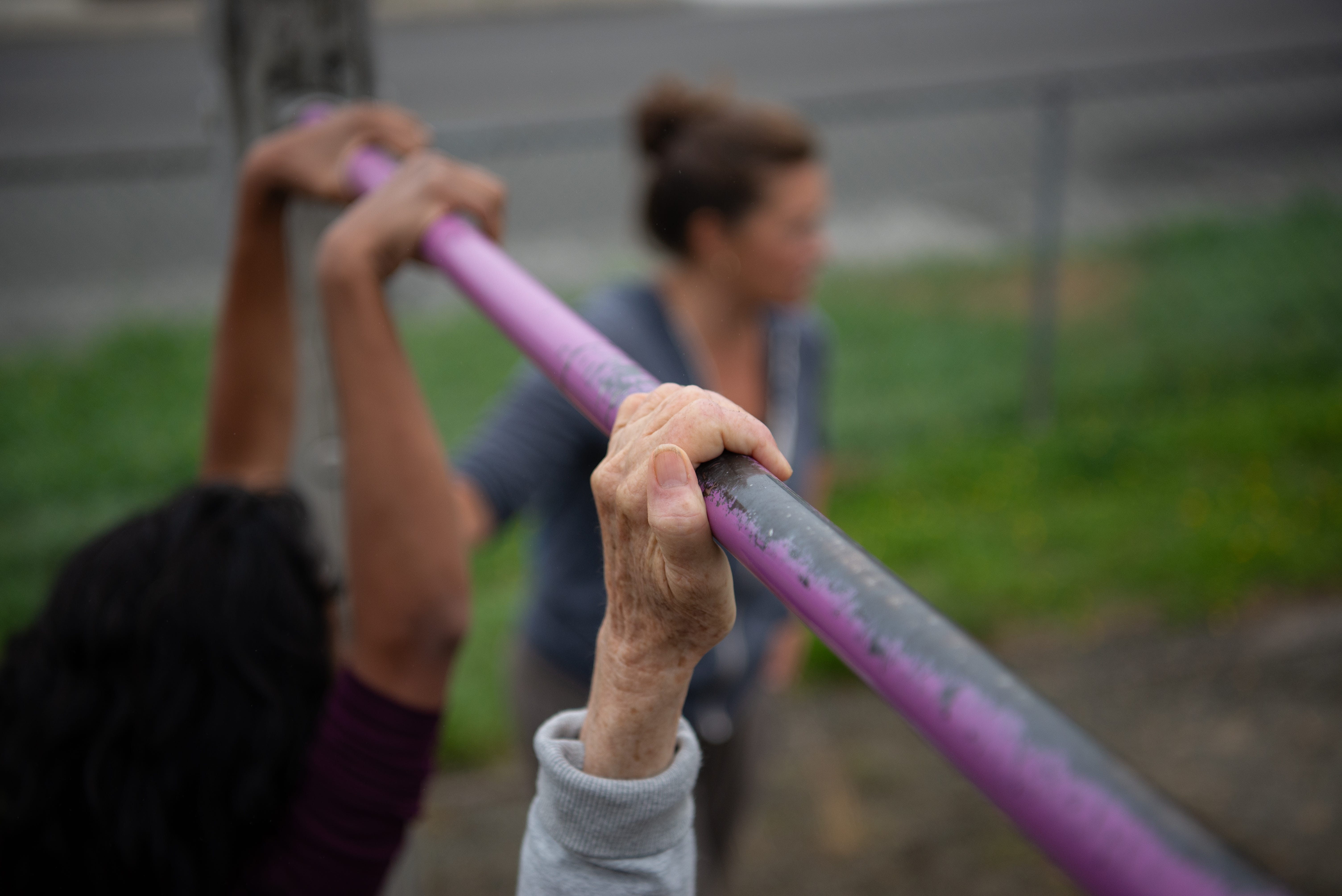
Weak grip strength
Address any frailty
Research shows that working on strength, balance, and boosting daily physical activity can meaningfully reduce some of these hallmarks of frailty. Exercise and physical activity are factors we have some control over, and the role our personal habits play in our individual aging process are worth paying attention to. Not because you’re scared of what will happen if you don’t, but because becoming more physically resilient means you can continue to do the things that bring you joy, even when facing stressors. Because there will always be stressors, and you can always use joy!
I think this often, especially when it comes to prioritizing my own movement plan. While we all have different “Movement Whys” (reasons staying active is relevant to our personal values), there are certain strengths and mobilities that are foundational for the day-to-day living experiences we have in common: grip strength; upright balance (including balance while walking and carrying) which affect walking speed; reaching your feet with your hands; getting to and from the floor; and up and down stairs (all the stuff I put into my book Dynamic Aging). If I were to give Gram anything to balance out her movement diet, it would be a big handful of mobility exercises, especially for her feet and hips. (I did show her some when she was eighty, and she has a photo of me teaching an exercise in Prevention magazine hanging on the inside of her medicine cabinet, but I don’t think she ever did any…)
If you’re frail now, do I think you should work on it? Absolutely. Especially if you’re frail in middle age. Is there a single pathway to get there? No. Plenty of people don’t follow some Instagram fitness path and yet still age remarkably well. This is why there’s no use in panicking, just planning.
Gram didn’t exercise in a structured way. Yes, she’s frail, and more frail now than she was ten years ago, but her quality of life tells a more nuanced story. It’s smart to understand frailty and take practical steps where you can—but it’s just as important not to turn that awareness into worry.
Worry can exhaust you. Instead, let the worried feeling highlight that “OH YEAH, BEING RESILIENT IS IMPORTANT TO ME!” and choose something to work on a little bit each day.
Books My Grandma and I Have Read:
I usually see my grandma twice a year, but we stay regularly connected through books. We read and we talk about them, repeat, repeat, repeat. I pick books with themes I hope she’ll explore via stories in time periods she’s familiar with. P.S. I do our book debriefs on foot, so I don’t feel hurried to get off the phone. We can both ramble along and she gets attention that means a lot to her.
My grandma will pretty much read whatever I suggest, and also whatever she can find at the library in general. She doesn’t like books that jump back in forth in time or place (All The Light We Cannot See got a thumbs down for being too confusing). Also out are books that are too heavy to hold. Yes, you will see my at the library judging a book by how I think it will make her wrists feel.
Keep Reading Listen—Move Your DNA Podcast Episodes
Dynamic Aging — for simple exercises and lifestyle adjustments to reduce frailty markers
I Know I Should Exercise, But… — when you need motivation and a new perspective on exercise
My Perfect Movement Plan — a workbook to help you uncover your Movement WhysWork on Your Walk with Me
Walking Well: A Stepwise Approach to an Everyday Movement
Ep. 203 Determining if Your Frail (or Pre-Frail) and What to Do About It
Ep. 204 Beyond Lifespan and Healthspan: The Case for Joyspan
No posts
Comments
Nothing yet. Say the first thing.
Sign in to join the conversation.