
It’s with a heavy heart that I share the news that yet another of the wonderful wartime women I have had the privilege of interviewing has passed away.
Pat Spicer died on 11 April aged 96 and 8 months. “She’s at peace now in the arms of her darling Bill,” her lovely daughter Elaine told me.
I first met Pat back in 2015 when I interviewed her in Bethnal Green as research for my wartime East End novels. We quickly became friends. You couldn’t not with a woman like Pat. She was an East Ender to her core. Loyal, funny, smart and glamorous, right to the end. It’s impossible to overstate how much I learnt from Pat. She lived through cataclysmic times. Pat had no power to change world events, but she was forced to live through them.
Pat took on the war with enormous energy, ingenuity and a large dollop of chutzpah. Born in 1929, in the Marie Celeste ward of The London Hospital in Whitechapel, Pat was 11 when the Blitz began, forcing her to take shelter in Bethnal Green Underground.
Like many, I had seen the Henry Moore shelter drawings of people forced to sleep in an amorphous huddle underground on concrete platforms whilst bombs dropped overhead.
‘Oh that must have been frightening,’ I commiserated.
‘Oh no dear, it was wonderful,’ she cheerfully replied.
Pat didn't just set me straight about Bethnal Green Underground shelter community in wartime. She opened up a metaphorical door to the world.
‘I loved sleeping underground in the Tube station. It was like a little village, a sanctuary after the street shelters. We couldn’t hear the bombs. We had peaceful sleep down there.’
Not just a good nights sleep either. Pat told me proudly of the triple bunks sleeping 5,000 up the eastbound platform and of the amazing facilities. There was a medical bay with free healthcare, a canteen serving bacon rolls, rock cakes and cups of tea for pennies. A WVS run creche enabling women to work and a theatre seating three hundred which hosted Sadlers Wells Ballet, plays and shows.
‘I remember watching a baritone singer in the theatre one night. He sang in Russian and I had never heard anything like it,’ Pat told me. ‘I was entranced and it sparked a lifelong love of music. Sheltering underground opened my eyes to another way of life. You never had time to be bored and I never saw anyone miserable, ever. In the morning, mothers would feed their kids what little food they had from their rations, then emerge blinking into the smoke-filled dawn, hoping to find their home still standing for a quick wash before heading off to the factories for work. Business as usual! Hitler never banked on that!’
But, and here is the part that lingered long in her memory, there was a little underground library!
On the first night of the Blitz, a bomb crashed through the roof of Bethnal Green lending library at 5.55 p.m. on what would later be known as ‘Black Saturday’. What had been an orderly and well-equipped library became in a split second a scene of destruction.
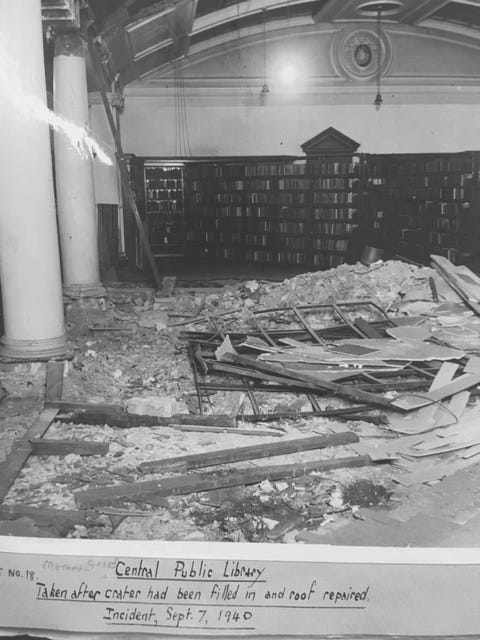
And here the story takes a surprising twist. Rather than simply hurrying for the nearest shelter, the borough librarian, George F. Vale and his deputy, Stanley Snaith, calmly pulled a tarpaulin over the shattered glass dome roof and set about planning a pioneering social experiment that would transform the lives of wartime Londoners.
They, plus a team of volunteers, salvaged what books they could from the bomb crater, took them down to the Underground and built a little library out of plywood and a lot of elbow grease.
I love surprises in history and finding out about George and Stanley’s secret underground library through Pat, built over the boarded-up tracks of the westbound tunnel, felt like nothing short of magic. In fact, it sparked my novel, The Little Wartime Library.
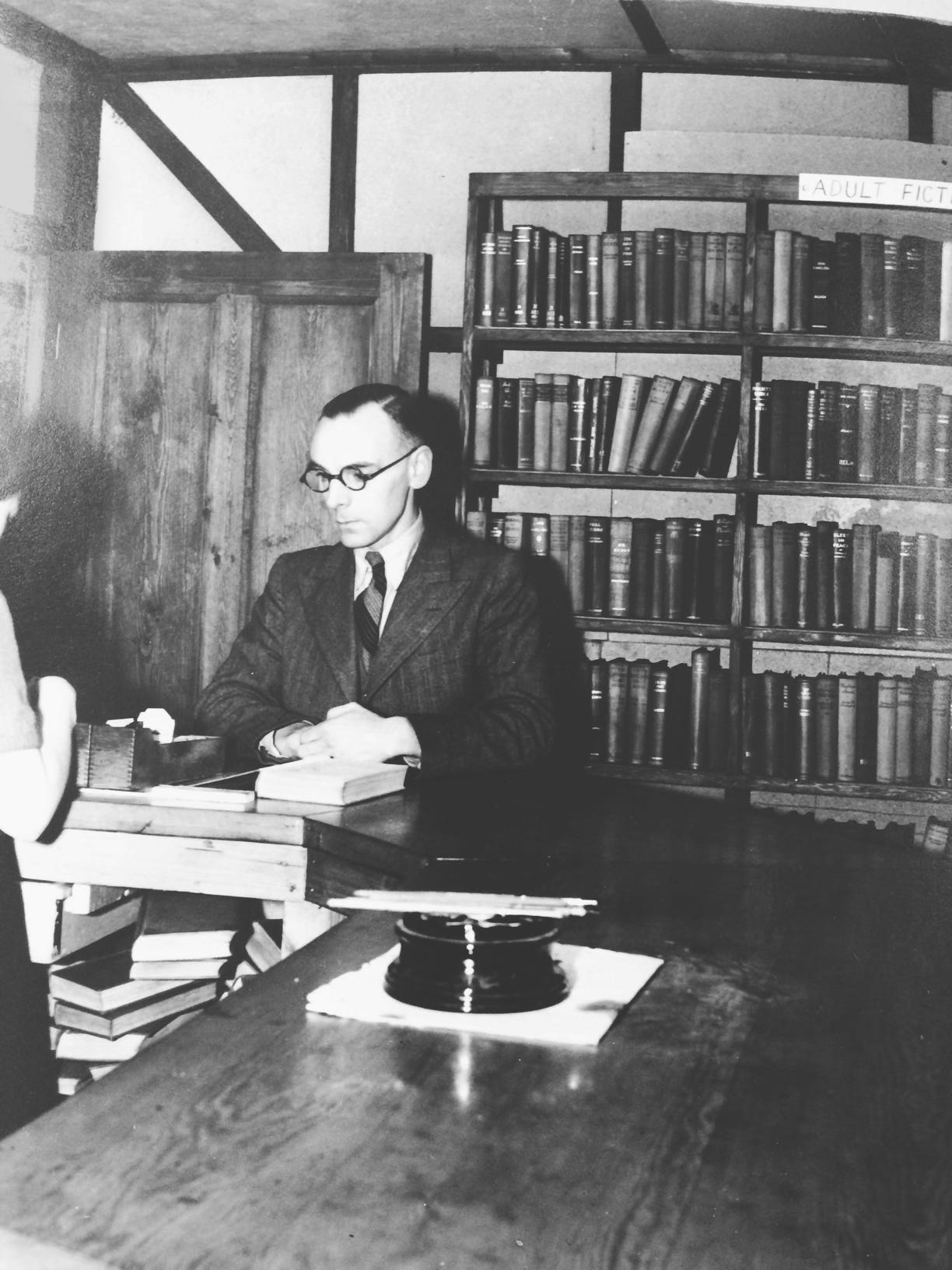
The underground wartime library.
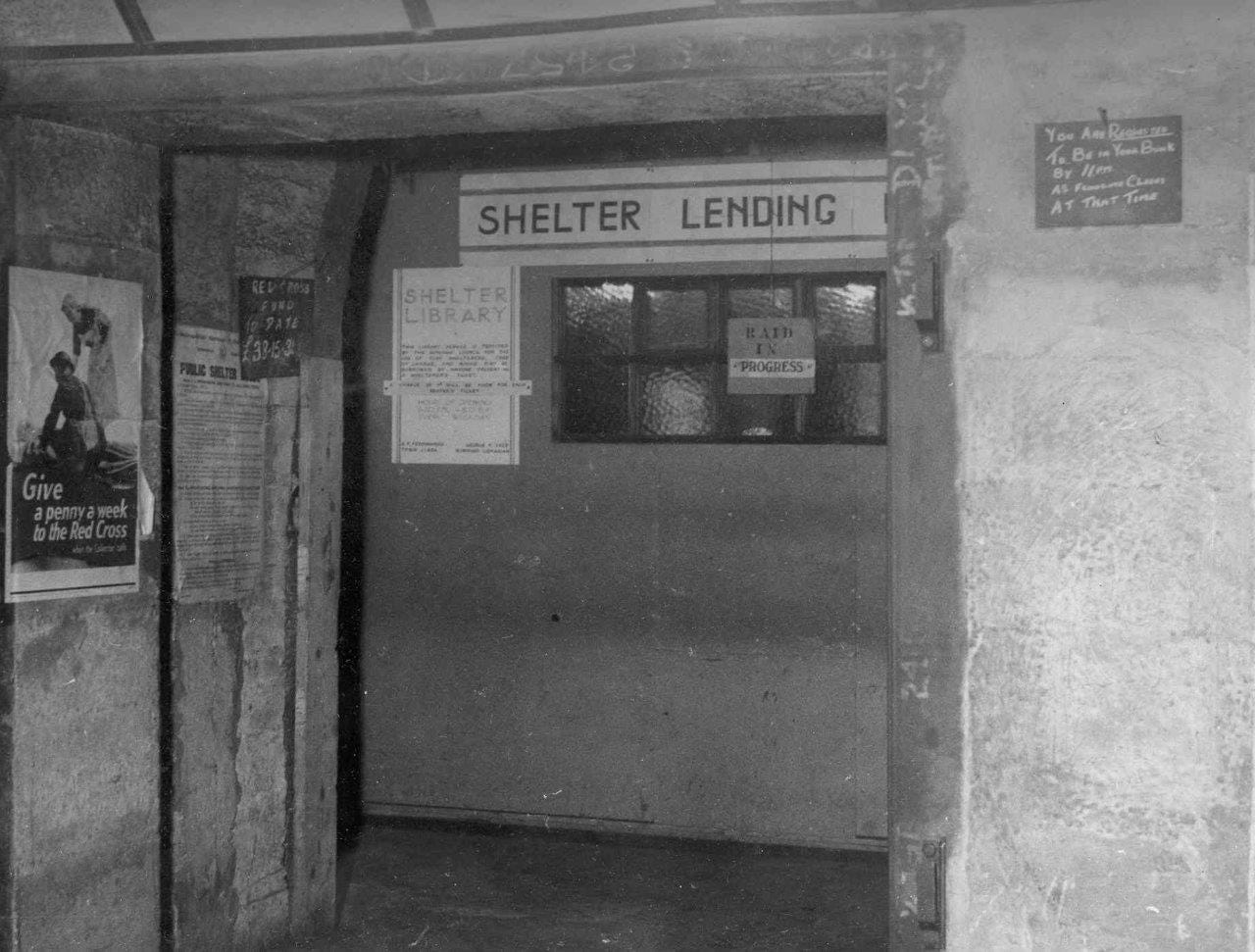
The underground entrance to the library.
‘I used to borrow Milly-Molly-Mandy from the underground library,’ Pat told me. ‘I didn’t worry about the bombs when I had my head buried in a book. That little underground library sparked a lifelong love of reading.’
Thanks to Pat, the memory of the library and all of George and Stanley’s hard work lives on.
After the war, aged 18, Pat got a job working as a dressmaker for department store Bourne & Hollingsworth and met gentleman’s barber William (Bill) Spicer. Bill was from a huge well-known east end family. After six long, dark years of war, Bill and Pat’s announcement of marriage was something bright and beautiful.
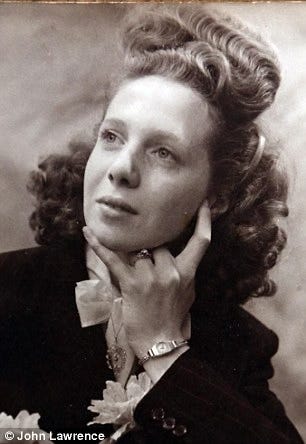
It’s easy to see why beautiful Pat caught Bill’s eye.
‘As a dressmaker it would have been shameful if I didn’t look my best on my wedding day. I felt I really ought to be well turned out. I also wanted a really glamorous wedding. There was so much poverty in those days we all wanted escapism on our big day, our chance to feel like a star for the day.’
To that end, Pat employed the services of legendary Jewish East End photographer Boris Bennett, whose Whitechapel studio was the place to go for glamorous weddings.
Boris was famous for bringing a touch of Hollywood style to a wedding shoot. Using exquisitely painted backdrops and beautiful lighting, he could transform the most ordinary looking bride into a sophisticated showstopper. He even employed a uniformed commissionaire to meet and greet the newly weds. Eager on lookers would gather outside his studio on the Whitechapel Road to catch a glimpse of the bride, including dressmakers who would wait, sketchbooks in hand.
‘We went for the complete set, nine framed photos and a book at 16 guineas. It was expensive but I had to have it and my family had saved for my wedding for years,’ Pat told me. ‘Boris was charming and helped me to look stunning. We posed against a beautiful cream archway with dreamy lighting. He arranged extra tulle around the bottom of my dress and taught us how to pose.’
No matter that outside the door of the studio, just yards from Pat and Bill, snaked a smoke-choked Whitechapel High Street. For a brief time, Pat was in Hollywood.
Boris’s exquisite portraits shine with a deep pride, for he understood what all East Enders knew back then – there was no shame in being poor.
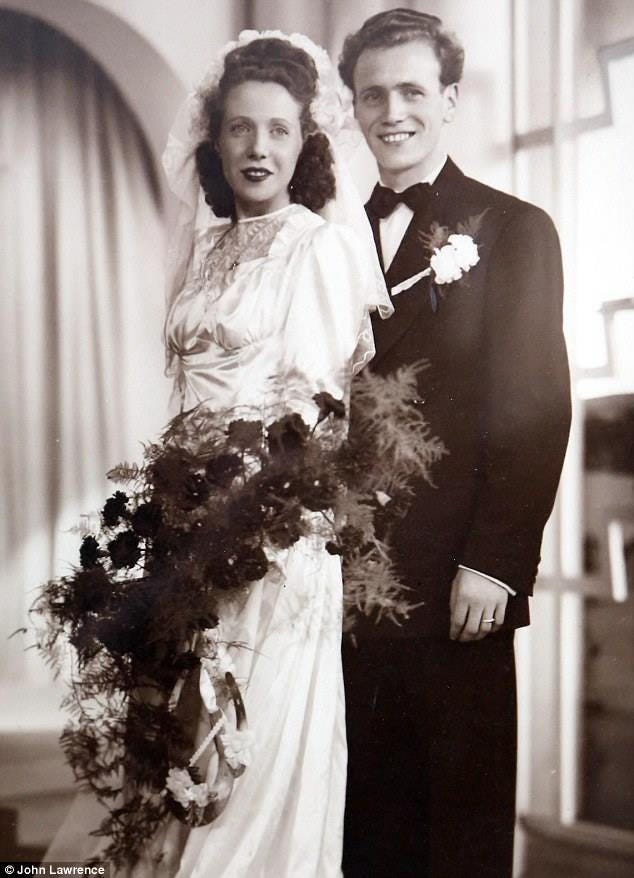
‘I wore a white satin gown with a sweetheart neckline with an inlet of lace, cathedral sleeves with a loop on the finger, twenty-two satin buttons on the back, a fluted train and a lovers knot embroidered into the veil. Local dressmaker Hetty Dipple made it and we had four fittings in her front parlor. Hetty sewed a strand of her hair into the seam, her signature finish.’ A trick legendary East End born designer, Alexander McQueen used to employ.
‘After the photographs it was back down to earth with a bump,’ Pat confided. ‘The reception was at Bill’s mums in neighbouring Bethnal Green. She did her best bless her, clearing out the rooms and setting up Salvation Army trestle tables, but it was so packed I had to clamber over the table just to sit down. We had mashed potato, cold roast beef and beetroot, followed by a weekend in Canvey Island. All top show, nothing underneath as my Mum would say,’ Pat told me laughingly, revealing not just her cockney humour, but also her family’s innate sense of thrift and resourcefulness.
‘Cold beetroot aside, thanks to the experience of posing for my wedding portrait, which I still treasure, I felt so special. Bill called me his Pocket Venus.’
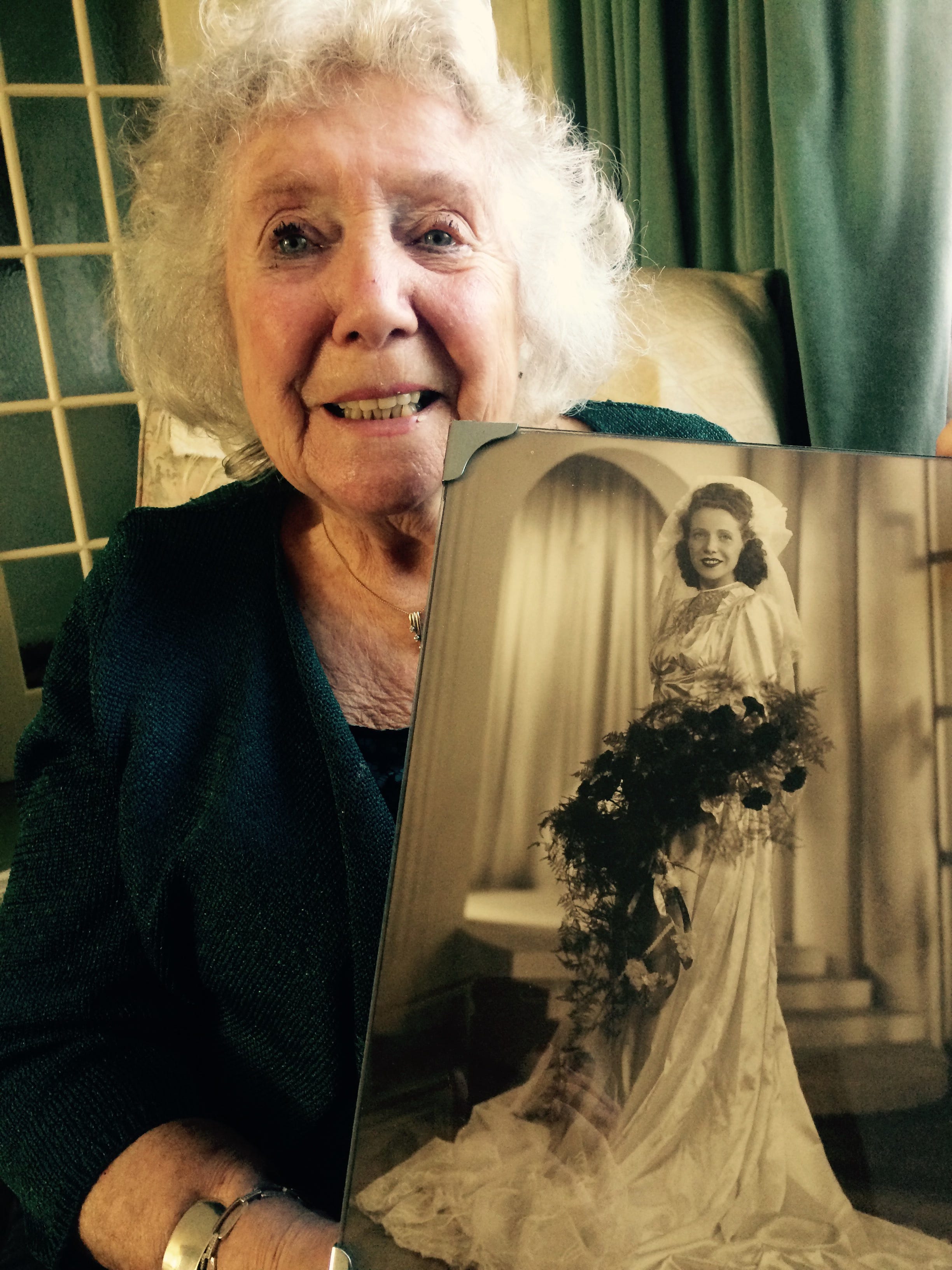
Pat’s heartwarming story shows the dichotomy between hardship and high glamour that was so prevalent during the poverty of the postwar years. To own a beautiful wedding portrait, in a time when few people owned a camera, much less a selfie-stick, was a symbol of hope.
The couple were happily married for fifty-nine years.
Pat was a beautiful woman inside and out. She is survived by her two daughters, two grandchildren and four great-grandchilden
Pat filled my head with stories and fired up my imagination. I will forever be indebted to her. Rest well, Pocket Venus.
No posts
Comments
Nothing yet. Say the first thing.
Sign in to join the conversation.