
To celebrate the upcoming publication of my fifteenth book, The Secret Society of Librarians, I’m sharing some of the remarkable stories I uncovered in my research. I am never anything less than awe-struck and humbled at the bravery of ordinary men and women when I research my books.
When you delve into the past, you never know what treasures you will unearth, what surprising initiatives, pioneers and trailblazers are waiting for you in dusty folders or sitting rooms. All the stories I share in the novel are inspired by real people and places. From a magical library in the heart of London, founded after the Great Fire of London (which you can visit) to an underground dating club formed in the middle of the Blitz and even a fearless group of librarians fighting back against censorship. I’ll be sharing these stories and more over the coming weeks. This book is for anyone who believes that reading is resistance.
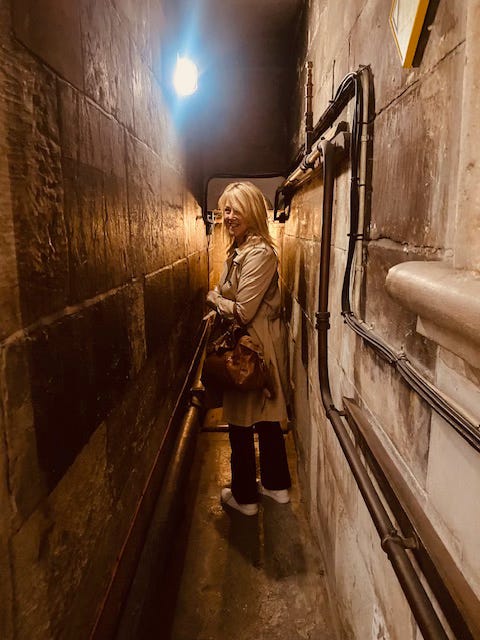
On a clamorous summer day in London, I slipped through an ancient wooden door and descended a narrow stone staircase into the bowels of St Paul’s Cathedral. It was a welcome relief from tourists and the sticky heat.
‘Mind your head,’ my guide told me. I scurried after her, along a long stone passageway inscribed with ancient graffiti, into a service lift and up, or was it down? - and through a series of rooms that seemed to get progressively smaller. I was beginning to feel uncomfortably like Alice in Wonderland.
We continued ascending the cathedral by way of a labyrinth of unseen passageways, running like mice between walls, only once popping up behind a screen that looked down onto the whispering gallery.
‘Nearly there,’ said my guide, ‘afraid you’ll have to turn sideways for this part.’
A damp crooked passageway only as wide as my shoulders tapered off into the gloom.
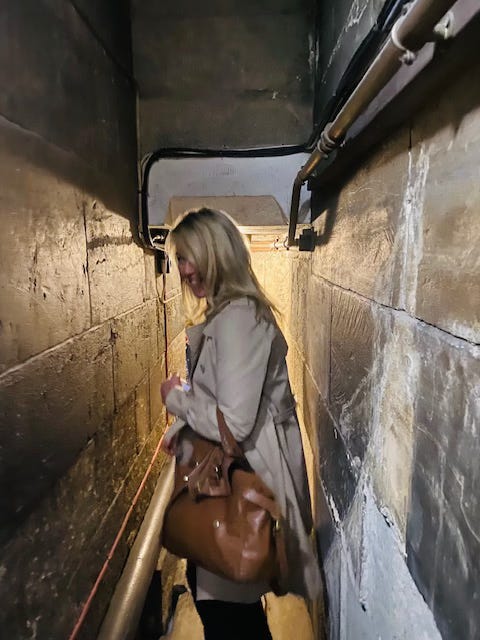
‘It’s worth it,’ my guide smiled, sensing my hesitation. Breathing in, I followed.
And then, finally, when I was starting to wonder whether we’d actually walked back to a London of fires, fogs and plagues, we emerged blinking into a space of such beauty, I actually inhaled.
‘Welcome to St Paul’s Library.’


‘There’s been a library on this site since medieval times,’ said the cathedral’s librarian. ‘The oldest book we’ve got is from the 12th century. It’s a Psalter, which is a book of Psalms which was used in services at that time.’
The books in their collection are priceless and thus have their own special heating system to protect them from damp, which kicks in when the temperature drops below five degrees centigrade. Perfect for books, not so good for chilly librarians.
The library’s collection was almost completely destroyed in the Great Fire of London in 1666 – but Sir Christopher Wren’s Library chamber was restocked by the Commissioners for rebuilding St Paul’s. They bought collections of valuable bibles and received a generous bequest in 1712 of nearly two thousand volumes from the library of the Bishop of London.
In the 20th century, the library was in danger once more. On August 11, 1939, shortly before the outbreak of the Second World War, the cathedral’s collection of books was driven to the National University of Wales for safekeeping. They were escorted by the cathedral’s sub-librarian, Gerald Henderson, who went with the books to see them safely housed. Gerald, by all accounts passed an anxious night when the lorry driver insisted on stopping at a wayside inn with his precious freight.
Gerald was an esteemed member of the Watch.
‘The Watch was made up of people from varied backgrounds and ages,’ St Paul’s archivist told me. ‘There were members of the clergy, but also many architects. The cathedral needed people who understood how a building works, and how to access hidden away areas. There were also many women volunteers, including a lady from Surrey called Elfreda Audsley, who had written a children’s book called Quiddlekin. They used to joke that they were the best club in London.’
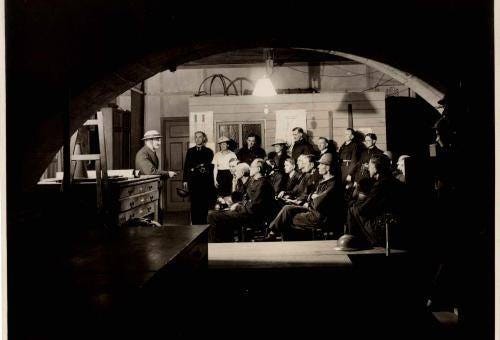
Members of St Paul’s Watch attending a meeting in the Triforium. (Copyright St Paul’s Cathedral archives)
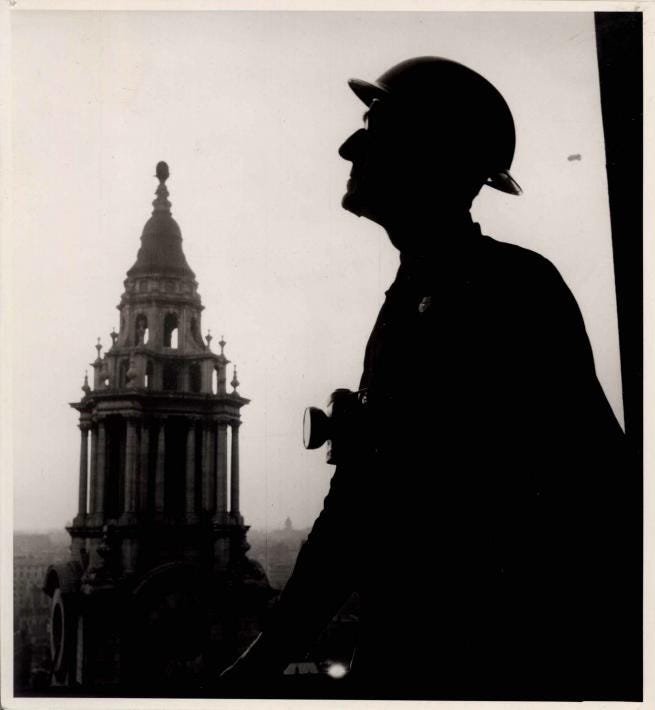
A member of St Paul’s Watch with helmet and lamp looks south from the Cathedral rooftop, 1944. (Copyright St Paul’s Cathedral archives)
There were over 300 volunteer members of the Watch, and when the Blitz broke out, this disparate group of people were flung together into desperate nights of danger. There is something uniquely British at a group of clergy, architects and a children’s author working round the clock to save the country’s most iconic monument.
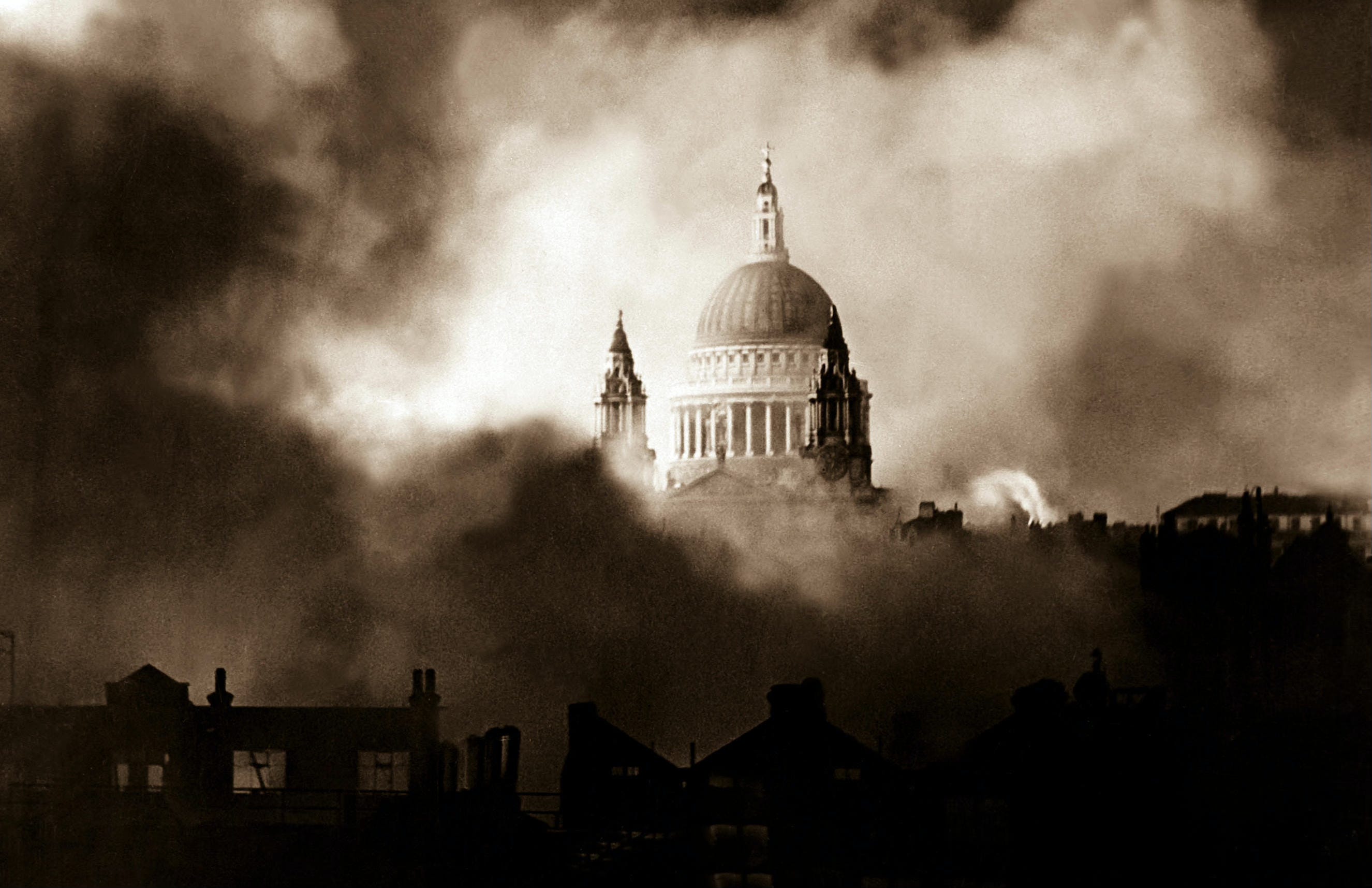
Standing up gloriously out of the flames and smoke, St. Paul’s Cathedral is pictured during the great fire raid of Sunday December 29th. London, 1940. (Copyright American Photo Archive/Alamy Stock Photo.)
On December 29-30th 1940, they faced their biggest challenge. This article I found in the archives of the Daily Mail describes it best. ‘Roar of gun barrage mingled with the roar and crackle of flames; raiders droned overhead. Daily Mail photographer H.A. Mason stood on a City roof to get this awe-inspiring picture of the second Great Fire of London – St Paul’s Cathedral ringed with fire. “The glare of many fires and sweeping clouds of smoke kept hiding the shape. Then a wind sprang up. Suddenly the shining cross, dome, and towers stood out like a symbol in the inferno. In that moment, I released my shutter.” Here is his picture, one that all Britain will cherish – for it symbolises the steadiness of London’s stand against the enemy: the firmness of Right against Wrong.’
The archivist showed me the 80-year-old log books where members of the Watch meticulously detailed the work they undertook during their nightly shifts. The Watch had just ten minutes to deal with incendiaries, any longer and the bomb would burn through the roof and fall into the Cathedral below.


It was essential for the Watch to be in position throughout an air raid, and this they did every night during the war. Thanks to the Watch, the Cathedral remained standing.
‘There’s a story that on the night of 29th December 1940, Winston Churchill contacted the Cathedral and ordered it be “saved at all costs!”’ the archivist told me.
Today, the Cathedral is dwarfed by skyscrapers, but in 1940, it was the most imposing landmark on the London skyline. Churchill’s dogged demands make sense. If the famous dome had crumbled, so too would morale.
The Watch officially disbanded on VE Day, 8 May 1945, closing a chapter of British history that deserves to be better known.
On our way out of the library, back along the narrow corridors, I imagined Elfreda and the Watch, peering out the stone windows at waves of enemy aircraft lit up by the moon.
You can find out more about St Paul’s Cathedral library and how to visit it here.
The Watch and St Paul’s Cathedral library feature in The Secret Society of Librarians, out in hardback and kindle March 12 and paperback August 27 2026.
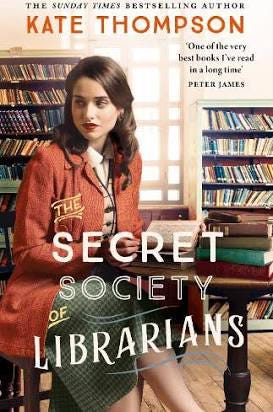
In my next Substack newsletter, discover a mobile library launched during the Blitz.
No posts
Comments
Nothing yet. Say the first thing.
Sign in to join the conversation.