
I’ve been a little quiet for the past couple of weeks because I’ve been off exploring another remarkable place. There will be plenty to tell you about that soon, but I didn’t want to leave this story unfinished. There are still a few moments from my time at the Arctic Hideaway that have stayed with me, and this is one of them.
The Gate
On my first morning at the Arctic Hideaway I set off to explore the islands alone.
There was no plan. The beauty of Sørvær was that you could simply follow the paths and see where they led. Wooden footbridges linked one rocky outcrop to the next, each crossing revealing another stretch of coastline, another sheltered bay or another view across the sea.
The water was unlike anything I had seen before. It was so clear that the sea seemed to disappear altogether. Beneath the surface, ribbons of brown seaweed drifted gently above pale sand, while dark rocks emerged as if suspended in glass rather than seawater. Even on a cloudy day, the colours felt luminous. The turquoise shallows merged into deeper blues before giving way to the grey horizon, where low islands rose gently from the sea.
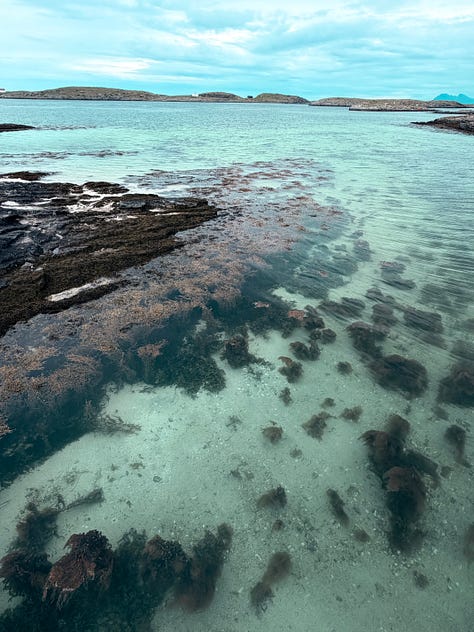
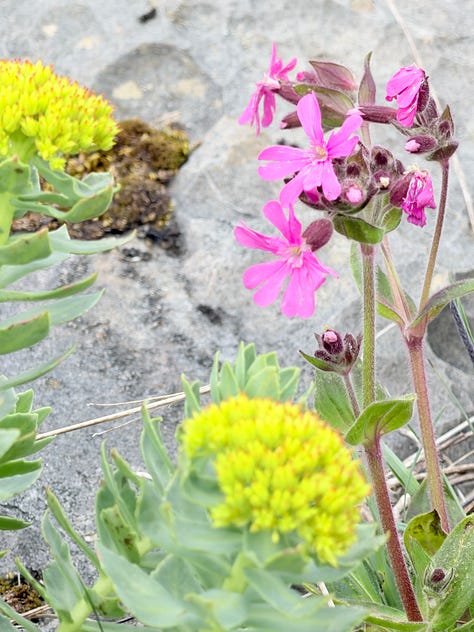
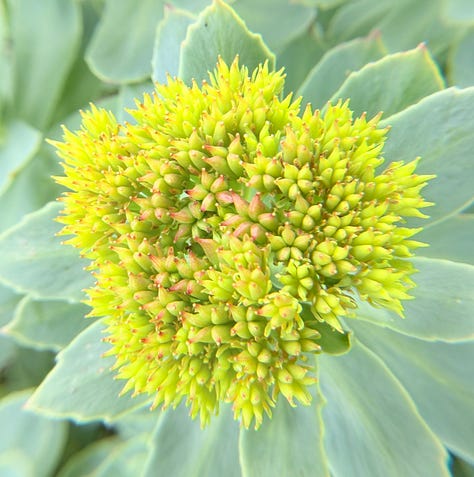
I found myself stopping every few minutes, not because there was a famous viewpoint, but because every angle seemed worth looking at.
Eventually I reached a gate.
Beyond it, another bridge continued towards a small cluster of houses. I paused for a moment before turning back. I assumed the gate marked the end of the public path and thought nothing more of it.
A few days later I found myself standing there again.
One of the resident artists had arranged for us to visit a local resident who lived beyond the gate. Without hesitation she unlatched it and we continued across the bridge. Seeing my surprise, she explained that the gate was not there to keep people away. It helped to reduce disturbance during the nesting season because eider ducks had made this part of the island their home.
It was such a simple explanation, but it completely changed the way I thought about the place.
We were welcomed warmly into the house and, over coffee, listened to stories about life on the island. The conversation wandered from one subject to another in the easy way that conversations often did at the Arctic Hideaway. Nobody seemed to be in a hurry and there was no pressure for the afternoon to be anything other than what it already was.
Before we left, the homeowner asked if we would like to see something.
He led us outside and pointed beneath the wooden terrace.
Tucked into the shelter beneath it sat an eider duck on her nest. She hardly acknowledged us, remaining perfectly calm as we looked from a respectful distance.
“She’s been coming back here for twenty five years,” he told us.
I remember smiling in disbelief. Twenty five years. The thought that a wild bird would return to the same place for so long had simply never occurred to me. In that moment the gate made perfect sense.
It was never about keeping people out. It was about giving the ducks the peace they needed to return, year after year, to a place that had become part of their lives.
As we walked back across the bridges later that afternoon, I looked differently at the islands around me. They were no longer just beautiful places connected by wooden walkways. They were places where people had learned to live in harmony with the wildlife, making small adjustments so that both could share the same landscape.
That afternoon has stayed with me, not because we walked a little further than I had before, but because I realised that what had first appeared to be a barrier was, in fact, an act of care. Sometimes the most interesting thing about a place is not what it allows you to see.
No posts
Comments
Nothing yet. Say the first thing.
Sign in to join the conversation.