
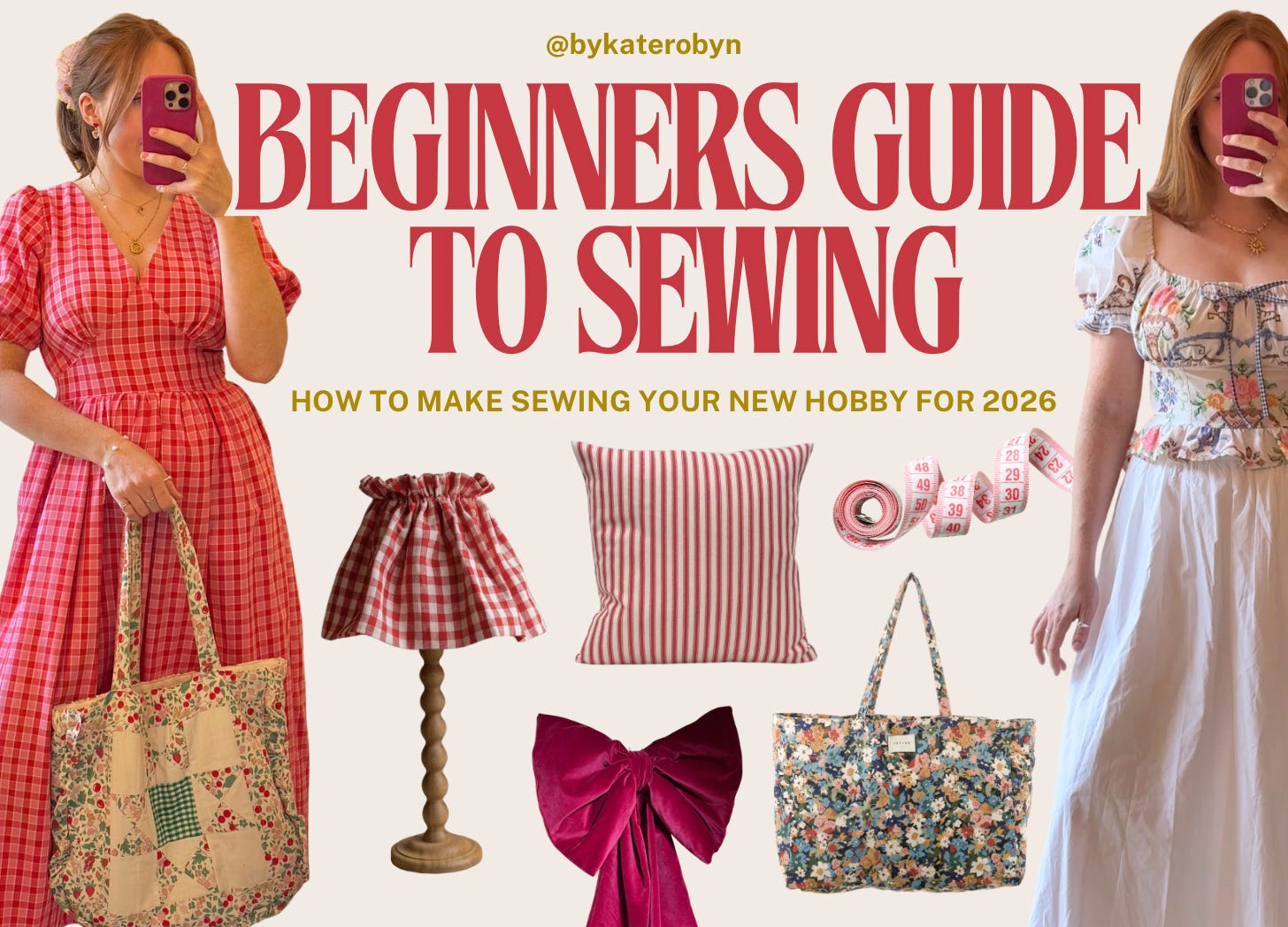
So I’ve been seeing online that 2026 seems to be the year of the ‘analogue hobby’ - people are even creating ‘analogue bags’ in an attempt to keep them offline for as long as possible.
I think this all sounds a bit silly on the surface, but I’ll never pass on the opportunity to blabber on about creative hobbies. I think using your spare time to create something with your hands is truly SO good for your mental wellbeing. If you already partake in a creative hobby you will probably know the feeling of being in a ‘flow state’, where you’re so locked in and in the zone that you don’t have space in your brain to be thinking about other stuff, especially doomscrolling.
As well as keeping you occupied and entertained, creating something tangible for yourself, bringing something beautiful into the world that wasn’t there before, just makes you feel proud and gives you a sense of self-esteem. That is important!!!
ANYWAY all that being said… one of my fav ‘analogue hobbies’ is sewing. I taught myself how to sew during lockdown, having had no experience aside from some DT lessons in year 9 with one of the most child-hating teachers I’ve ever met. So that did scar me for a good 15 years. If you’re like I was in 2020 and have zero experience but big ambitions of sewing your own clothes and home decor, then this is the guide for you. I’m hoping it will give complete beginners a good idea of where to get started.
I don’t want to be annoying here, because you might just be looking for me to tell you the exact model of sewing machine you should get, but I honestly just think you should start with WHATEVER sewing machine you can get your hands on.
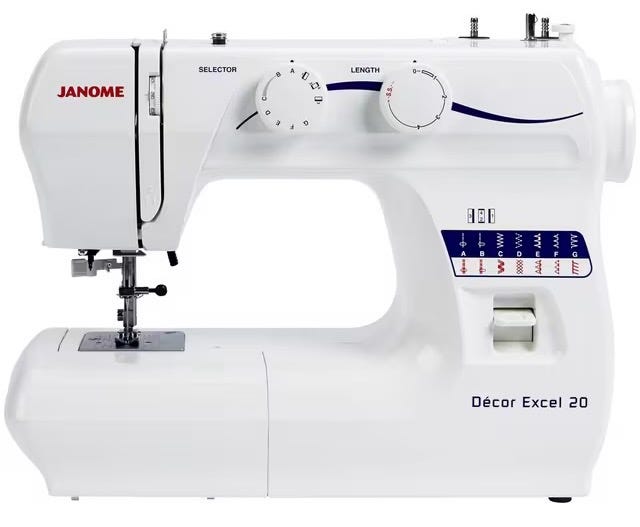
To start with I had a Janome Decor Excel 20 which was about £160, which was perfectly good as a starter. I ended up getting rid of it because I thought it wasn’t working properly but I think I was just bad at sewing 😭
I switched it for a Brother Innovis A50 which was £449 so a bigger purchase, something to go for once you’ve been sewing for a while and know you’re going to continue with the hobby.
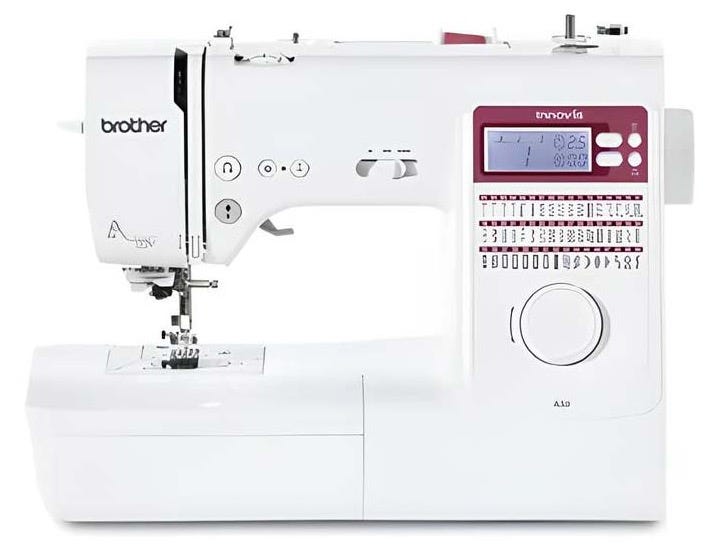
I’ve been loving this machine, it hasn’t really failed me yet! But as I say, I would recommend just starting with a cheap sewing machine so that you can learn the basics and test out whether sewing is for you.
Another thing I would recommend if possible would be to buy your machine from a local shop - I bought mine from the craft centre in my nearest town, which included a free session to show me how the machine works, how to thread it, how to wind a bobbin, what the stitches mean, etc.
This is SO helpful if you’re a complete beginner because you might not be able to find YouTube vids on the specific machine you buy, and it’s really nice to just have an actual human there to ask any questions you might have. I was able to try it out in their workshop and have a little go sewing some fabric. It meant I felt much more confident when I got my machine home. I also got my overlocker (serger) from the same place and let me tell you, having a session to show you how to thread your overlocker is EXTREMELY helpful because those things are super intimidating to thread.
Buying a sewing machine second-hand from eBay or the thrift store is definitely a good option too, as long as you know it works fine! You can upgrade as soon as you feel comfortable, I just think it’s a lot to spend almost £500 on something you’re not sure about.
So this is what I think is necessary to start your first sewing project:
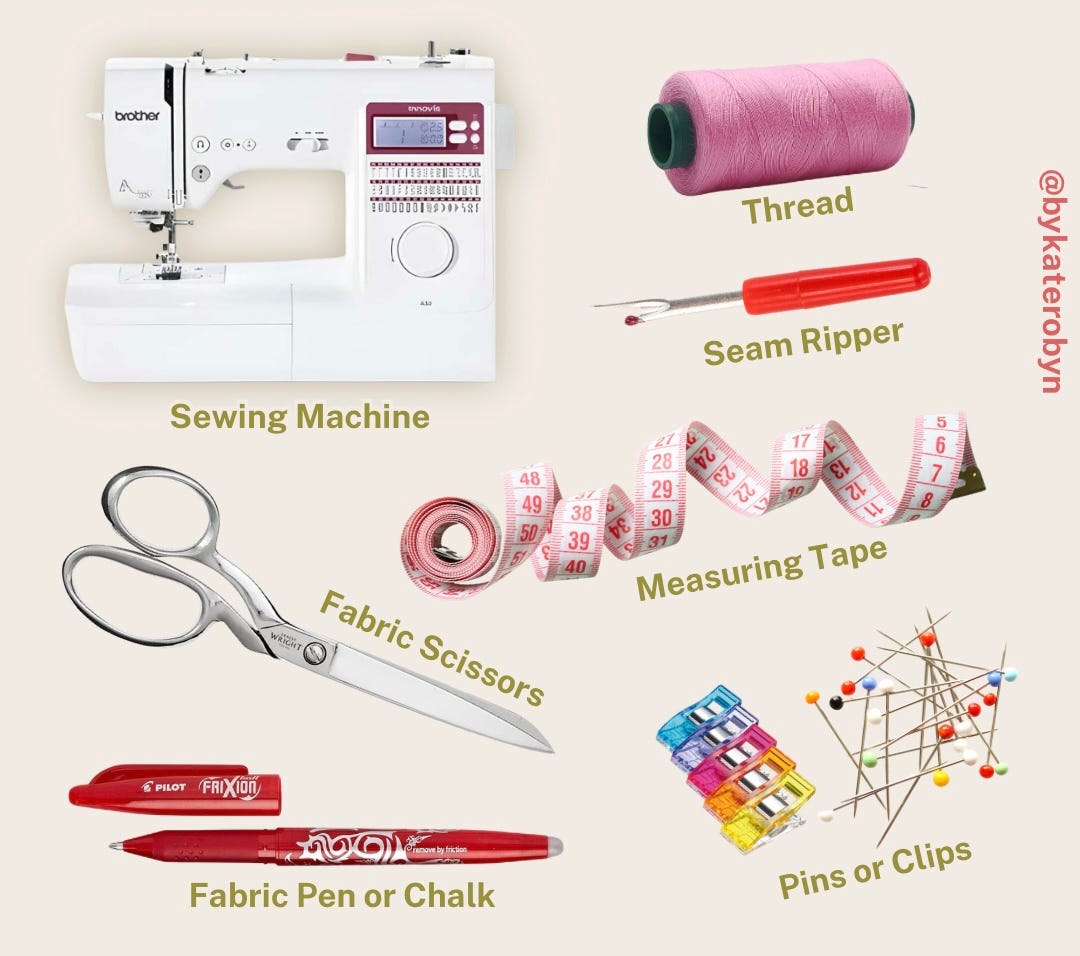
One thing I didn’t mention above is an iron & ironing board. Pressing your garments is quite an important step in getting a professional finish. You will also often need iron to press hems and certain seams before stitching.
Most of these items are self-explanatory. Again, you can buy REALLY expensive fabric scissors but they’re not necessary, you should be able to find a good pair for about £20.
In terms of fabric pens, they sell all different types but I would recommend the heat-erasable pens, so when you iron the marking it will completely disappear. I find that chalk isn’t easy to be precise with and it doesn’t always show up very well.
The little sewing clips that are used for quilting are a good alternative to pins and I find them easier to use, although there might be the odd time where clips won’t work because of the position, so it’s good to have both pins and clips handy.
You can buy multipacks of thread. I often find them very cheap in the middle of Lidl or Aldi - and they’re great because the thread comes with a matching bobbin, already wound for you!
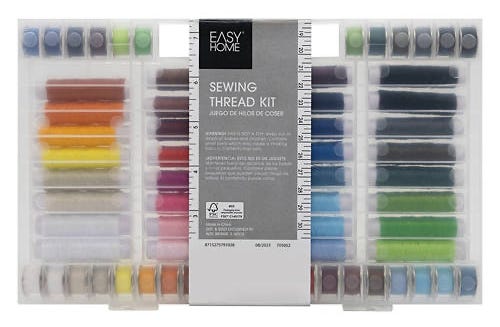
There are a few extra bits that you might find handy to begin with but aren’t completely needed at first:
safety pins (you’ll need these if you need to thread anything through a channel, and they’re also helpful for turning things like straps right side out)
rotary cutter (helpful for cutting long straight lines, especially good for patchworking projects where you need to cut lots of squares)
quilting ruler (again, useful for patchwork projects but not really needed for sewing clothes)
long ruler (good for marking out lines where you need to cut on your fabric)
extra bobbins (your machine will come with a few, but they’re pretty easy to lose, and also it’s handy to have multiple bobbins wound with different colours so that it’s quicker to start a sewing project. You can buy multipacks of clear plastic bobbins.)
a few little sewing notions so that you can experiment and learn techniques, such as buttons and zips (‘notions’ is the name for all the little accessories, tools and bits and bobs that you use for sewing)
I know you’ll be thinking “how the heck do I buy fabric?” In my opinion buying fabric online is HARD, I still find it hard - there are so many different types and its seems impossible to know what they all mean. Even when I’m looking at cotton; there’s cotton poplin, cotton lawn, quilting cotton, and there are all different weights. It’s confusing! This is why I would really advise trying to go to your nearest fabric shop so you can actually have a feel of the fabrics and see what you like.
My other biggest piece of advice for buying fabric is to just head to the charity shops / thrift stores and look for bedding. It’s such a good way to buy a lot of fabric really cheaply, and you won’t have to feel precious about it. I still look for bedding whenever I’m thrift shopping - it’s often 100% cotton too which is fab. You can also find amazing linens, things like vintage embroidered tablecloths or quilts, which are one of my favourite things to use in my sewing projects.
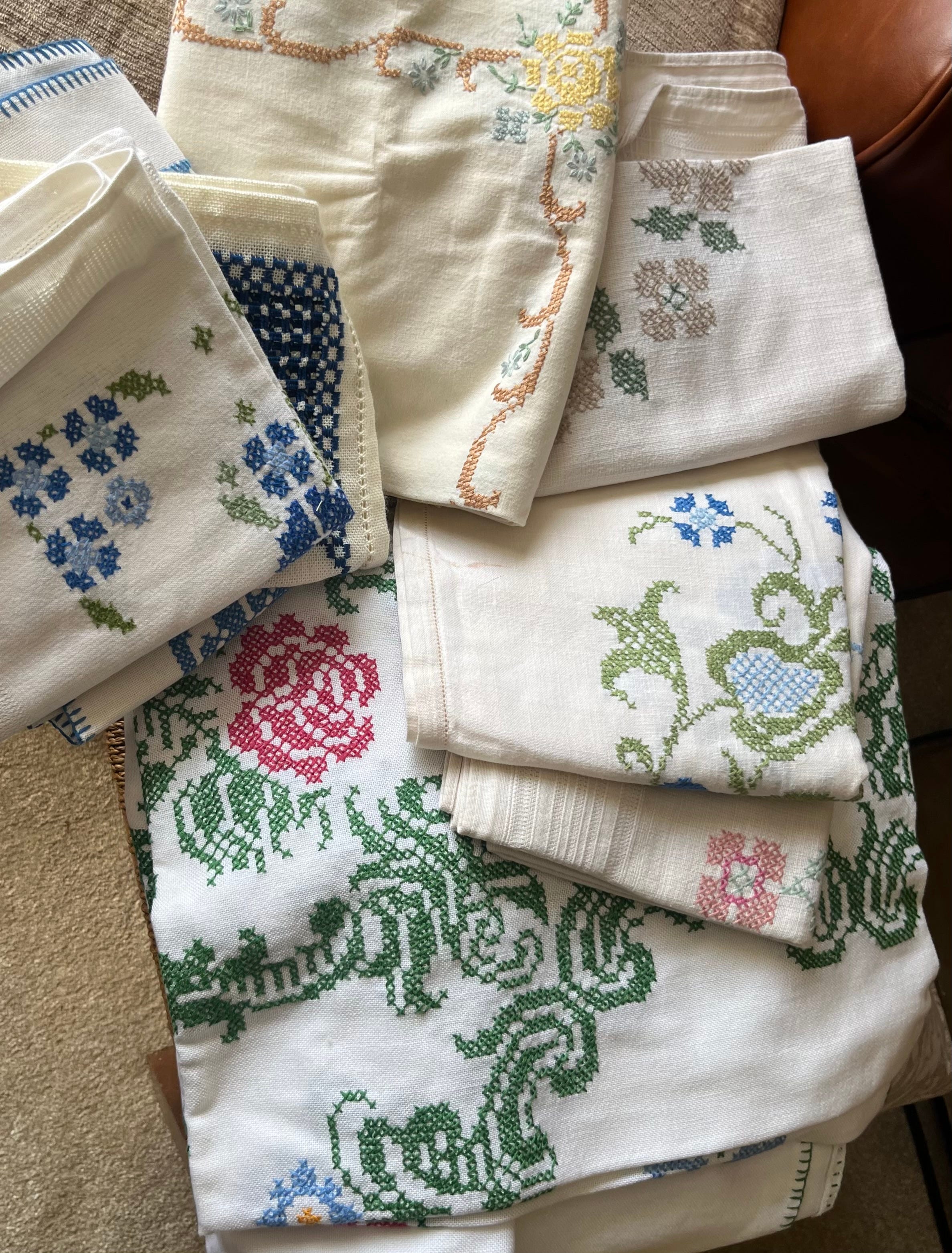
Speaking of cotton, people will always recommend you buy cotton. I think the main reasons are that it’s natural, breathable and feels nice to wear. It doesn’t have the plasticky feel of polyester and it’ll be nice and cool in the summer. However, there’s nothing wrong with getting a polyester mix, or just using a synthetic fabric especially for things like tote bags or toiletry bags. As long as you like the look and feel of it then go for it! Basically for your first projects just avoid things that are really silky and slippery, avoid stretchy fabrics, or any super thick heavyweight fabrics as these are all more difficult to sew with.
Another top tip is to go for a gingham or checked fabric for your first projects, because the grid lines will be very helpful for cutting straight and sewing straight.
Something else that is slightly confusing to begin with: how much fabric should I get?! So, fabric tends to come in standard widths (115cm, 135cm and 150cm), although they do wider fabrics for things like upholstery. As a ROUGH estimate I’d say you’ll need about 3 metres for a dress or trousers, 1-2 metres for a top and you can make plenty of things with 1 metre such as cushions and bags. If you’re following a tutorial or a pattern then it should tell you exactly how much you’ll need, but that is just a rough guide for if you find some fabric you love but don’t know the exact project yet.
If you’re lucky enough to have somewhere nearby that offers beginner sewing classes and workshops, I don’t think you can beat learning the basics that way. As I mentioned earlier, I bought both my sewing machine & overlocker from a local craft centre where I had a class on how to use the machines. I’ve also been to a beginner’s patchwork class there and I did a 1-2-1 tutorial to learn how I could alter a dress I loved that didn’t fit me great. These were all invaluable experiences, and I just found it super helpful to be able to ask any questions and get an expert answer without having to trawl through google.
As helpful as I found these experiences, I have learned everything else I know about sewing from the internet, and you can definitely learn how to sew solely this way. The University of YouTube contains thousands of amazing tutorials, from the very basics up to couture sewing and drafting your own complex patterns.
I would start by checking out these playlists:
General Sewing Tips by The Essentials Club
Learn to Sew by Sydney Graham
SEWING BASICS by With Wendy
And these are some beginner’s tutorials for projects that don’t need a pattern:
Tote Bag Tutorial & Skirt Tutorial by Sydney Graham
4 Easy DIY Cami Tops & DIY Gathered Tee Dress by The Essentials Club
Easy Envelope Cushion Cover by Jann Newton
As well as Sydney Graham and The Essentials Club some of my other fav sewing YouTubers are:
I know that when I first started sewing, patterns were SO confusing to me. They may as well have been in a different language. Probably what made this worse is that I was using a vintage pattern I’d bought from a charity shop. (Pictured below)
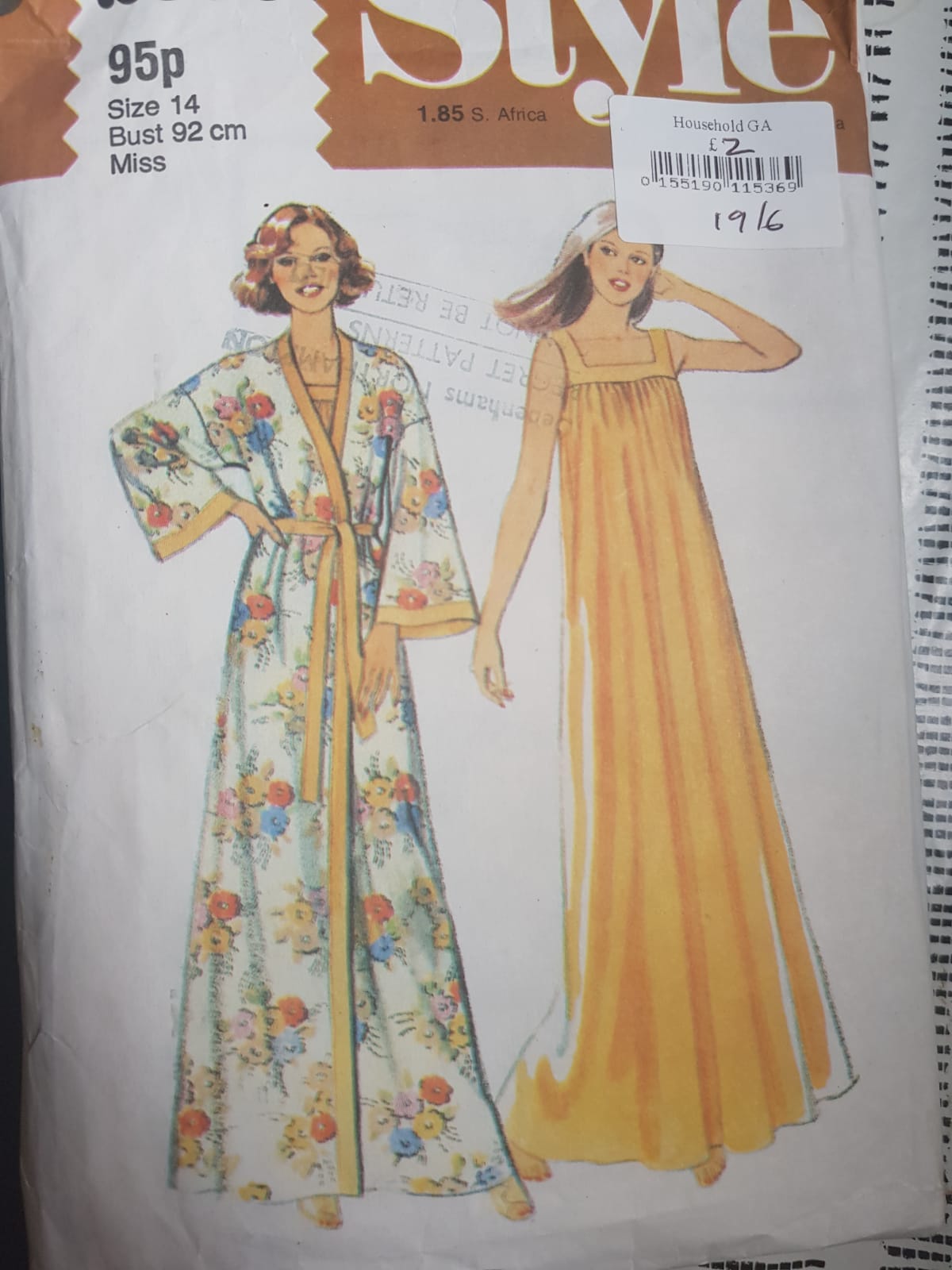
Thankfully there are loads of amazing indie pattern makers out there, and their patterns are much easier to follow. My favourite thing as a beginner was sewing patterns that came with an accompanying YouTube tutorial, so I could sew along with the video while learning how patterns work.
Lots of the sewing YouTubers I mentioned above also make sewing patterns, so definitely have a look at them to find some beginner patterns with videos.
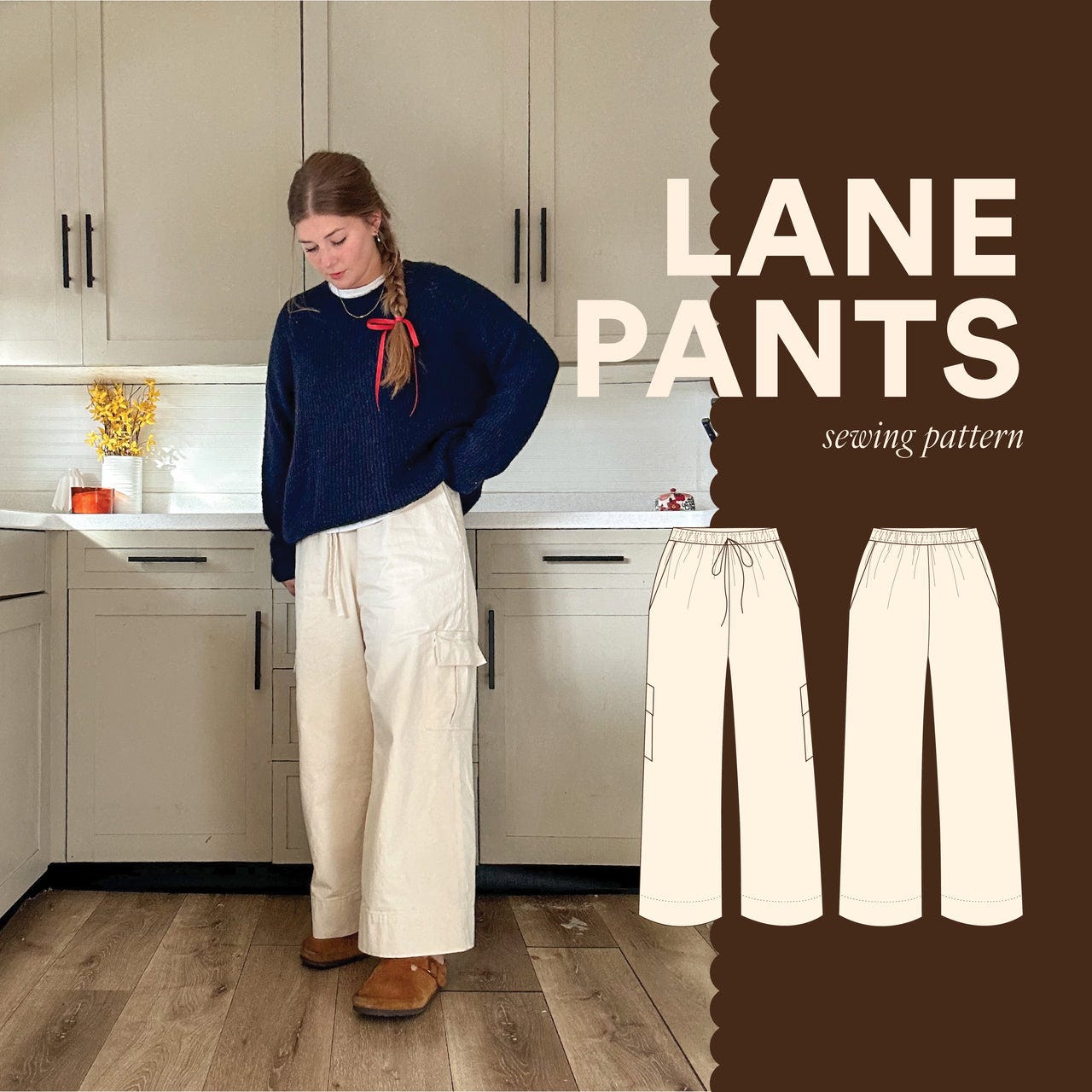
Sydney Graham’s Lane Pants is a fab beginner sewing pattern and just an amazing one to have in your collection. They have an elasticated waist and a wide leg, which make the comfiest trousers. They also come with different options for a tie waist and added pockets on the legs. An extra bonus is that Sydney has made YouTube videos showing you how to hack this pattern so that you can create trousers with a ruffle at the bottom, or an adorable pair of shorts. I would also highly recommend watching Sydney’s video on printing and assembling a PDF pattern which can be quite intimidating as a beginner!
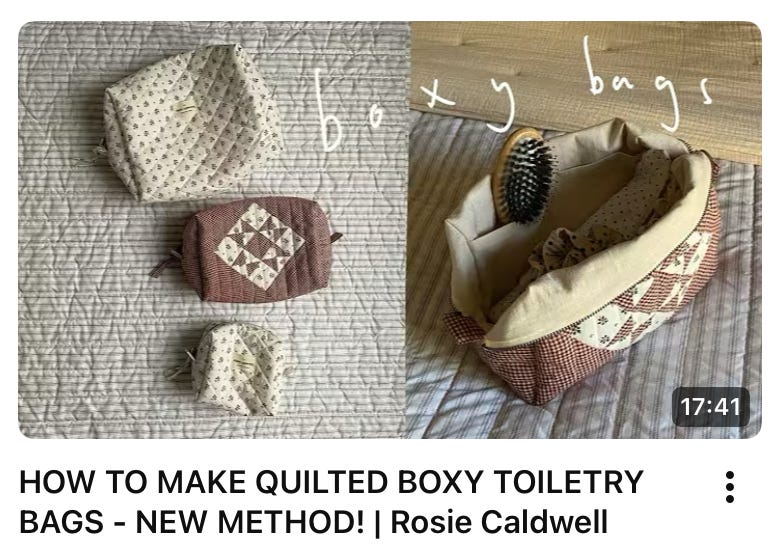
The other recommendation I would always give a beginner is to try a bag pattern by Rosie Caldwell. One of the first patterns I made (and have made SO many times since then) is the boxy toiletry bag pattern. This is a super cute quilted toiletry bag, and the pattern includes three different sizes for you to make. I’ve loved using thrifted quilts with this pattern, as well as making my patchwork versions using fabric scraps. Rosie also makes video tutorials for all of her patterns, so this is another great one to sew along with and learn while you make. Rosie is the queen of amazing bag patterns, and she has so many more that I’d recommend you give a go - my other faves are the quilted tote bag and the quilted book cover.
Okay, I feel like I have been rambling on for a long time, and probably could go on for a lot longer so I’m going to stop there. Definitely have a scroll on my Instagram (@bykaterobyn) because I’ve made loads more posts with sewing tips and beginner-friendly sewing pattern recs.
Good luck with your new analogue hobby, I hope it brings you as much joy as sewing has brought to me.
Kate
X
No posts
Comments
Nothing yet. Say the first thing.
Sign in to join the conversation.