
Welcome to Undividing where we are reconnecting a divided world
Hey there Everyone,
A message arrived in my Instagram DMs a few weeks ago from a reader of How To Burn A Rainbow, my memoir about my gay divorce. I get a couple of these a week, and I’m always happy to hear how my book has touched people’s lives, but this one pinged something in me.
It was from a straight guy, I’m guessing mid-fifties. He and his wife of twenty-three years had just separated. The kids were grown and out of the house. They’d decided, between the two of them and without a battle, that they were done.
A friend had passed him my book. And he read and really enjoyed it. But it didn’t apply to him. Not because he wasn’t gay. It’s that unlike my divorce, there wasn’t a fight.
The word he and his wife landed on, was that their marriage was, “complete.”
No fighting, no lawyers, just relief. And now they were still friends, but wrapping up the relationship.
I thought about that message for days. Because I personally know two other couples, both straight, both long marriages, both with adult kids, who’ve done the same thing in the past couple of years. Called it. Peacefully. No massive drama, no friends splitting, no lawyers billing by the hour, no children used as leverage. Just two adults who looked at each other after the school run was over and said: we’re done here.
When three becomes a pattern, a pattern becomes something worth looking at; how the texture of divorce is changing.
If you know someone who’d like to get in on this conversation, you can share it with them here:
Share Undividing with Karl Dunn
Now, let’s get Undividing, in a moment…
I just started writing my next book. And as part of the process of keeping myself accountable to my goals, I’m doing a quarterly update here.
The muse had not visited me in a long time. Then one morning, this fictional story arrived half formed in my brain. And I was out of bed at 7am on my keyboard. This was after a period where I had been really struggling to get out of bed, and was going through a time where I was really concerned about my mental health.
First I was just happy to be writing. But then I realised I felt like myself again. The real me. Turns out the best therapy is following your true calling.
So I started in earnest to plan it out.
It’s called “The Familiars” and it’s about four human servants of vampires, set in modern day Berlin, who all must chose a side as a schism threatens to become a war in the vampire world.
That’s all I’ll say for now. But the world building, the structure plotting, and the first 15K words of Draft 1 are written. By next update at the start of October, Draft 1 will be done.
Right, update done. Now let’s get Undividing…
Kramer vs. Kramer was the template for a generation: ugly, contested, exhausting. Genuinely moving, but also, for thirty years, basically the only script we had.
Then came The War of the Roses in 1989, a couple so committed to mutual destruction that their divorce lawyer spends the whole film watching them burn the house down. Literally. It also wasn’t that far from how divorce looked in the tabloids at the time.
The 90s gave us First Wives Club, which was fun. But at its core the story was divorce as wound, as betrayal, as something done to you by someone who deserves to suffer for it.
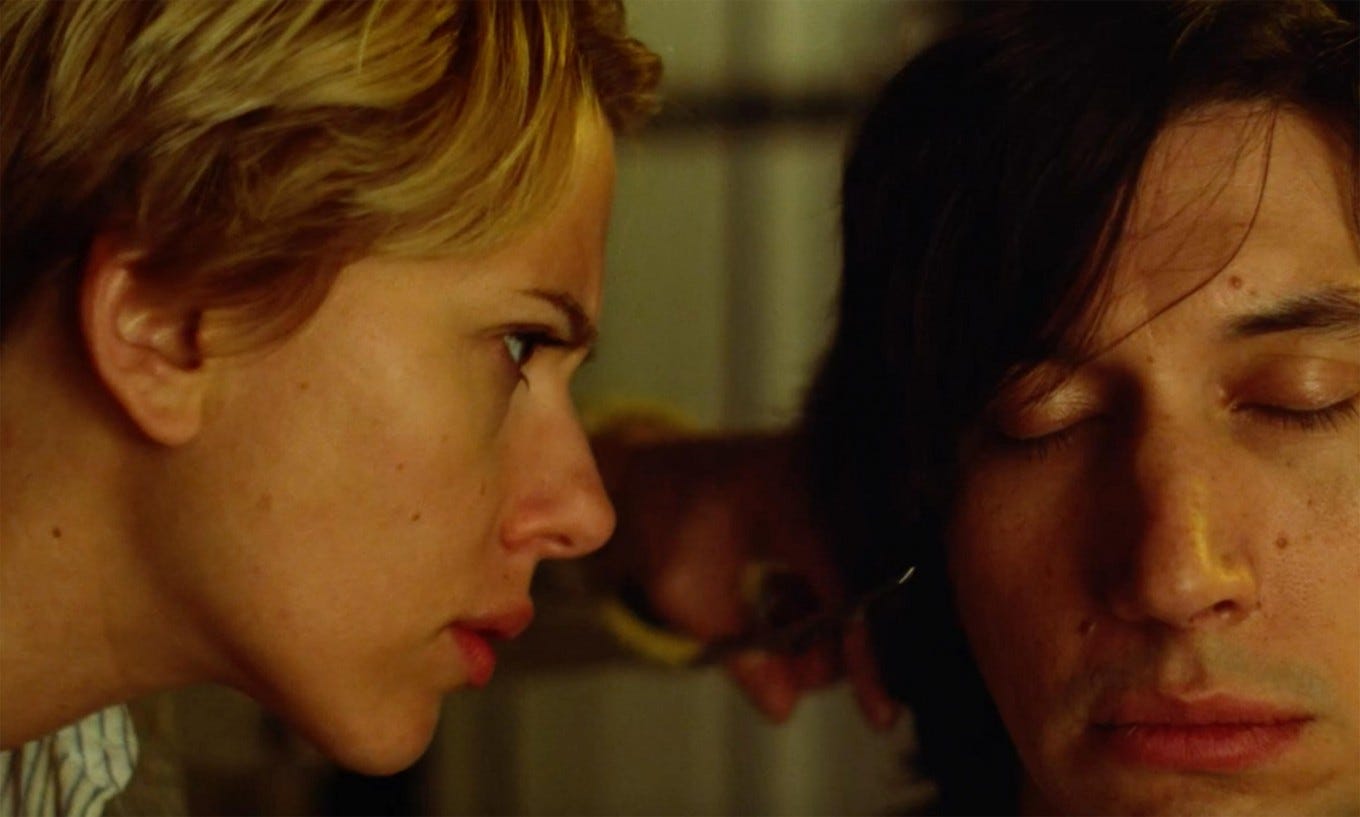
Even Marriage Story in 2019 with Adam Driver and Scarlett Johansson, begins with two people trying to be civilised and ends with them screaming things at each other they can never take back. It’s a brilliant and devastating film. But it confirms the same belief: that divorce, whatever it starts as, ends in war.
However, in 2014, Gwyneth Paltrow and Chris Martin announced they were separating. They called it ‘conscious uncoupling’. The internet laughed for six months. But I think that mockery was a tell. We ridiculed them because the idea that a divorce could be intentional, respectful, even kind, felt like something a wellness brand would invent.
But Paltrow said later she’s proud of it. That people stop her in the street to say thank you. That the response shifted from “why did you say that” to “how do you do that.”
Gray divorce — the term for splitting after 50 — now accounts for 36% of all US divorces. In 1990 it was 8.7%. That’s more like a rewrite than a trend. And while divorce rates have been falling in younger age groups for decades, adults over 65 are the only demographic where they’re still rising.
Couples are 40% more likely to divorce after their children leave home. The kids were never just the reason to stay together. They were the structure that made the relationship liveable.
And this one, consistent for 80 years of data: women initiate roughly 69% of all divorces. That figure has barely moved changed since the 1940s. But here’s what has changed: only 27% of women regret it and 40% of men; that’s less than half of all divorcing people think it was a bad idea.
The average marriage that ends in divorce now lasts twelve years — up from ten just fifteen years ago. We are, collectively, trying harder and longer before we call it.
Mediation has steadily replaced litigation for a large and growing number of couples. Instead of two lawyers billing by the hour to help you win, a single neutral professional sits with both of you and helps you figure out what fair looks like.

Empty nesters have one huge advantage here: no custody arrangements. Just assets, a house, and a future to divide. Couples who choose this route are resolving their divorces in months instead of the years a litigated process can take, and for a fraction of the cost.
The way assets are split is changing too. The old script was about winning and losing; words my first lawyers used liberally. What I’m seeing in numbers and stories online (that you have to really search for) is couples who sat down and asked, genuinely, what does fair look like for both of us? How can we both be OK after this is done?
Men, it should be said, have a specific challenge here. Research is fairly consistent on this: in many marriages, women manage the social calendar, the friendships, the family connections. After a divorce, men often find themselves unexpectedly adrift from the entire social world it contained.
The men I’ve seen navigate this well are the ones who go and find something that is just theirs. A sport they’d abandoned. A place they’d always wanted to live. A project. Men who’ve come through this tend to describe it as something they didn’t know they needed, that became the most important thing they ever did.
There’s a reason this is happening now, in the 2020s, in people’s 50s and 60s specifically. Life expectancy has shot up. There’s lots of IG accounts of grey haired women and men living their best, most active, most stylish, most engaged lives. If you divorce now in your early 60s, you have almost a third of your life still to go. It’s a totally different calculation than my parents’ generation would have made.

People in their 50s and 60s are not, increasingly, thinking of themselves as old. They are thinking of themselves as people with a whole life ahead. A different one. One they get to design.
Here’s what’s also changing, grey divorcees aren’t running toward someone younger. They’re dating people their own age. Other divorced empty nesters, often.
And the relationships look different. Calmer. Less loaded. More realistic. And apart.
LAT. Living Apart Together. That’s the term for a committed relationship between two people who keep their own homes. The data on this is striking. For single women over 60 in the UK, LAT is ten times more likely than cohabitation or remarriage as their next relationship choice. For men, it’s nearly twenty times more likely than cohabitation. Companionship without losing the self they just spent a few post-divorce years rebuilding.
Multiple studies show that LAT couples report higher relationship satisfaction than cohabiting ones. The working theory is straightforward: when you don’t live together, you have to actually choose each other. Every visit is a choice. Every weekend is a decision. The relationship contains only what both people actively put into it.
Women who’ve been through gray divorce describe a specific freedom: gone is the invisible labour of keeping a household and a marriage running simultaneously.
Expectations change too. The people I’ve seen in these second-chapter relationships aren’t asking their partner to be their best friend, their therapist, their social secretary, and their life purpose all at once. They seem to have distributed those needs more honestly across their actual lives.
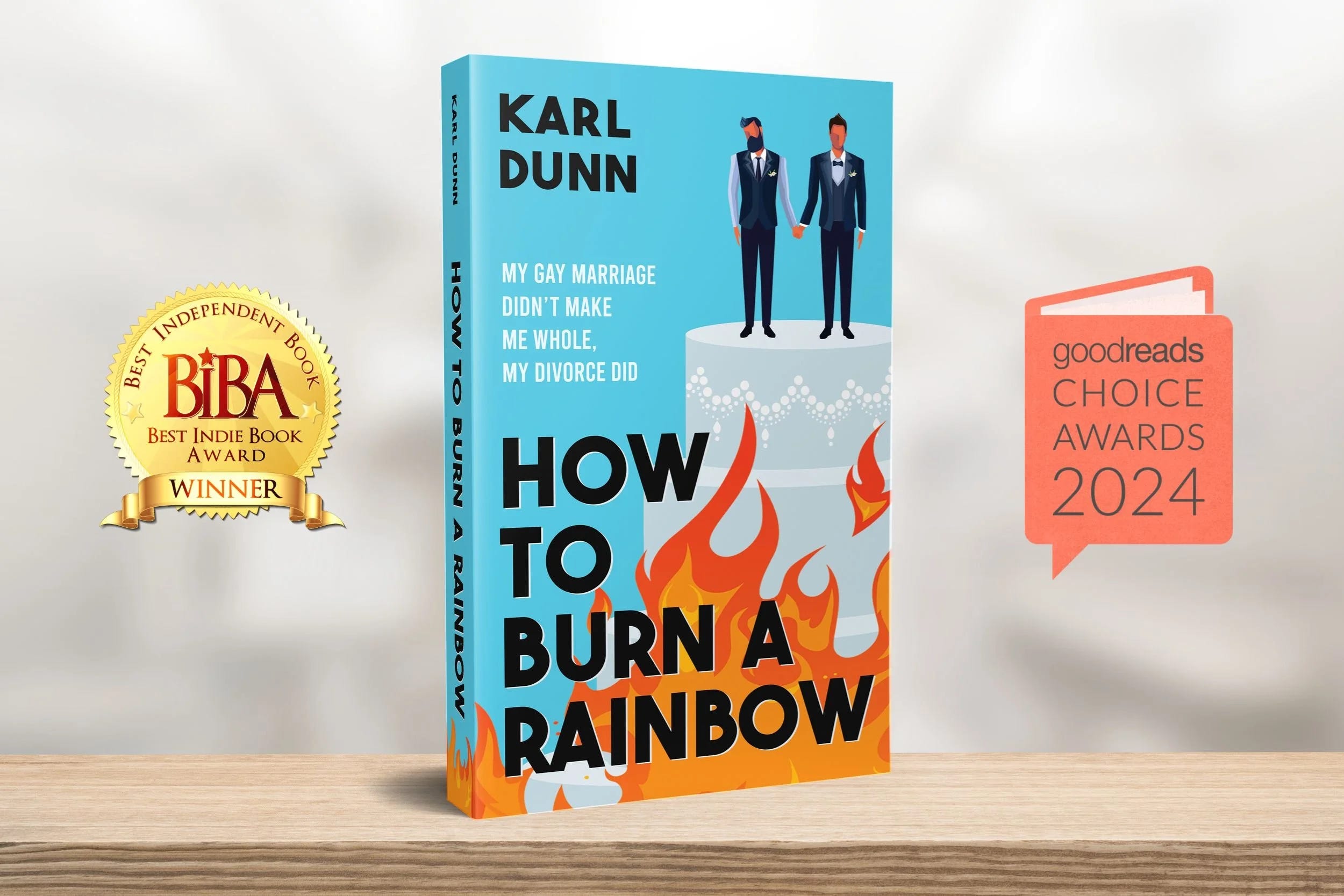
My book How To Burn A Rainbow is subtitled My Gay Marriage Didn’t Make Me Whole, My Divorce Did. I wrote it as a gay man writing about a gay marriage and divorce. But a significant part of its readership has turned out to be straight. Which tells me that the thing I was writing about — the experience of going into a marriage partly to complete yourself and discovering, only when it’s over, that completion was an inside job — is not a gay experience. It’s just a human one.
There’s a chapter though, that never made it to print. It was about how I could already see, even as I was writing about my own divorce, that a rethink was happening in the straight world too. That the cultural permission to end a marriage without a war was spreading quietly, particularly among people whose children had grown up and left. I took it out because I wasn’t sure it was my story to tell.
Mine was lawyers-at-ten-paces ugly. So I don’t want to romanticise divorce at all here. But it does make me happy that the script I felt pushed into by my ex, society, friends, lawyers, the divorce industry, and honestly by myself too, is getting if not a rewrite, a much needed appendix.
The man who messaged me signed off by saying that he and his ex-wife had had dinner together the week after they told the kids. Just the two of them. To mark it, he said. To honour what it had been.
The idea that you could sit across from someone you’d shared twenty-three years with and say, simply: that was real. That mattered. We did good. And now we’re done.
No villains. No war. Just two people, being adults about it. In a world that still doesn’t entirely have the language for that.
Like my post a few weeks ago about words we need in English, maybe this is a new maturity we haven’t named yet.
Till next time — let’s keep moving through this world undividing, and see what this planet can do.
Karl
Are you noticing the texture of divorce changing where you are? A friend, a family member, a neighbour? Someone who came out the other side and surprised everyone — including themselves? Tell us what you’re seeing in the comments.
Literally as I was reading the VO for this, it occurred to me that a grey divorce and a LAT is exactly what I did, a little earlier. I got divorced at 48, and I’ve been dating my partner for the last 4 years. We don’t live together. We’re planning to get married. But honestly, not really sure if we’ll live together then either.
We like having our life together. And then our own lives as well. It’s not something I ever would have considered ten years ago. Now it feels very natural to us.
And I also feel more committed, connected, and beautifully entwined with him than anyone I’ve ever been with before.
So I guess this week, I was writing about myself without even realising it. Change three, to four in the pattern.
Sources
The Graying of Divorce — Brown & Lin, Journals of Gerontology (2022)
Empty nest divorce: couples 40% more likely to split after kids leave — Equitable Mediation
Gray divorce now 36% of all US divorces — Atlanta Journal-Constitution, May 2026
Why the search for love looks different after 50 — Greater Good, UC Berkeley (2026)
Dating trends 2026: 50–70 age group dominates — Sixty and Me
More couples divorcing after 50: psychologists navigate the changes — APA Monitor (2023)
Gwyneth Paltrow on conscious uncoupling: ‘I feel very proud’ — Today.com (2023)
12 divorce movies that changed how America viewed marriage — Ranker
Like, comment and restack! It all helps the algo push Undividing into people’s feeds.
Have you learned anything in Undividing that’s helped you in your life? Given you a new perspective? Helped you feel connected to the good in all of us? If so, consider taking out a paid subscription.
You can also Buy Me A Coffee. I post you back a personal 30 sec video for any donation, any size. (Ignore the BMAC amount prompts, you can enter any amount)
You can also support by picking up a copy of my award-winning book How To Burn A Rainbow, the story of how my divorce set me off on a journey - a riches to rags rollercoaster from LA to Berlin where I had to lose it all to find myself.
Comments
Nothing yet. Say the first thing.
Sign in to join the conversation.