
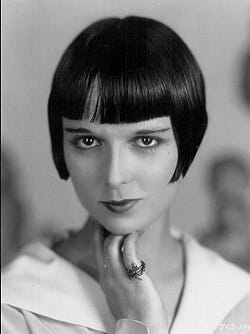
In the mid-1920s, a young woman named Louise Brooks left Kansas, danced in George White’s Scandals, and then joined the Ziegfeld Follies on 42nd Street. An infatuated Paramount producer named Walter Wanger signed her to a five-year contract after seeing her perform.
She was twenty years old.
Within a few years, Brooks would become one of the most iconic faces in silent film—her bobbed hair imitated by thousands of women, her naturalistic acting style so subtle that audiences at the time complained she wasn’t acting at all. But her independent spirit, her refusal to conform to the strict studio system, and walking away from Paramount Pictures over a salary dispute, resulted in her being blacklisted upon her return to the U.S. in the 1930s.
She spent years in poverty, working at a department store counter in Manhattan, all but forgotten. Film historians did not rediscover her until decades later.
Her director, the great G.W. Pabst, had warned her. He told her that her carefree approach to her career would end in dire poverty “exactly like Lulu’s”—the doomed character she had played in his masterpiece, Pandora’s Box. He was right.
Brooks was not destroyed by a lack of talent. She was destroyed because she refused to be grateful, and the industry had no use for a woman who wouldn’t cooperate.
Between the Footlights and the Shadows
The Grace Michelle Mysteries move between two worlds that were, in the 1920s, colliding: Broadway and the silent film industry in Los Angeles. Both had their own power structures, their own politics, and their own ways of getting rid of people who became problems.
Broadway in the twenties ran on personal power. A producer could hire you over dinner and fire you before opening night. There were no union protections for most performers, and a bad word from the wrong person could end a career before it started. Chorus girls vanished from cast lists without explanation. And in Los Angeles, the film industry was even more volatile. Fan magazines simultaneously warned young women to stay away and printed glamorous photographs that lured them there. Chaperoned dormitories were built in Hollywood to house the flood of arriving young women—and to alternately protect and police them. As one actress told columnist Louella Parsons, she felt like telling every girl to stay home, because “the profession is crowded now… it will be survival of the fittest.”
Grace is not a performer. She works in the world around the stage—the offices, the rehearsal halls, the after-hours conversations where the real decisions get made. She sees how things actually work, not just how they look from the audience. And she never stops noticing.
Visibility and Its Cost
In this world, fame was supposed to protect you. It didn’t. Clara Bow, the biggest box office draw in America, received forty-five thousand fan letters in a single month in January 1929. By the following year, studio-fed scandal had begun to consume her. She described her nerves as “all shot” and reportedly kept rows of sedative bottles by her bed. The industry that built her image was already preparing to discard her.
Grace knows this world from the inside. She has watched women be applauded one season and forgotten the next. And she has learned that the truth about a person rarely shows itself on stage. It surfaces in the quieter moments—backstage, between scenes, when someone forgets they are being observed.
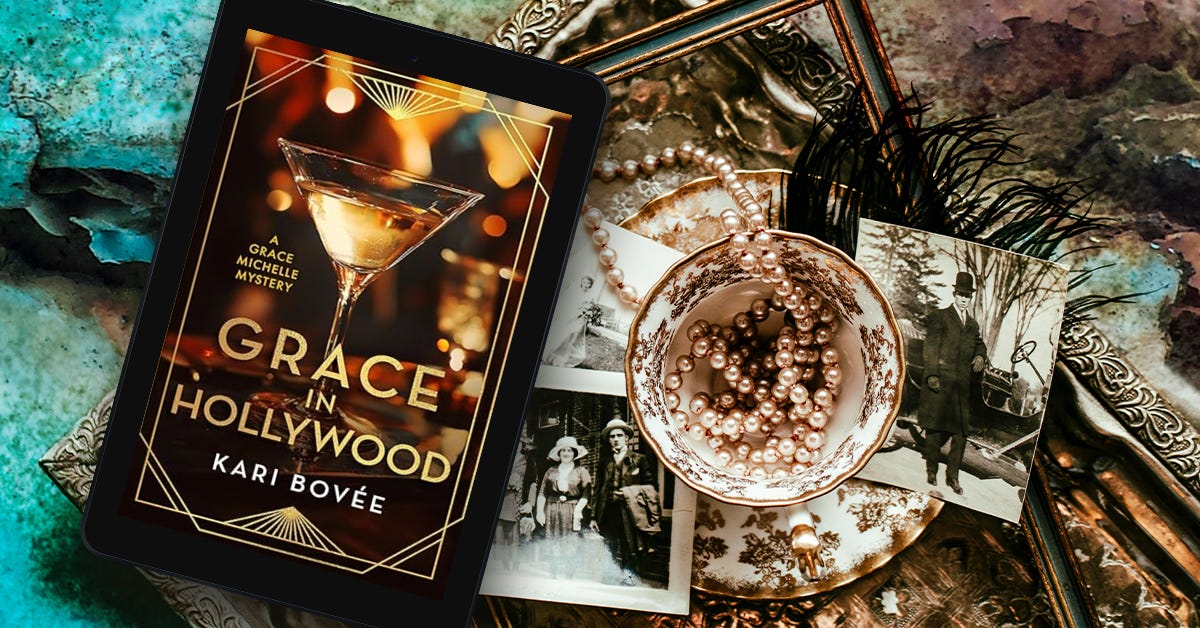
If you’re drawn to mysteries set in worlds that look beautiful on the surface and ruthless underneath—where the detective’s greatest advantage is that no one takes her seriously—the Grace Michelle Mysteries might just be what you’re looking for!
No posts
Comments
Nothing yet. Say the first thing.
Sign in to join the conversation.