
TL;DR: I’ve spent months telling two young women to quit their jobs and chase their dreams. Turns out, I was wrong. After transitioning from C-suite leadership to a different role, I’m realizing that maybe the steady job that funds your actual life IS the dream. And maybe it shouldn’t take decades to figure that out.
Hello there 👋
I’ve spent a good number of hours encouraging two young women—29 and 31—to quit their jobs and pursue their passions. They’re both trapped in careers they hate, dreaming of something else. One has no kids. One has a small child and another on the way. Neither is the sole earner in their household.
My advice? Get out. Life’s too short. Follow your dreams.
Here’s the thing: Maybe I was wrong.
I arrived at this realization through my own journey. After twenty years of being either #1 or #2 in leadership, I’m in a very different role now. And it’s been a real adjustment—not being the big boss, not carrying the weight of the organization on my shoulders, not having that corner-office authority.
But as we make the turn into fall, with a big birthday looming in 2026, I’m working on giving myself grace. Recognizing what this shift has given me. The privilege of work that supports educators. The ability to clock out and actually have energy left. And most importantly—the space to have a life outside of work.
Because here’s what I do now: I lie around and watch K-dramas. I started my own newsletter (if you’re reading this, thank you 🫶). I randomly make batches of chocolate chip cookies and eat them right off the rack. I exercise every day. I have a regular Thursday night friend date. I hang with my kids. I text with my besties. I read so many books. I work on my Threads account and my digital products. I travel when I can.
Yes, I don’t have the kind of income I used to. I don’t wear (or buy) beautiful clothes and shoes anymore. But I have something I didn’t have when I was climbing: actual life.
So what’s success if not that?
When I feel bad about not having the big title anymore, what am I actually feeling bad about? It’s all ego. For real. I’m buying into the capitalist, patriarchal system that’s so ingrained in me that I can’t even see it most days.
So that’s when I realized: maybe those two young women aren’t trapped. Maybe they’re actually ahead of me. Because they’re asking these questions at 29 and 31, not 59.
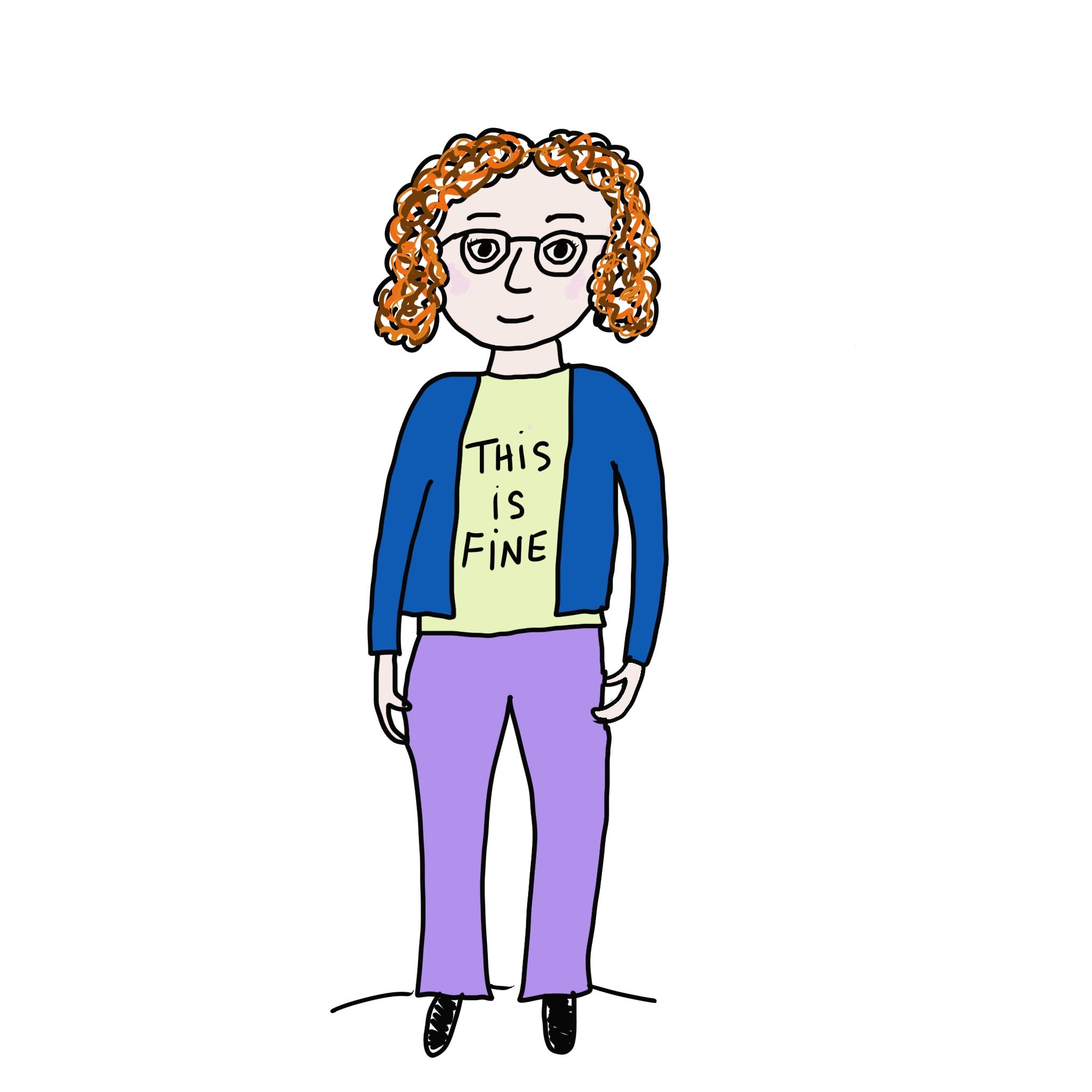
Here’s the narrative we’ve all swallowed: If you’re not passionate about your work, you’re wasting your life. Your job should fuel your soul. Your career should be your calling. If you’re just working for a paycheck, you’re settling.
This is particularly vicious for women because we’re already supposed to be passionate about everything—motherhood, relationships, our appearance, our homes. Now work, too? We’re supposed to find deep meaning and purpose in our jobs while also being grateful for the opportunity and never complaining about the grind?
So women stay in jobs that drain them because they “should” be passionate about them. Or they quit stable positions to chase dreams in an insecure world, then blame themselves when the passion doesn’t pay the rent. Or they feel guilty about having a “regular” job because it’s not their calling.
Meanwhile, the steady job with good benefits that lets you clock out at at a decent hour and actually live your life? That’s treated like failure. Like you’re not ambitious enough. Like you’re not living up to your potential.
We’ve been told that following your passion is brave and staying for security is cowardly. But here’s the inner voice of reality: It’s really hard to follow your passions when you’re worried about rent, healthcare, and whether you can take a sick day without financial panic.
You know what actually enables passion? Security. Stability. A job that might not fuel your soul but fuels your bank account, your ability to experiment with that side project, your freedom to spend weekends doing what you actually love instead of hustling to make ends meet.
The standard advice keeps feeding us the same toxic narratives:
“Quit your job and bet on yourself!” This sounds empowering until you realize it’s just hustle culture wrapped in an inspirational quote. It ignores that most people need health insurance, steady income, and the ability to sleep at night without financial terror. It treats security as weakness instead of strategy.
“Find your passion and monetize it!” Translation: nothing in your life gets to just be enjoyable—everything must be optimized, leveraged, turned into a personal brand. Your hobby becomes your side hustle becomes your second job. God forbid you just like doing something without it generating income.
“You’re just afraid of taking risks!” This one’s especially cruel because it pathologizes reasonable caution as fear. No, Karen, I’m not afraid of risk—I’m aware that I need to eat and have a place to live. There’s a difference between being brave and being reckless, and acting like security is for cowards is gaslighting.
“Lean in and create the career you want!” Sure, just individually overcome systemic barriers while also being passionate, strategic, grateful, and never complaining. Easy peasy 🙄
Here’s why all this advice fails: It assumes passion and work should be the same thing. It never questions whether the job is supposed to be the center of your life or just the thing that funds your actual life.
It also puts all the burden on individual women to fix what’s fundamentally a systemic problem. The issue isn’t that you’re not striving enough—it’s that we’ve built an economy where people can’t afford to live unless they’re constantly grinding, and then we’ve convinced them that if they’re not also passionate about the grind, they’re doing it wrong.
Here’s the reframe I’m working with: Don’t conflate the job with the dream.
Success isn’t about climbing as high as I can. It’s about building the life I actually want. And sometimes—often—that means the work is just work. The thing that pays for everything else that matters.
This requires completely flipping the script, both in how we talk to ourselves and how we respond to the world:
Instead of: “I should quit and follow my passion.”
Try: “My steady job is what makes it possible for me to explore my passions without panic.”
Instead of: (When someone asks about your career ambitions) “Oh, I’m just doing this regular job, nothing exciting.”
Try: “I’m in a role that gives me the stability and time to focus on what actually matters to me.”
Instead of: “I’m not living up to my potential by staying here.”
Try: “I’m being strategic about how I use my finite time and energy.”
Instead of: (Internal guilt spiral) “I should be doing more with my career.”
Try: “My career is doing exactly what I need it to do—funding my actual life.”
Instead of: (When feeling envious of someone’s “passion career”) “They’re so successful, and I’m not.”
Try: “They made one choice. I made a different one. Both are valid.”
The mindset shift is profound: You’re not giving up on your dreams by having a regular job. You’re making your dreams possible.
That job you’re ambivalent about? It might be giving you health insurance to manage your needs. Financial stability to save for what you really want. Mental bandwidth to write on weekends. Time to actually be present with your kids. Freedom from the constant anxiety of making your passion profitable.
This isn’t settling. This is wisdom.
And listen—if you genuinely want to quit everything and chase the dream career, DO IT. Just make sure you’re doing it because you want it, not because you’ve internalized the message that you’re not enough if you don’t.
Make a two-column list:
Left side: “What my job gives me”
Right side: “What I do with what my job gives me”
Be specific. Your job gives you $X salary—what does that make possible? It gives you health insurance—what does that protect? It gives you nights and weekends—what do you do with that time?
Then look at the right column and ask yourself: Is this my life? Because if it is, maybe your job is doing exactly what it’s supposed to do.
We’ve bought into the idea that we must always be striving for a bigger title and salary. For some, that IS what fuels them. For others, it’s either what drains us or isn’t attainable. And then we feel bad about ourselves. That’s the system at work.
What our jobs actually need to give us: a paycheck, health insurance, a secure landing spot. The stability to fuel ourselves. This isn’t settling. This is living.
If you’re not at the place you thought you should be by now, stop beating yourself up. It’s not you. It’s the system making you feel less than. And that is total 👏 bullshit 👏 .
With you all the way,
- Kara
P.S. Next week: A deep dive into the importance of a work bestie. The system keeps us second-guessing ourselves. Your work bestie keeps it real.
Got a great work bestie story? Reply and share it with me! I’ll include it in next week’s newsletter (if you want!)
Comments
Nothing yet. Say the first thing.
Sign in to join the conversation.