
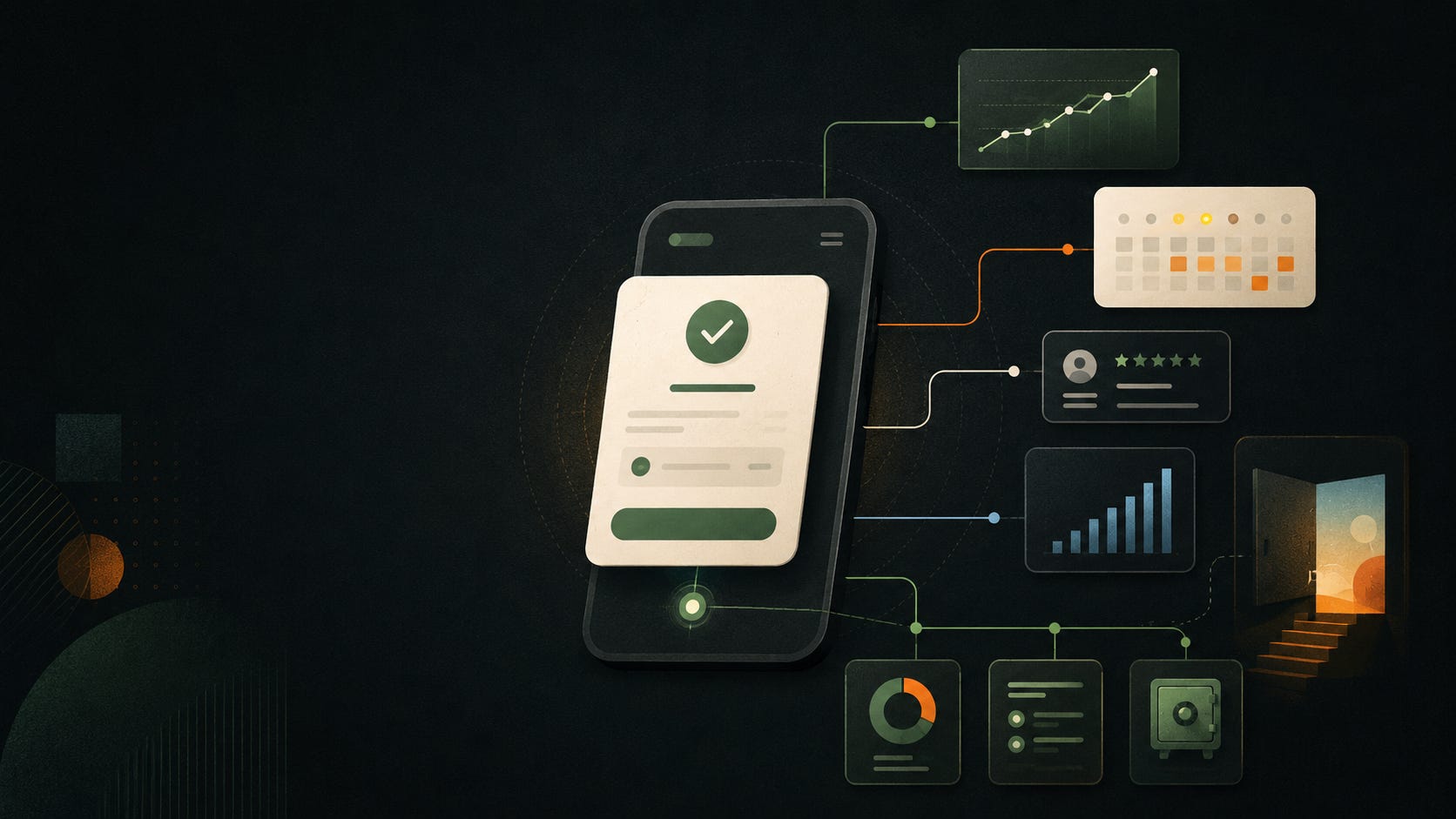
The first thing someone sees in Snippe is simple.
Create a payment page. Add what you are selling. Share the link. A customer pays. You get a receipt.
That is the product on the surface.
It is useful because getting paid online is still unnecessarily difficult for many people. A creator should not need a website to sell access to something. A freelancer should not need to send bank details, screenshots, and long instructions to every client. A merchant should not need an engineering team to accept an online payment.
They should be able to create a page, share it on WhatsApp, Instagram, TikTok, or anywhere else their customers already are, and start collecting.
That is why we built Snippe.
But after watching how people use it, we started seeing something bigger.
The payment is not the product.
The payment is the beginning of the product.
Because behind every payment is a person trying to build a financial life that the formal system still struggles to see.
For a lot of people using Snippe, the link is not just a checkout page.
It is their first storefront.
It is where they collect deposits for a service.
It is where they sell tickets to an event.
It is where they receive payment for a freelance job.
It is where they take orders before buying stock.
It is where they turn an audience into income.
It is where a small business begins to create a record.
That record matters.
A person who receives one payment may have made a sale.
A person who receives payments every week is showing demand.
A person who receives recurring payments from customers is showing income consistency.
A business collecting payments before fulfilment is showing a real operating cycle.
A creator receiving money from an audience is showing that they have built trust.
Most of this activity is already happening online. It is happening in WhatsApp chats, Instagram DMs, Google Forms, Telegram groups, TikTok comments, and community networks.
The money moves.
The work gets done.
Customers come back.
But when the same person needs capital, insurance, or any form of financial support, they are often treated as if none of that activity exists.
That is the problem.
Someone can receive money every day and still be financially locked out.
They may have a mobile wallet.
They may have a bank account.
They may have customers.
They may have a history of selling.
They may have months of transactions showing that people trust them enough to pay.
But when they need a loan to buy inventory, they are asked for documents that do not reflect how they actually earn.
When they need working capital, they are pushed toward products built for formal businesses with audited accounts and predictable monthly payroll.
When they need to prove income, they are treated as informal, even when their income is real and consistent.
This is where the idea of being “banked” becomes misleading.
Having an account is not the same as having access.
Being able to receive money is not the same as being financially recognised.
A payment page solves the first problem.
It does not automatically solve the second.
But it can become part of the answer.
The payment industry has spent years making money move faster.
That matters. Payments are foundational infrastructure.
But a payment that ends with a receipt leaves a lot of value on the table.
The more important question is what happens after the payment.
Can that activity help a small business understand its revenue?
Can it help a creator show consistent income?
Can it help a freelancer build a more credible financial profile?
Can it help a merchant access working capital that matches how their business actually operates?
Can it help someone separate business money from personal money?
Can it help a person save from every incoming payment instead of waiting for money that may never feel “left over”?
That is the direction we care about with Snippe.
Not just helping people collect money.
Helping people turn payments into proof.
Proof that they have customers.
Proof that they have revenue.
Proof that they are reliable.
Proof that they are building something worth backing.
Traditional finance was built around formal records.
Payslips.
Collateral.
Business registrations.
Bank statements.
Audited accounts.
Those things have a place. But they are not the whole economy.
Across Africa, a huge number of people operate real businesses without fitting neatly into those structures.
They sell online before they open a physical shop.
They take orders through chats before they build a website.
They receive deposits before they have formal invoices.
They run businesses before they have the paperwork that makes a bank comfortable.
The issue is not that they have no data.
The issue is that their data is fragmented, ignored, or not treated as useful.
Their transaction history sits in mobile-money messages.
Their customer records sit in WhatsApp.
Their sales activity sits across payment links, social platforms, and conversations.
Their business exists in plain sight, but not in a format that opens financial doors.
We think that has to change.
A payment should not only confirm that money moved.
It should help make the person behind that payment more legible.
Snippe began as a simple tool for collecting payments.
That remains important. Simple tools win because people can start using them immediately.
But the deeper opportunity is to build from that simplicity.
Every successful payment creates a small piece of economic history.
Over time, those pieces can become something more useful.
A clearer view of revenue.
A better understanding of cash flow.
A stronger record of customer demand.
A foundation for products that are based on actual business activity, not assumptions.
This does not mean every transaction should become a loan.
It does not mean payment history alone should decide who gets credit.
And it does not mean turning people’s data into another way to extract from them.
It means building financial products that start with the reality of how people already earn.
The value should flow back to the user.
If someone has built a history of receiving payments, that history should help them access better tools.
If someone is growing a business, their financial infrastructure should grow with them.
If someone is doing the work, taking the risk, and earning customers, the system should not keep pretending they do not exist.
The next generation of financial products in Africa will not be built only around accounts.
They will be built around activity.
Around trust.
Around cash flow.
Around behaviour.
Around the real ways people earn.
That is what we are learning through Snippe.
A payment link may look like a small product.
But for the person behind it, it can be the first verifiable record of a business that is already alive.
The payment is not the product.
The payment is the signal.
What matters is what it can unlock next.
No posts
Comments
Nothing yet. Say the first thing.
Sign in to join the conversation.