
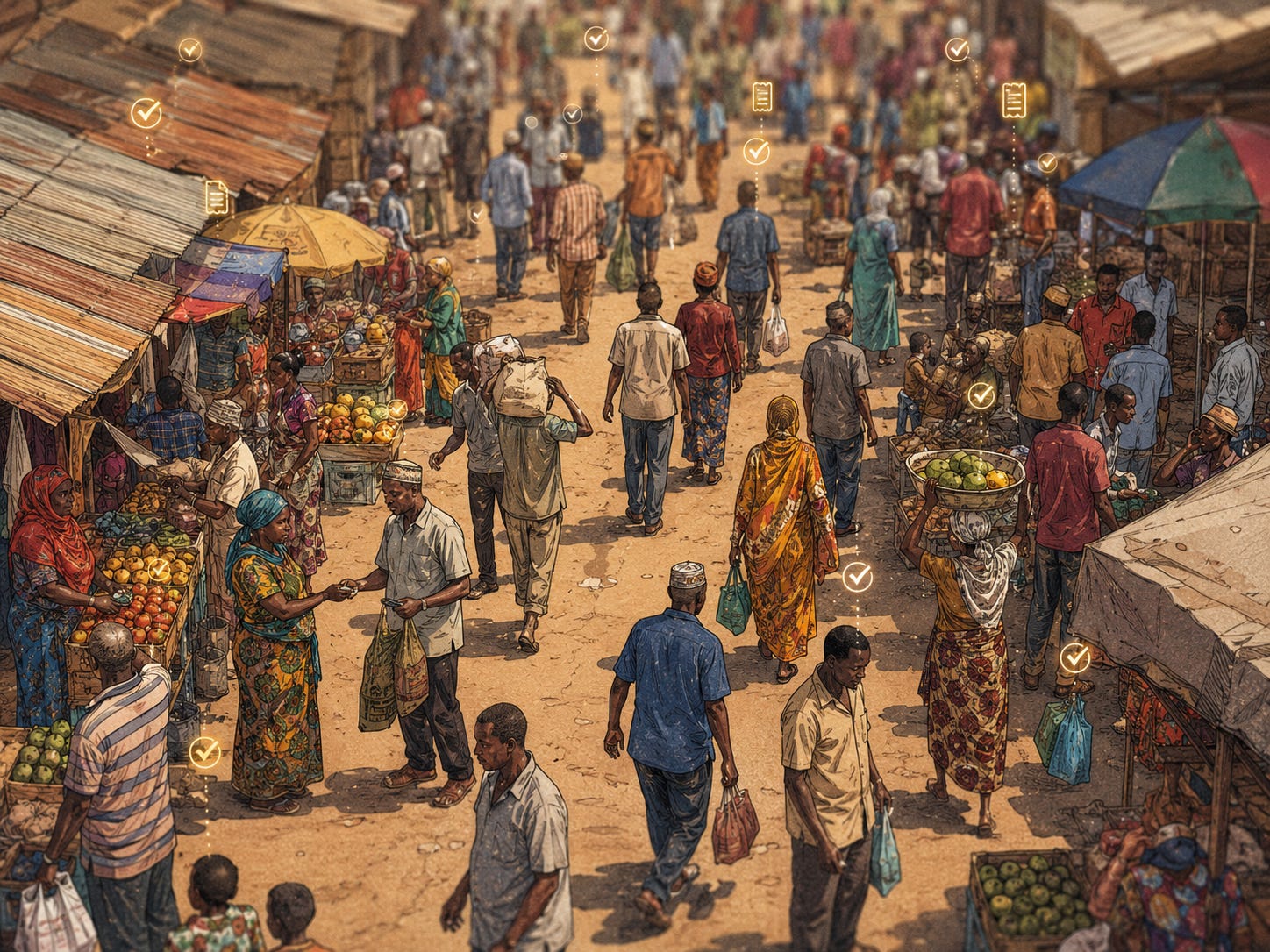
Snippe is a payments infrastructure product built for sellers, developers, and businesses that need to collect money without building a payment company from scratch. Payment links, payment pages, APIs, webhooks the lightweight layer between a product and a paid customer.
Since launch, Snippe has processed approximately ~ TZS 600M roughly $220K. That number is still early. But what it is teaching us about how commerce actually works in Africa is not.
When you look closely at the money moving through Snippe, you stop seeing just payments. You see developers integrating local payment rails into real products. You see creators selling guides, templates, and access. You see freelancers collecting from clients without sending bank details every time. You see tour operators accepting bookings from customers who discovered them on Instagram. You see NGOs collecting donations and program fees without forcing people through broken processes. You see SaaS companies like Kilihost supporting local payment flows. You see student developers who shipped something real before they had a company, a compliance team, or a banking relationship and needed a way to get paid.
They are not all the same business. But they have the same problem. They need something lighter than what exists.
A payment page. A link. A simple storefront. A webhook. A confirmation. A way to get paid and move.
That is the category Snippe is growing into. Not just payment links. Not just APIs. Infrastructure for lightweight commerce.
For a long time, people have assumed that digital commerce in Africa must eventually look like Western e-commerce. Build a website. Upload products. Add a cart. Integrate payments. Run ads. Optimize conversion.






That model works for some businesses. But it is not how most commerce starts here.
Commerce starts when someone posts a product on WhatsApp status. It starts when a creator shares an offer with their audience. It starts when a customer asks for a tour package through Instagram DM. It starts when a freelancer agrees on scope inside a chat. It starts when a student developer ships a small product from a hostel room and suddenly someone asks, “How do I pay?”
This kind of commerce does not need a heavy storefront. It needs infrastructure that respects how the sale actually happens fast, social, conversational, and trust-based. Sometimes informal at the beginning, but very serious once money starts moving.
Lightweight commerce is commerce without unnecessary weight. It is what happens when someone can start selling, collecting, or monetizing without first assembling a full business stack.
For a creator, a simple storefront, selling directly to an audience.
For a freelancer, a clean payment page instead of explaining instructions every time.
For a tour operator, a booking link for customers who come through social, not search.
For an NGO, collecting donations and program fees without making payment painful for both sides.
For a SaaS company, local payment flows without turning payments into the main engineering project.
For a student developer moving from “I built something” to “someone can pay for it” before becoming a formal company.
That is the market Snippe is serving. And it is bigger than people think.
One of the clearest things we are seeing: payment pages now contribute roughly one-fifth of Snippe’s growth. That is not a minor product detail.
It tells us something important about seller behavior. Not everyone wants to start with an API. Not everyone wants to build a full website. Many sellers want to create a page, share it, collect payment, and move.
That sounds simple. But simplicity is usually where the market is hiding.
A payment page can be a mini-checkout.
A booking deposit page.
A creator monetization page.
A donation page.
A SaaS subscription or top-up page.
A lightweight storefront before the seller is ready for a full one.
Most people do not start with perfect systems. They start with demand. Someone wants to pay. The seller needs a way to receive the money. Everything else comes later.
Developers have a different problem. They do not only need a payment page. They need infrastructure they can build on APIs, webhooks, metadata, reliable callbacks, clean payment status, a way to connect payments to their own application logic.
This matters more now because the way software is being built is changing. More people are shipping apps faster. Some are experienced engineers. Some are founders testing an idea. Some are building with AI, vibe-coding with tools they learned last week. Some are shipping weekend projects that suddenly become real.
But payments remain the point where momentum dies. The app can be built in a day. The demo can go live before dinner. But the moment money has to move, things get serious.
The builder needs to know when a payment succeeds, fails, expires, or needs action.
They need webhooks that work.
They need documentation they can actually understand.
They need to focus on their product not payment plumbing.
In payments, predictability is not a feature. It is the product.
SaaS companies may already have a product, customers, and a pricing model. But if they serve local users, they still need payment flows that match how those users actually pay. Businesses like Kilihost show what this looks like in practice: collections, callbacks, reconciliation, and clean checkout flows that disappear into the product experience. That is what good infrastructure does. It handles complexity underneath so the business can stay focused on the customer.
NGOs face the same gap from a different angle. They also collect money donations, event fees, membership contributions, application fees, program payments. And in many cases, payment operations are still manual. Someone sends a screenshot. Someone confirms by hand. Someone reconciles later in a spreadsheet. That works when volume is small. It breaks when the organization grows. Lightweight payment infrastructure matters here too not because NGOs are selling in the traditional sense, but because they need the same things any serious money movement requires: trust, visibility, and clean confirmation.
Many African sellers, builders, and organizations already have demand. That is the part people underestimate.
The creator has an audience.
The freelancer has clients.
The tour operator has inquiries.
The influencer has traffic.
The SaaS company has users.
The student builder has early adopters.
The problem is the gap between demand and payment. The customer is ready but the seller is still sending bank account details. Or waiting for a screenshot. Or losing the sale because the process feels untrustworthy. Or delaying launch because payment integration feels bigger than the product itself.
Snippe is trying to close that gap. Not by forcing everyone into a heavy system. But by giving them lightweight infrastructure that helps them move from interest to payment faster.
Processing TZS 600M is still early. But it is evidence.
Evidence that sellers want simpler tools.
Evidence that payment pages are not a side feature.
Evidence that creators need lightweight storefronts.
Evidence that developers need better local infrastructure.
Evidence that NGOs, SaaS companies, and student builders can become serious payment use cases faster than people expect.
African commerce will not be built only through websites and apps. A large part of it will be built through links, pages, storefronts, APIs, WhatsApp flows, and embedded payment experiences tools that help people collect money without becoming a payment company first.
That is the direction Snippe is moving toward. Not just helping people collect money. Helping people sell, build, collect, and operate without unnecessary friction.
The next generation of African commerce will not all look like traditional e-commerce. A large part will be lighter and that is not a downgrade. It is the architecture that actually fits how commerce starts here.
A creator with a storefront.
A developer with an API.
A tour operator with a booking link.
An NGO with a donation page.
A student builder with a checkout link.
A vibe-coded app with webhooks.
A seller with WhatsApp checkout connected to fulfillment.
Less heavy setup. Less friction. Less waiting. More direct selling. More payment visibility. More infrastructure under the surface and less complexity for the person trying to sell, collect, or build.
After processing TZS 600M, the signal is clear: Snippe is becoming infrastructure for lightweight commerce. The businesses using it are not waiting for a perfect system. They are moving. The infrastructure just needs to move with them.
No posts
Comments
Nothing yet. Say the first thing.
Sign in to join the conversation.