
“A PhD is a marathon, not a sprint.”
If you aren’t an athlete or runner, this statement appears logical. Yet, what is assumed is that a marathon is the antithesis of the sprint. The slow, consistent, and steady effort compared to the all out effort of a sprint. However, as a former athlete (including track sprinter and hurdler), I want to challenge this black and white perception and offer that this idea of constant, steady output is a disservice and may be part of the reason so many researchers and doctoral students/candidates find themselves stuck in an endless loop of what many might describe as “writer’s block.”
“Writer’s block” often used to refer to the cognitive stalling or overwhelm resulting from perfectionism may also be used to describe the experience of the researcher returning to their work after an extended break. Or perhaps, returning to the page after a period of data collection or primary source analysis. Writing, for the researcher, is one step of many which contributes to their process. Writer’s block, thus, is a result of the return. Returning to writing. To the blank page. And the uncertainty of where to start.
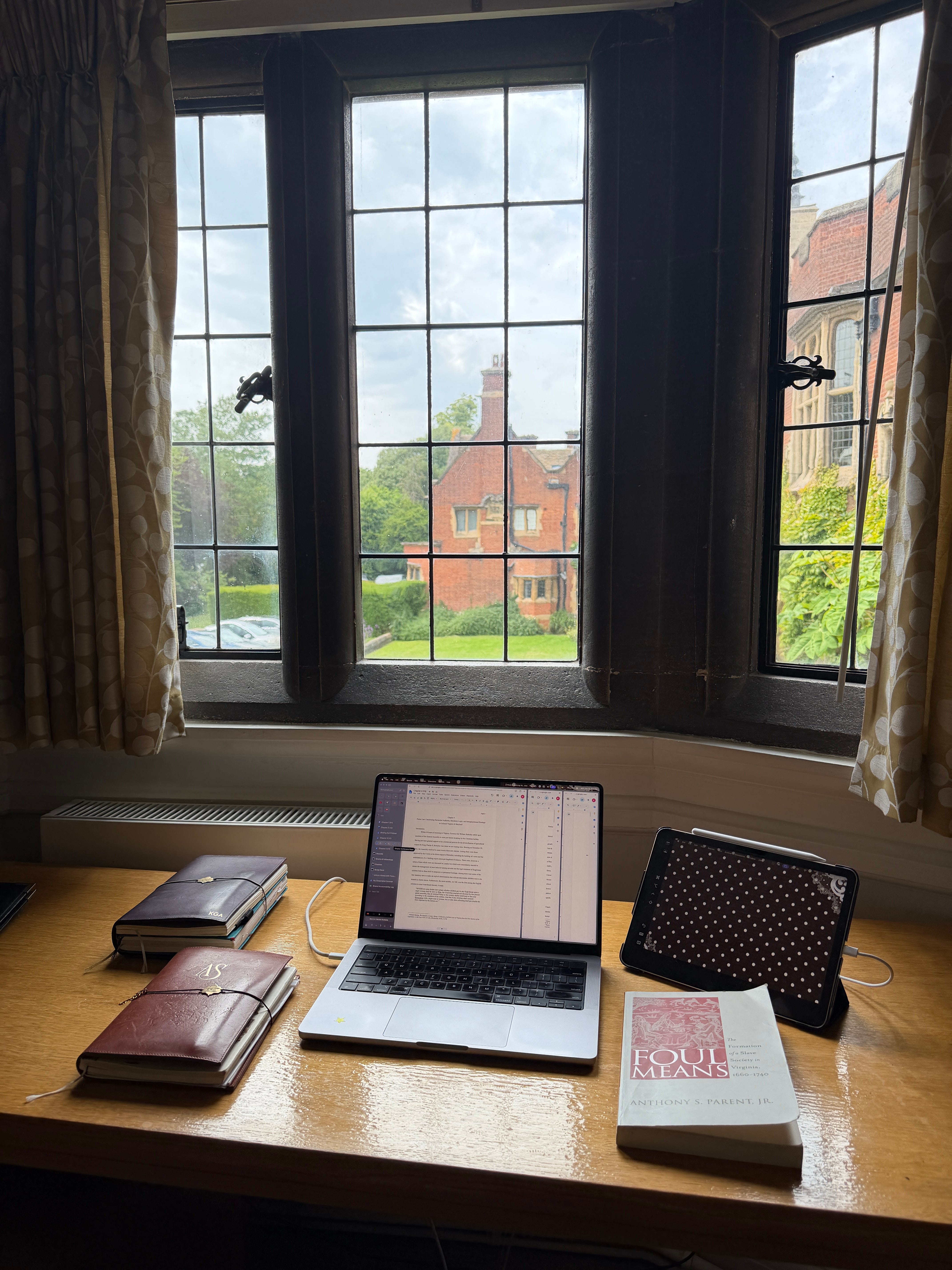
I’m a PhD Candidate in History & African American Studies (recently renamed Black Studies - more on this later) at Yale working through my dissertation while living in the UK. My journey to PhD has been all but linear. It has been a “marathon” characterized by detours (the year I worked in EdTech), failures to launch (days spent staring at my computer to no avail), euphoria (when I finally find a source in the archive which I can cite), and many many days churning out strides (words) that have failed to help me build momentum.
It’s, in many ways, been like a marathon where the finish line is a mirage and the path seems to grow ever longer. Now, only 180 some days until my submission, however, the end is finally in sight. The wind has once again filled my sails and I am slowly moving across the turning tide.
What follows are tips and bits of wisdom I have been granted by my PhDone Coach Polly Hember and which I have learned through practice (lots of trial and error). I encourage you to give them a try and report back, as well as to share your advice and tidbits of wisdom in the comments or by reposting this article to share with your own Substack community members.
Rather than reading the work of other scholar (which often leads to overwhelm and the perception that our writing must be held to a similar standard), start with your own written work. Read back old essays, a section you have drafted previously or (even better) a summary of your chapters or the proposal which underpinned the project itself.
Starting with your own words, sentence structures, language, and tone ensures you are not stuck in a negative feedback loop of comparison. You are simply building on your own portfolio of prose. Contributing to your own catalogue of written works.
Just as the people we spend time with alter our personalities and reactions, so too does the input we subject our brains to. So rather than getting stuck into the words of another, start with the best example upon which to start and build your repertoire, your own voice.
After a period of data collection or primary source analysis, start by reacting in bullet points instead of paragraphs. What are you seeing? What seems significant? What may be surprising?
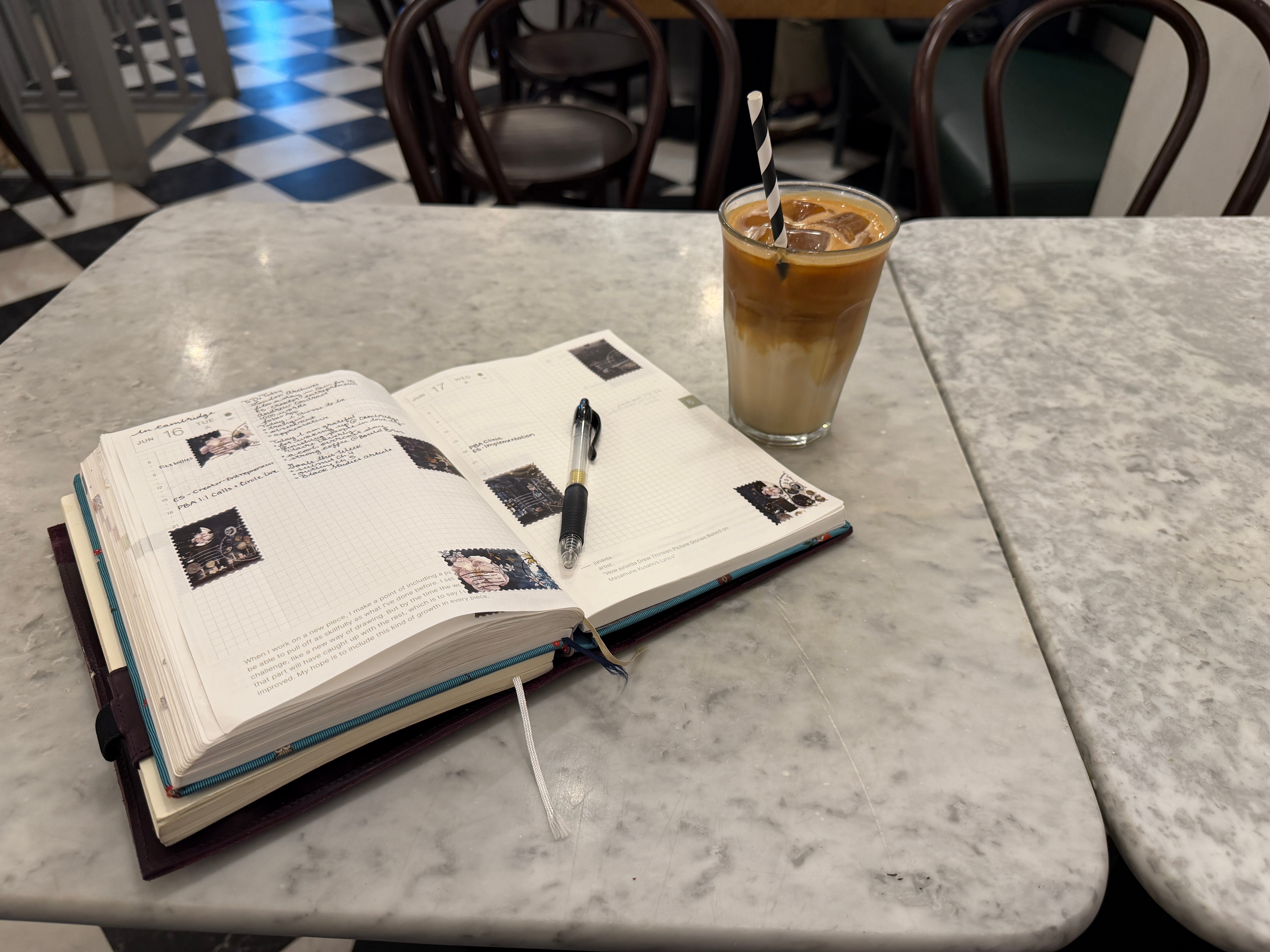
I often draft out statutes by hand (I am a legal historian after all) as bullet points in my Dissertation Diary (which you can read more about here). I am a strong believer that we must have an intimate relationship with our research, our findings something we should be able to tangibly engage. For me, this looks like jotting my reactions, thoughts, and findings in my journal. Perhaps this looks like Post It Notes, a VoiceNote or something else entirely. But start with a less intimidating and informal form by which to begin the distillation of your research.
From here, you will have accumulated your main points for the written draft, thus providing structure which can steer your outline and the flow of your draft.
Whenever I am truly stuck, I begin hand writing based on a simple prompt:
What am I curious about?
How does this source shape, corroborate or challenge my thesis?
Today, I look forward to exploring…
The prompts are a starting point which allow me to structure my initial thoughts but in writing by hand, I allow things to get messy, to “go off the rails” and follow whichever logic or idea comes to mind. The goal here is write in my own words. I swear. My sentences are shorter. The format is informal and nonsensical. That’s the point.
No one will read this. The idea is to get “out of your head and onto the page” as we like to say in Accepted. To allow the informality and natural language to support unbridled and free writing to take over.
If writing by hand isn’t for you, however, perhaps try calling up a friend and recording your explanations. Ask them to question you. To press further to see where the fault lines are as well as identify the areas you DO, in fact, have confidence in.
The methods I propose are intentionally opposing the use of AI. To return to the roots of our ideas and build confidence in our own voices. To read back our work and affirm that WE HAVE SOMETHING WORTH SAYING. We do not need AI summaries, to rely on templates stollen by LLM tech companies. Your voice, your ideas, your messy humanness deserves to be championed. Trust it. Lean into it. Within it, you share find a deeper sense of self.
If you enjoyed and resonated with this article, I would love if you would Subscribe to my Free Substack Publication and Repost the Article itself. This greatly helps spread the word and connect us with more likeminded souls.
Thank you <3
No posts
Comments
Nothing yet. Say the first thing.
Sign in to join the conversation.