
Hullo everybody!
What another huge week it’s been. I was just re-reading the newsletter I sent out one week ago. At that point, the 14-point Iran-U.S. Memorandum of Understanding was still only a possibility. Since then, we’ve had, successively: confirmation from the two capitals that it would be going ahead… a slow rollout of its actual text… and then, the sight of Pres. Trump signing the MOU— in two languages— on Wednesday, in (of all places) the Palace of Versailles.
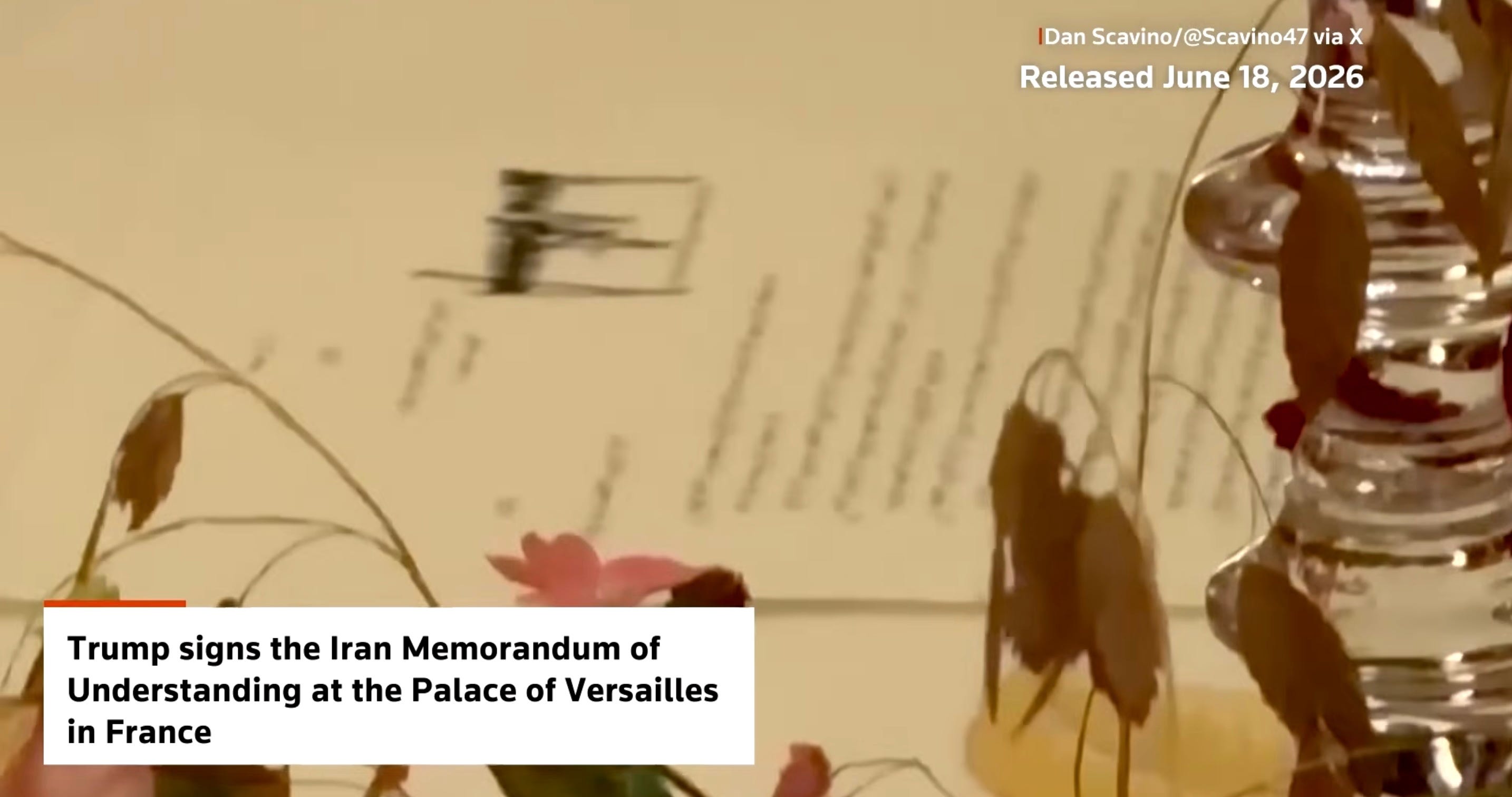
Iran’s Pres. Pezeshkian also signed the MOU, which the Iranians were at pains to note was drafted and signed in both English and Farsi, in order to minimize the possibility of interpretational differences going forward.
These include the following:
Exuberant welcomes to its conclusion from most governments and financial markets worldwide… and a plunge in the posted Brent Crude oil price back down to ~$80/barrel from highs it had reached that were north of $115.
Ground-reality situations that appeared substantially calmed (for now) in the Gulf theater, but absolutely not calm yet in either Lebanon or Gaza. In Lebanon, as news of the MOU and its Lebanon-protecting terms became firmer from Monday on, residents of the South started streaming back to the farms and villages from which Israel had violently evicted them, in their own “Great March of Return.” But throughout the week— and even after the formal conclusion of the MOU by Trump and Pezeshkian— Israeli military units occupying areas across Southern and East Lebanon continued to launch hostile (and often very lethal) actions against them. Hizbullah, which initially abided by the ceasefire, then returned fire against the offending occupation forces.
Even today, the Israeli units continued their lethal actions in Lebanon. At 8:30 am ET today, journalist Courtney Bonneau reported from the village of Qanaret that Israelis forces had attacked 30 towns and villages earlier today, killing at least 21 people.
In response to all that, Iran’s central military command has now announced the closure of the Strait of Hormuz. It stated that this was in response to “the explicit breach of the first clause of the post-war MOU by the United States” and “the Zionist regime's continuous and ongoing violations of the ceasefire in southern Lebanon.”
Israel has also continued, or even escalated, its violations of the ceasefire reached eight months ago in Gaza.
Zionist leaders and supporters in Israel and worldwide have meanwhile gone ballistic in their criticism of the MOU. These people (quite rightly) see the slowly released terms of the MOU as constituting an extremely serious setback for Israel and the goals it sought to win through the attack on Iran that it launched jointly with Pres. Trump back on February 28. Let’s face it: the terms of the MOU merely codify the fact that the U.S.-Israeli Axis lost this war, due to the smarts and the long-prepared resilience with which Iran defended itself and the grotesquely violent (and seriously ill-informed) way in which Washington and Tel Aviv waged it.
The deeper effects of this ill-begotten war will resonate throughout the coming decades. (I wrote a little about this in mid-week, here.) But for now the fact remains that there is no military path through which any combination of U.S. and Israeli power can either “win” this war or even reduce the scale of the two powers’ defeat. The only way to limit the effects of their defeat is through smart diplomatic engagement. (I’m not holding my breath on that. But a person can hope.)
In recent days we’ve seen a sharp war of words between top officials and supporters of the U.S. and Israel. On the Israeli side, this has included members of Netanyahu’s government and some of his high-ranking, longtime supporters in the media speaking out super-harshly about Pres. Trump’s “capitulation” to Iran. Netanyahu himself has thus far bit his lip and stayed silent… Then from Washington yesterday we saw Pres. Trump himself speak out in a derogatory and demeaning way about PM Netanyahu and his government. Trump insisted to Axios that he could control Israel from attacking Lebanon, adding that, "They have a lot of respect for me, and so they do as I say."
Now that Iran has announced the re-closing of Hormuz, we will see whether that assessment from Trump has any real-world force beyond that of rhetoric.
We have also seen some key Israeli allies in the Arab theater making small though welcome shifts in their positions. These include the UAE government and also— still tentatively— the President and PM of Lebanon. Regarding the UAE, we learned some weeks ago of the extent of the cooperation that its ruler, Muhammad Bin Zayed (MBZ), has been pursuing with Israel in the military, intel, and diplomatic fields. But now it turns out his “spymaster” brother Tahnoon (TBZ) has been pursuing a different track. This report from Bloomberg yesterday tells us that, “In the three months since the regional war began, Abu Dhabi’s initially hawkish stance gave way to a more pragmatic approach built upon engaging with its bigger neighbor. Sheikh Tahnoon, also the UAE’s national security advisor, played a key role in that process… “ Bloomberg also provides some details, as did this earlier report in Middle East Eye.
Whoa, these are such fast-moving days we’re living through. I had a long list of resources that I wanted to bring to your attention in my newsletter today. But the intellectual challenge of pulling together the list I made above was not trivial. So I will race a little faster through the list of other things I want to tell you about today. Here’s what they are:
The impact of the MOU for Gaza, and Hamas’s reaction to it
Two great new JWE/Palcast productions, audio and video
Some key news from Lebanon
A valuable new analysis of Iran’s internal politics
Our new call: Protect Trita Parsi!
Iran’s Organization for Defending Victims of Violence translates our Jeffrey Sachs convo
More on my latest essay on historical resonances of the current war
Rami Khouri on TRT and Al-Jazeera.
So here goes:
The first clause of the (English) text of the MOU starts thus:
The United States of America and the Islamic Republic of Iran and their allies in the current war by signing this M.O.U. declare the immediate and permanent termination of military operations on all fronts, including in Lebanon, and undertake from now on not to initiate any war or any military operation against each other, and to refrain [from] the threat or use of force against each other and ensuring the territorial integrity and sovereignty of Lebanon.
This clause specifies only Lebanon among the fronts that it covers. It also appears to bind all the two sides’ respective “allies” to its terms. Almost immediately after the MOU was concluded, Hizbullah announced its intention to abide by its terms. Israel did not.
Regarding Gaza: It was not specified as being included. On June 16, as the terms of the MOU were slowly becoming revealed, the Hamas leadership issued a statement in which it welcomed the achievement of the MOU. It stated that,
it hoped the agreement would have a positive impact on pressing regional issues, particularly by securing an immediate end to the ongoing Israeli offensive in the Gaza Strip and stopping attacks and violations affecting Lebanon and other fronts.
Hamas said that achieving security and stability in the region depends on ending what it described as a war of “genocide, starvation and displacement” against Palestinians in Gaza, as well as addressing the roots of the conflict, including the continued Israeli occupation and the denial of Palestinian national rights.
The movement also congratulated Iran’s leadership and people on what it described as their resilience and commitment to protecting their rights and national interests in the face of pressure and challenges. Hamas said this had helped thwart attempts to impose political dictates and regional domination projects.
Yesterday, the well-informed,and Tehran-based Iranian professor Mohammad Marandi appeared on Judging Freedom. He noted that the Israelis have killed more than 1,000 Palestinians in Gaza since the conclusion of the (highly imperfect) “ceasefire” last October. He also said this:
Iran is adamant that without the sovereignty of Lebanon restored and without the end of the terror of the Israeli regime in Lebanon, we cannot have a deal. And the first phase even will not end with success unless a result. And during the negotiations over the next few weeks, the issue of Gaza is going to be a part of it.
Iran is not going to accept Netanyahu continuing to slaughter the Gazans, the Israelis to continue to slaughter Gazans every day until they’re just wiped out and as Western media looks away. So the issue of Gaza, in order for us to have success, it has to be resolved. The issue of Lebanon, because it’s very explicit because of the genocidal war that we’ve seen in Lebanon over the past few weeks, this has to be resolved very swiftly.
This week, we and our colleagues at PalCast released these two new productions:
An audio version of Yousef Aljamal’s recent convo with Gaza-based English-language student Mohammed R Isdodi. This was a return appearance for Mohammed. In addition to speaking about the continuing miseries of daily life in Gaza, he also discussed his current big writing project, Novel Gaza, a collaborative book created with fellow writers from Gaza.
He also offered a moving reflection on the gap between the Gaza he remembered and the Gaza he now walked through every day.
The episode provides a deeply personal account of resilience, memory, and survival in Gaza through which listeners were given the opportunity to hear directly from a young Palestinian living through the crisis and working to ensure that Gaza’s stories are not forgotten. The episode is available now on Apple Podcasts and Spotify. Please listen to the full episode and share it with others to help amplify voices from Gaza!

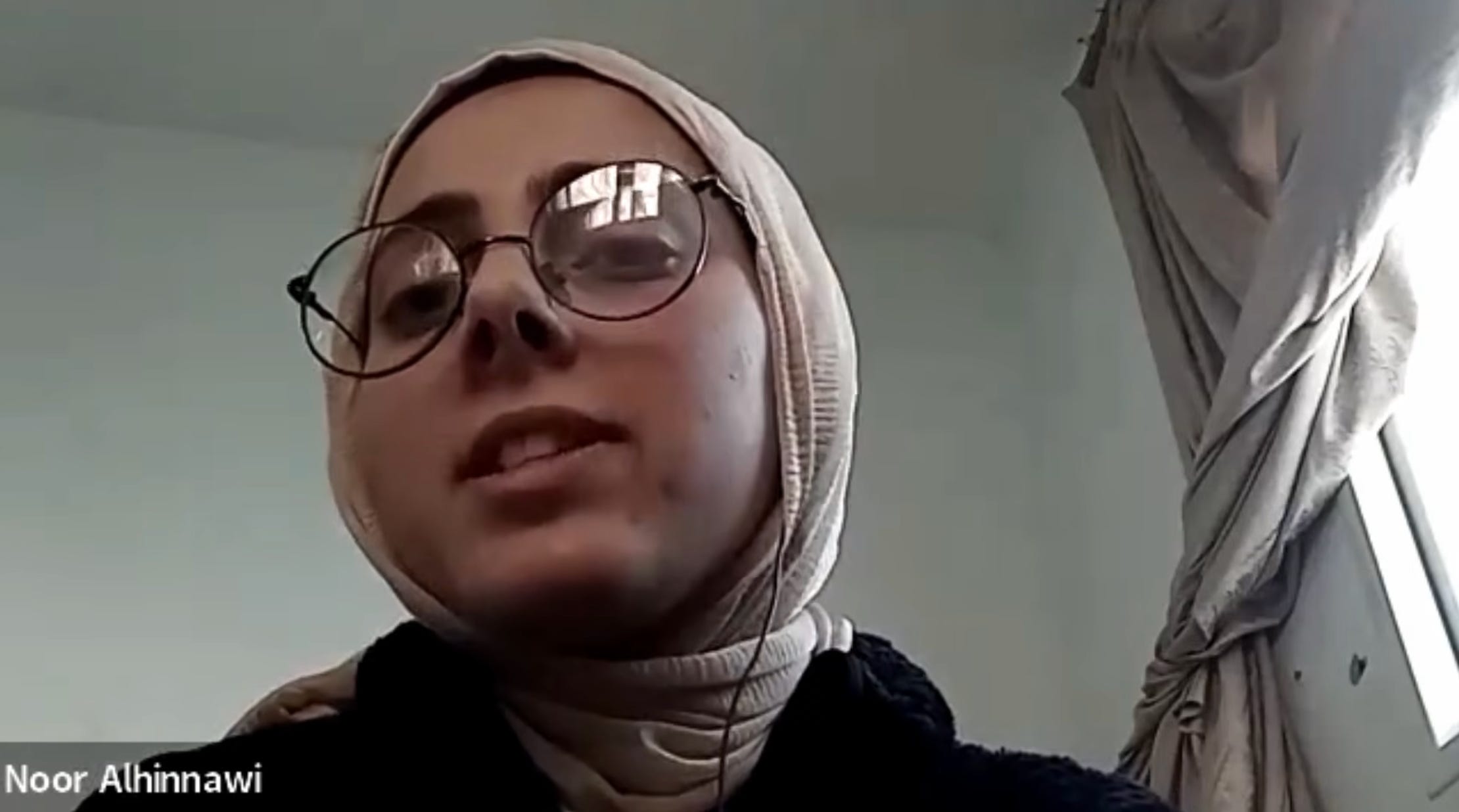
We are also now able to share the video version of a convo that the PalCast hosts had back in March with young Gaza writer Noor Alhannawi It means so much to us to be able to bring the voices and the videos of these brilliant young people from Gaza into the homes of English-speakers worldwide. Please watch Noor’s video and share it with your friends!
As of June 18, UN-OCHA was reporting that since the eruption of the latest round of hostilities on March 2, Israeli strikes had killed 3,884 residents an injured 11,856 residents of Lebanon. (That, in addition to the massive numbers of residents of Southern Lebanon whom Israel had attempted to ethnically cleanse from their homes and properties across the South of the country.)
Today we learned with sorrow that the renowned Lebanese environmental activist Mona Khalil, whose beach-side sanctuary the Orange House had been targeted by Israel in recent days, today died of wounds she sustained in that attack.

Ms. Khalil, 77, was best known for the campaigns she undertook to save the terrain of the baby sea-turtles that hatched every year from eggs laid on the beach. The Guardian today carried this appreciation of her work.
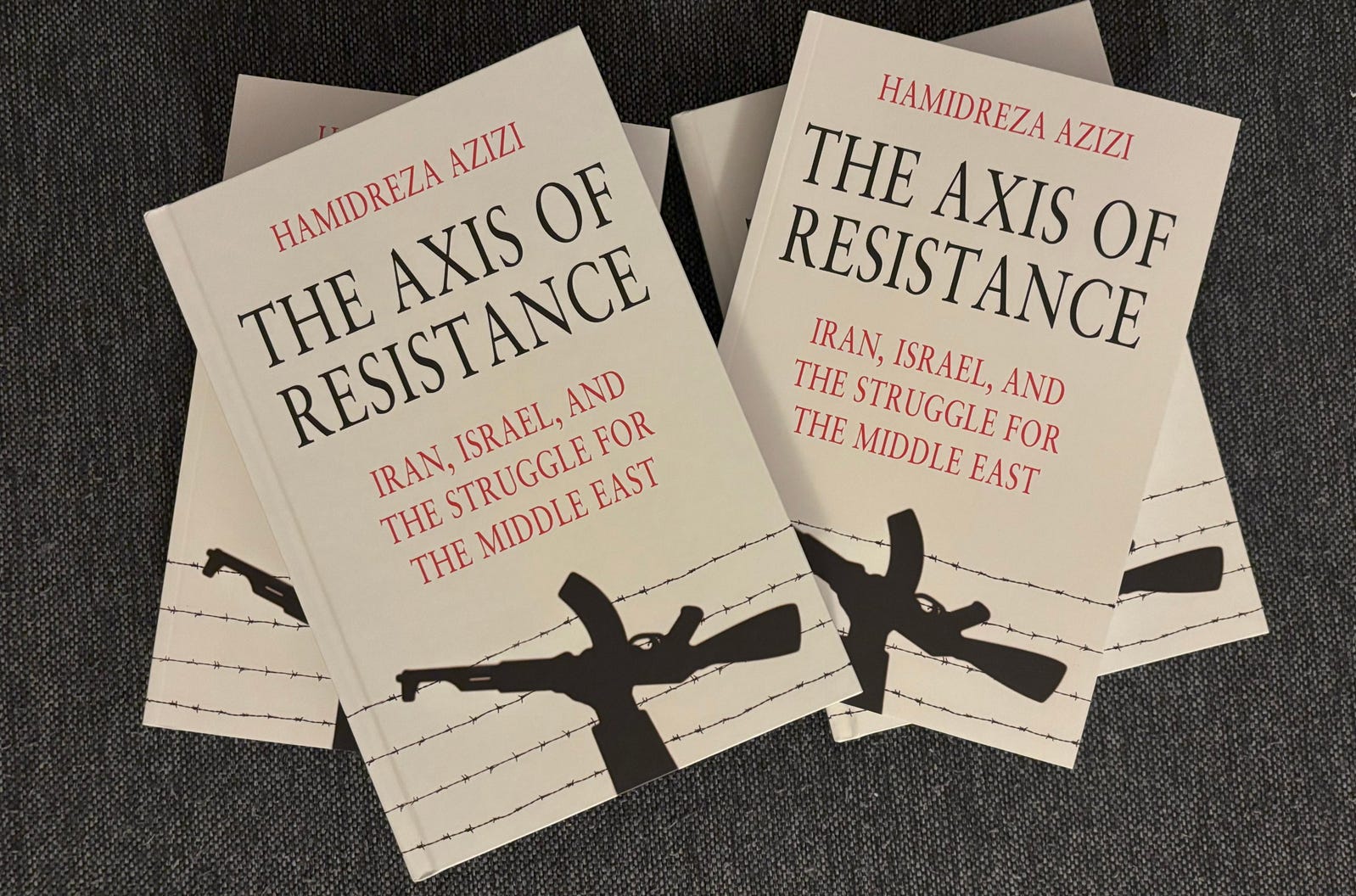
Time magazine (of all places!) yesterday carried a deeply informed and very helpful analysis of the internal Iranian politics behind the conclusion of the latest MOU. The author is Hamidreza Azizi, who’s a a Visiting Fellow at Stiftung Wissenschaft und Politik in (I think) Berlin.
He writes, quite realistically:
Inside Iran, skepticism about the agreement runs deeper than the rhetoric of the Stability Front, an ultra-hardline faction influential within parts of the state and society, and reflects a broader, pragmatic unease rooted in profound distrust of the U.S.—a feeling sharpened by the trauma of two American-Israeli wars against Iran within a year, both launched while negotiations were underway. Understanding that psychology is essential to assessing whether the current ceasefire holds, and whether this tentative opening can ever mature into a concrete and comprehensive deal.
After a fairly lengthy survey of the many factors affecting Tehran’s decisionmaking, he concludes with this:
The coming weeks will serve as a test phase, in which the U.S. and Iran measure each other’s will to implement the terms they have agreed upon and determine whether the political and strategic conditions for something durable exist at all. Iran has signed a document that advertises peace while quietly preparing for its breakdown. Which of those two futures the agreement was truly built for is the question the next 60 days will answer. And Tehran, hoping for the best, has engineered the text to survive the worst.
I see that Dr. Azizi has this intriguing-looking book coming out next month:
Big thanks to all of you who enquired about the call I sent out last week, for folks to record short video message to echo/amplify Prof. Jeffrey Sach’s potent call to “End the War and Bring the Military Home!” We felt, as the days passed, that that plan had been Overtaken By Events (in a generally good way.)
So now I have another little action I invite you all to take, which is to sign this petition that Drop Site Media and others have organized, which calls for protecting the distinguished Iranian-Swedish analyst Trita Parsi from the intense campaigns of harassment to which he’s been subjected.
… And talking of Jeffrey Sachs, we’ve also been delighted to learn that the Tehran-based Organization for Defending the Victims of Violence has now published on their website both Persian and English-language versions of the conversation I conducted with him two weeks ago, as part of JWE’s project on "The Iran Crisis.”
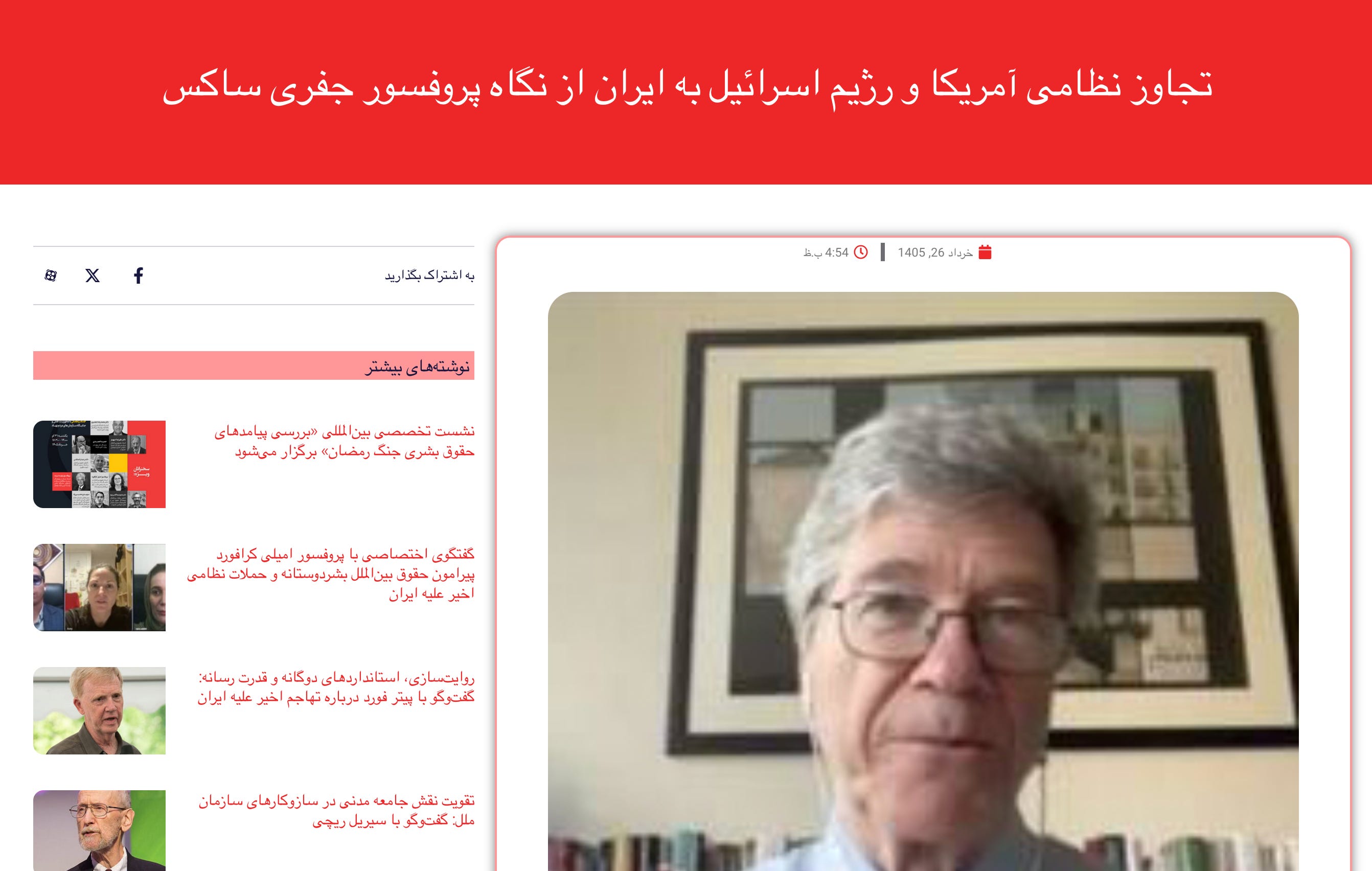
We are always delighted when JWE’s materials can reach beyond the Anglosphere and are particularly happy to be able to reach out to friends and colleagues inside Iran right now. The ODVV does invaluable work, and we’re hoping to be able to steop up our cooperation with them.
I referred briefly above to the essay I published in midweek about some of the longer-term resonances of the current/recent U.S. war on Iran. You can read the whole essay here.
In it, I was expanding a little upon the parallels I (like many others) have drawn in recent weeks between the Hormuz Crisis of 2026 and the Suez Crisis of 1956— mainly in terms of both crises having been precipitated when a fading imperial power— or in the 1956 case, two fading imperial powers— decided to partner with Israel to launch a regime-change attack against an Israeli-questioning regional power elsewhere in West Asia… And how both those ventures went badly wrong and served mainly to hasten the demise of the Western imperial power in question…
In the essay, I also looked at the seventy-year span in question as bracketing, really, the era of the rise and fall of AIPAC…
Quite possibly, combining those two aspects of my analysis into a single essay was not a good editorial/conceptual choice. But it’s what I did.
I also took the opportunity to present two charts very relevant to the whole matter of AIPAC’s declining influence:

( I think you can click on either one to see it whole.)
Finally, let me note the great job my JWE board colleague Rami Khouri has continued to do on the airwaves of both TRT (June 18) and Al-Jazeera (today).
Rami’s own summary of the key takeaways from his TRT appearance ran thus :
Vague Versus Explicit Language: The MoU explicitly states that both sides must respect Lebanon’s territorial integrity and sovereignty. Israeli propaganda will spin this clause by arguing it mandates the disarmament of Hezbollah.
Withholding Information: The United States reportedly denied Israel’s request to see a copy of the MoU before its release, potentially to prevent Israel from launching a preemptive media campaign to disrupt negotiations
Shift in U.S.-Israel Dynamics: We may be witnessing an unprecedented rift between the two allies. Donald Trump has broken traditional norms by criticizing Israeli military tactics and calling out Prime Minister Benjamin Netanyahu.
U.S. National Interest: The U.S. administration is realizing that regional instability heavily threatens the global economy, energy sectors, and American national interests and strategic alliances. Consequently, U.S. actions have turned toward diplomatic settlement despite aggressive rhetoric.
Potential Derailment: While the MoU signals a slow-motion turning point, Israel will likely use its diplomatic influence and allied networks in the U.S. to challenge the agreement and protect its own localized interests.
Good points, all.
I guess this is a good place for me to urge all of you to “Subscribe” to both Rami’s feed on Substack, and my own. By the way, it was Rami’s fault/inspiration that led me to move this JWE newsletter over to Substack, and then to shift to doing my own writing mainly on Substack rather than the Globalities platform that I had previously developed and used.
We each use our personal Substack accounts a little differently. I use mine mainly for publishing my own essays. Rami uses his mainly to compile and present the many media appearances he has all around the world… Anyway, it seems like a good way to publish and document the intellectual work that we both do. And for now, I think both of us are determined to keep our writings there available with charge to the interested public.
That is also the case with these newsletters that I write here, for Just World Ed, almost weekly. But of course Just World Ed does need— and much values— your continuing support, which is what makes all our projects possible.
So if you value our work and are able to send us a donation, that would be truly wonderful!
That’s all for now! Buckle your seatbelts for what may well be another tumultuous week ahead in world affairs…
Stay well, stay kind, and stay sane—
~ Helena
Comments
Nothing yet. Say the first thing.
Sign in to join the conversation.