

Artificial Intelligence has become (almost) the only game in town. AI-related private investment continues to accelerate. Capex by the “hyperscalers” alone has jumped from 0.3% of GDP in 2019 to 1.4% of GDP last year, and is expected to double to 3% of GDP per year for the next three years. Spread across software, data centers, chips, power generation and more, AI-related investment accounts for a significant direct contribution to GDP growth and accompanies a sustained increase in stock valuations, which in turn supports household consumption through the corresponding wealth effect. It’s part of the reason why the US economy has proved defiantly resilient to the prolonged energy shock and uncertainty emanating from the US-Iran conflict.
As I have noted in a previous post,
I find it [AI] to be an extremely powerful instrument, and I have no doubts that it can yield significant efficiency gains. I also think it is way overhyped.
Fuel the hype: share this post!
A bit of over-excitement is understandable and should not be too concerning. The key distinguishing feature of Generative AI is its ability to communicate through language the way we humans do — only faster. This makes it too easy for us to assume that its intelligence is similar to ours — only sharper. And the technology is, in many ways, genuinely impressive. Its potential to deliver value is real — even if realizing it at scale throughout the economy will take longer than most people assume. So, what’s wrong with a little irrational exuberance if it helps push innovation forward?
What worries me is the sense that this is just the latest free lunch craze, that we have embraced AI as Free Lunch 3.0.
First we tried the monetary version: Quantitative Easing was Free Lunch 1.0, the idea that central banks could simply print prosperity. Through successive waves of monetary expansion, the Federal Reserve grew its balance sheet nearly tenfold between 2008 and 2022.
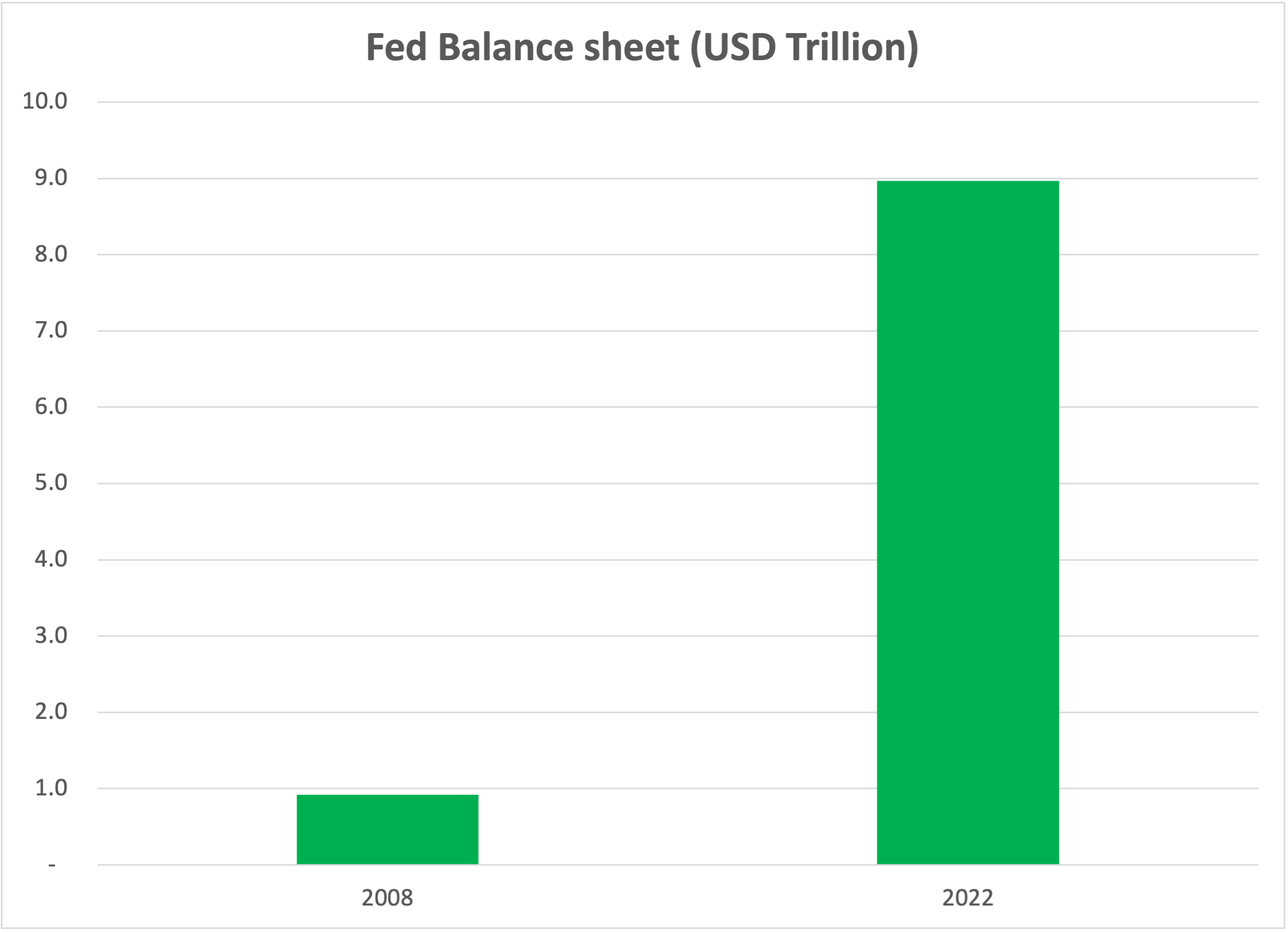
QE was the answer to every challenge: it started as an emergency response to the Global Financial Crisis and the ensuing deflation fears, then became the tool of choice to try and boost economic growth.
Then came the fiscal version: Free Lunch 2.0 was a massive expansion in government deficit spending, the myth of limitless government debt, the belief that borrowing would forever be free, and governments could spend their way to prosperity on credit. A cumulative budget deficit of 50% of GDP during 2020-25 contributed to a massive rise in US federal debt, which quadrupled between 2008 and 2025 to nearly $40 trillion. Most other advanced economies followed a similar path.
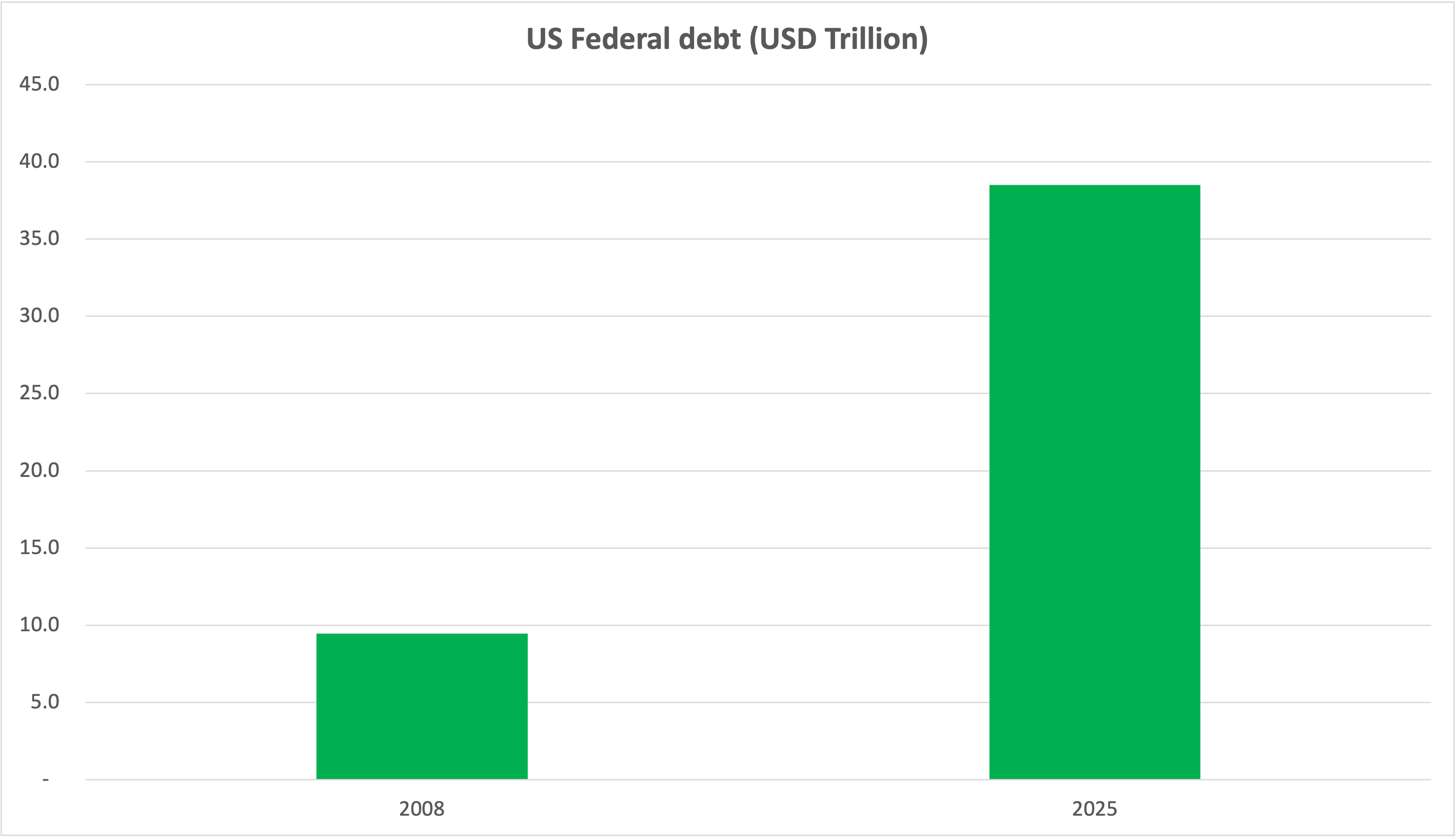
As we know, it all ended in tears. The monetary-financed explosion in public spending finally fueled a burst of inflation that incinerated purchasing power. Bond yields have floated up to levels that make a mockery of the idea that borrowing would forever be free.
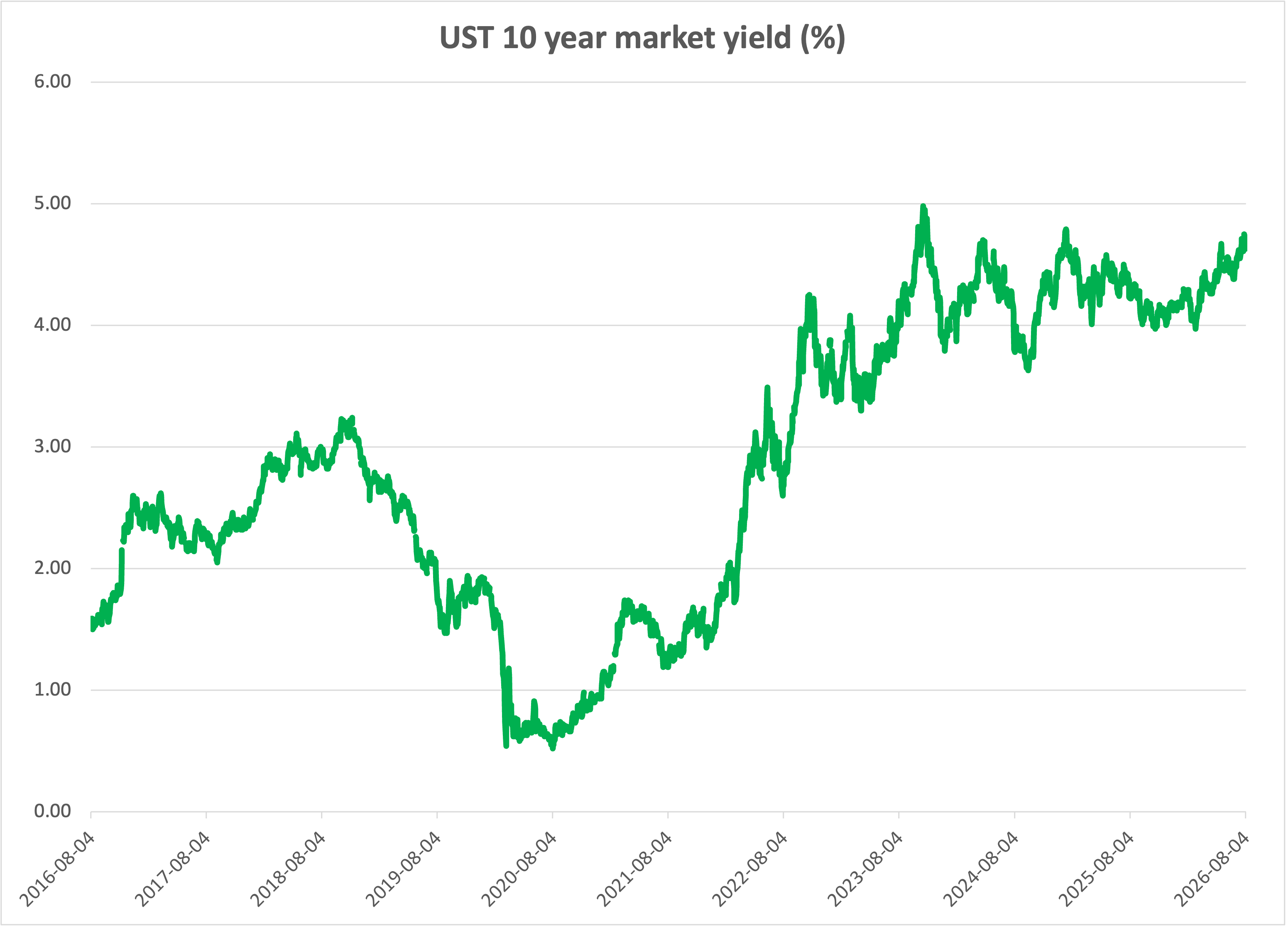
This has forced us to confront the harsh reality that prosperity can’t be printed or borrowed — we must build it. The only sustainable source of rising living standards is faster productivity growth.
Lo and behold, here comes Generative AI promising a magical boost to productivity, unlocking new wonderful scientific discoveries and unprecedented efficiency gains. It requires investment, yes, but this gargantuan investment boom can be financed first through the free cash flow of hyperscalers and then…you guessed it…more borrowing. In fact, AI-related borrowing is scaling fast enough to have a material impact on credit markets, and to start seeding some anxiety and doubts in financial investors.
And, surprise surprise, the AI revolution will supposedly enable — in fact require — the mother of all free lunches: Universal Basic Income.
Four years after ChatGPT took the world by storm, the evidence on the macro impact of Large Language Models should give us some pause. The next chart shows the holy grail: U.S. productivity growth. These are quarterly data, and I’ve taken a four-quarter moving average to smooth out some of the volatility.
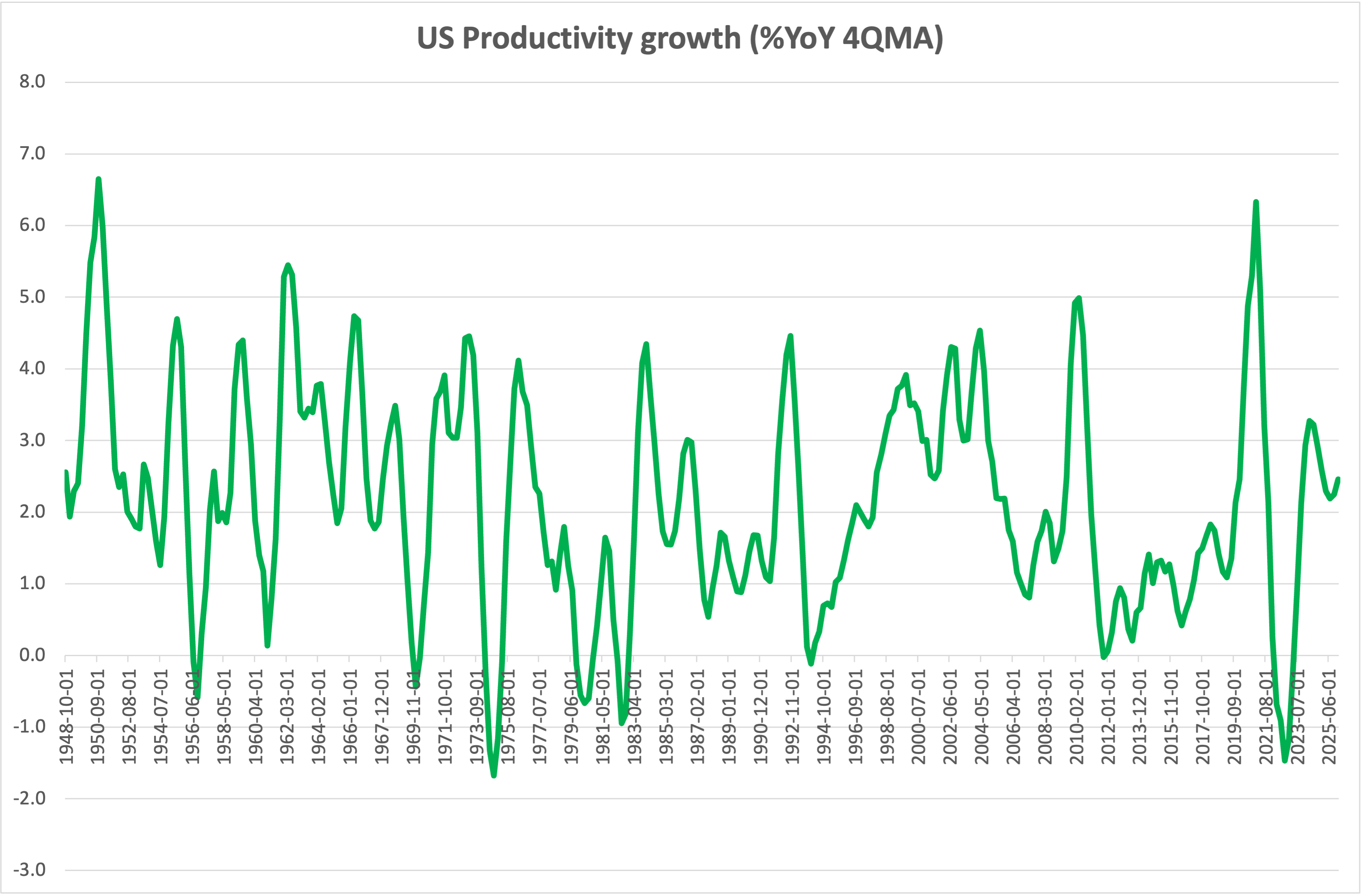
You can clearly see… nothing really. There’s no break in the trend, no sign that productivity growth is accelerating in any meaningful way. It doesn’t mean it will not happen, but the evidence so far is non-existent.
Labor market data tell a similar story: there is no sign that the unemployment rate is taking off.
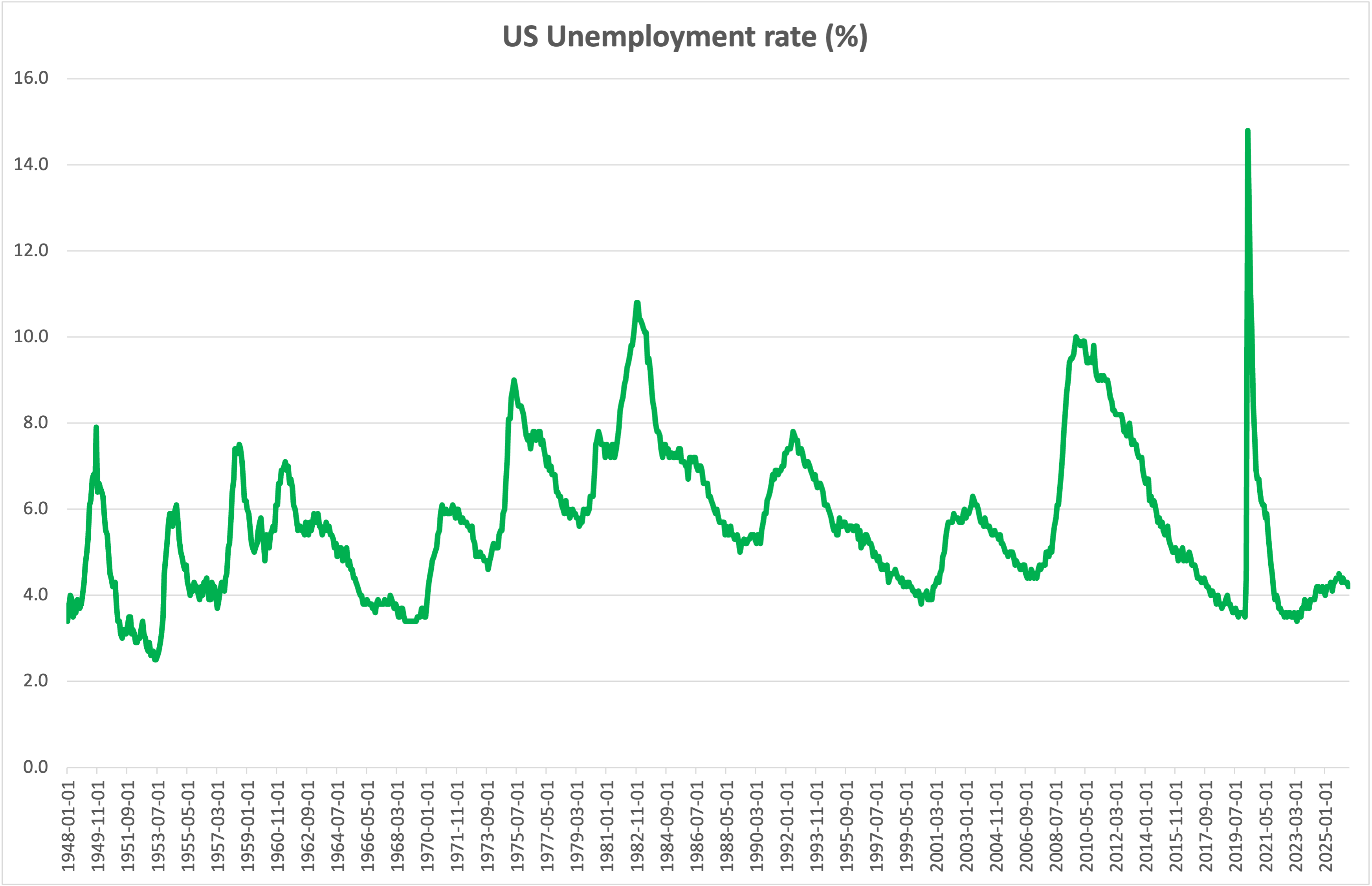
A number of economists and other assorted experts have warned that AI will cause mass unemployment. For a while, the press played up anecdotes of companies that claimed to be reducing their workforce because of AI. Now, somewhat sheepishly, companies are hiring again, even as the adoption of AI is supposed to be spreading far and wide. There is no sign of rising unemployment in the industries supposedly most exposed to AI, not even for offshore workers.
AI evangelists keep telling us that we are but a few months away from Artificial General Intelligence or “superintelligence”; they bombard us with examples of AI models beating new benchmarks and solving new mathematical problems. The economic data, however, shows zero evidence of AI moving the needle.
Again, this doesn’t mean that the technology is not powerful. It is. But believing that the current wave of AI will deliver abundance requires a very athletic leap of faith.
There is nothing wrong with optimism. Nothing wrong with investing in innovation. Nothing wrong with betting on productivity growth to lift living standards. Quite the opposite, it’s exactly the right strategy. But it requires a lot of hard work, including bolstering education, upgrading infrastructure, streamlining regulations, and putting fiscal and monetary policy on a more sustainable footing.
The current AI craze sends a quite different message: that, as long as we build enough data centers, AI models will soon start doing all the work, improving themselves at a faster and faster pace, and, in short order, solving all the hard problems confronting our societies. No hard work for us, no need to worry about anything else other than how to redistribute the fruits of AI’s cornucopia. This is complacency, not optimism. This is Free Lunch 3.0, and it’s unlikely to prove any more successful than its predecessors.
Comments
Nothing yet. Say the first thing.
Sign in to join the conversation.