
I grew up in a small town that was slowly dying.
Empty storefronts. Abandoned motels. Old neon signs missing letters, sitting in parking lots that didn’t have much reason to exist anymore. Not a pretty place. Not the kind of thing you’d drive out of your way to see.
But I loved it. I just didn’t know why yet.
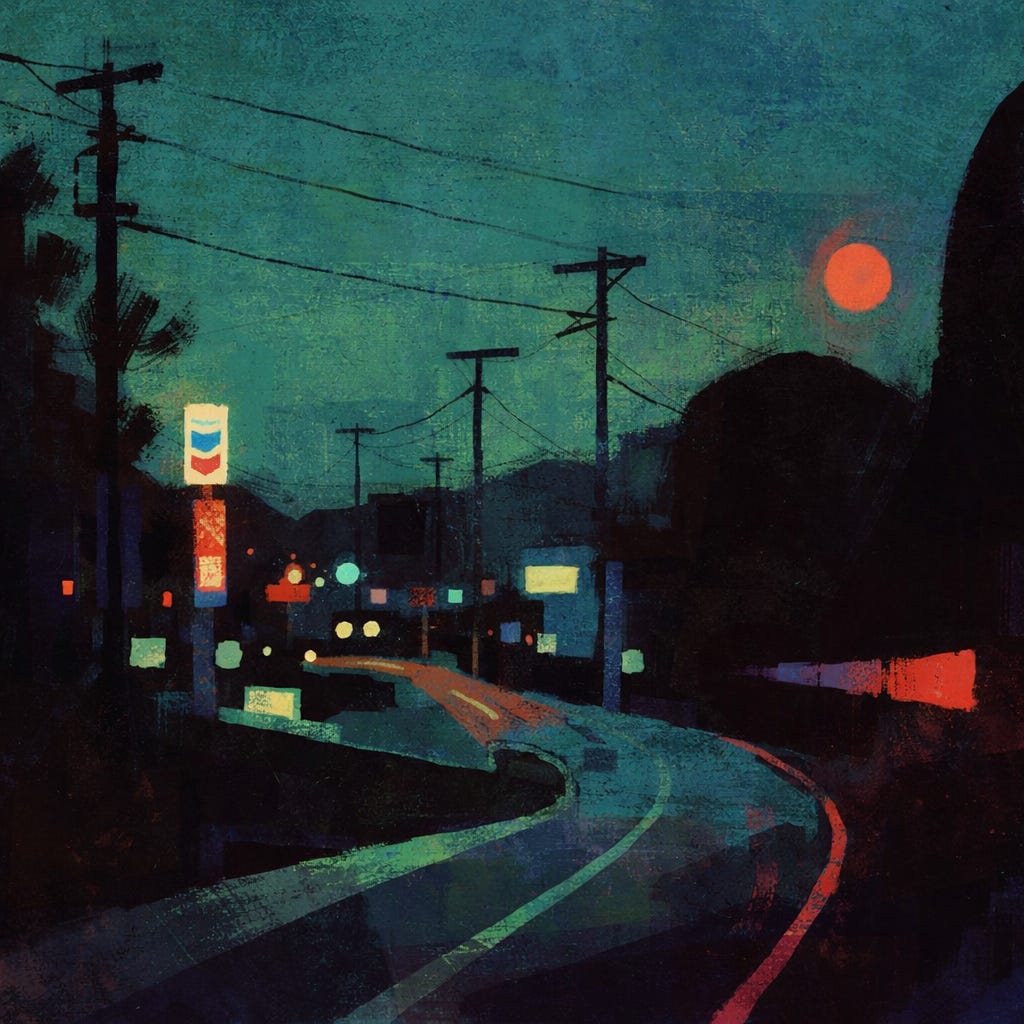
There’s this thing nobody really explains when you’re learning to make art — beauty isn’t a thing on its own. It needs something working against it.
I remember standing in a parking lot as a kid looking at a McDonald’s sign on the horizon. Dark sky, flat desert, and this one bright yellow sign just sitting there. It sounds like nothing. But it stopped me. There was something about the contrast — the emptiness around it, the warmth of it against all that dark — that made it feel like more than a fast food sign.
That’s the whole lesson right there. I just didn’t have the language for it at the time.
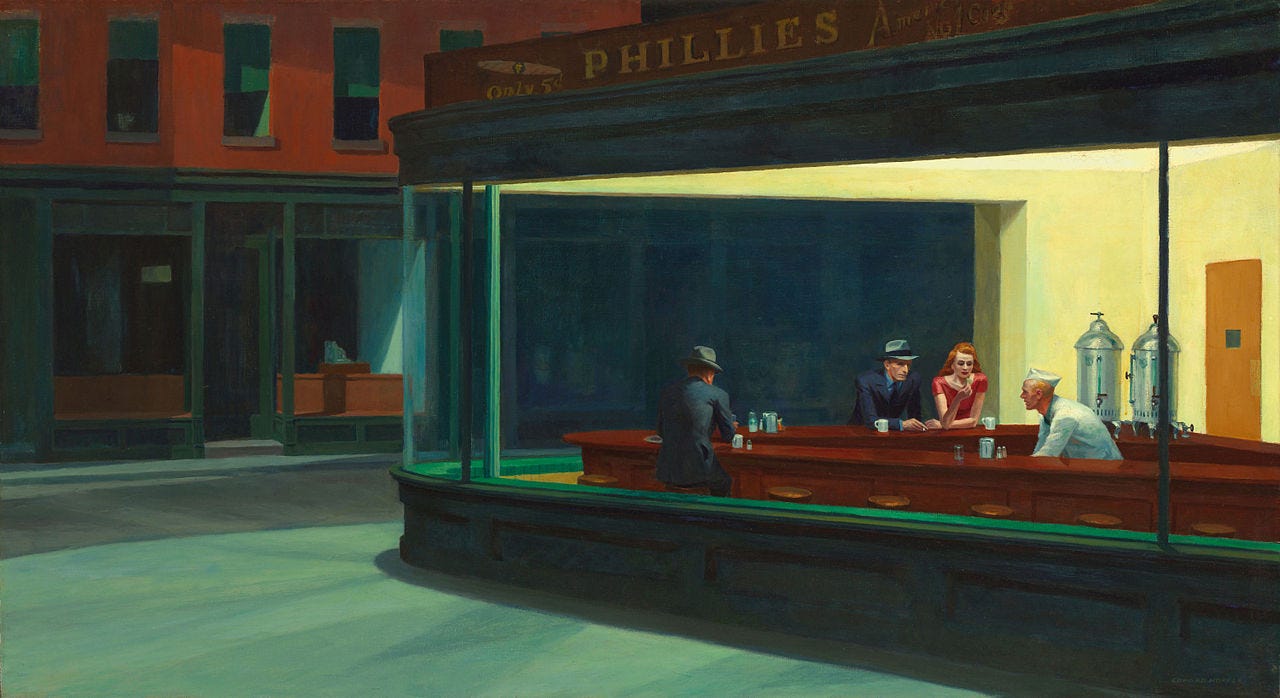
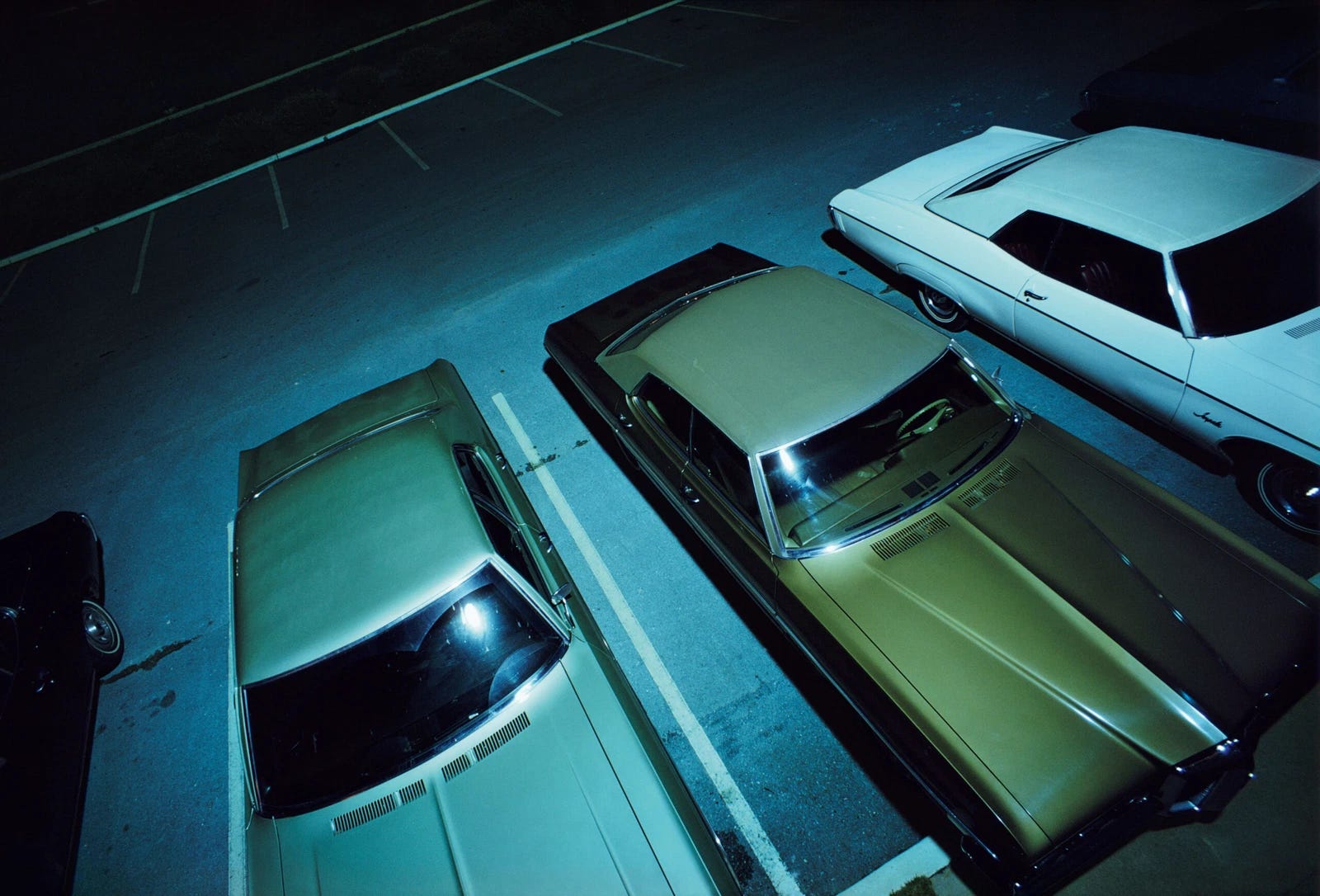
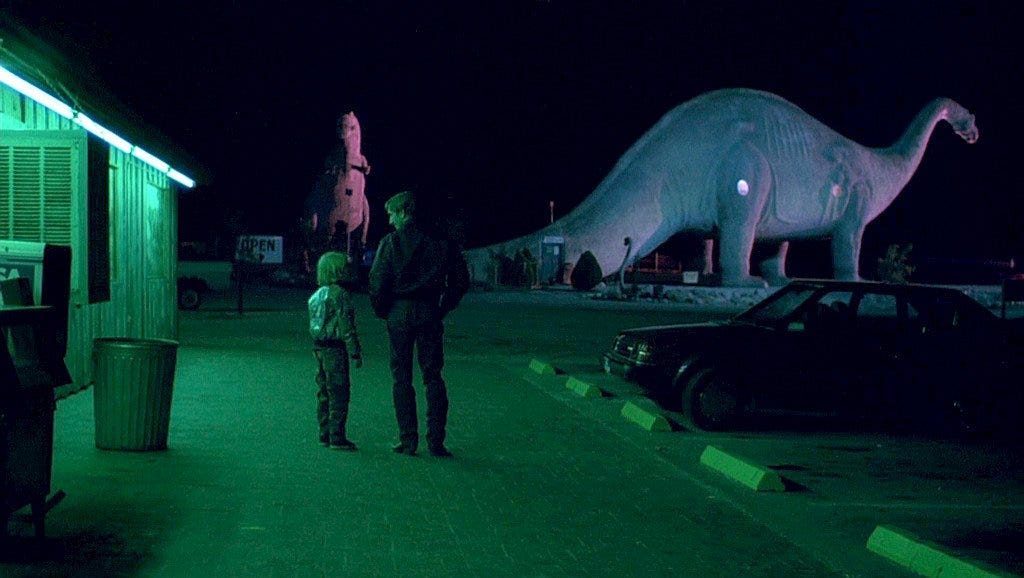
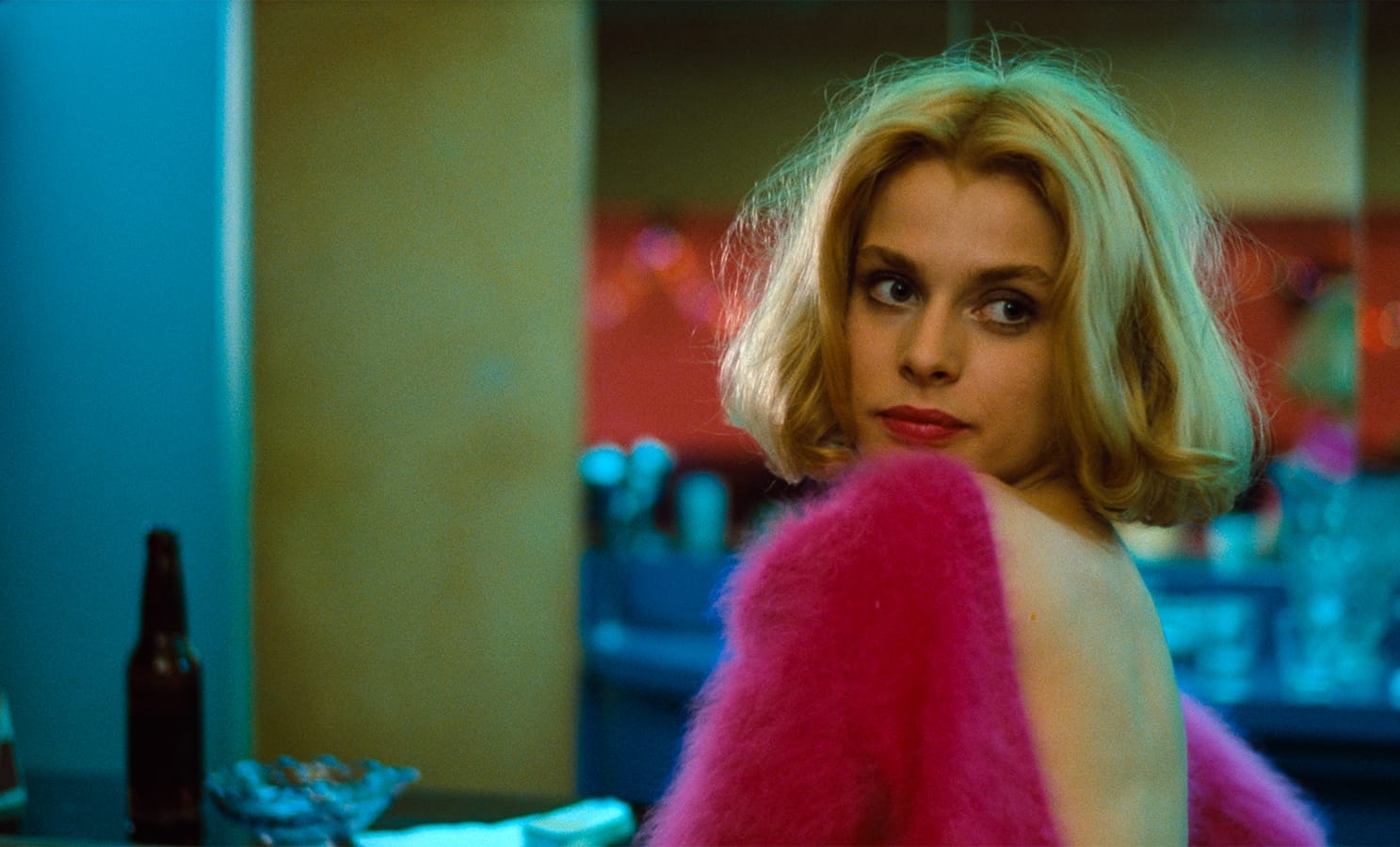
The artists who actually stick with you figured this out. Hopper painted diners at 3am and empty gas stations. Eggleston shot parking lots and the inside of a freezer. And then there’s Paris, Texas — one of my favorite movies, maybe the most beautiful looking film ever made. Wim Wenders took the most desolate, forgotten parts of Texas and the American West and made them look strange and magical and eerie all at once. None of it should work. But tension and contrast were baked into every single frame — the emptiness, the scale, the loneliness — and that’s exactly what made it unforgettable.
None of that is pretty in any conventional sense. All of it has tension. Something slightly off that your eye can’t let go of. That tension is what does the work.
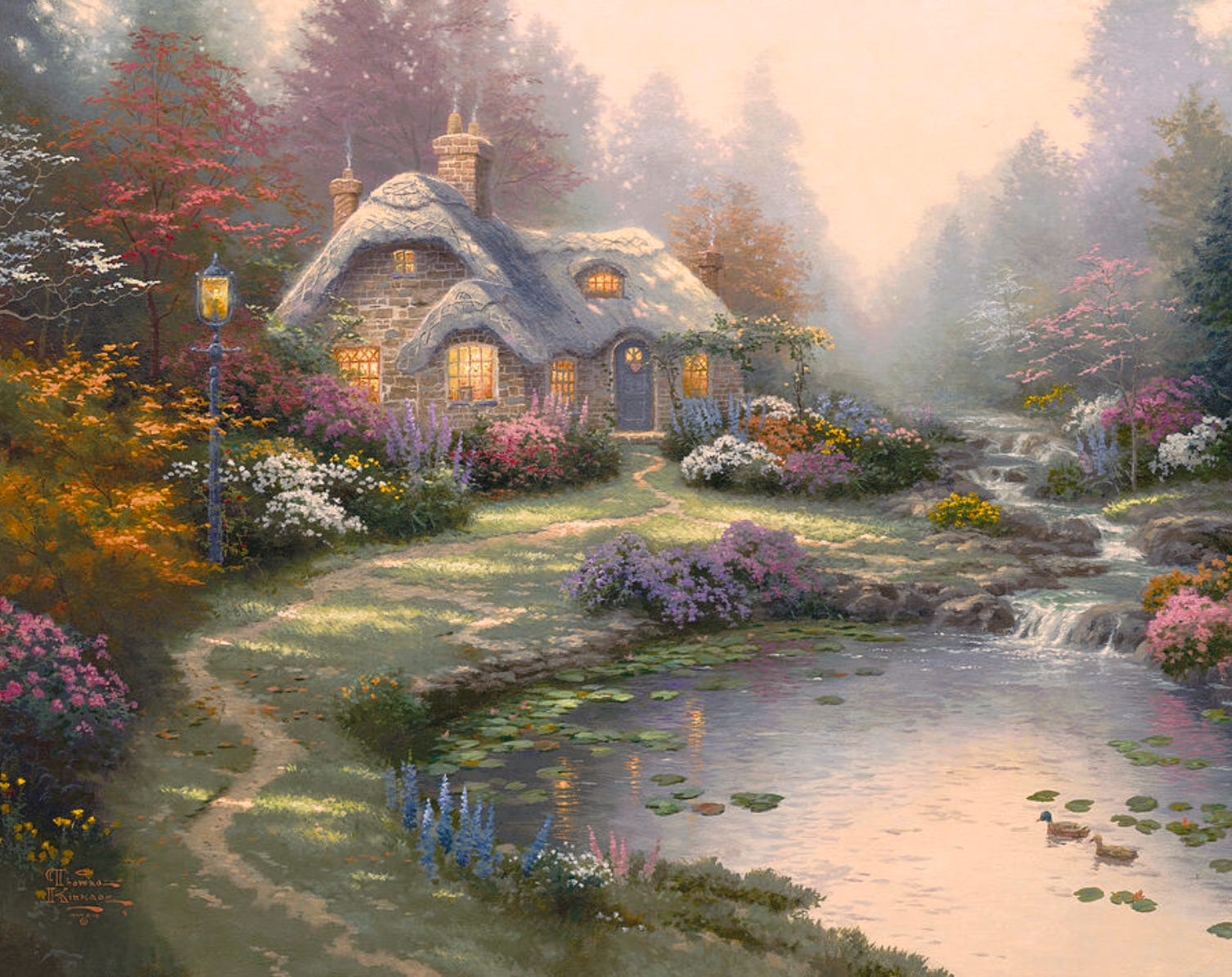
Here’s the counterintuitive part — take all that tension away, strip out everything difficult or uncomfortable, and you don’t end up with better art. You end up with emptier art. You end up with a Thomas Kinkade painting. And I say that with some genuine affection for Kinkade — there’s something almost hypnotic about what he did. But the goal of creating a perfectly sanitized, conflict-free world actually backfires completely. His cottages are so relentlessly warm and glowing and safe that they tip over into something strange. Something a little unsettling. The paintings end up feeling eerie precisely because nothing is wrong. Which, if you think about it, is just contrast working in reverse — proof that you can’t actually escape tension in art. You can only decide where it comes from.
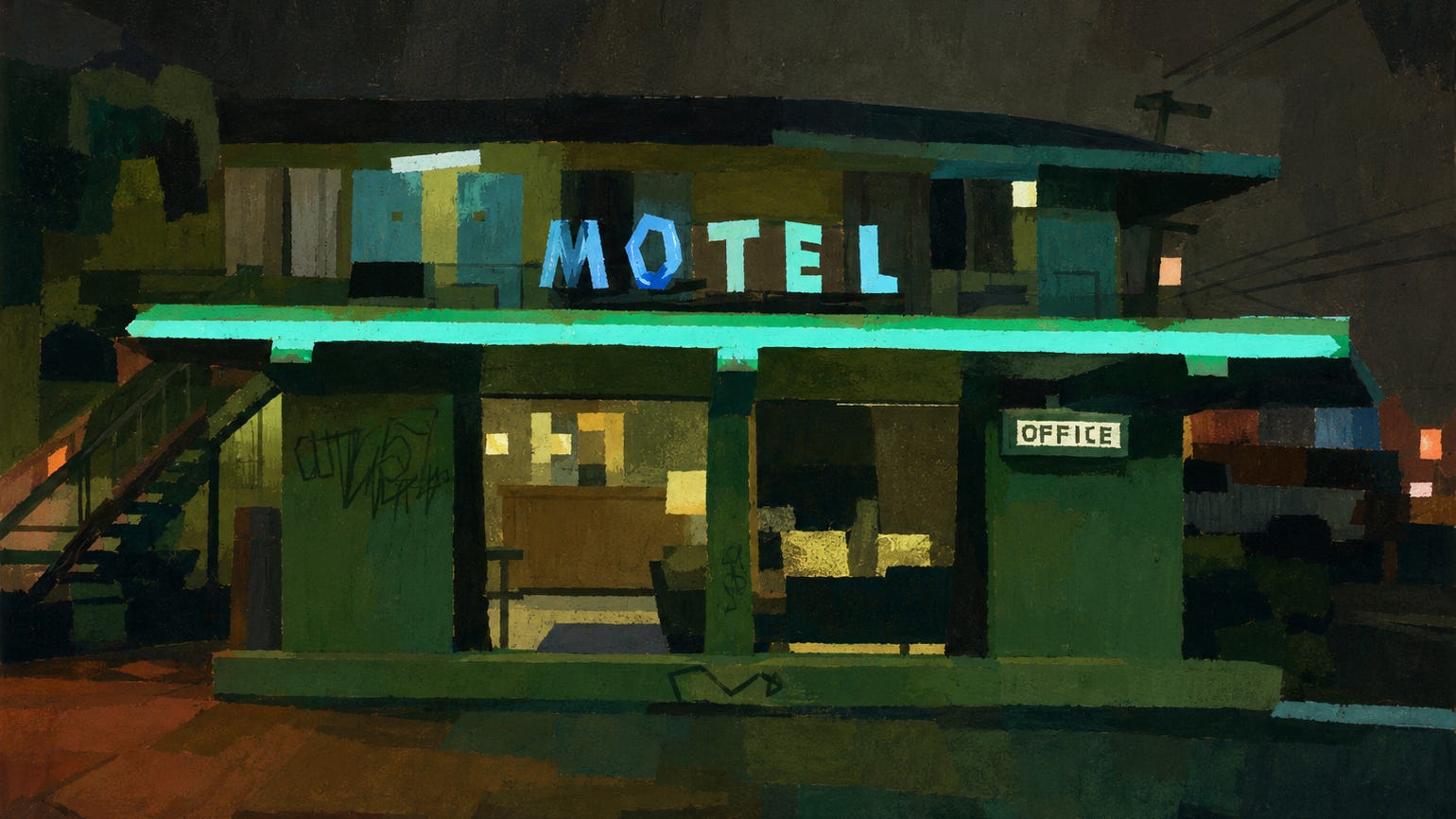
My paintings keep coming back to the same stuff. Old neon. Gas stations. Parking lots under halogen lights that turn everything a sickly green or pale blue. Small towns that have seen better days. The kinds of places people pass through without really looking.
I paint them because I grew up with them. But also because they’re harder. There’s no easy beauty to lean on. You have to find the tension and build from there.
If there’s a takeaway for anyone making work right now, it’s this:
Stop trying to resolve the contradictions in your work. Use them. Lonely but comfortable. Ordinary but strange. Ugly but weirdly beautiful. That push and pull is what makes something worth looking at.
The places I grew up around looked like nothing. Turned out they were a pretty good education.
No posts
Comments
Nothing yet. Say the first thing.
Sign in to join the conversation.