
This week, the big theme is handoff control.
Google is pulling Local Services Ads deeper into PMax, AI answers can disagree with paid ads, Reddit wants more review-style search, and OpenAI is testing ads that may skip the landing page entirely.
Why PMax pay-per-lead needs clean local inputs
How AI Overviews can undercut a paid search ad
What Google’s new AI-search impressions can and cannot tell you
Why ChatGPT ads may turn the conversation into the landing page
How Reddit reviews and recommendations are becoming search inventory
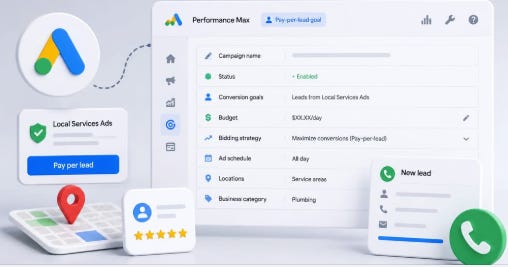
The short version: Google is giving advertisers a clearer roadmap for the campaign type that will absorb more Local Services Ads work. The new docs cover campaign settings, targeting options, and best practices for Performance Max campaigns built around pay-per-lead goals.
That matters because local service advertisers are no longer just managing a separate LSA box off to the side. More of the work is moving into the Google Ads ecosystem, with service areas, categories, lead goals, and automation all tied together.
For local businesses, this is not just a platform housekeeping update. It changes who needs to understand the setup. Your GBP accuracy, service area choices, categories, budget, lead handling, reviews, and offline follow-up can all shape whether these campaigns bring profitable leads or just more noise.
The Real Reason This Matters:
Pay-per-lead sounds simple, but the campaign still needs clean service areas, correct business categories, and disciplined lead handling.
Local Services Ads moving into Google Ads means owners, PPC managers, and GBP managers need one shared operating view.
Automation can only chase the lead goal you define. If your intake process treats every call as equal, Google has weak feedback about what a good lead actually is.
Key Takeaway: PMax pay-per-lead is becoming the new operating layer for Local Services Ads, so local advertisers need to clean up the inputs before the rollout reaches them.
Action Step: Before touching budget, document your eligible services, service areas, GBP categories, license and insurance status, review profile, call handling process, and what counts as a valid booked job. Then compare that against Google’s new PMax pay-per-lead setup docs.
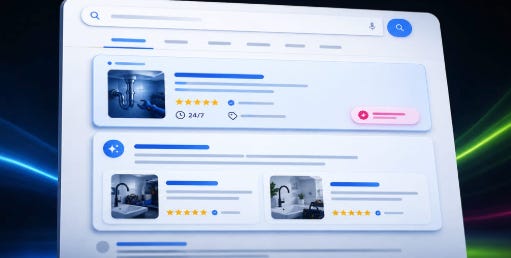
Search Engine Land found a paid search problem that local advertisers should not ignore. For a query about the best plumber for a broken pipe, the paid ad promoted one emergency plumbing company while the AI Overview underneath recommended different companies by name.
The Real Reason This Matters:
A top ad position no longer guarantees that Google is telling the same story underneath it.
AI Overviews can turn a comparison search into a recommendation before the user evaluates the ad.
If your ad promise, review footprint, service proof, and local authority are weak, the AI answer may steer the user somewhere else.
Key Takeaway: Paid visibility and AI-recommended visibility are becoming two separate jobs.
Action Step: Search your highest-value local queries in an incognito browser and note whether AI Overviews appear, which businesses they recommend, and whether your paid ad promise matches or conflicts with the answer.
Search Engine Journal explains Google’s new generative AI reports in Search Console. The report can show impressions from AI Overviews and AI Mode, broken out by page, country, device, and date. It does not currently show clicks, CTR, queries, average position, citation placement, passages used, conversions, or revenue.
The Real Reason This Matters:
Local businesses finally get a cleaner clue about which pages Google is using in AI experiences.
The report is diagnostic, not a scoreboard. More impressions do not automatically mean more leads.
Pages that rank well organically may still be hard for AI to summarize if the answers are buried, vague, or hidden behind scripts and tabs.
Key Takeaway: AI-search reporting is useful for finding pages Google can understand, but it cannot prove business impact by itself.
Action Step: Export AI-visible URLs, group them by page type, and compare them with booked-call, form, and CRM outcomes before making big content decisions.
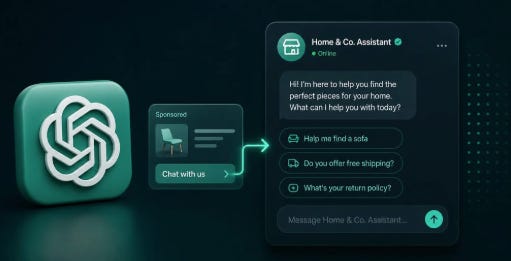
Search Engine Land reports that OpenAI appears to be testing ChatGPT ads that open a business-specific AI agent instead of sending users to a landing page. The test workflow includes crawling a company’s site to build a business profile, letting advertisers configure an agent, and sending campaigns into that conversation.
The Real Reason This Matters:
The landing page may stop being the first place a paid prospect asks questions.
Bad website information can become bad agent information if the profile is built from weak source material.
Local businesses need lead qualification, scheduling, FAQs, pricing boundaries, and service-area rules ready for conversational ads.
Key Takeaway: Chatbot-native ads could move lead capture from the website to the conversation.
Action Step: Write the top 20 questions a real prospect asks before booking, then make sure your website answers them clearly enough for an AI agent to use without guessing.
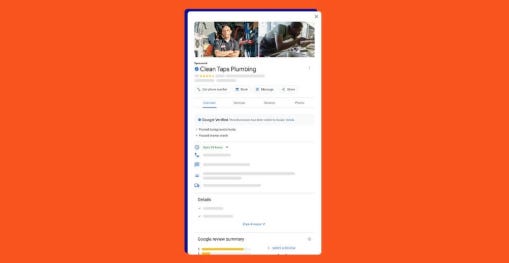
WordStream’s updated Local Services Ads guide frames LSAs as Performance Max campaigns with pay-per-lead goals. It also reinforces the basics that affect whether local service ads work: eligibility, GBP linkage, licenses, background checks, service areas, reviews, and lead management.
The Real Reason This Matters:
The cheapest valid lead is not useful if the business misses the call or fails to qualify the job.
GBP reviews and business details can influence how the ad looks before the lead ever contacts you.
PMax management may feel familiar, but LSAs still depend on local trust signals and service fit.
Key Takeaway: LSA performance is equal parts campaign setup, GBP trust, and intake discipline.
Action Step: Audit one LSA-eligible service line and confirm the job types, service area, hours, licenses, reviews, and lead follow-up process are all accurate before adding spend.
🌶️ Spicy Take
The click is no longer the whole handoff
This week’s ad and AI-search stories point to the same uncomfortable shift: the customer handoff may happen inside an AI answer, a Reddit recommendation, an LSA, or a chatbot ad before anyone reaches your website.
The spicy part is that many local businesses still treat the website as the only conversion surface. That is too narrow now. The offer, proof, reviews, service boundaries, and lead-handling process have to be clear enough to survive wherever the platform chooses to make the introduction.
Build fewer, better location pages. Multi-location brands should structure pages around real locations, markets, and service areas instead of spinning up every geographic keyword as a new URL.
Treat familiar brands as AI competitors. If AI systems favor brands they recognize, local businesses need more third-party proof, consistent mentions, and clear category positioning.
Use paid search as AI-search intel. Paid search query, conversion, and offer data can show which buyer questions deserve stronger organic, AI, and landing-page coverage.
Review clickable ad description tests. Clickable links inside Search ad descriptions could change where users land, so keep ad text, sitelinks, and landing pages aligned.
Plan H2 budgets by marginal opportunity. Benchmarks are useful, but lead-gen accounts need to look at impression share, query coverage, marginal CPA, and downstream lead quality before adding budget.
Use fewer ads when testing Meta. Small local Meta accounts usually learn faster when budget is not split across too many weak ad variations at once.
Document your Meta ads timeline. A simple change log of pixels, audiences, forms, offers, and creative rules makes Meta performance easier to explain when the platform shifts again.
Let me help you “Get More Leads”
If your ads, AI answers, GBP, reviews, and landing pages are all telling slightly different stories, the platforms will expose that gap before your team catches it.
Whenever you’re ready, book a 15-minute Help Me Get More Leads call. I will help you spot the biggest leak and the next practical fix.
Thanks for reading Local Marketing Minute! This post is public so feel free to share it.
Comments
Nothing yet. Say the first thing.
Sign in to join the conversation.