
This week is less about chasing one shiny tactic and more about tightening the system underneath local growth.
Google is filtering harder, Business Profile answers are getting attention, AI crawlers are exposing technical gaps, and ad automation needs clearer business inputs.

The spam update began on August 18 and applies globally across languages. Google said the rollout could take several days, which makes the first 24 hours a poor time to rewrite pages, disavow links, or declare a recovery plan.
For local businesses, the useful question is where the movement appeared. A broad sitewide decline, a group of thin city pages slipping, and a Maps-only change point to different problems.
Google has not said this update targets one specific tactic. Claims that it is an AI-content update, a link update, or a local-page update go beyond the announcement. The disciplined move is to preserve a baseline, segment the data, and wait for the rollout to finish before making a diagnosis.
The Real Reason This Matters:
Search volatility can tempt teams into fast changes that erase the evidence needed for a real diagnosis.
Google’s spam policies also apply to AI features in Search, which connects classic rankings and AI visibility more closely.
Key Takeaway: Treat this week as an observation period. Save the baseline and identify the affected page types before changing the site.
Action Step: Compare August 17 against the next two weeks by service page, location page, blog post, query class, and Maps visibility. Wait until Google marks the rollout complete before assigning cause.

Google is testing a redesigned question-and-answer experience on Business Profiles. The reported test puts fresh attention on a part of the profile many businesses ignore until a customer posts a confusing or outdated answer.
The Real Reason This Matters:
Public questions often reveal the details prospects cannot find on the website or profile.
Old community answers can stay visible long after hours, services, policies, or service areas change.
Clear owner answers can remove friction before a prospect calls, books, or moves to a competitor.
Key Takeaway: GBP Q&A should be treated as a living conversion and reputation surface.
Action Step: Review every open question on your primary profiles. Correct outdated answers and add clear owner responses for pricing, insurance, service area, parking, scheduling, and availability where appropriate.
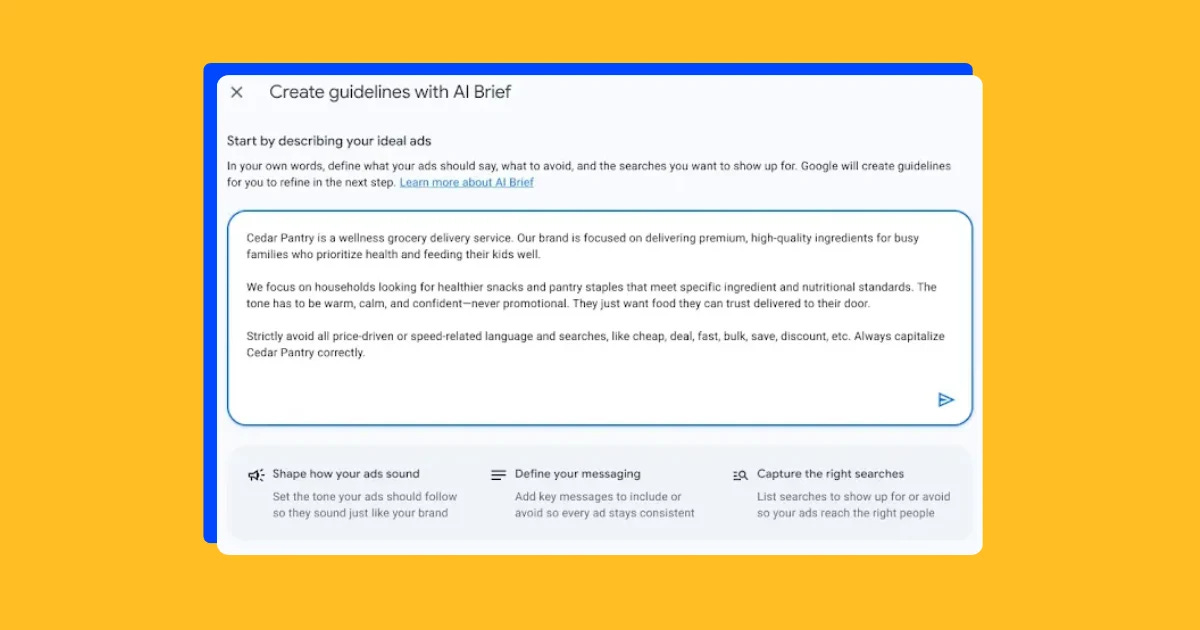
Google Ads AI Brief gives advertisers a clearer way to guide AI-generated messaging, matching, and audience decisions. WordStream's overview explains how the brief can turn business context into a practical guardrail.
The Real Reason This Matters:
AI-generated ads can only work with the business, offer, audience, and proof they are given.
Vague inputs make it easier for automation to create generic claims and attract weak-fit leads.
A useful brief creates a reviewable contract between business strategy and platform automation.
Key Takeaway: Better AI ad output starts with better business inputs.
Action Step: Write a one-page campaign brief with priority services, excluded services, ideal customer, service area, proof, prohibited claims, and the qualified conversion you want the platform to learn.

Local 5.0 frames local visibility around how AI systems understand, compare, and recommend businesses across websites, profiles, reviews, directories, and third-party sources.
The Real Reason This Matters:
Ranking well is useful, but recommendation systems need enough consistent evidence to choose the business.
GBP details, review themes, service pages, local mentions, and directory data can reinforce or contradict one another.
The business with the clearest category fit and proof may be easier for an AI to recommend than the business with one strong page.
Key Takeaway: Local SEO is becoming an entity and evidence problem as much as a ranking problem.
Action Step: Pick one high-value service and compare the website, GBP, reviews, Yelp, directories, local press, and AI answers. Fix the biggest disagreement first.
🌶️ Spicy Take
More ad automation is only useful when the outcome data is clean
Automated bidding and placements can increase reach before they improve lead quality. Giving the platform more freedom without reliable qualified-outcome data can scale the wrong result faster.
The uncomfortable part is that automation can make a weak measurement system fail faster. If spam calls, bad-fit forms, repeat customers, and missed calls all count as equal conversions, the platform can optimize efficiently toward the wrong result.
Check loyalty-member bidding. Membership, wellness, and repeat-patient businesses should review whether first-party loyalty segments can support a useful retention strategy.
Watch enhanced matching for Customer Match. If a client uses customer lists, document consent, source quality, and current match rates before testing broader matching.
Split action pages from discovery content. Use service and location pages to drive action, then use supporting content to answer questions and earn discovery across search and AI.
Compare AI crawling with referral value. Track AI bot activity beside referral sessions and qualified outcomes so heavy crawling is not mistaken for marketing impact.
Watch how quickly AI Overviews can scale. Use the France rollout as directional evidence that AI Overview exposure can expand quickly, then monitor local queries in your own market.
Measure ChatGPT as a destination. Add ChatGPT referral and assisted-conversion views to reporting instead of assuming AI use stays inside an invisible research step.
Do not build an AI plan around one citation source. Reddit’s reported citation drop is a reminder to build broad authority instead of chasing one source that happens to be prominent this week.
Use a budget-tier promotion checklist. Choose one promotion tactic that fits the current budget and can be tied to a qualified lead or booked outcome.
Keep keywords out of the GBP business name. Use the real-world business name and build relevance through categories, services, reviews, and website proof instead of keyword stuffing.
Let me help you “Get More Leads”
If search, ads, reviews, and AI answers are telling different stories about your business, prospects feel the gap even when every dashboard looks busy.
Whenever you’re ready, book a 15-minute Help Me Get More Leads call below. I will help you spot the biggest leak and the next practical fix.
Thanks for reading Local Marketing Minute! This post is public so feel free to share it.
Comments
Nothing yet. Say the first thing.
Sign in to join the conversation.