
“Governments will be tempted by ham-handed policy responses. The European Union is already considering subsidies, price caps, oil profits taxes, and other controls. Ah, Europe - tax energy, send carbon-emitting industry off to China, ban domestic drilling and fracking, destroy nuclear, all in the name of climate. When prices rise, add subsidies and controls… Higher gasoline prices need not mean inflation. But governments will produce inflation if they hand out money so people can pay higher prices. Price controls mean gas lines, which increase economic damage. The most productive users who can’t substitute away then can’t get the energy they need, and suppliers see no incentive to help. Windfall profits taxes in bad times dampen the incentive to invest in spare capacity in good times. The first principle of economics is: Don’t transfer income by distorting prices. The first principle of politics is the opposite.” - John Cochrane, WSJ.
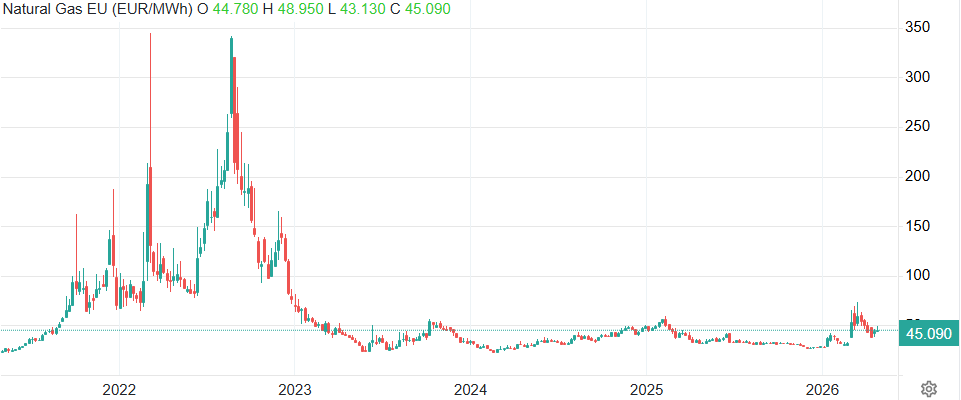
Guess how Europe has backfilled part of its shortage of natural gas since the war began? In the first quarter of 2026, the EU reportedly took 69 of 71 cargoes from Russia’s Yamal LNG facility, equal to roughly 5.1 million tonnes and about 97% of Yamal’s LNG deliveries over the period, spending close to €2.9 billion in the process. All while the EU has agreed to phase out Russian gas imports, with short-term-contract restrictions arriving first and the full-scale ban not scheduled to bite until 2027. Europe usually gets something like 2.3 million tonnes of LNG from Qatar each quarter, but that flow has been interrupted following the March attacks that reportedly knocked out around one-sixth of Qatar’s LNG export capacity. This goes some way toward explaining how prices have remained subdued relative to the surge seen in 2022. Higher than pre-war at around €50/MWh, yes, but still a long way from the lofty triple-digit heights scaled during Russia’s invasion of Ukraine.
The combination of exams and a lack of inspiration precluded me from delivering any ramblings last week. Although it appears that very little has changed in the interim. The Strait of Hormuz remains severely disrupted, and energy experts continue to warn that we are tiptoeing over the precipice into the abyss, where energy and other key commodity prices are about to go parabolic as floating storage and inventories are exhausted. The price of oil is beginning to trade like this is the case. The longer the Strait remains disrupted, the more the probability of catastrophic tail events increases. Expect another huge release from the Strategic Petroleum Reserve and other emergency stockpiles should we get another spike toward $150. President Trump has warned of an extended blockade.
Trying to reconcile these developments with the stock market having its best month since 2020 is a fool’s errand. Back when I was working on the trading desk, you would get salespeople asking why the Aussie dollar went up overnight, why the Swiss franc was weak today, etc. Depending on how hungry or tired I was, I would sometimes curtly reply that there were more buyers than sellers, or vice versa. This was more than frowned upon, and never acceptable, despite the fact that, ultimately, it was the case. Make up a story, make up a narrative, something that can be sold as a good enough explanation. Sure. Then you start talking about iron ore prices, China industrial production numbers, gold export figures, blah blah blah; whatever makes people happy, give them what they want.
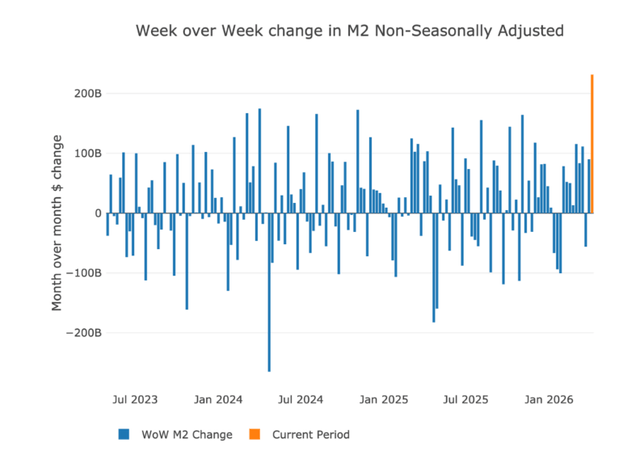
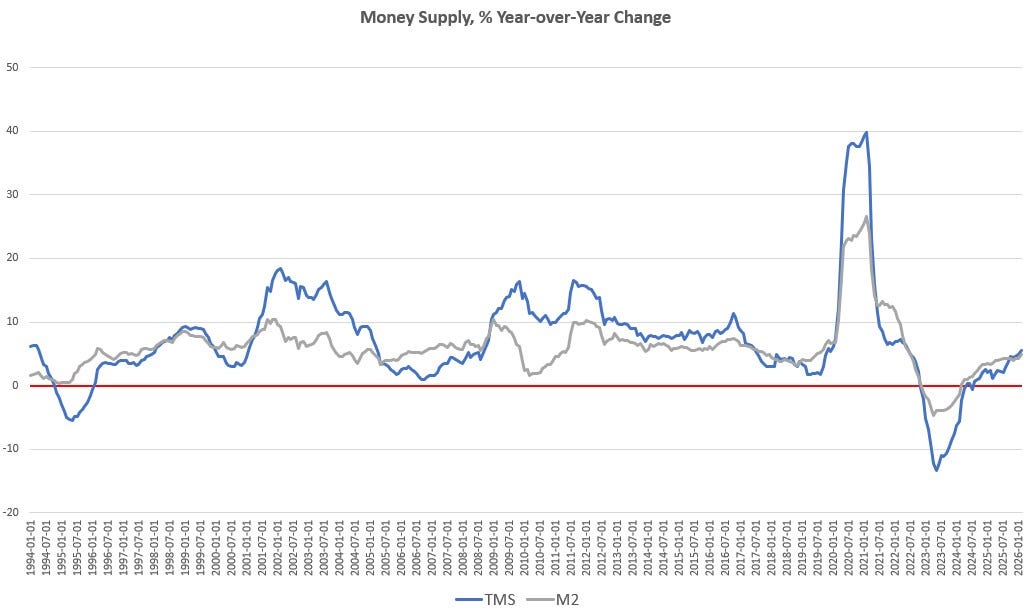
Now, with all of that said, here is just one of the explanations for why stocks are doing so well despite the ongoing war in the Middle East and elevated energy prices: the Fed is doing what looks like quantitative easing again. Call it stealth QE. During February, year-over-year growth in the money supply was at 5.5%, following January’s increase of 4.9%. The total money supply has increased by over a trillion dollars since last summer. OK, fine, M2 represents “broad money supply” and is not QE: it is money available for spending in the economy. A jump in M2 does not automatically mean the Fed is doing QE. Still, when you reconcile the jump in the money supply with the fact that the Fed’s balance sheet has risen from $6.5 trillion in December to $6.7 trillion this week, it certainly starts to walk like a duck and quack like one too.
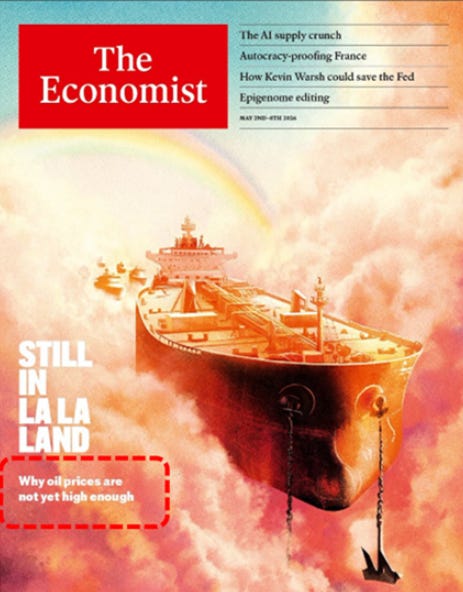
If this new money is saved, it is not inflationary. If it is spent, however, it is a whole different story. Elevated energy prices force the extra spending. Food prices have yet to really surge again in the same way they did in 2022, as the prices of wheat, soybeans, and other agricultural commodities remain well below the levels that conspired to push inflation to extremes then. That inflation was, in large part, driven by the huge fiscal spending that governments enacted both after the pandemic and in response to the impact of the war. This time around, we are getting enormous capital expenditure from the hyperscalers competing in the AI race, alongside steady but not huge fiscal stimulus from the government. This is all a recipe for higher prices. The saving grace is that The Economist just put out a great contrarian-indicator cover page that would suggest the high is in for oil prices.
If inflation rears its ugly head again in the same way, expect bonds to sell off hard. Europe can be counted on to implement silly policies that heighten the inflation scare to everyone’s detriment, and stocks should eventually come under pressure again. For the time being, though, I am going to steal another quote, this time from Brent Donnelly, saying that, for now, “the world is still more worried about the shortage of generative AI tokens than it is worried about the shortage of crude oil.”
Keep the replies coming.
Donal
Great chat.
Comments
Nothing yet. Say the first thing.
Sign in to join the conversation.