
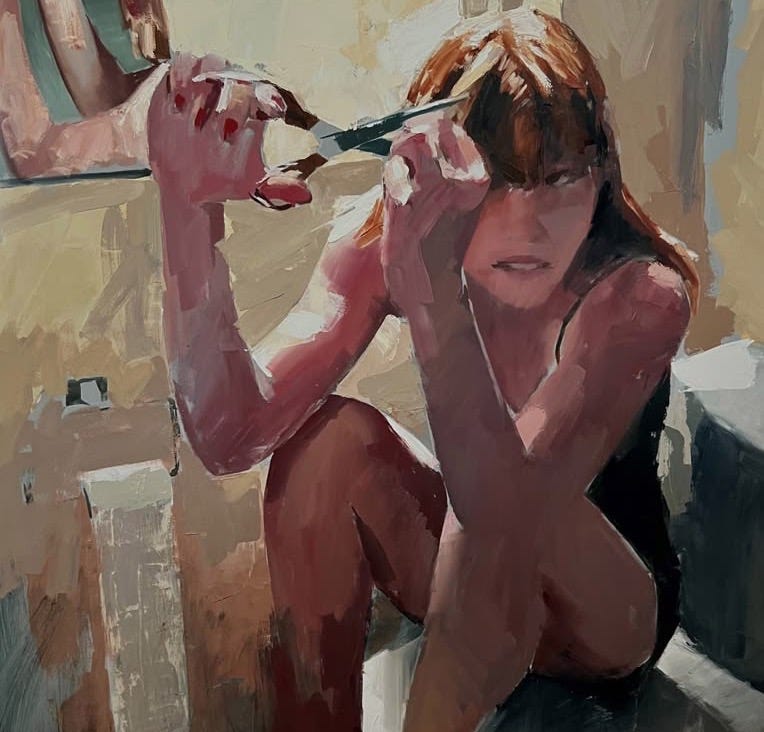
It’s 30 degrees outside, and I’m lying in a tepid bath soaking my self-tanner. It’s only a few days old, so it’s still bronze and prized to my skin, but I have a meeting with a potential client tomorrow, so my mind is in a civil war about whether I should scrub it now or leave this as a preliminary soak. The video meeting will be face-only – so there’s no way my potential employer will notice the tiger bread discolouration on my wrists and ankles – but my neurotic self is worried my aesthetic imperfection will colour our working relationship before it’s even begun.
I use tan as an example because it’s what’s grating me right now (just as the exfoliation mitt hanging off the tap wants to), but this kind of beauty pedantry can apply to anything. It comes in the temptation to delay a first date because you can’t afford to have your forehead grooves ironed out; to move an important job interview because your outfits feel stale; or reluctance to join your friends on holiday because your scale hasn’t dropped to the desired number. An old colleague, despite being lonely, vowed not to go on a date until Invisalign rendered her teeth poker straight, and a friend committed to abstaining from sex until she’d had the fat from her hips transferred to the alleged hollows under her eyes. When I returned to university after going full-tilt anorexic, I said to a friend, my voice hopeful, “Maybe now I’ll get a boyfriend.” From the bus seat opposite, she replied, “I don’t think that’s how it works.” Years later, nervous about the biggest interview of my career, I considered bankrupting myself for some fresh highlights, as if Khloé Kardashian would refuse to open up to me on account of my sooty roots.
“Fail to prepare or prepare to fail” is a dictum a lot of us were raised on. We’ve been taught from birth that preparation is both proof of caring and a means of guaranteeing a positive outcome. But dates, in all their unpredictable glory, are hard to prep for. You don’t know what the other person is going to ask you (if anything at all) or what they want from your personality, but you can preen your face, hair, and body to look just so, and, if you’re straight, to adhere to the male gaze. Whenever I re-immerse myself in the dating pool, that gaze sets up shop in a chamber of my brain: How I look at any given time is internally criticised by a shadowy male figure – the amalgam of the men on Hinge or a hazy iteration of whoever I’m seeing.
But oftentimes, preparation is just control in a different font. For me, outsized pressure to look perfect (even when It comes to changes that are imperceptible to others, as most are) before a loosely significant event is tied to my OCD. Wanting to look perfect stems from a desire to exert control: when my OCD was at its worst, I thought picking a piece of fluff off the carpet could ward off sudden death. Now, my lash tech feels like a shaman who possesses the power to ward off rejection.
And it’s not just lashes. At the crux of most beauty work is a desire to control how we’re perceived. Many of us have an internal vision of our most tweaked and exercised self. Sometimes, this image feels like the real us, and our current form, a mere typo: a practice run on the road to actualization. This perceived lacking warps our self-perception, overshadowing, or even negating, all of the things people actually see when they look at us. We begin to feel that the perfected version is the one who should show up on our first day of work, at our wedding, or to that reunion with an old lover. Being ‘hot enough’ to live all comes down to a universal temptation to insulate ourselves from life’s vulnerabilities: the rejection, heartbreak, and insults, via that universally prized and seemingly achievable thing – beauty.
It all comes down to the belief that looking good makes us more deserving of good things (a belief pushed by makeover montages, glow up culture, and the beauty industry at large). That in exchange for love and stability, we owe our lovers and employers our hottest selves. That we can’t justify the excess of beach cocktails or the sensory joy of waves at our back without first reaching our goal weight. I often have to remind myself that research into a company is more important than looking hot in the interview, but as fucked up as it sounds, looking good makes me feel more deserving of the job – and perhaps good things in general – than practical preparation does.
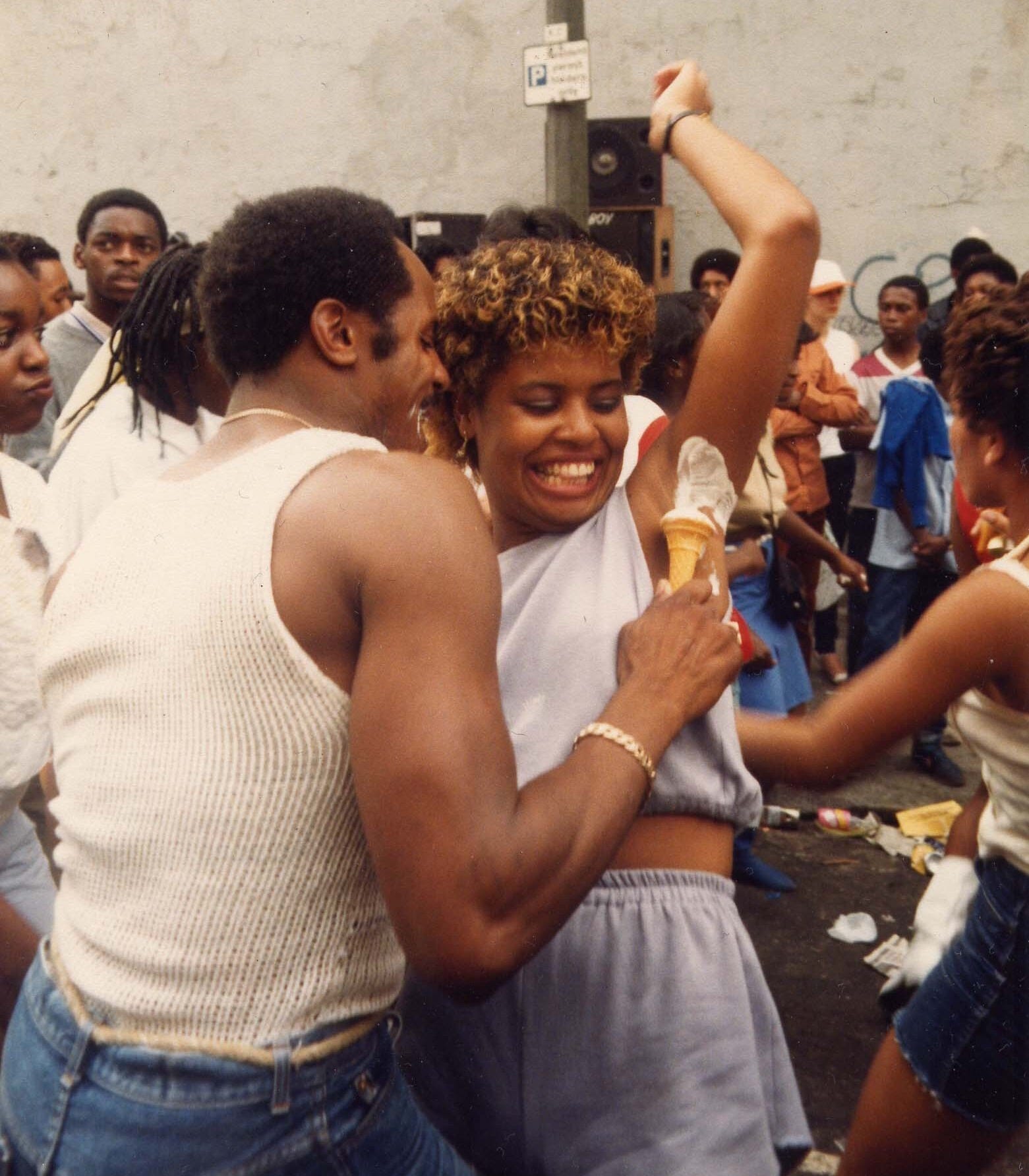
Our brains are pickled in the idea that so-called “pretty privilege” has the power to negate life’s darkness. To replace life’s valleys with peaks, or at least make us better equipped to surf those valleys or attract a coterie of friends, fans, and lovers to pull us out of them. But although the halo effect is punishingly real, and, crucially, caught up in matters of race and class, its impact can be overblown (some of my hottest acquaintances are the most unhappy). It’s also more subjective than we think. As anyone who’s spent their life in the quest for a flat stomach then fallen in love knows, the things we think we need to be loved are rarely of major interest to the person who loves us. In fact, the idiosyncrasies we think need fixing are often those they find most endearing. An ex loved the teeny singular hair that pokes out from the right of my belly button; my friend’s boyfriend loves her tummy, the thing she used to feel the need to bat men’s hands away from. Of course, they’re not blind to our flaws, but the features they notice or dislike are often traits you may never have thought to prevent or fix - the slightly asymmetrical mouth I didn’t know I had, or the texture of my wet hair on his pillow. This knowledge can be a hard pill to swallow when it means we’ve been prioritising the wrong thing and missing out all our lives.
Still, I’m not going to bullshit you and claim that adhering to beauty standards via beauty work can’t alter trajectories and change lives – it can and it does. But I can promise you that no one treatment is going to be the thing that grants you permission to start your life. And as both someone who gets regular beauty work or someone with an obsessive disorder will tell you, one treatment or obsession will reliably breed another.
No tweakment or hack will make you suddenly worthy of sand between your toes, a high school reunion keeled over in nostalgic laughter, or a good fucking. I come from a long line of house-proud Irish women. Our houses are scrubbed until they “deserve” to be seen by any impending “visitors”. But those houses don’t have to be polished to be loved and lived in, or, for that matter, to serve as a refuge for guests.
And more often than not, the coziest room in the house is the messiest.
“I compare my body to the bodies of other women. Occasionally, I win. What does it mean to win? It means that my body fits more closely to the bodies of women in magazines on which I grew up. It means that I am skinnier. It means that I am in some way beyond reproach.” - melissa broder
A relevant piece I wrote for Dazed about the rise of the glow up:
Comments
Nothing yet. Say the first thing.
Sign in to join the conversation.