
In case you missed this week’s cultural news, I've recapped it below. None of them mention the brain, but there’s a neuroscience lesson in each.

What happened?
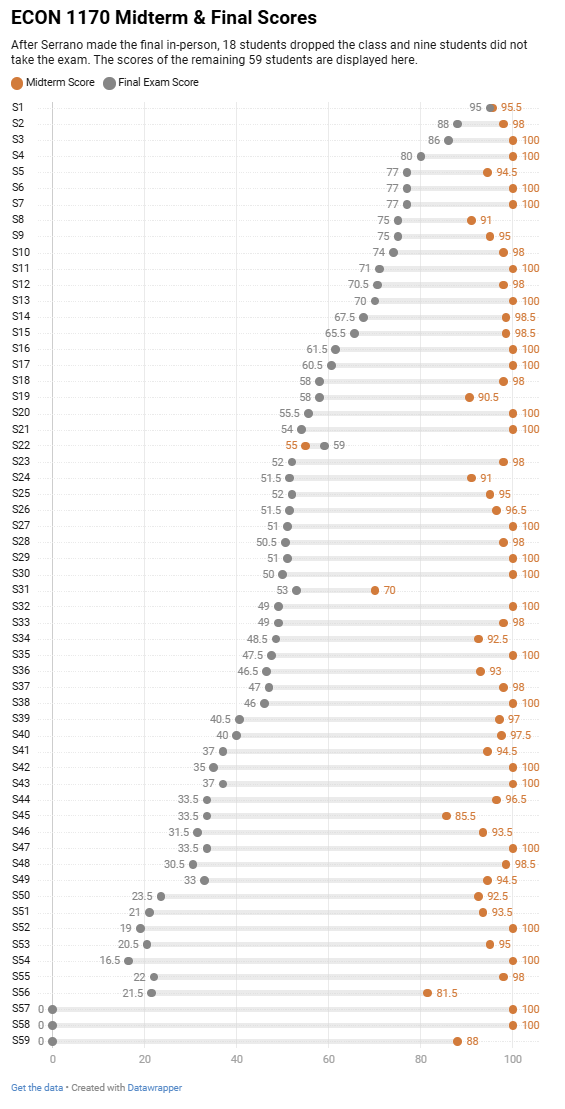
Brown University economics professor Roberto Serrano gave a take-home midterm this spring to 86 students, 40 of whom earned perfect scores, which led him to suspect widespread AI use. He told the class he would count the midterm only if the in-person final matched its distribution, giving them an explicit chance to prove him wrong; instead, 18 students dropped the course outright, and 9 more stayed enrolled but never sat the exam. The fifty-nine who did show up watched the class average collapse to 48.6 percent, the lowest in the course’s history.
What is Neuro about it?
The unsettling part isn’t that some students cheated (I mean, we expected it to happen with AI, and I am sure there’s more of it happening than caught); it’s that so many couldn’t function once the shortcut was gone, and a large share chose to leave rather than try (and this is after they scored that high midterm number that will still be counted towards their final grades!).
That tracks with what MIT researchers found when they monitored student writers with EEG: those who wrote essays with an AI assistant showed the weakest brain connectivity of any group, struggled to recall or even quote their own writing, and still lagged behind unaided writers even after being moved into a no-tools condition.
Cognitive scientists have understood the underlying mechanism for decades under a less alarming name, the testing effect: effortful retrieval, not passive consumption, is what actually builds durable memory and skill. A brain that never practices retrieving information on its own does not stay neutral while it waits; it gets worse at the exact task it stopped practicing.
Most importantly, the students didn’t even bother to try. They are not learning to build confidence in their ability to learn, to think, to be tested. We are building a generation of brains that will resort to the machine before even trying to come up with a hypothesis. It’s not the machines we should be scared of; it’s the passive brains that are not being put to use.
What happened?
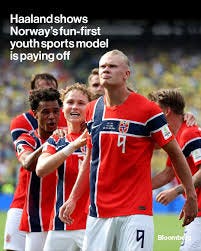
Bloomberg profiled Norway’s youth sports federation this week, which builds its entire model around exploration over competition. Norwegian children under twelve play in leagues that keep no official score and post no standings, and federation rules give every child the right to sample multiple sports before committing to one. Erling Haaland, now the most dangerous striker at the World Cup, split his childhood between football, handball, and track, a path several of his current national teammates also followed.
What is Neuro about it?
A large-scale review in Science analyzed the developmental histories of more than thirty-four thousand top performers across sports, music, chess, and academic science, and found that early stars and eventual world-class adults are, more often than not, two different groups of people. The kids who specialized early and progressed fast were the ones who dominated as children; the ones who explored multiple sports or disciplines and progressed more slowly were the ones still improving, and often overtaking the early stars, as adults.
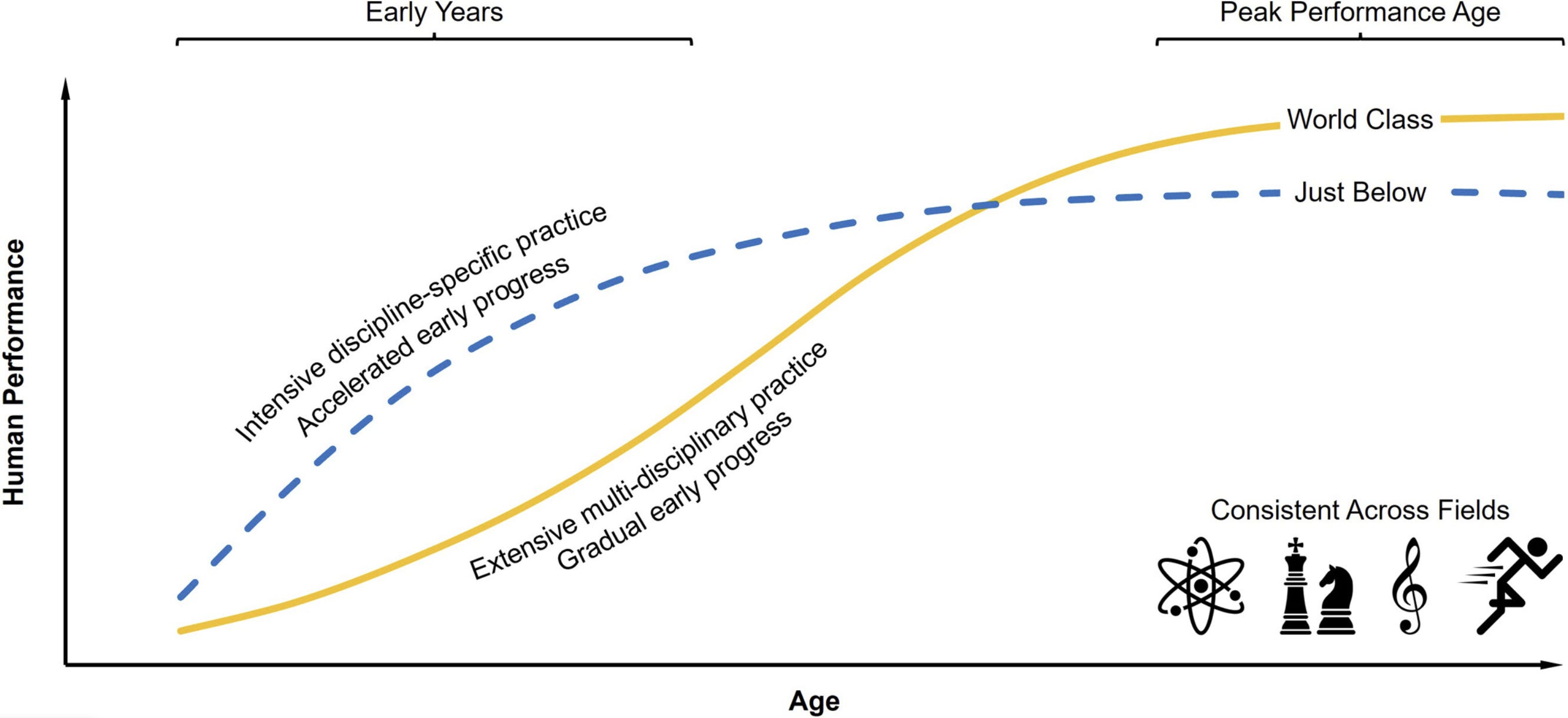
Exploration, in other words, is not time wasted before real learning starts; it is how the brain builds the kind of general learning capacity that keeps compounding long after the sport-specific reps stop. It doesn’t stop at childhood—any exploration you do as an adult, every pivot you take in your career —it’s not wasted; it builds you toward excellence well into your adulthood!
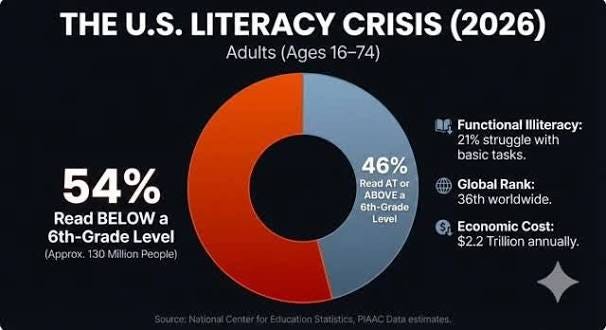
What happened? The Atlantic’s new cover story, The End of Reading Is Here, argues that most of the country has quietly stopped doing anything that resembles deep reading, with nearly 30% of adults now unable to paraphrase or draw inferences from a multi-page document, up from under 20% in 2017.
What is Neuro about it? Not everyone stopped, though: a year-end survey found that 19% of Americans accounted for 82% of all books read in 2025, while 40% read none at all. Barnes & Noble is betting on that 19%, opening 60 new stores in 2026 on top of roughly 70 opened in 2025.
That gap looks less like a preference and more like a widening of intellectual capabilities. In a five-wave twin study, researchers tracked 1,890 identical twin pairs from age seven to sixteen and found that whichever twin developed stronger reading skills first went on to score higher on general intelligence tests years later, including nonverbal reasoning that has nothing to do with vocabulary, a pattern that held even though the twins shared the same genes and the same home.
A 2017 reanalysis questioned how much of that effect is truly causal, but even the more cautious reading of the data leaves childhood reading as one of the few habits that reliably tracks forward into sharper adult cognition. Part of the mechanism resembles what happens in the brain during sustained reading: it recruits the same default-network circuitry used to simulate other people’s thoughts and intentions, exercising a kind of inference-making that skimming a headline never requires.
Even without the complicated neuroscience, we see what happens when society breaks the habit of engaging with a single thought for a long time. Many see a single comment or a headline, jump to conclusions, and react without first considering the other side or the context.
Reading in the modern era is not about gaining information because Googling or using AI is the most efficient way to do that. Rather, reading is more about engaging deeply in critical thinking, seeing creative problem-solving at work, and developing the ability to notice nuances we don’t get from a short video or a newsletter.
Of course not, this one. This newsletter has many nuances and is a great way to get back into reading. :)
No posts
Comments
Nothing yet. Say the first thing.
Sign in to join the conversation.