
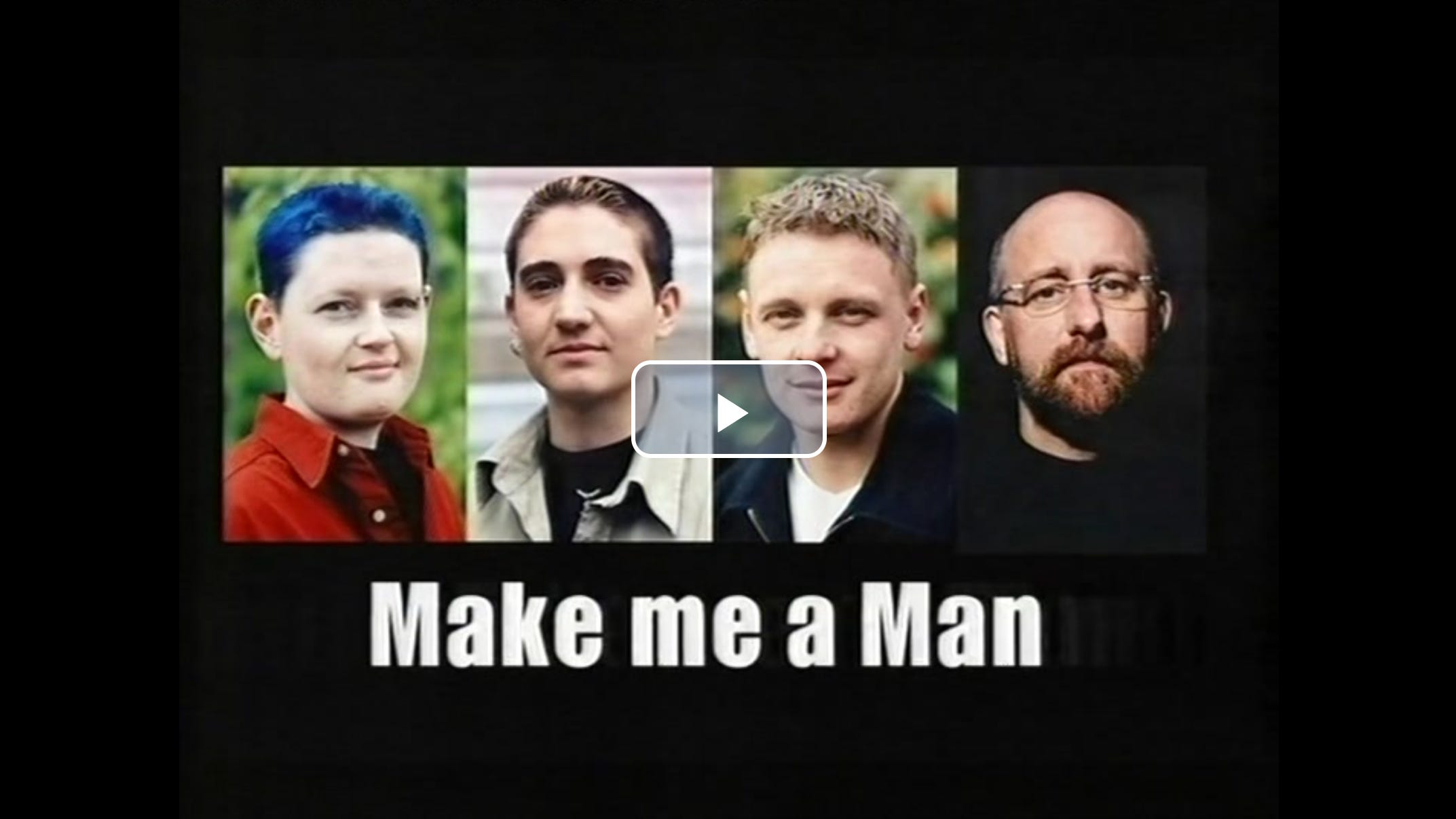
*I can’t post the link to the doc from my archive, as it is strictly copyrighted to me. But I’m sure you will get the drift of it, from the reviews below.
What was happening in 2002, when this series was screened?
It was right on the cusp between the wider public ‘understanding’ of transsexualism, and the modern-day horror story of gender ideology.
Things were shifting in law: that same year, a landmark ruling in the European Court of Human Rights (EHRC) allowed a same-sex couple to marry. Christine Goodwin, a man who identified as a woman, was given the legal green light to marry another man – eleven years before other same-sex couples were able to do so.
Around this time, trans activists began demanding that the medical/psychiatric model be rejected. They didn’t want gender to be seen as a medical problem in any way. The legal framework was still quite medicalised as the Act came into place, and it wasn’t until 2019 that the World Health Organisation removed ‘gender incongruence’ from its chapter in ICD-11 (the global standard for recording health information) on mental and behavioural disorders, placing it instead into a chapter concerning sexual health.
Stephen Whittle and Christine Burns were the key spokespeople for Press for Change, an old-school transsexual rights campaign founded in 1992. It was an effective and influential organisation, credited with the 2002 and 2004 changes to legislation.
Although the GRA is the source of multiple problems, Whittle and Burns, at the time at least, favoured “education and engagement rather than confrontation or demand making”. This approach could not be more different from the movement today.
Whittle (and her phalloplasty) was the key character in Make me a Man. The documentary certainly helped normalise the notion of women transitioning to live as men, and certainly brought some glamour to it. Millions watched these ‘trans men’ being happy and accepted at work, and enjoying family and romantic life.
What happened between 2002 and 2015 is a whole other story, and one I shall be focussing on in a couple of weeks.
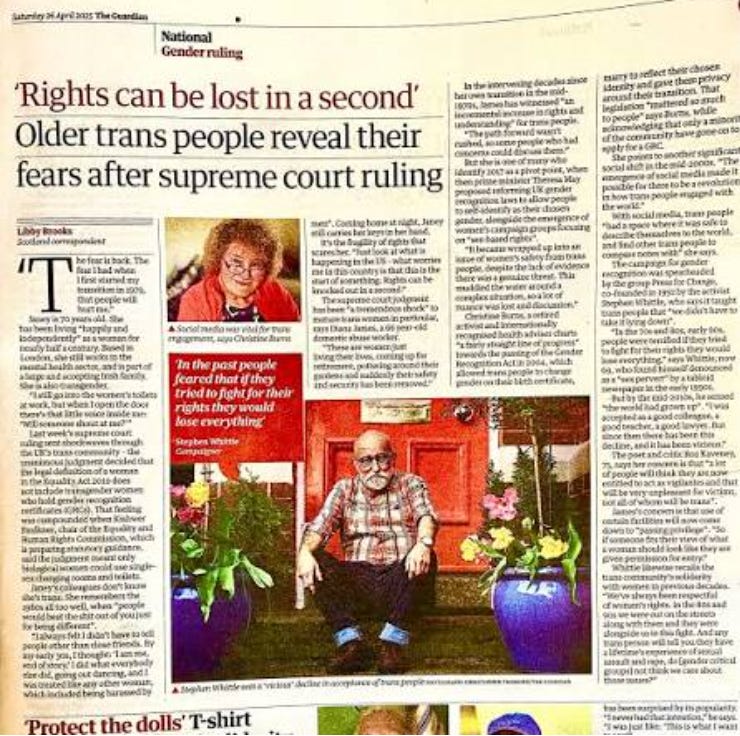
Burns and Whittle, wittering on about those pesky feminists
My first taste of this crazed ideology was the very beginning of the 1980s when, as a new and young feminist, I joined a group, Women against Violence against Women, which campaigned against male violence. In one meeting, a woman was discussing how her friend had left an abusive husband, and then fallen in love with another woman. When he discovered this, he began to claim he was a woman, and a lesbian, and kept turning up at venues he knew they would be at.
We were all very clear, that the diagnosis of transsexuality was both bonkers and dangerous for women.
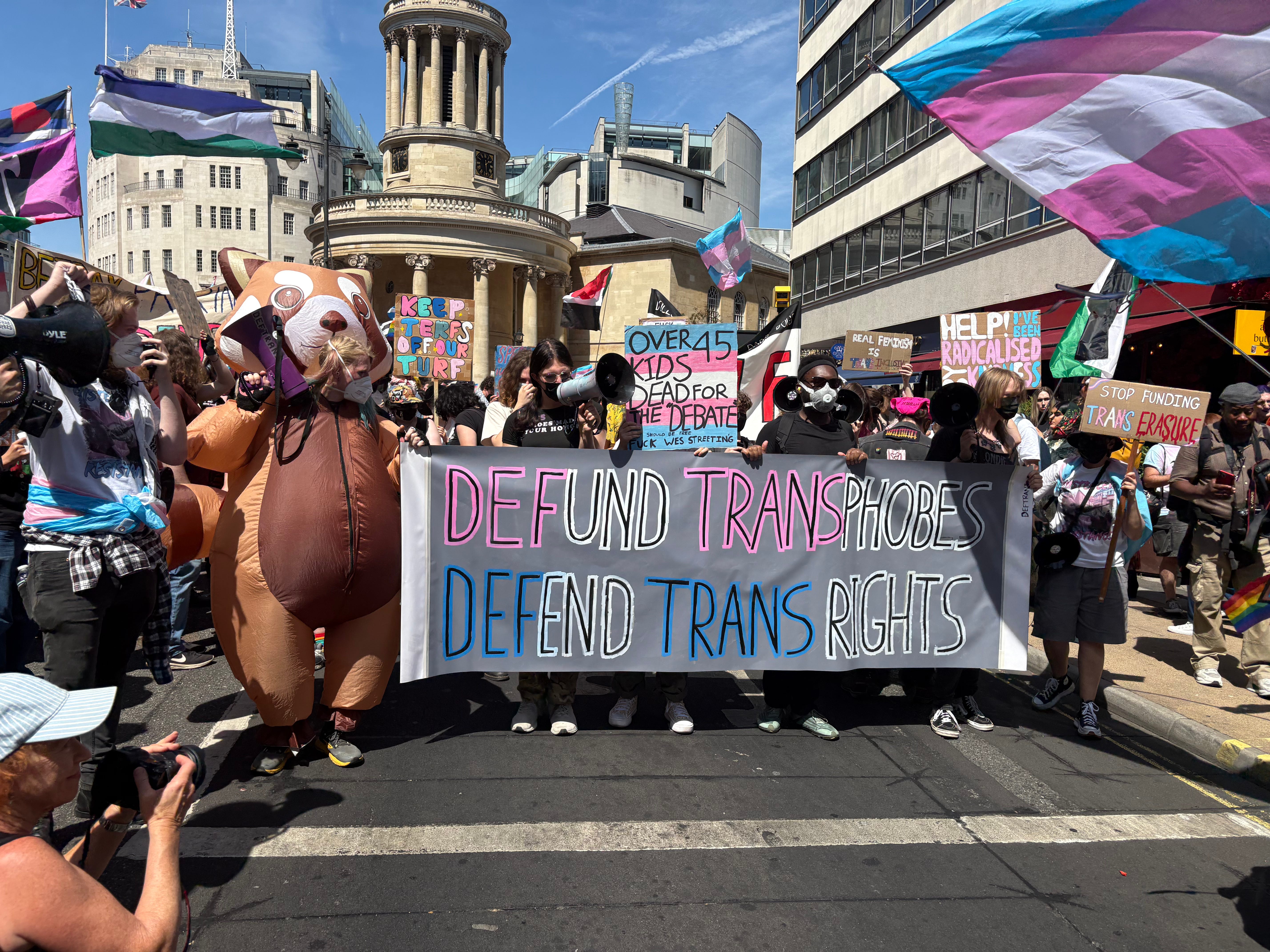
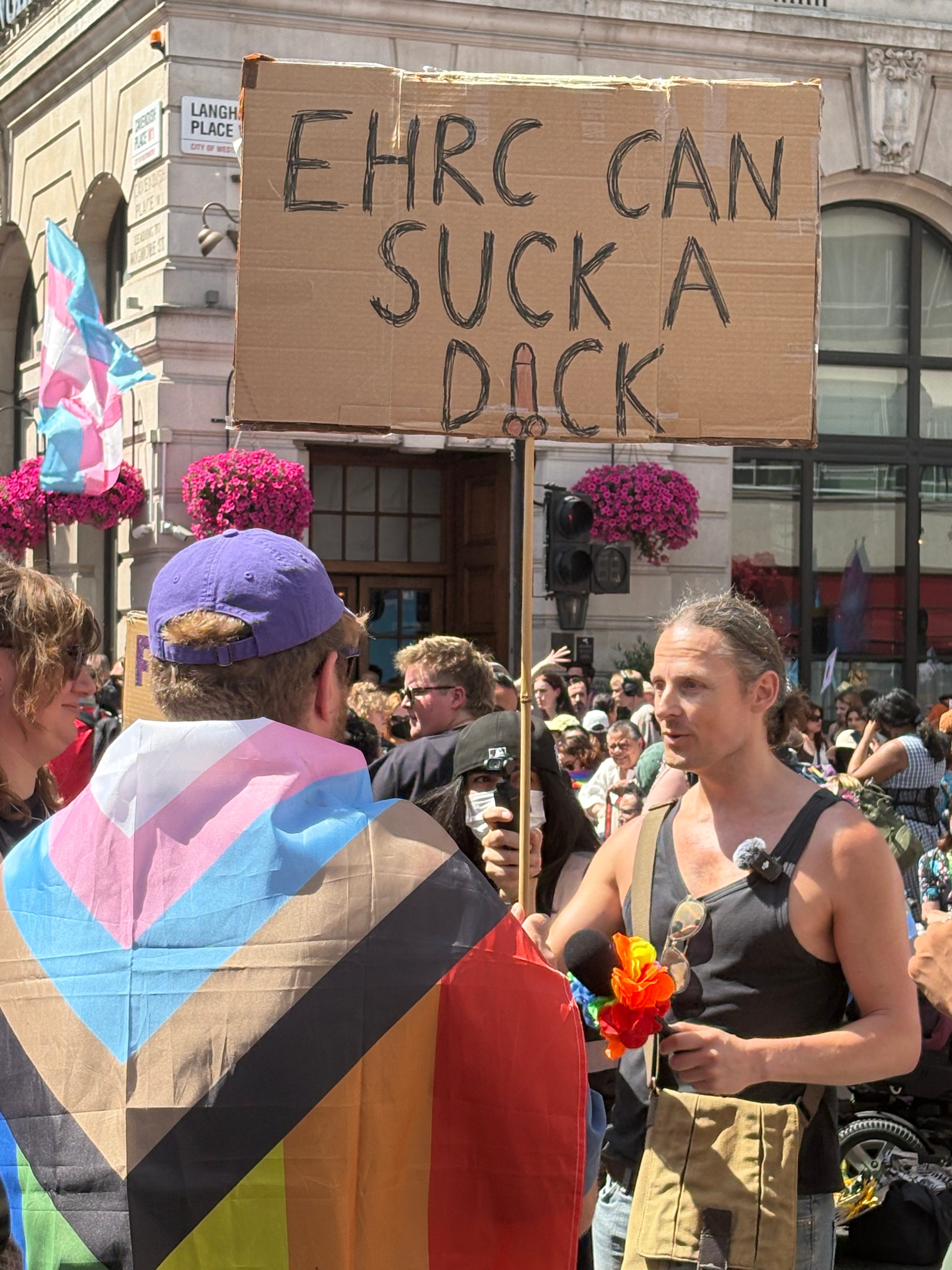
London Trans Pride, July 2026
We could never have imagined then that decades later, we would see the invention of the “transgender child”.
There was never any doubt that these men were sexually aroused by cross dressing, because we saw this type of pornography during our campaigning. We didn’t have the word autogynephilia then, but it was obvious that this was a sexual kink.
And one interesting thing to point out: in those days, many of the out lesbians (mainly working class women who were not involved in feminism at all) were hard-core butch, often being mistaken as men (at first glance). But they would never identify as men, and would be extremely offended if someone suggested they might. There were numerous reasons why the outward appearances of these women matched the masculine stereotype, but I never heard one, and I knew many, who either thought they were men, or who wanted to be.
Feminists fighting male violence against women and girls (not the liberal, fun kind), have always been aware of and fought against sex stereotypes that form the basis of women’s perceived inferiority to men. Therefore, we saw such stereotypes as harmful. We understood that gender roles, or what we referred to as ‘rules’ are about the way that girls and women were required to act, should be eradicated. We didn’t ever think any of it was ‘natural’ or ‘innate’.
In 2002, when Make me a Man was broadcast, I was still working in academic research. I was writing opinion pieces relating to my feminist campaigning work, but I wasn’t yet a journalist. Nevertheless, my interest in transsexuality was revived, both by the documentary, and on discovering a paper in an academic journal that left me open mouthed. It was written by a trans identified man talking about how outrageous it was that he had to go through two years, living ‘as a woman’, before he could be considered for surgery. Before the Gender Recognition Act, this the requirement.
Anyway, he was explaining how, at the Charing Cross Hospital, he was advised to have speech therapy to sound ‘more like a woman’, learn to cross his legs at the ankle, walk in a ladylike manner, defer to men during conversations, stick his little finger out when picking up a teacup - all of the things that would make him appear more ‘like a woman’. I started looking into this a bit more, and was horrified when I discovered that there was an entire chain of stores across the UK called Transformations, at which men could go and dress up as their fantasy woman, and buy stick on, rubber vaginas so they could sit down to urinate I kid you not).
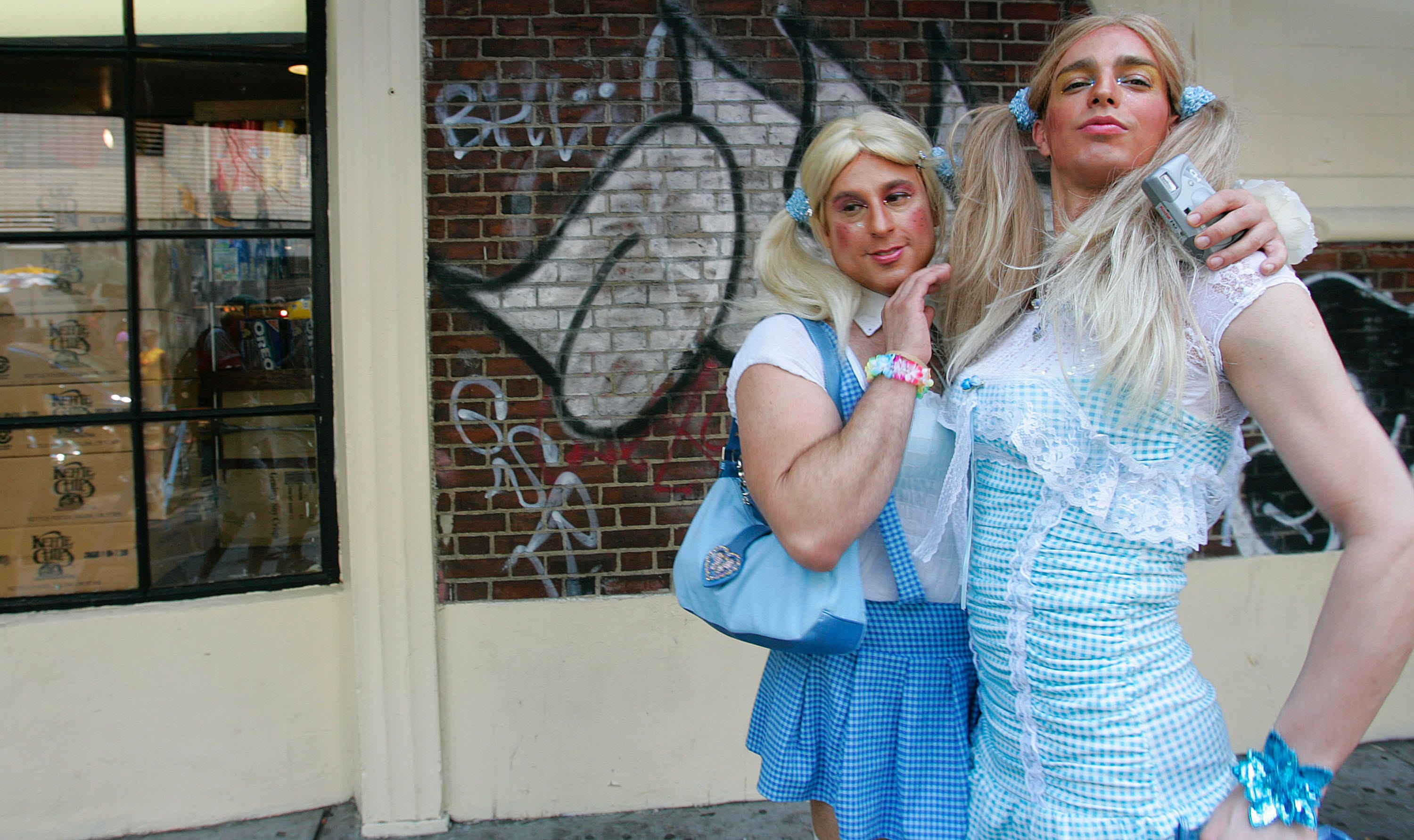
A pair of wazzocks
It wasn’t until 2003 I wrote about Transformations, and interviewed Claudia, the very first public regretter. My article was published in the Sunday Telegraph Magazine on the 15th November. In those days, magazine supplements were not available online, so there was no onslaught. What did happen though, was when, a couple of days later I was at an industry party (having decided I was leaving academia, so was schmoozing with journalists in preparation for joining the trade) I was praised to the hilt by several people, who would definitely now fit the ‘be kind’ trans activist types, who found my piece to be of interest. Many of them told me they were appalled that psychiatrists were still handing out this diagnosis. I remember each and every one of them that made positive comments about the article, and I bet they remember too.
Just weeks later I was officially launched into my new career, and on the 30th January, 2004, my infamous column, Gender, Benders, Beware was published.
This was at the beginning of the UK trans rights movement, and none of us had any idea how bad things would get. I thought the crazies might just continue targeting me, because now here was an opportunity to ‘shut that man hating bitch up’ who’s always going on about domestic violence and rape. I didn’t realise that, just over a decade later, we would be in the throes of a full blown gender war.
A SMALL SELECTION OF REVIEWS OF MAKE ME A MAN
Guardian
Make Me a Man charted the lives of four female-to-male transsexuals. Father-of-four Stephen had lived as a man for 25 years and was preparing for the surgery which will finally endow him. He had picked the penis he wanted from the internet. It is called “Dirk”. Twenty-four-year-old Scott has testosterone injections every fortnight. Previously, they have encouraged chronic masturbation. While Scott was awaiting his mastectomy (footage of which was obligatory and gory), we got to see old photos of him as a little girl called Sarah. “Little prick coming,” warned a nurse, brandishing a syringe of testosterone. Nobody even smirked.
Daily Mail
A YEAR in the making, Make Me A Man (Channel 4, 9pm) is a ground- breaking two-part series telling the story of four female-to-male transsexuals - all at different stages of the process of changing sex to become men.
It includes everything from their struggles to get treatment, the dramatic effects of testosterone as their voices drop, the radical surgery required and the impact that their sex-changes have on their friends, family and lovers.
There are now more than 2,000 female-to-male transsexuals in the UK. But while many maleto-females struggle to ‘pass’ as women, the effects of the testosterone are often so dramaticthat most female- to-males become indistinguishable from biological men.
A landmark decision at the European Court of Human Rights earlier this month now means that British transsexuals will soon be able to change the gender on their birth certificate and marry.
Guardian Features
They had climbed the daunting rock faces of the Peak District together, played pool for the same team, and shared their studies and home. But last spring, they put their years as a lesbian couple behind them and embarked on another joint project: to become men.
Bob and Lee, currently undergoing hormone treatment, have joined an increasing number of women who believe they were born into the wrong bodies. There are 2,000 female-to-male transsexuals in the UK - compared to 3,000 male-to- female - and a landmark ruling by the European court of human rights this month means that their transformation will soon be legally as well as physically complete. It will ensure that transsexuals have full legal recognition in their adopted sex, allowing them to marry, receive an amended birth certificate, and adopt any children born to their partners by donor insemination.
But while transsexualism is becoming more common and more widely accepted, it is still highly unusual for a couple to decide that they both want to change sex. Several people assumed the move would spell the end of Bob and Lee’s relationship: if they fancied each other as women, would they still be attracted to each other as men?
“It caused a few raised eyebrows,” admits Bob, 29, who is a mature student in Sheffield. But it never seemed to be a big issue what gender we were; we were comfortable being Bob and Lee and he never really thought of me as being female anyway. A lot of people were concerned that Lee was copying me because I was the older one. He found that slightly insulting. I honestly don’t believe that anyone can persuade you to have a sex change.
“If I had been given information a lot earlier, I would probably have done it when I was about 16. It’s quite a scary thing to consider, because it’s drastic, but it was a big relief to realise there was a reason why I was feeling the way I was feeling.”
Bob’s dislike of his body is so intense that his treatment was held up for months by his refusal to undergo a physical examination. “I don’t like anybody seeing what’s underneath my clothes, because it’s not right and not me and it shouldn’t be there, and if they see that they might start thinking of me as female,” he says.
“I don’t think there was any point in my life where I actually felt female. I vividly remember my mum trying to put me into a skirt to go to junior school when I was seven. I was holding on to the door frame as she tried to force me out. Then I hit 16 and became more aware of the differences. I would practise in front of the mirror, making sure that when I walked I didn’t swing my hips like a girl. After a few weeks it became second nature.”
Twenty-two-year-old Lee, on the other hand, tried to appear more feminine. “I tried to fit in through my teenage years; I grew my hair and tried wearing skirts, but I didn’t feel comfortable like that,” he says. “I was known in high school as ‘the girl who wants a sex change’ by a couple of people, which is pretty ironic.
“Just before I hit puberty, I saw a programme on hermaphrodites and I remember wishing that my parents were going to tell me they had a big secret they’d been keeping and actually I didn’t have to go through puberty. It was only when I talked to Bob that I realised something could be done.”
Lee was called Heather until a couple of years ago, when, prior to his decision to have treatment, he decided to take an androgynous name. Bob flatly declines to discuss the subject of who he was before. “You can ask, but I won’t tell you,” he says.
Becoming male is a long, slow process. Candidates spend months living as men before they can receive treatment; they must use men’s toilets, go under a male name and ensure that documents carry their new identity. Gender clinics often give people tips on “passing” (passing yourself off as a man), and the hints offered to Bob and Lee included watching TV newsreaders to learn how modern men style themselves.
“It’s amazing how much of life comes down to which toilets you use,” Bob muses. “For five or six years before I realised I was transsexual I was dressing like a bloke anyway, and the only thing that gave me away was walking into women’s toilets and my ID saying Ms instead of Mr.”
With his slighter build and higher voice, Lee found it harder to pass: “I’ve only been questioned once, but you’re always waiting for it. I would pass until I opened my mouth and then they would revert back to ‘she’ and ‘love’. You feel very much in between; it drums in how wrong you feel as you are.”
Experts insist that such a period is crucial to determine whether those who want treatment are really transsexuals or are simply confused. Patients then face a panel - which, for Lee and Bob, included a vicar and a stylist as well as doctors and psychiatrists - who assess whether they should receive treatment.
Female-to-male transsexuals need testosterone shots every fortnight throughout their lives, and many of the effects are irreversible. Within a few weeks, women start to experience male puberty, and once their voices have changed, they will never regain a higher pitch.
“After my third jab my voice started to break,” says Lee, who began treatment six months ago.
“It made the difference between me being able to pass and not. My face has changed a lot as well, and I’m covered in spots; but it’s OK, I’m not going bald yet. In fact, I’ve become extremely hairy. My legs have become forests and I’ve got hair all over my body. It’s all starting to change, but when I get ready for bed I’ve still got the same body. It’s quite traumatic.
“The gender clinic tries to tell you about body language and acting like a man, but after a while you realise all men are very different anyway and if you look like a man you are going to pass. I realised I can be me, I can be the man I want to be and I’ll still pass.”
Bob, who received his first injection in April, is also much happier. “It was only a couple of weeks before my sex drive went through the roof - as seems to happen with everyone, because you have about 300 times more testosterone than the average teenage boy going round your system,” he says. “Your body changes within a couple of months. I’m already less conscious of how I walk and sit and speak.”
Transsexuals find that their skin becomes coarser; that they have to buy new shirts as they bulk out and their collar sizes increase; that their feet often become bigger. Most bind their chests, but after a year or so of hormone treatment they can undergo mastectomies, removing their breasts entirely.
The final step is to have an artificial penis and testes constructed from skin taken from elsewhere on their bodies and grafted on. It can, however, fail to take, and many choose not to undertake this last part of the process. Its main function is to allow transsexuals to pass unnoticed in changing rooms and showers.
It is possible to construct a penis that allows the user to urinate standing up, but this is riskier. It is also possible to insert an artificial erectile device, so that the penis can be made erect using pumps. But this is only to satisfy partners. A transsexual who goes through with the surgery will lose almost all his sexual pleasure because the clitoris is removed at the same time.
Lee is currently being treated on the NHS, while Bob has had to go private because of his refusal to undergo a physical. The availability of free treatment varies widely, and a wait of several years is common even when it is approved. But going private can be cripplingly expensive; phalloplasty alone (the making of an artificial penis) can cost around pounds 25,000.
Both Bob and Lee say they are looking forward to surgery. But treatment has come at a price, and not just financial. A few months after Lee began hormone shots, Bob ended their four-year relationship.
“I was always aware that it could affect our relationship, but the only way we could handle it was to assume that we would deal with any problems it threw up as and when they happened,” Bob says.
“I thought I was attracted to Lee as Lee. It was only after the physical changes started that I realised how much of a difference it would make and that I was only attracted to him as a woman. I have never been bisexual; I have always been attracted to women.”
The break-up was even more traumatic for Lee. “I thought that our relationship would be fine,” he says. “Because I saw myself as bisexual, I didn’t have any problems with Bob changing sex. But he sees himself as heterosexual and therefore being seen with a man wasn’t really what he wanted. He said he wanted a girlfriend and not a boyfriend.
“I did think: why am I doing all this? I could have ruined my relationship with my family; I have ruined my relationship with him; why do it? But I couldn’t do anything else. I’m much more confident already. I am happier than I have ever been.”
Lee and Bob tell their story in Make Me a Man, a two-part documentary starting on Wednesday at 9pm on Channel 4. The Beaumont Society offers advice for transgender people and their families on 01582 412 220.
Scotland on Sunday Magazine
WHEN 21-one-year-old Sarah started the first course of hormone treatments that would send her on an irreversible journey towards becoming a man, she noticed a number of immediate effects. Her voice broke, her beard started to grow and she got acne by the truckload, but the most startling development was in her brain. “What amazed me was the sexual hunger,” Sarah, now Scott, says in Channel 4‘s Make Me A Man. “Everything was about sex. Someone in the office might ask me how my hard drive was doing and I’d be like that ‘woo-uurrgh, hard drive!’ Sarah, it seems, was turning into an idiot.
His/her old schoolfriends have been very supportive, but even they seemed a bit taken aback when they all went for a girlie (plus one) night out and quizzed him/her about what men really talk about. “You must have this amazing insight into the minds of both sexes...” one coos, but is less than pleased to hear Scott’s insight that “when you leave the room there’s lots of comments about ‘nice baps’ and ‘she’s a bit healthy-looking’.” “What? Are you saying I look fat?,” says his bosomy chum, advancing gender stereotypes yet further.
In fairness to Scott, he has adjusted very well to his new identity - as a little girl he dreamt of growing up to become a man and with the encouragement of his mum and friends his ‘external and internal now match up’. I could have done without watching him discuss his upcoming mastectomy while stuffing a chicken, though.
Lee, on the other hand, figures that she should become a man on the grounds that she’s always felt comfortable talking about “farting and burping and football”. Unsurprisingly her NHS psychiatrist remains unconvinced about her precise motivations - actually, they think that she’s copying her girlfriend Bob, who bears a striking resemblance to Rodney Bewes and has consequently been accepted for hormone treatment. As my dear old Grandma used to say, ‘God makes you and he matches you’. There’s no doubt that to be born in the wrong body is a tragedy but it does seem tremendously worrying that had Lee been able to raise GBP 4,000 she would have been able to get testosterone from a private clinic whose psychiatrist had diagnosed her as transsexual with the less than unequivocal “I’m pretty convinced”. One clear feeling that emerges from watching the documentary is a sense of relief that we’re not the ones who have to make the decision as to whose is the genuine case, muddied as it is by plain old self-loathing, self harm and galloping hormones. Again, Lee’s family is cautiously helpful, with only his mother voicing the understandable fear that “what if she does all this and she’s still not happy?” Note the personal pronoun. Mum, it would seem, is not a true believer.
The best advertisement for gender reassignment is the high- profile transsexual campaigner Stephen Whittle, who has been living very successfully as a man for the last 25 years. As a law lecturer he is struck by the inequity of a system that would send him to a women’s prison should he commit a crime, and horrified at the fact that his four children (born from donor insemination) will technically be orphans should their mother die. He’s decided that modern surgery has progressed to a point where he will complete his sex-change with the creation of a penis with skin from his belly. “Touch wood,” he says, without a hint of a smile, “I hope it’s going to be all right.” I hope so too, Mr Whittle.
Northern Echo
Stephen is a bearded, balding, bespectacled father of four who proves that looks can be deceptive. He was born a woman, but has lived for 25 years as a man - and a very convincing-looking one too.
He’s one of four female-to-male transsexuals featured in this fascinating two-part documentary.
Unlike male-to-females, who often have a element of drag queen about them, women make very plausible men. Regular injections of testosterone deepen the voice and make facial hair grow.
Scott is a typical bloke in every way, except he used to be a girl called Sarah harbouring a secret dream that one day she would turn into a boy.
His mother Suzie realised, by the time he was eight, that he was a boy in a girl’s body. “You just knew. He was a boy, there was nothing female about him,” she says.
Sarah was confident on the outside, in turmoil on the inside. She cut herself with a razor blade and made a suicide attempt before deciding on a sex change.
Six weeks after male hormone treatment, she started going through puberty. Her voice broke, she started shaving and got teenage spots.
One thing remained the same - her breasts. Scott had to bind them every morning to flatten them and give him a more masculine chest. The film followed his decision to have his breasts removed (an operation shown in gruesome detail).
His friends have helped him through a difficult time. “He’s happy and that’s the main thing,” said one of them.
Stephen is happy with his sex change too. He and partner Sarah have four children, who treat the fact that their dad used to be a woman without the hang-ups that adults bring to such a situation.
When he began living as a man in the 1970s, surgical techniques were crude and dangerous. Now Stephen is pressing ahead with having an artificial penis (made from the skin on his stomach). He surfed the web to find the model he wants.
Lee and Bob, students in Sheffield, are in love but don’t want a lesbian relationship. They want to become men. First, they have to convince doctors they really are transsexuals and not just unhappy lesbians.
There are other problems - such as, should they be allowed to play in the pub’s women’s pool team?. The more serious one concerns Lee. “They say I’m only doing it because Bob is doing it,” she says.
After the NHS delayed giving her male hormones because they doubted her motives, she consulted a private doctor. Now it looks like she might get the go-ahead.
Her mother Jill, admitted she was very upset on being told what Lee wanted to do. She accepts it now but still has worries. “What if she does all this and is still not happy?,” she wonders.
Comments
Nothing yet. Say the first thing.
Sign in to join the conversation.