
We tend to analyze technology one curve at a time. AI improves. Energy gets cheaper. Biology becomes programmable. Robotics advances. Launch costs fall. Each trajectory has its own logic. Each can be measured on its own.
But something different happens when those curves begin to move together.
Computation lowers the cost of discovery. Energy lowers the cost of doing physical work. Automation lowers the cost of deploying ideas into the world. When those inputs improve at the same time, industries do not just move faster. They change shape. Economic thresholds that once seemed far away begin to cluster. What looked incremental starts to feel discontinuous.
This is not an attempt to guess the exact year of a breakthrough. It is an attempt to understand the underlying structure. Scaling laws, learning curves, efficiency gains, and network effects narrow uncertainty about direction. They tell us where costs are heading and where capabilities are expanding. What they do not fix is timing. Timing depends on infrastructure, regulation, capital cycles, and coordination.
Direction is structurally guided. Timing is probabilistic.
On their own, exponential curves describe progress. Taken together, they describe acceleration.
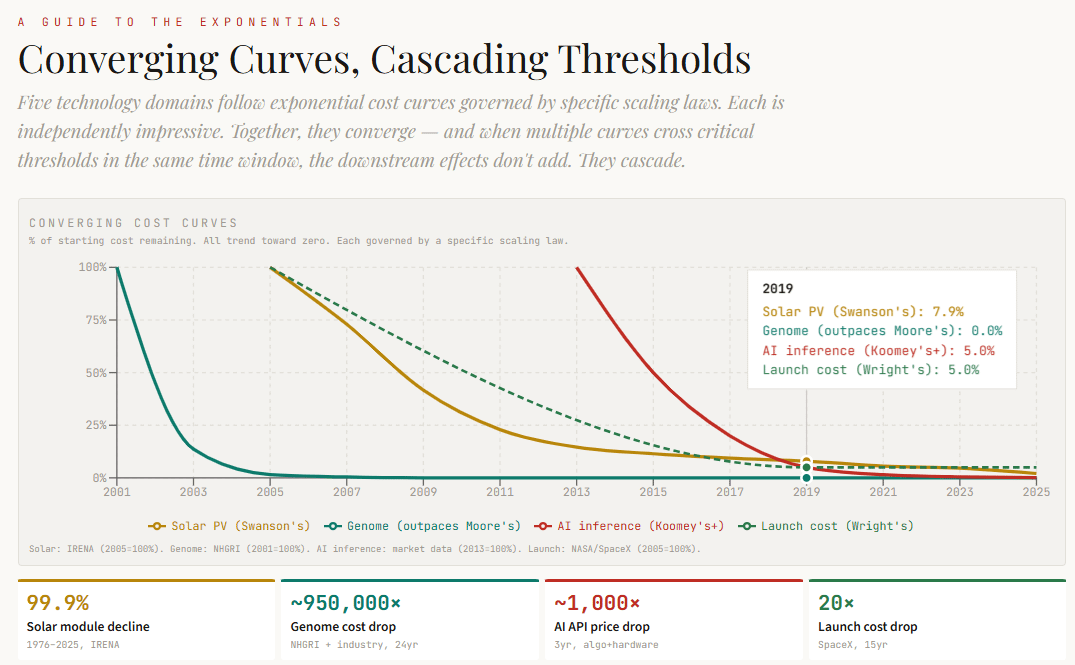
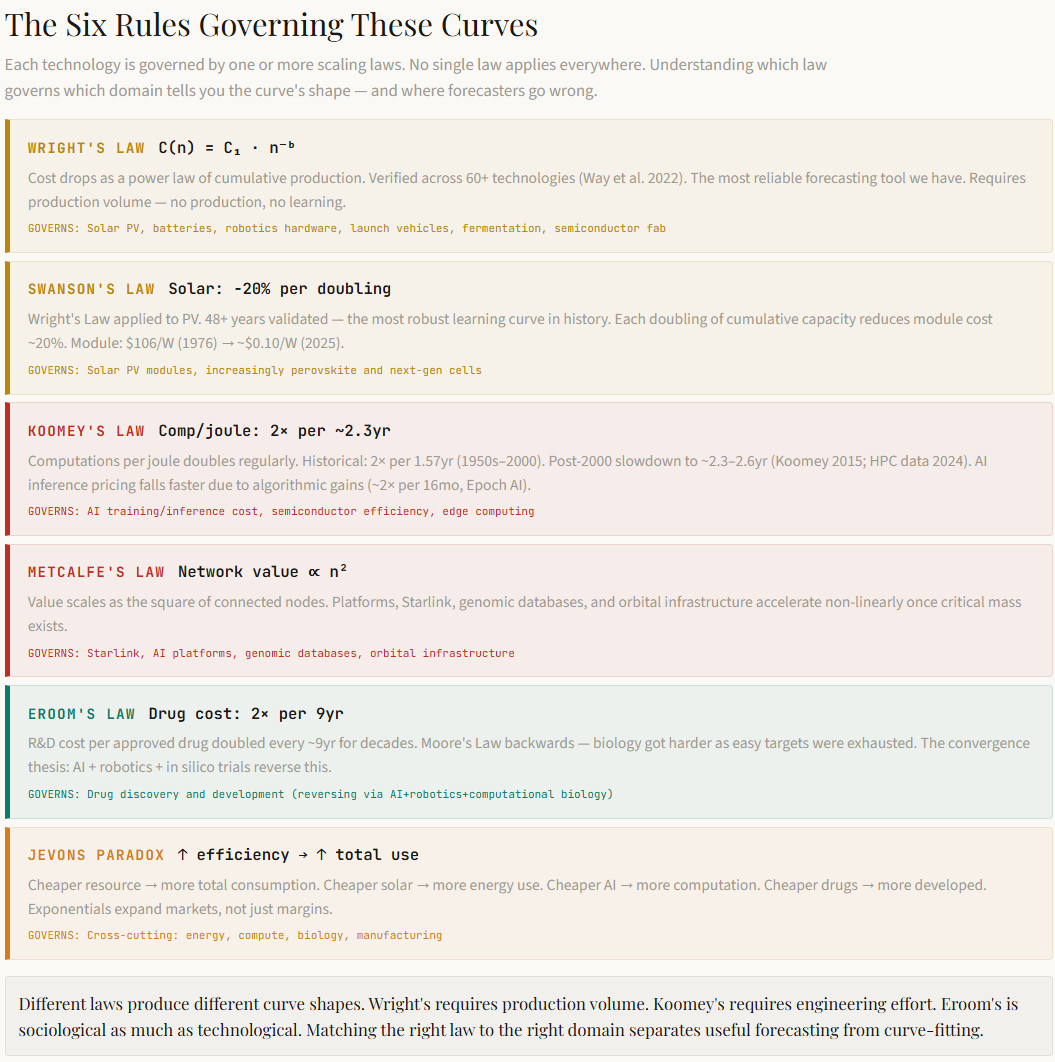
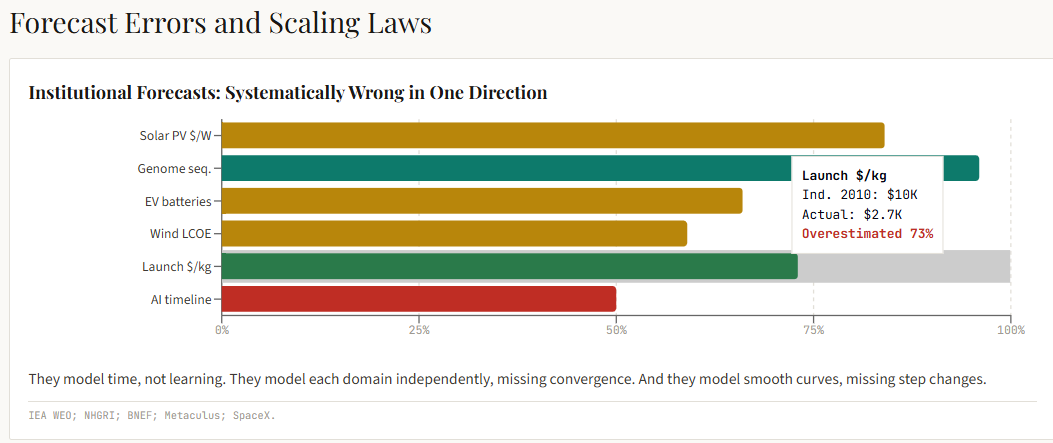
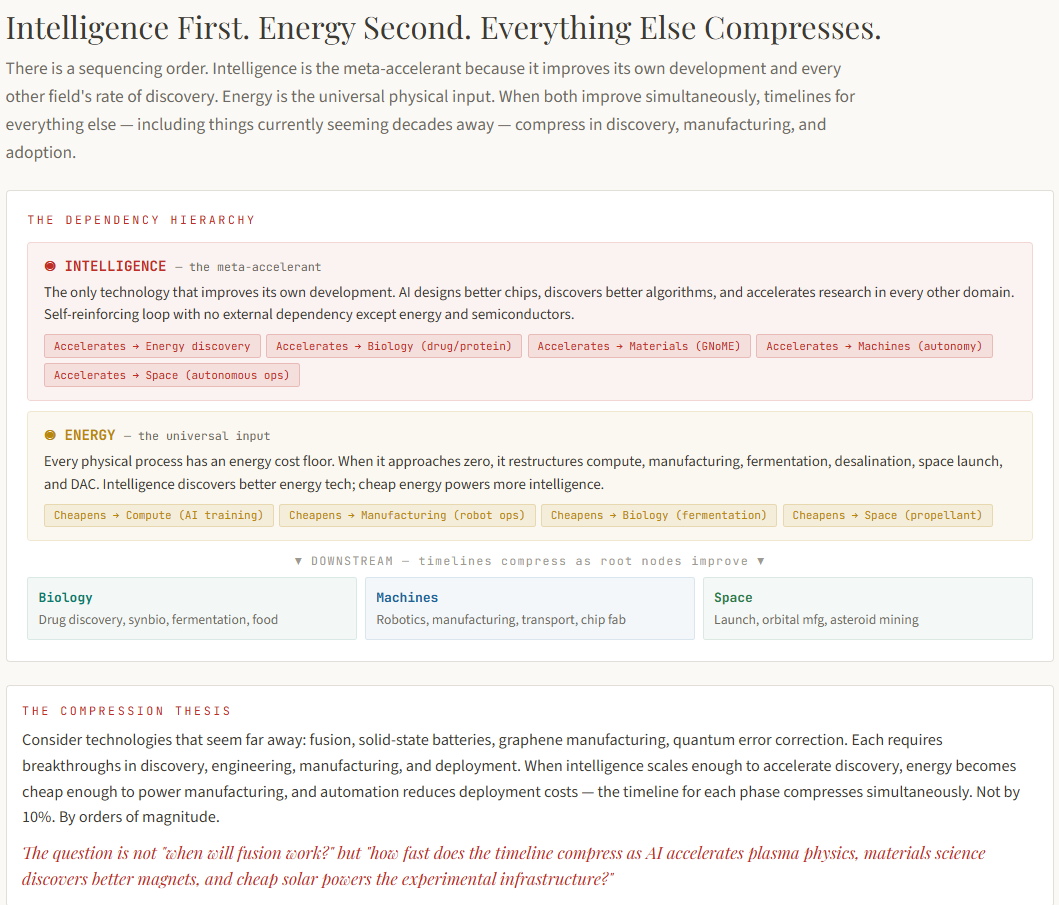
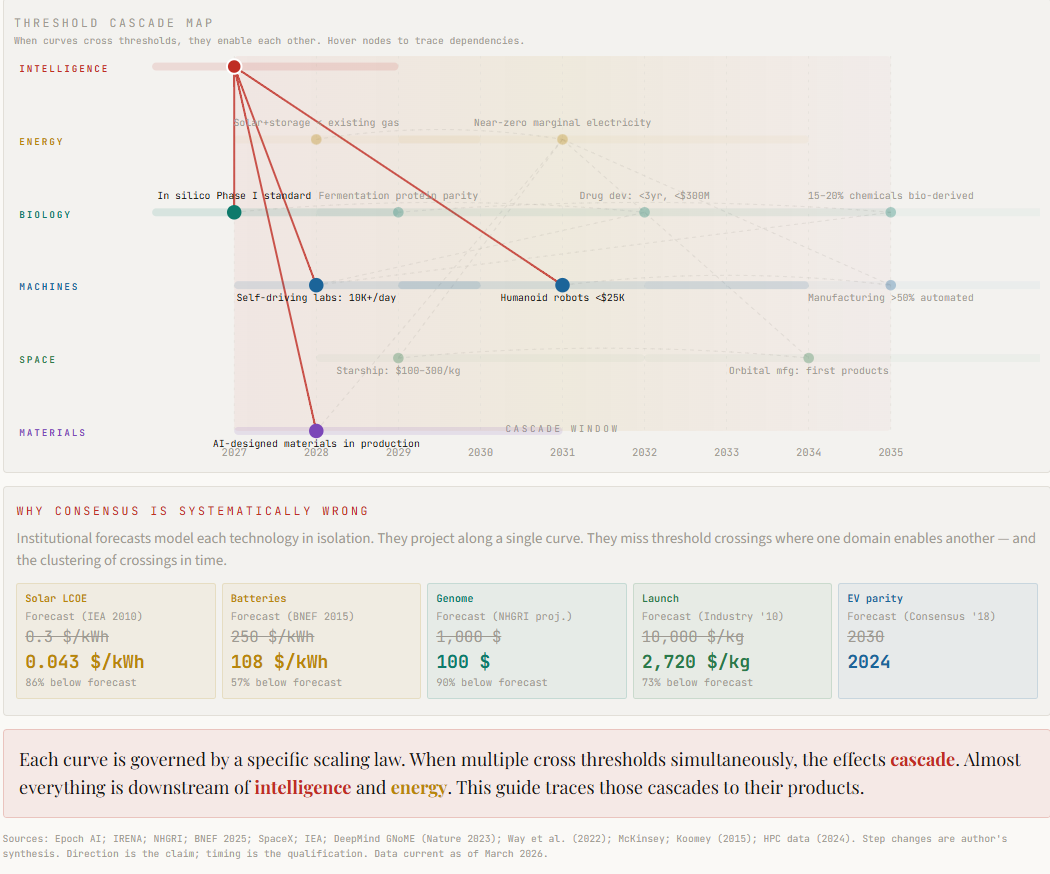
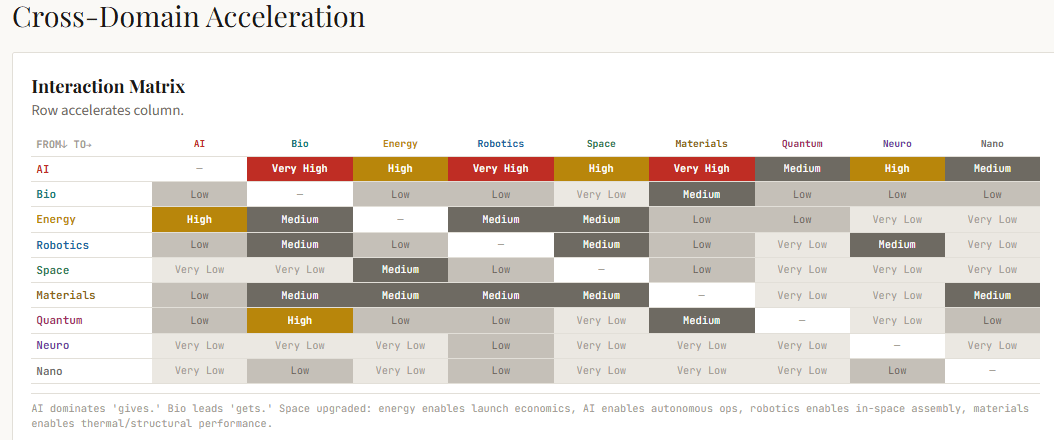
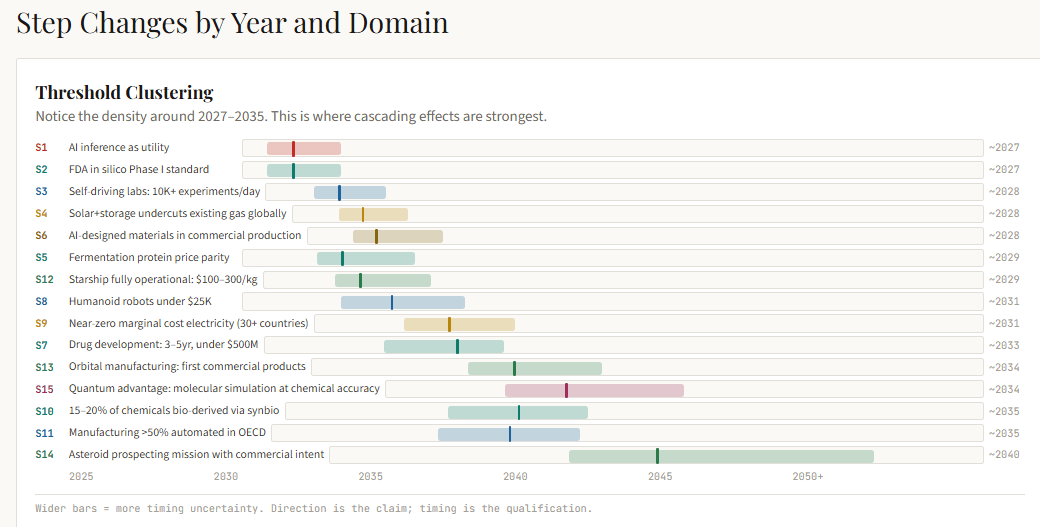
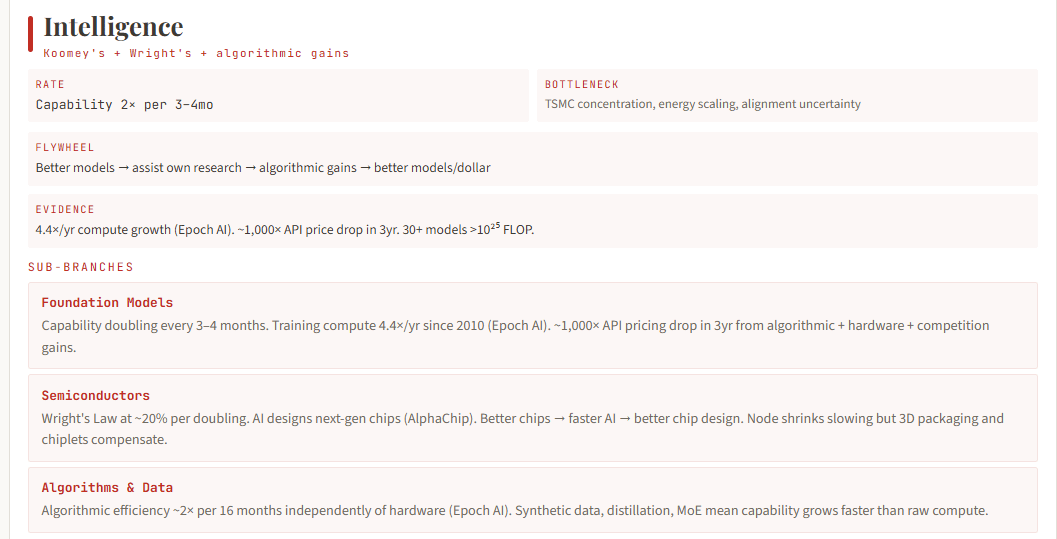
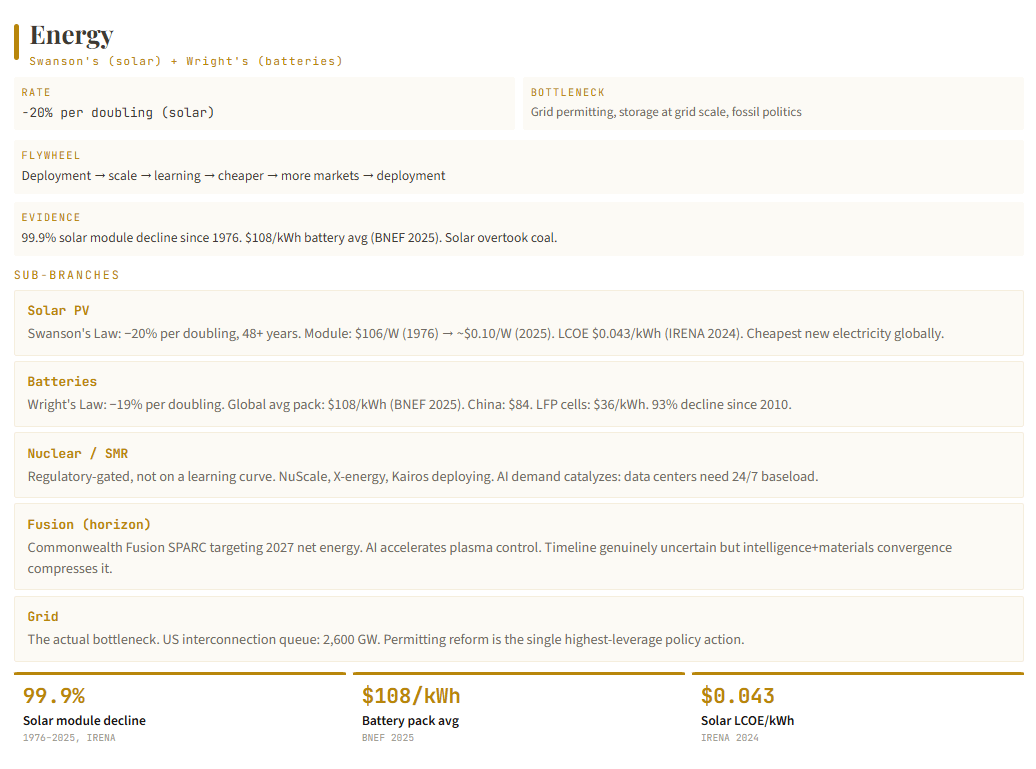
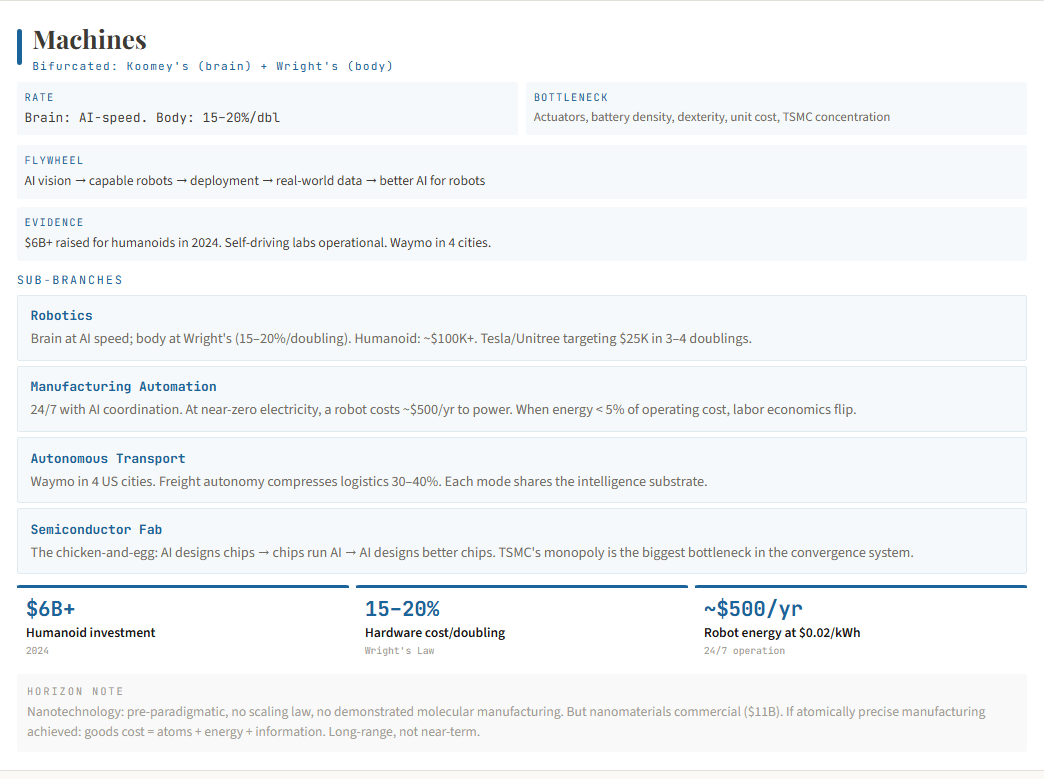
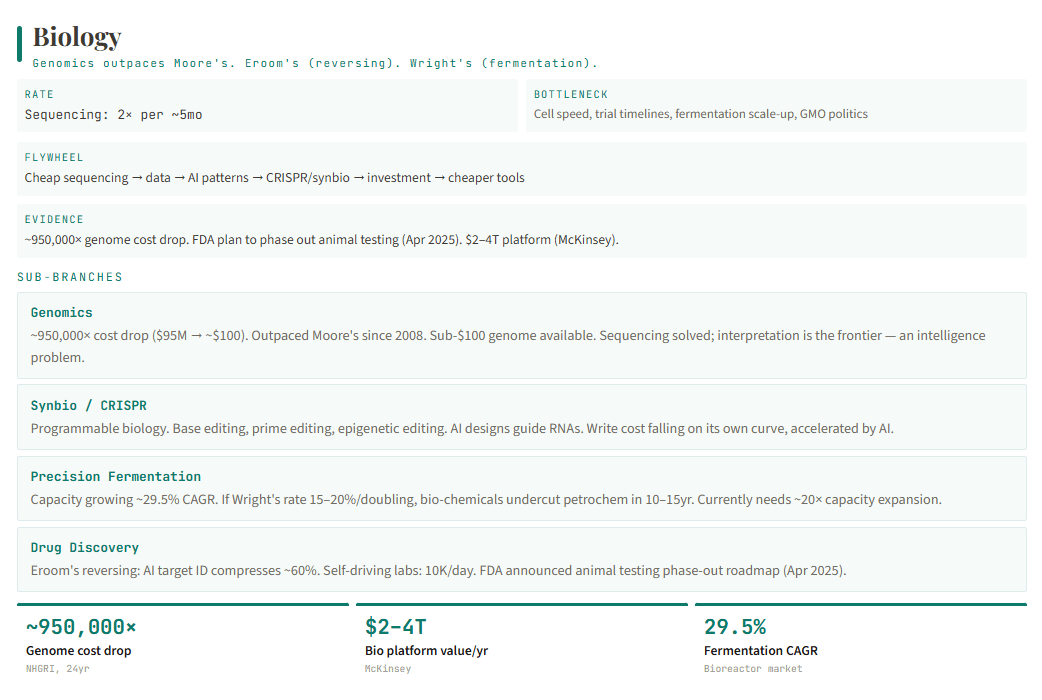
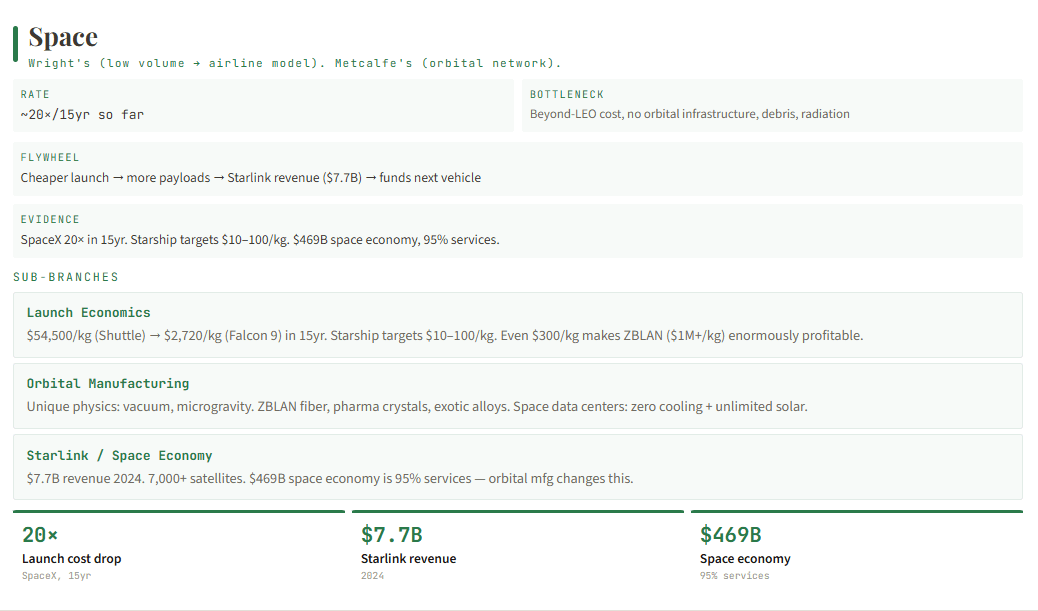
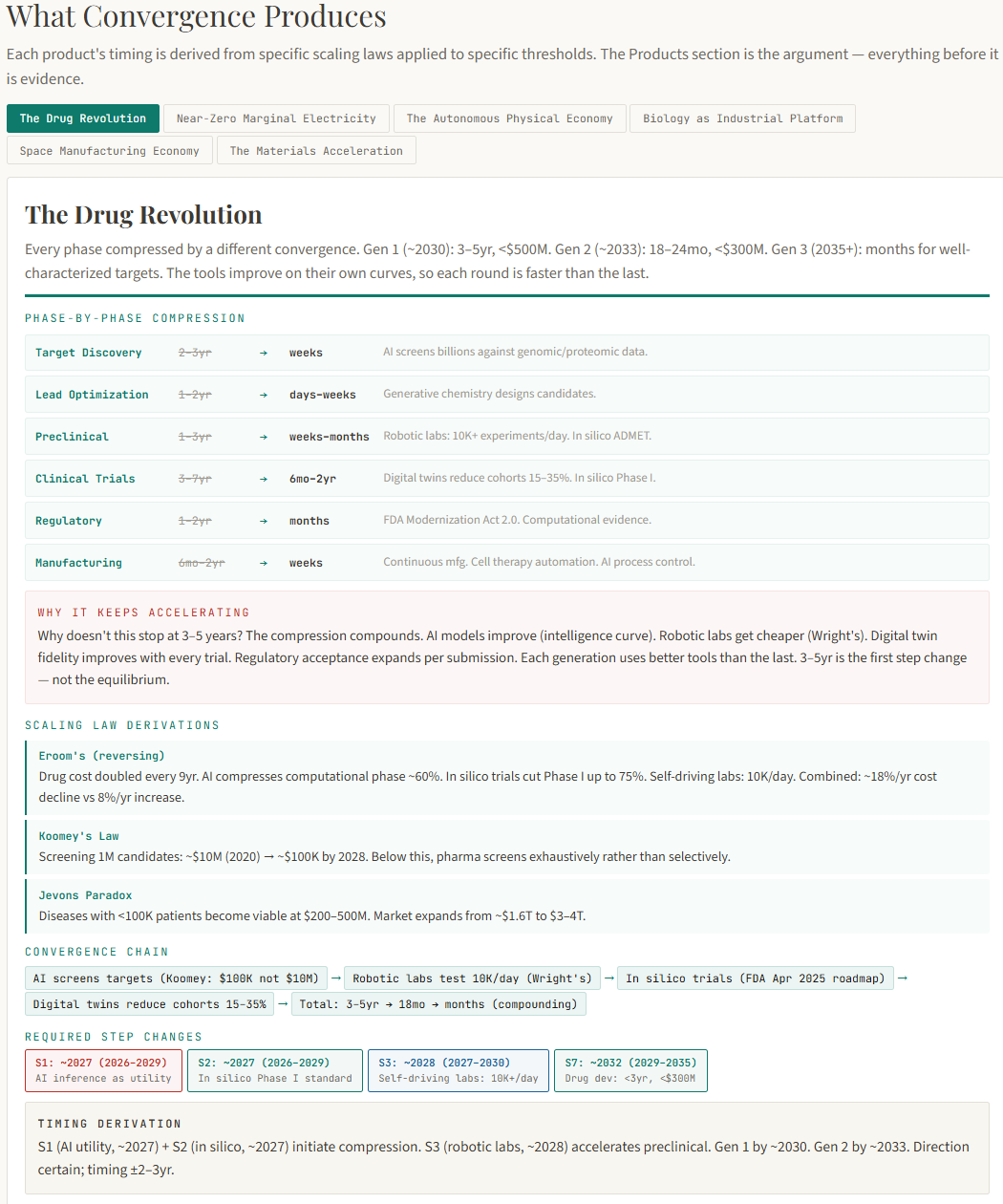
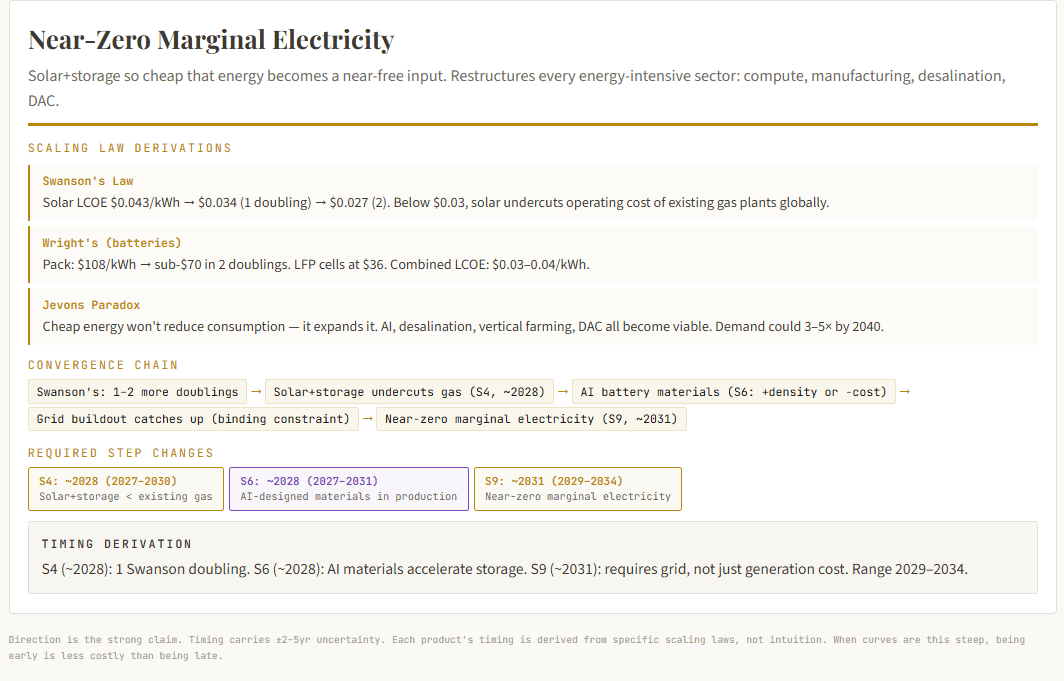
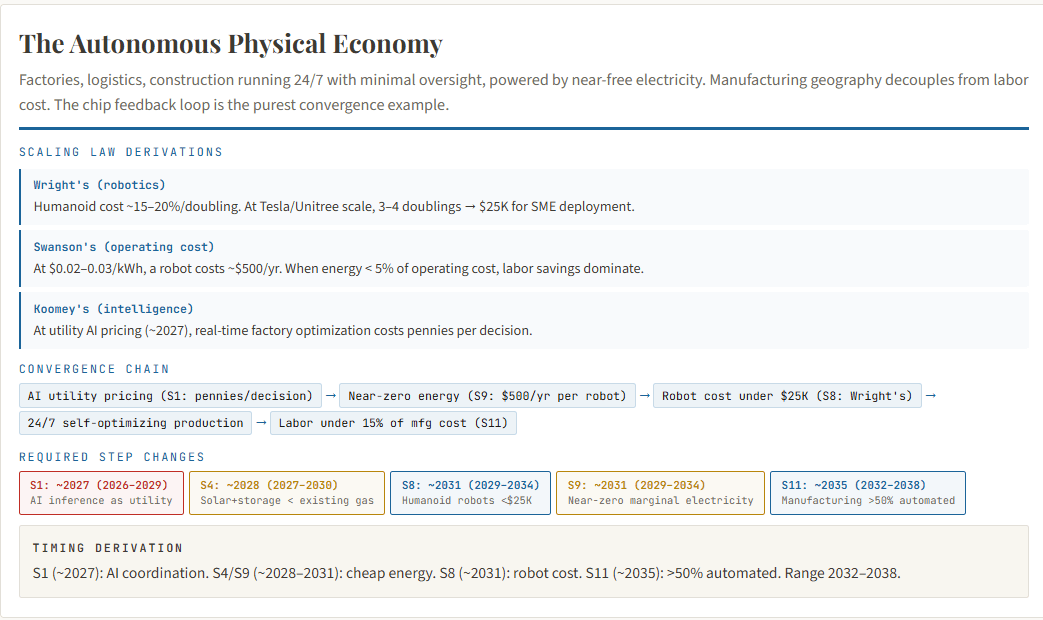
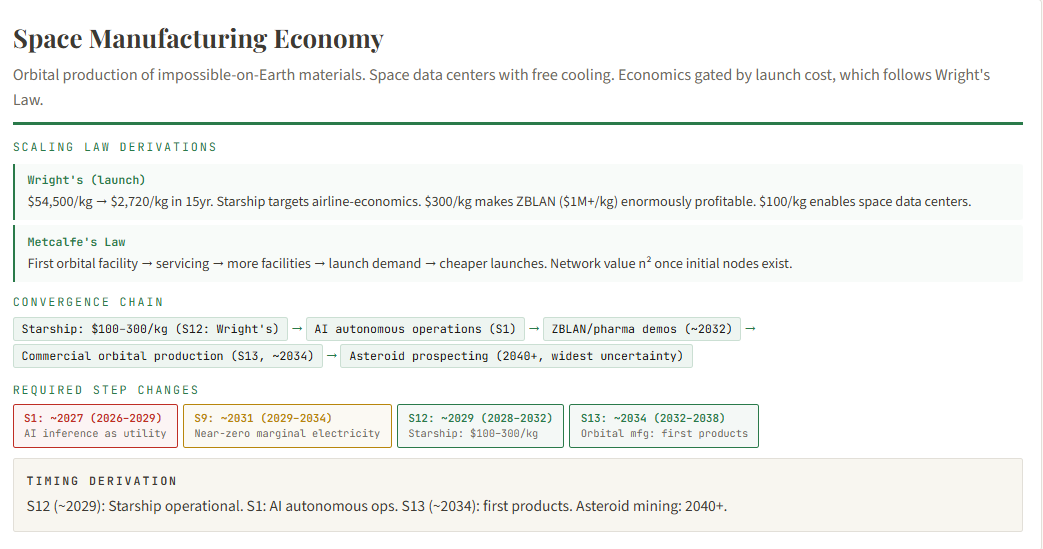
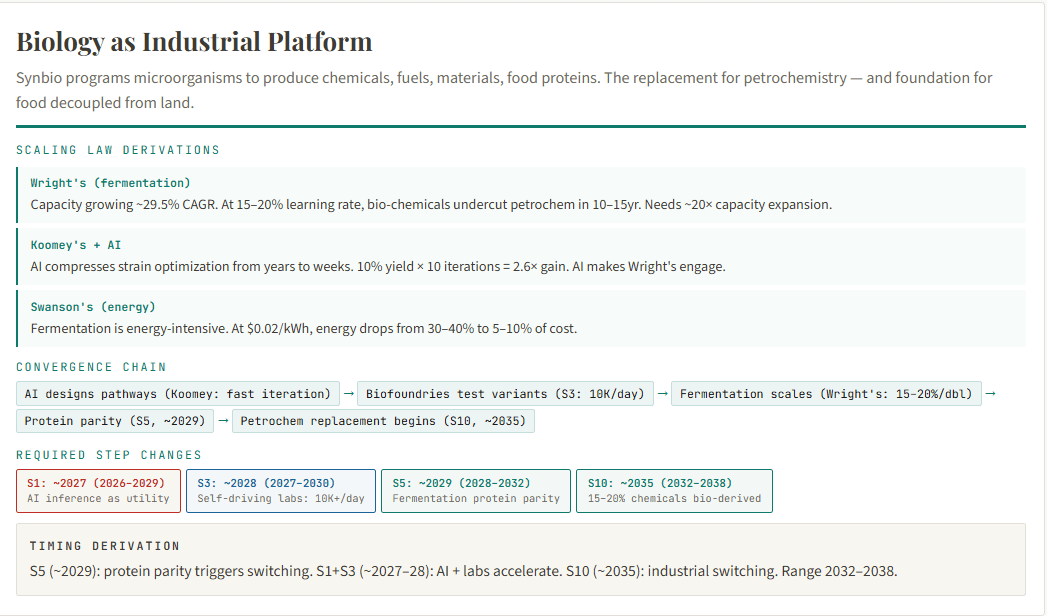
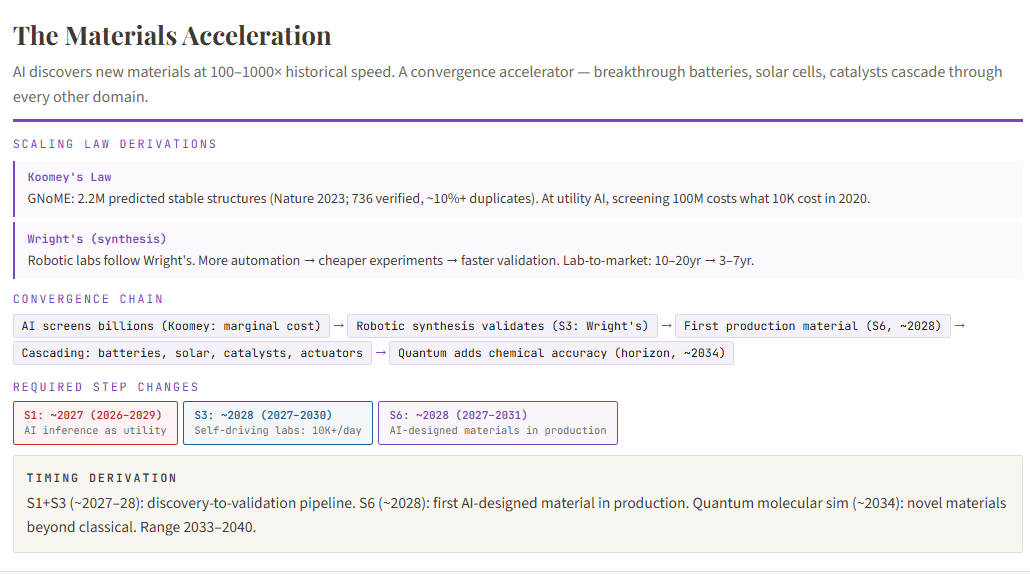
Breakthrough narratives focus on singular inventions. Systemic change emerges from synchronized enablement.
If intelligence lowers the cost of solving problems and energy lowers the cost of performing physical work, then industries downstream of those inputs inherit their acceleration. Manufacturing, drug development, materials science, logistics, and space infrastructure do not evolve independently. They compound.
This does not imply inevitability of specific timelines. Learning curves operate within regimes. Bottlenecks migrate. Constraints shift from discovery to regulation, from design to deployment, from cost to coordination.
When multiple enabling inputs improve at once, the space of what becomes economically viable expands nonlinearly.
That is the structural claim.
Understanding convergence replaces fragile single point predictions with a systems view. It focuses attention on shared accelerating inputs and threshold conditions rather than isolated announcements.
Exact dates will vary. Specific implementations will differ. But the compression dynamic, when discovery and execution both become cheaper, is structural.
The future is not defined by one curve. It is shaped by the interaction of many.
No posts
Comments
Nothing yet. Say the first thing.
Sign in to join the conversation.