
I haven’t baked any bread for almost 2 years and in the preceding 3, I never baked at home. My bread was almost exclusively made at work and for other people. But baking for others is not how my love of bread started — it was not an act of generosity as bread is very often associated with. In fact it was a delightfully selfish pursuit.
I began making bread as a way of helping myself.
Thanks for reading! This post is public so feel free to share it.
I discovered bread making 12 years ago at 25 years old. Up until then, I had always really struggled with myself, I was often depressed, endlessly anxious and constantly people pleasing, bending over backwards to do everything for others without knowing what I liked or wanted. In 2013, I had very nearly completed a masters at the Royal College of Art, a place where I had always dreamt of studying. But, instead of inspiring me to continue with my design career, my masters had had the opposite effect and I realised that after 8 years of studying and working in the art and design industry, I was in the wrong place and wasn’t thriving. I needed a new direction. But what would I do otherwise? And how would I even begin to start again?
There was one project during my time at the RCA that excited me — a cross disciplinary brief that the Sustain department ran to redesign sustainable feeding systems for chickens. This project planted a seed in my mind and I became really interested in how the world feeds itself. Food was political, social, creative, it touched every part of life. It was a massive subject and I had no idea how to climb into it, I had no contacts or knowledge or skills, I didn’t have access to outdoor space to learn about growing food and I definitely didn’t have the resources to keep or rear animals.
But I could buy a bag of flour and start making my own bread.
So I did.
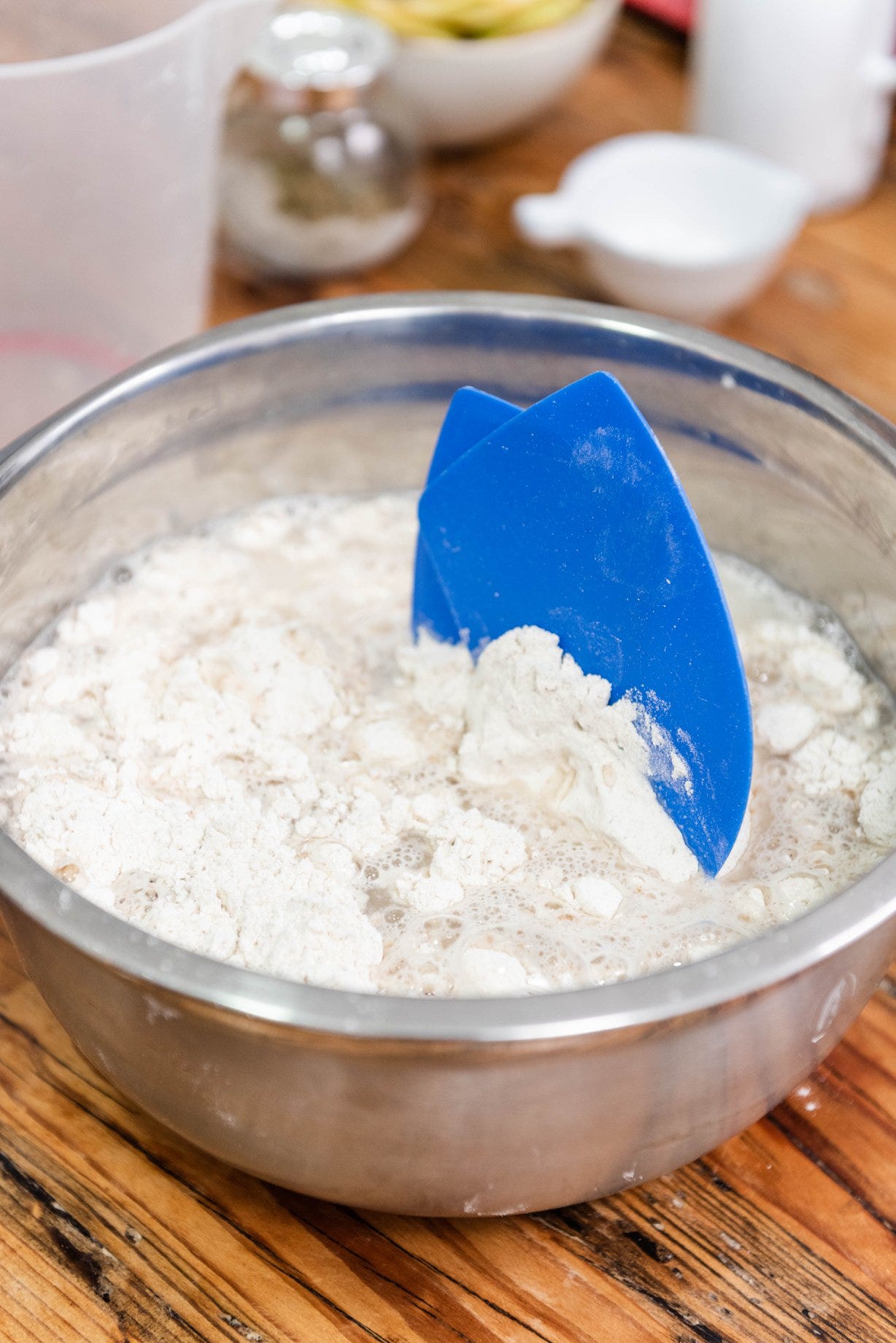
And I started by making a sourdough starter.
My starter was really the first thing that I had successfully managed to look after. At that time, I could barely look after myself, I had never been able to keep plants alive or had the capacity to look after a pet. But my sourdough starter was simple, it was like a less involved goldfish that I kept in my fridge. And it flourished!
Once armed with ferment, I made hundreds of loaves of bread. Yes, I shared those loaves with the people I loved, but it was me who I was really making bread for. Every time I baked, it gave me the confidence to continue changing everything that I didn’t like about my life. Making bread was tangible proof that I could alter my path, turn a corner and start something new — it became my way into food activism. From there I got a job as a baker in a social enterprise bakery in Haggerston (which I write about in my first post on Substack here). I started a small bakery business called The Bread Companion and taught people how to make bread. I ran supper clubs on the side and wrote about food systems, drawing from all the things I had learned from baking. I moved to Lisbon with my bakery and rebuilt a much happier life for myself. I rescued a dog, learnt how to grow plants… and all this I attribute to mixing flour, water and a bit of discipline together to give life to my first starter.
The pandemic came and seemingly knocked everything down overnight, so off I went back to London. I moved in with my mother, who threw away my OG starter, mistaking it for some kind of mouldy sauce (which I suppose it is) but by then I had experienced so many fresh starts and new starters that it was no drama — I knew how to grow yeast culture with my eyes closed. And I also knew how to begin everything else again, too.
I find myself in a similar place these days, I’m not at the same from-scratch position that I was in as an art student or during the pandemic, but a new beginning of sorts has arrived. I don’t have a map for what comes next, I just know that a sourdough starter is a great place to start if you’re going to start somewhere.
As I haven’t kept one for a while, a few weeks ago I sensed it might be time to start fermenting flour and water again. This new batch of sourdough starter is now barely 2 weeks old, it is sitting on my kitchen counter, gurgling like a newborn — it feels like a talisman of good things to come.
I’d like to share the recipe that I have used throughout the years to get my starter going and keep it happy. It is an old post that I published when I was still running The Bread Companion but I didn’t think there was much point of me reposting it here on Substack as it still stands true today. Since then, however, there’s a great many more things that I have learned about making sourdough, so here are some additional useful tips when becoming a Sourdough Starter Guardian…
Temperature matters:
Sourdough starter is a yeast culture, a living and breathing organism which, like me or you is affected by extreme heat or cold. A warm environment speeds a starter up and, if it’s too hot, this can make a starter over-active. Cool weather slows the starter down, if it’s too cold it can be sluggish. The ideal temperature for a starter is between 24 and 28°C, so if it’s really hot outside then it’s a good idea to use cold water when mixing to keep its temperature down. Likewise, if it’s very cold, use warm water to liven up your yeast. However, don’t use boiling water — in fact never go beyond about 28°C. Once you have been feeding your starter for a week or so, it’s best practice to keep it in the fridge to keep its temperature constant — don’t set your fridge too low. Before making bread, always bring it back to room temperature.
Be a biologist:
I have found it useful when baking to pretend put on a biologist’s hat. Making starter (and bread in general) really is a biology experiment, as we are dealing with tiny living bread making creatures and how they respond to changes in heat, flour, water and other factors in their surrounding environment. To keep my process precise, I like to keep track of everything I do whilst tending to my sourdough starter. I have found the best way to do this is to stick a piece of paper to the front of the starter’s container and note down dates of mixing and any key changes made to the mixing process. For example, did I change the brand or type of flour, was it a hot day, which amounts did I use etc… If things start to go wrong, then you can pin point what might have happened and likewise if things start to go right, then you can repeat the process.
Look after the kitchen sink:
You will, at some point, have to throw away a fair amount of starter down the kitchen sink. Whilst doing this, you’ll notice that the consistency of starter isn’t the best for plumbing. To protect your pipes, run hot water down the sink once you’ve chucked out your starter (a kettle full of just boiled water will also help).
Water is important:
I’ve read recipes that call for sourdough starter to be fed exclusively with bottled spring water. IMO, this is fucking outrageous, it’s an utter waste of plastic and though it wouldn’t necessarily hurt the starter it’s completely unnecessary. Yes, there are probably some undesirable things in tap water, but honestly I truly believe that part of the charm of a natural, home made sourdough starter is that it is the product of its environment and tap water is a major part of that environment. I might start a petition to rebrand ‘tap water’ to 'local water.’
Store it somewhere happy:
To sound like the crustiest of hippies, I always try and keep my ferments in a sociable spot where I can see them, engage with them and, yes, if I have some things I need to get off my chest, talk to them. I personally like to place them near a radio so they can hear what is going on with the world. There is a load of potentially bullshit pseudo science to ‘back’ this and though I don’t actually believe in it (because it’s not science… it’s pseudo science), I think of my ferments, whether they are sourdough or kombucha or pickles, as tiny pets and I do believe in being respectful to living things. I would also apply this theory to houseplants.
However, though they should be kept somewhere with bright feelings, direct sunlight is a little too bright.
Make sure your container is sterilised:
I have had some mishaps recently because I didn’t sterilise the jar that I stored my starter in properly. The best way to sterilise is to get rid of any visible dirt and stick it in the dishwasher on a really hot wash. If you’re using glass, you can also put your container in the oven at 100°C for a minimum of 20 minutes.
Use your hands:
Hands are the best tool for mixing starter (and bread) with. One reason for this is that, from a practical perspective, they are very washable and don’t sit on a draining board or in a drawer gathering bacteria. The other reason is, once again a bit hippy — as I said before, sourdough starter is a product of the environment that it lives in and the baker’s hands are an important part of that environment. It’s also easier to iron out any clumps of flour with a pair of hands. So get stuck in.
Repurpose and reuse:
Though most recipes (including mine) will tell you to throw a huge part of your sourdough away before you re-feed it, over the last few years I have used sourdough starter more and more in baking and cooking. I’ve made cookies with it, pancakes, biscuits and cakes. It’s really good as an egg substitute and, flavour wise, I’d say it’s quite similar to using yoghurt. I’d like to explore this more in the future and will be sharing some recipes that use leftover sourdough starter.
I hope you enjoy creating your starters!
I’d like to add that if you’re having any troubleshooting issues with your starter (or with baking in general), don’t hesitate to ping me a message, think of me as the Baking Hotline.
No posts
Comments
Nothing yet. Say the first thing.
Sign in to join the conversation.