
Trying to cook in a new kitchen can feel awkward, like putting on someone else’s shoes or snogging someone for the first time.
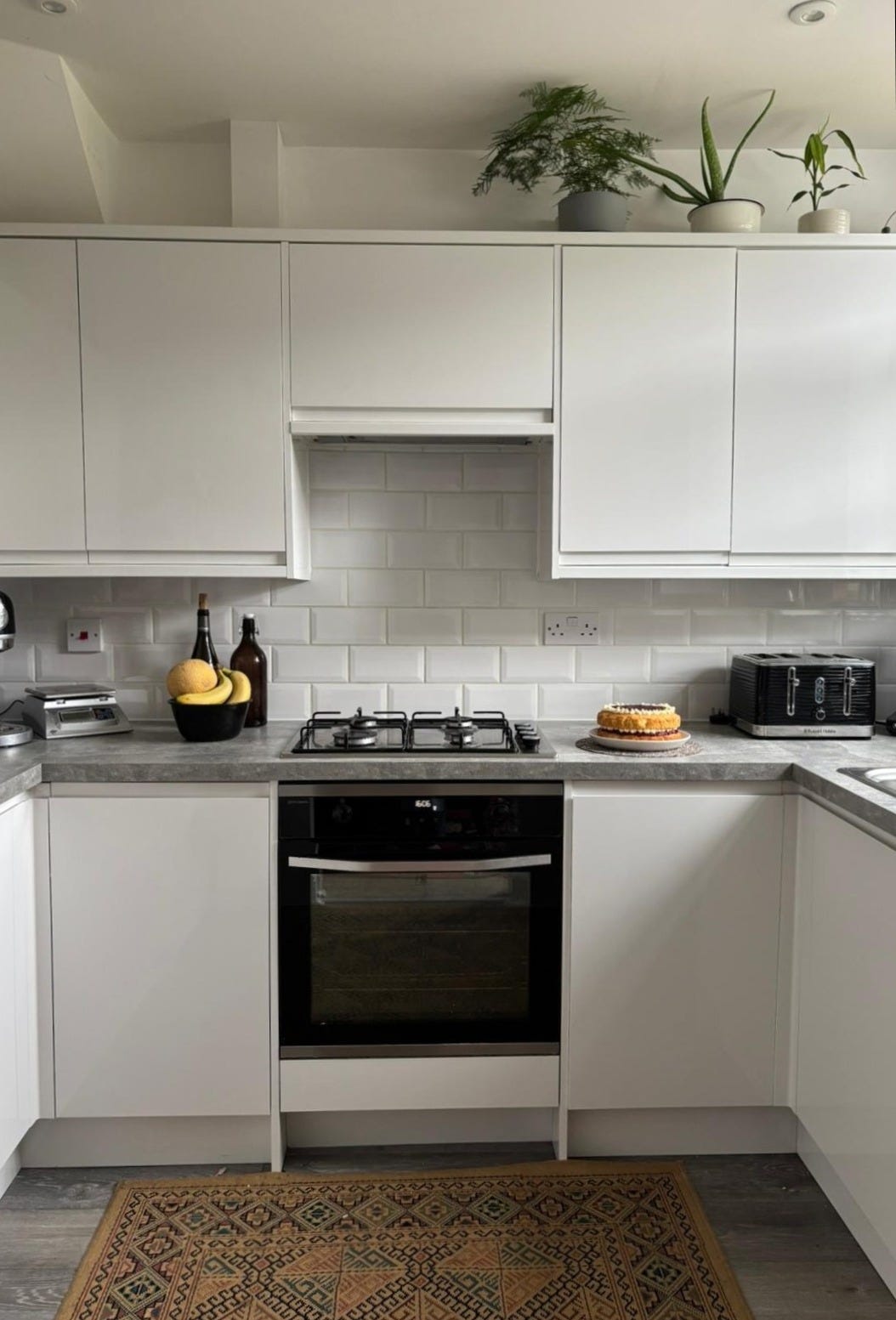
My partner and I moved back to London a couple of months ago — we’ve rented a little house in the east with a little kitchen to match, the kind of little where everything is within arms length, no matter where you stand. In my new kitchen, I’ve had a new appetite to cook and bake and ferment, not having done so in almost 2 years. And yet, every sourdough starter I have made in this house so far has gone mouldy (in my 8 years of baking prior to this, I have only ever had 2 starters turn bad). I seem to be perpetually fucking things up (yesterday I made banana bread and forgot to add in the sugar). I feel clunky and self conscious in the kitchen and, to make matters worse, since March our new dog has eaten my prized kombucha scoby as it bubbled away on the kitchen counter AND two carrot cakes that I made for a birthday party. My return to cooking, in short, has been a flop.
But I can’t continue like this.
I’m sabbaticalled-out.
I have to get back to work.
Plus, I have a hankering for sponge cake.
The thought of making sponges reminds me of my relationship with my new oven… aloof and insubstantial — after all, I’ve barely used it. And to not know your oven is a problem if you’re going to start baking. Sponges also remind me of the mother of someone I used to date.
I once found myself in a situationship with a man (also aloof, also insubstantial) for 3 whole years of my life. He was a lot of fun and a brilliant liar, often spinning a very entertaining yarn. He once told me that his mother had worked for British Gas, making cakes. Her job description went something like this: if someone complained about their oven, she would pay them a visit, bake a Victoria sponge in their kitchen and then would relay how the sponge had baked to the gas engineer. Were there under or overcooked parts of the cake? Did the baking parchment burn? Did the middle sink? From there they could figure out the oven’s problem. I have found no evidence that this type of career ever existed, so if you know anything about whether this is true or not please, please, please tell me! I don’t think it is, but I also sort of believe him (gullible I know but how do you think I ended up with him in the first place?) I believe him, first of all, because I have no idea how he might have known anything about sponges and ovens, he was only really interested in shagging. But also, making sponges is a truly great way of understanding the inner workings of your oven.
I’m sure that anyone who cooks or bakes a lot feels the same, but in the past I’ve had a sort of intimate relationship with all the ovens I’ve ever baked in. You get to know where the hotspots are (cheeky), or instinctively know what the perfect setting is for the perfect whatever-it-is that you’re making. This is important with most aspects of cooking, but it is especially important when making bread, whose success relies on even and very hot heat. But, like all relationships, it takes time to build. A sponge is the perfect team building exercise because each sponge only takes a few minutes to mix and bake, unlike bread, which takes an age. It is also very easy to spot the oven’s misgivings on the clear, beige slate of a Victoria sponge.
So, if you’re already in a harmonious and long term relationship with your oven, please feel free to ignore this next bit, but if you’d like to start baking along with me as I piece my baking skills back together again, don’t start with bread, instead start with sponge cake. Make a few (freeze them if you don’t want to eat them right away). Once you know how the oven heats (is it true to temperature, does it maintain its heat, do you need the fan, does it have a cold spot?), the necessary adaptations can be made for good bread at home.
Below is a recipe for a really simple sponge. I’ll give you some more ideas about what to do with said sponge shortly, but for now it’s just a basic recipe with a guide about what it might tell you about the oven. Enjoy, and I hope you make a new friend!
Basic Bitch Sponge Cake:
Makes: 2 sponges for a 19 cm sandwich tin
Takes: 10 minutes to mix, up to 30 minutes to bake
Vegan option: Use margarine and an egg substitute (like oggs or aquafaba)
Ingredients:
4 eggs
225 g plain, good quality flour (please don’t buy shit flour)
225 g butter
225 g sugar
2 heaped teaspoons of baking powder
4 drops of vanilla essence
2 x springform tins or sandwich tins
Baking paper
Method:
The experimental bit is setting your oven properly — most recipes are set to 180oC and the fan usually helps. In the end, I needed 170, no fan. The key here is really making sure that the oven is at the correct temperature first, as with all baking. So leave it on for a while before you pop a sponge in.
Make sure all ingredients are at room temperature
Beat the butter and sugar together for a few minutes until light and airy. I prefer to use a stand mixer or electric whisk for this part.
Add egg slowly to the butter and sugar, one or two tablespoons at a time.
Once egg, butter and sugar are combined, add vanilla essence.
Sift flour and baking powder together. Gently, ideally by hand, fold the dry ingredients into the wet - do not over mix!
Line a tin with baking parchment
Bake for… well, that depends on your oven. Start with 20, work up. I needed 24 minutes.
Let it cool before taking it out of the form. Just-ok to touch is ideal. It will collapse if you take it out too soon (or too late).
Things that might have happened:
It’s now quite easy to tell if your oven cooks evenly as it’s written all over the sponge. If there are dark brown bits in places, you’ve found your hotspots. If there are bits that look a bit anaemic, these are your coldspots — experiment with placing your cakes in the ‘good bits’ of the oven. You can also place a shallow tin with a little water in the bottom of your oven to even out the temperature. Sometimes baking with the fan on helps, sometimes it doesn’t.
If your cake didn’t really come away from the sides of the form this means your oven isn’t heating up quick enough, so allow a bit of extra time and turn the heat up.
Is your oven true to the temperature that it says it is? Mine runs slightly too hot — start with baking at 180 and see what happens. I realised this was the case as my first sponge experiment was beginning to burn after just 20 minutes.
Is your cake sinking in the middle? There are many, many reasons for this, from out-of-date baking powder to a sudden change of temperature. A sudden change of temperature can be brought on by opening the oven door mid cooking, but it could also be because the oven doesn’t maintain the correct temperature throughout baking. If you suspect the latter, stick a thermometer on the oven rack, keep the oven light on and check the temperature periodically whilst baking.
No posts
Comments
Nothing yet. Say the first thing.
Sign in to join the conversation.