
Before my doctor examined my eyes, he asked me how I was managing. He was referring to the fact that since surgery in May, I had lost partial vision of my left eye.
“I can function,” I replied. “My right eye does most of the work.”
He nodded.
“But are you okay? Is there something else we could be doing?”
I wasn’t sure what answer he was looking for.
“I appreciate you asking, but you said my vision won’t improve. I’ve come to terms with the fact that my vision is gone. I’m just grateful for what I have left.”
Of course I got angry and sad thinking about it. Sometimes, I’ll just get disoriented and remember why. But then it passes, and I let it go, because there’s no point in lingering over something I can never change.
“That’s good,” he said. “You know, out of all my cases, you’re in one of my top five hardest ones. You’re really tough. Your eye was on the verge of collapsing.”
“Don’t tell me that,” I say.
This surgeon is one of the best at what he does. People fly from all over the world for him to take their case. So, when he tells me that out of all of that, I am still one of the worst and hardest cases he’s had, it’s difficult to hear. Sometimes I try not to think about how bad my situation is. I tell myself there is always worse, or more complicated. This is probably nothing. But here was my surgeon, who has operated on the back of my eyes twice, telling me it really was that bad.
It makes me feel a mixture of pride that I can really withstand anything. That I know I can take on whatever comes my way. And also deep sadness and fear, recognizing how dire it was and has always been. That I’m always on the edge of going blind, and my doctors are always terrified.
He asked me to lean in so he could examine me. I hadn’t seen him for several months, and was hoping for good news. But he looked troubled.
“I saw some inflammation in your left eye. Maybe it’s nothing, but go get it checked out.”
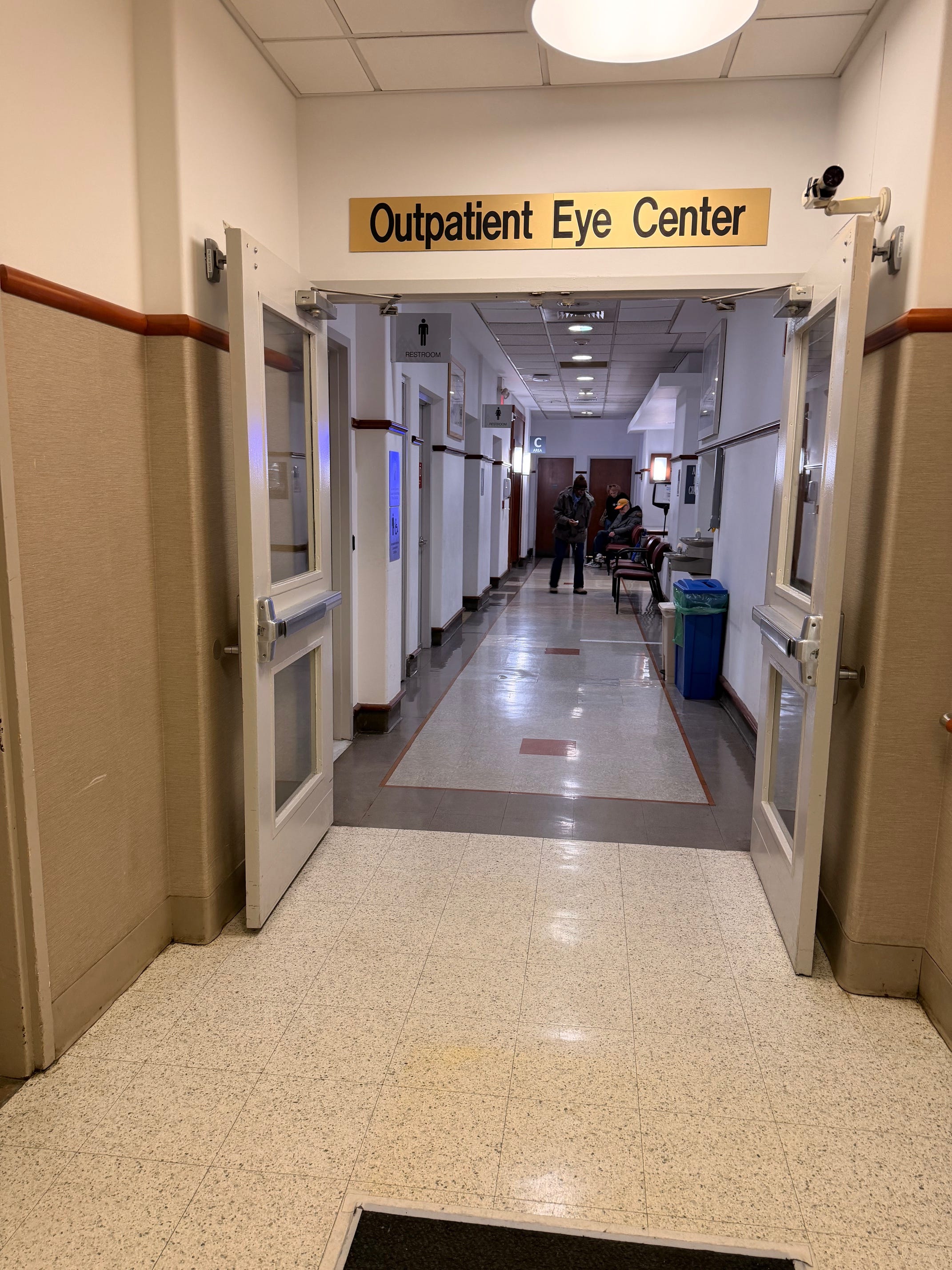
I went to my other doctor, who specializes in uveitis. He confirmed that there was indeed more inflammation than usual. Uveitis is the disease that started me on this hellish journey to begin with. It was so unmanageable that after endless treatments, the only option left to help me was invasive Retisert surgery where they would put steroid implants in the back of my eye. This led to 7 surgeries. 2 to put in the implants, and 5 more to manage the glaucoma caused by the implants.
But at least, despite 6 years in and out of surgery, the uveitis was better. Until now.
“I’m sorry, you’re no longer in remission. The uveitis is back,” my doctor told me. The words hung in the air, hard to believe or process.
I stumbled home, crying. I couldn’t believe this was happening again. I really thought, maybe after all this time, I was safe.
But it felt like a monster that had woken up and was coming back for me. I could travel and try to pretend I can have a life where I can exist and this isn’t all that consumes me, but when I come back home and meet with my doctors, it all floods back.
There was a moment, in my last week in Thailand, when I was sitting on a beach on an island so remote, it took a 9 hour boat to get there and I was nearly in Malaysia. Sometimes, going as far away as possible excites me, because I can sit there and think, maybe here, I can feel far enough away where my disease can’t get me, and I can simply exist. I can just be happy.

Yesterday, I went back in to see my uveitis doctor. He had put me on a high dose of steroid eye drops to see if that could be enough to stop the inflammation. He noted that it had improved slightly, but not by much. Still, he suggested we taper down on the medication.
This was my first time working with this doctor, so he has never seen me in a time of crisis. He didn’t know how bad my eyes could get. I explained that before, it was extremely aggressive. So, he changed his mind.
“Okay, how many hours are you awake in a day? Use the drops every single hour.'“
I was thrown by the sudden change in directions.
“But you had just wanted me to lower the dose a moment ago. This is a really big difference.”
He started getting frustrated.
“I’m not changing my mind again. This is what we’re doing.”
He started walking towards the door.
“I’m sure you have PTSD from all this,” he said. “If you really don’t trust me, go get a second opinion.”
This was not the first time a doctor responded to my questions about my health by telling me to find another doctor. It wasn’t even the second time, or the third.
I got it. Questions seemed to signal to doctors a sign of disrespect. But why couldn’t he see it wasn’t about that at all? That it was simply about advocating for myself and better understanding the situation.
I tried to explain that I was happy to do whatever he said, I just wanted to know why.
“You can see what’s happening in my eyes,” I told him, my voice shaking at the point. “But I can’t. So this is just how my brain works. I want to understand what’s happening to my body and your reasoning behind it. That’s all. It’s not to disrespect you. It’s simply to understand what’s going on.”
Finally, he softened. “Okay, fine.”
“So, do you still want me to get a second opinion?”
“No,” he chuckled. “Don’t see anyone else.”
The two other nurses watching this interaction also laughed.
But I wasn’t laughing. It was clear that he only told me to get a second opinion because he didn’t like that I was asking questions. And once I explained, he took it back. It wasn’t out of any good intentions for my health. It was simply to teach me a lesson that patients aren’t supposed to talk. They’re only supposed to listen. Otherwise, I could find care elsewhere.
But what kind of medicine is this? And why is this so often the case?
I’ve been dealing with health issues for over a decade now, and through those years have learned to be the best health advocate I can be. But sometimes, it felt it was hurting me more than helping.
I don’t want to say this is the case with all doctors. But as someone who has been been battling two autoimmune conditions and met with endless doctors, it’s far too common.
I know my doctors are doing the best they can to help me. And I’m sure, on a certain level, they’re scared. I’m this weird case that no one can ever solve. One of my surgeons routinely brings up how he shows off a video of him operating on me all the time at eye conferences. When he asks them what they would have done differently, he told me one them just responded, “I wouldn’t take that case at all.”
So, I know my case is beyond difficult. Top 5-most-difficult-cases-level-difficult. I don’t take their help or efforts for granted.
But I do still hope the way medicine is practiced can change one day. That asking questions and advocating for yourself is lauded, rather than punished.
Until then, I’ll probably keep asking my questions anyway.
Comments
Nothing yet. Say the first thing.
Sign in to join the conversation.