
Last month, you may have seen a copy of my first novel, THE THRALL’S TALE, in the photo from the Historical Novel Society conference. I slipped it in, assuming few would notice, because I wasn’t quite ready to make the big announcement just yet:
I’ve promised forever that one day I’d re-release my debut novel. Well, at long last, THE THRALL’S TALE: 20th anniversary edition is available wherever books are sold. There’s also an ebook for the first time ever. (Yes, that’s how long ago it was.)
This novel about “three women bound by fate in the first Viking Age settlement in Greenland” changed my life. It allowed me to become a full-time writer while raising my sons, and it eventually opened the path to creating The Writers Circle which has sustained me through countless literary ups and downs.
When THE THRALL’S TALE was first published, most people knew little about Greenland. It certainly wasn’t mentioned as a political pawn in the news. As is my nature, I was drawn to this breathtaking, remote landscape to explore the Viking settlers’ formidable lives. Through my writing, I sought to experience what was, and still is, truly beyond me and to challenge myself, through my characters, to survive.
While I realize that imagination is not quite the same as experience, spending years writing about a particular place and its people make them completely vivid and visceral in your mind. Writing deeply can truly alter your way of being. Perhaps, by writing about an enslaved woman in THE THRALL’S TALE, I found the strength that propelled me to write about a warrior woman in AKMARAL.
At the moment, THRALL is on a “soft launch”—meaning I haven’t had a minute to promote it. (This post is my very first effort!) So I hope you’ll take a look, perhaps buy a copy, and share THRALL’s return to publication with others who might enjoy discovering it.
When I was writing THRALL, I knew that I had to visit Greenland. (I longed to visit Central Asia for AKMARAL, but my kids were little and my husband rightly said No!)
Back then, getting there was no small feat. At one point, I considered hopping a freighter from Labrador to Nuuk. (As of this summer, you can fly there direct from Newark Airport in just over four hours.) But I did manage to find a rough-and-rugged cruise on a retired Estonian ice-class ship which sailed the same route that the Vikings took from Iceland to Greenland.
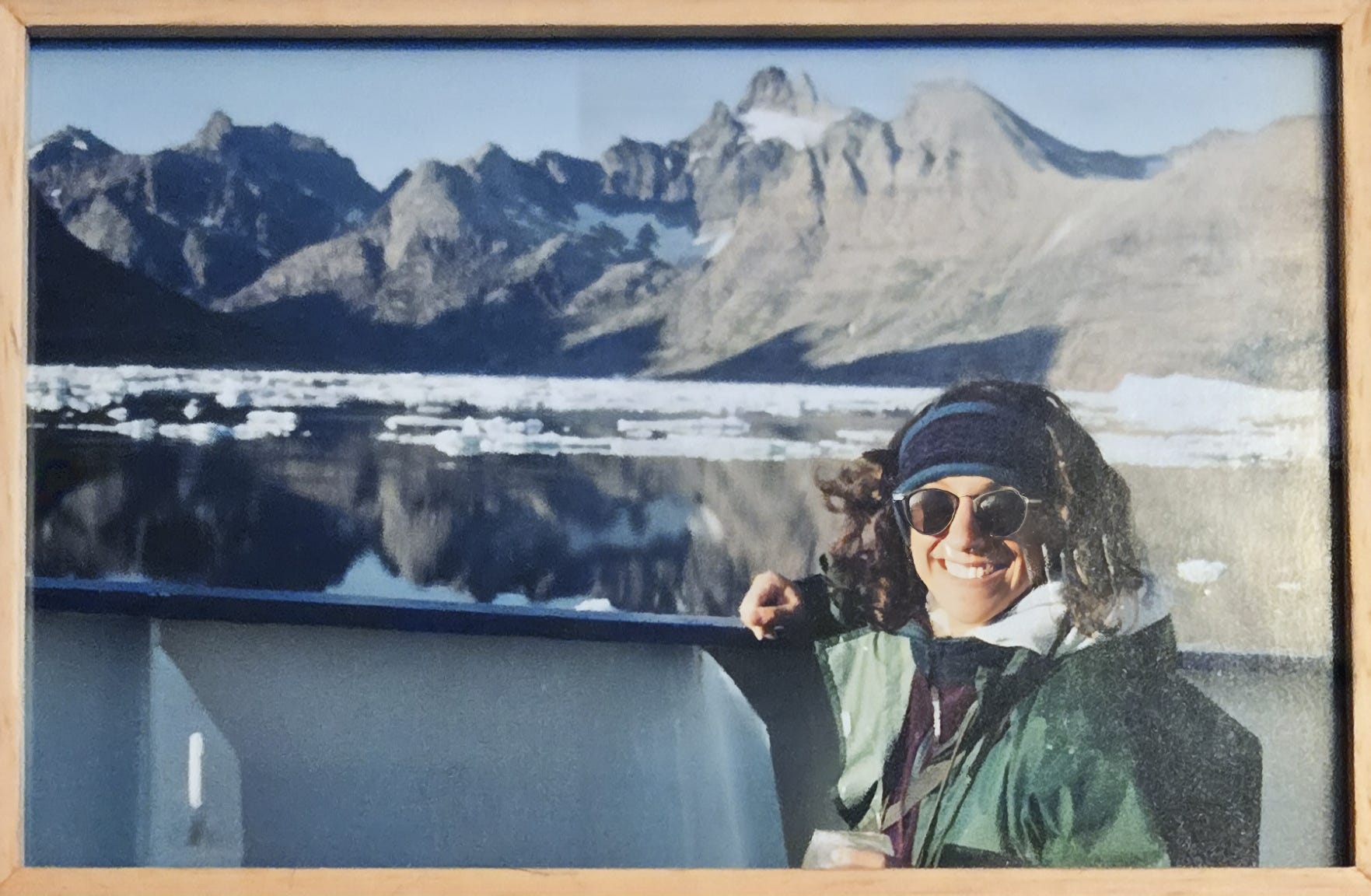
In both countries, I explored several Viking Age sites, from Breiðafjörður and Snæfellsnes where the Vikings set off for Greenland to Erik The Red’s homestead, Brattahlid, in modern day Qassiarsuk.
If you want to take a safe-from-your-screen visit, check out this virtual tour of Erik The Red’s homestead. And when they zoom in on the ruins of his farm, know that I spent a long time sitting on those crumbling stone walls, contemplating and planning scenes for my novel.
Twenty years ago, people did talk about climate change, but the impending inevitability wasn’t evident in day-to-day occurrences like the wildfires, floods, and droughts we’ve experienced lately. And while nature and the environment are always inherent in my work, the story of THE THRALL’S TALE doesn’t hinge on the natural world in quite the way it does in AKMARAL.
Lately I’ve been focusing more directly on the tragedies we are bringing upon ourselves through our unwillingness, way back then and now, to take the necessary steps that might have changed things.
Right now, the Arctic that I love is undeniably melting. There are countless studies but also photographic evidence, some that I have in my own files. The Greenlandic glacier where I stood, touching its great blue breathing, has receded beyond recognition.
Back in 2014, Iceland declared the great glacier Okjokull dead. Some years later, they laid a plaque of remembrance and warning:
Ok is the first Icelandic glacier to lose its status as a glacier. In the next 200 years all our glaciers are expected to follow the same path. This monument is to acknowledge that we know what is happening and what needs to be done. Only you know if we did it.
August 2019
415 p.p.m. of CO₂
This quote is what propelled me to begin the novel I’ve been working on, on and off, for some time, trying to find a way to express more directly my helplessness and remorse about our species’ future on this warming planet.
As Andri Snær Magnason, an Icelandic writer and filmmaker, writes in this powerful essay in The New York Times, “When the glaciers are all gone, what do you call an island that used to be Iceland? Just … Land?”
I’m still working through my Robert Macfarlane inspired prompts. Here’s one that I shared, to hysterical results, in an Eco-fiction workshop I taught this summer.
Here’s a bit of context for the prompt, from Is a River Alive? by Robert Macfarlane:
“There is a total of four mud-daubers nesting with us now, I think. One of them uses the hole in an electric socket. Also, in the mirror cupboard in the bathroom there are three mud chambers built by a black-and-yellow mud-dauber.”
He opens a small floor-level cupboard. “Oh—and see down here!”
I stoop, then rear back. There’s a rucksack in the cupboard. It is fused to the side and ceiling of the cupboard by a chambered, ash-grey wasps’ nest. A menacing humming emanates from it.
“Got it. You can close that now,” I say.
PROMPT: What if a wild being was your roommate? What if pests and rodents were revered and invited to dwell in our homes instead of being thrust out or killed? In fact, your nature-based roommate it doesn’t have to be a creature. It can be any element of nature. For example, imagine living with a storm in the next room. We use these sorts of metaphors in our writing. This time, try making them literal by writing a scene of interaction and relationship with one of the diverse, wild co-inhabitants of this world.
Thank you, everyone, for your support. And to my paid subscribers, you are ANGELS!
AKMARAL: a nomad woman warrior of the ancient Central Asian steppes must make peace with making war - “A crackling novel”—Publishers Weekly
“A gripping saga”— #1 bestselling author Christina Baker Kline
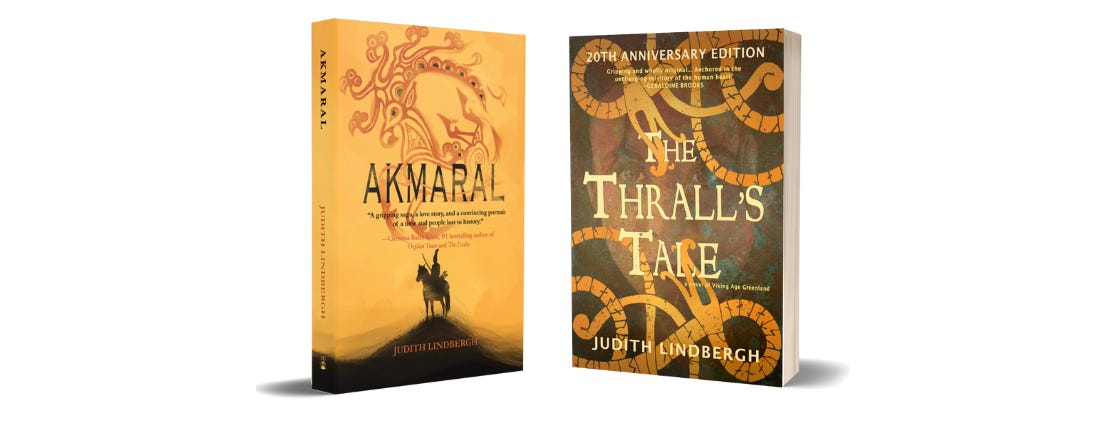
THE THRALL’S TALE: three women bound by fate in the first Viking Age settlement in Greenland - “Historical fiction at its best”—Philadelphia Inquirer
“Gripping and wholly original”—Pulitzer Prize winner Geraldine Brooks
Comments
Nothing yet. Say the first thing.
Sign in to join the conversation.