
I'm going to share something deeply personal with all of you… I wasn't really taught science growing up.
No, really. I'll explain.
I was homeschooled by extremely conservative religious parents, and my education was, if I'm being generous, questionable. If I'm being less generous, parts of it probably crossed into fucking educational neglect. My parents didn't believe in evolution. God created everything exactly as it was, and the science I was taught had to fit comfortably inside that belief system. Anything that didn't was either changed enough to make it acceptable or taught just enough that somebody could check a box somewhere saying, yes, this child has technically been taught science.
It wasn't until I got out of that environment that I realized how much I had actually not been taught. And then I wanted to learn everything. I became almost obsessive about it.
In my early twenties, I learned about people like Bill Nye the Science Guy and Neil deGrasse Tyson for the first time... I told you, my childhood was fucking neglected. I felt very jaded that I'd been deprived of these science superheroes my entire childhood. Neil deGrasse Tyson became one of my favorite people to learn from, and I spent a ridiculous amount of my twenties listening to him talk about space, physics and the universe, basically making up for lost time and filling in some fairly significant gaps in my science education.
And I fucking loved it.
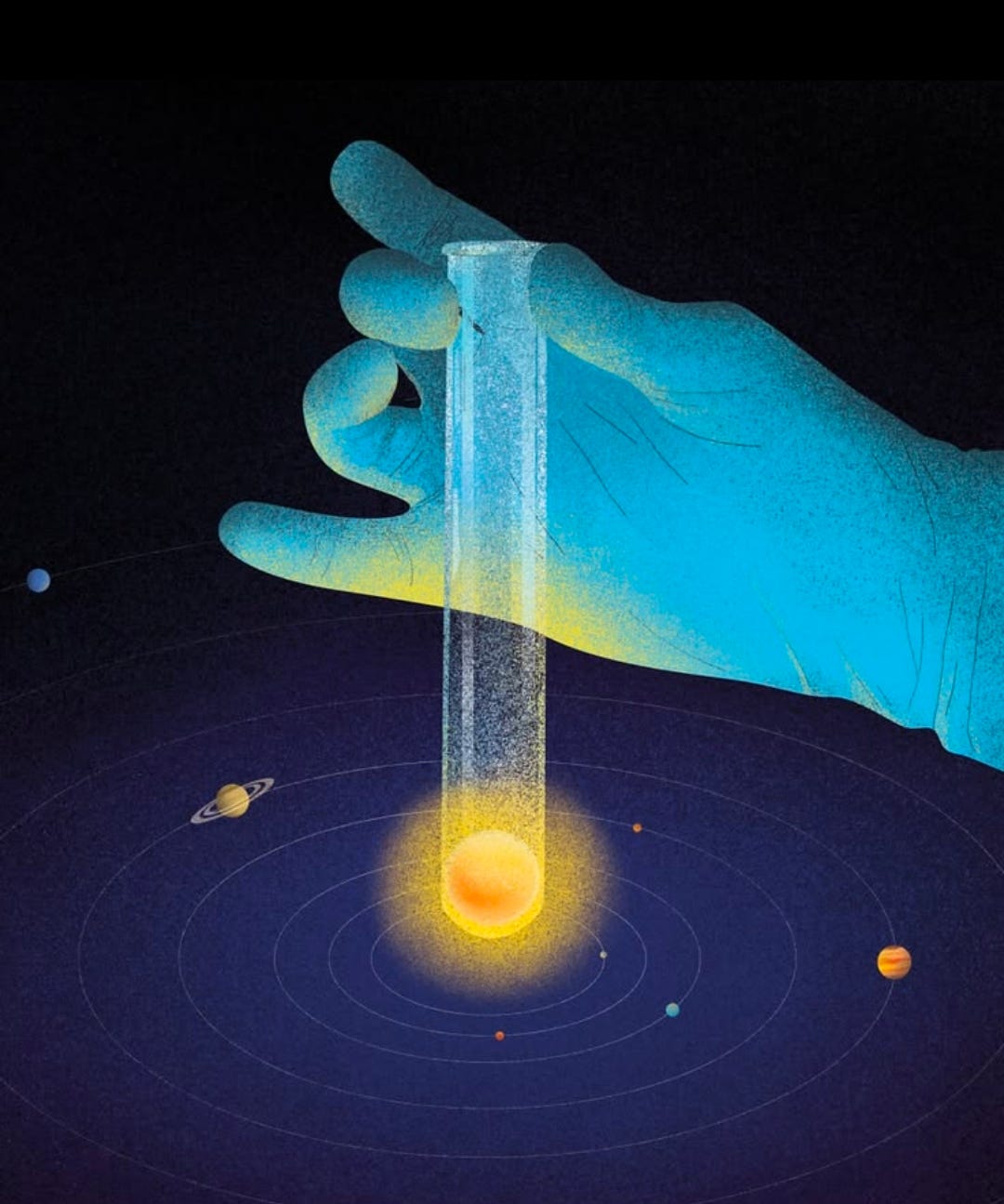
I still do. I love learning how the human body works, how diseases spread, why we age, how evolution shaped us, what is happening at the bottom of the ocean and what the hell is happening billions of light-years away from us. I love that we can take something we cannot see with our own eyes, like a virus or a cell, and figure out what it is doing. Or look at light that has traveled across the universe for billions of years and somehow use it to learn what happened before humans even existed. And somewhere out there is a scientist who has spent twenty years studying one tiny piece of one of those questions and knows more about it than I even knew there was to know. That is so fucking cool to me.
So yeah, watching what is happening to science in this country right now really fucking bothers me.
On August 10, Donald Trump signed an executive order calling for major changes to the childhood vaccine schedule in the United States. He wants the MMR vaccine separated into individual measles, mumps and rubella shots given at different medical visits, and he wants other childhood vaccines spaced out across more appointments. Major medical organizations, including the American Academy of Pediatrics, do not recommend doing this. Doctors have warned that delaying vaccines beyond the recommended schedule does not make children safer. It leaves them vulnerable to preventable diseases for longer.
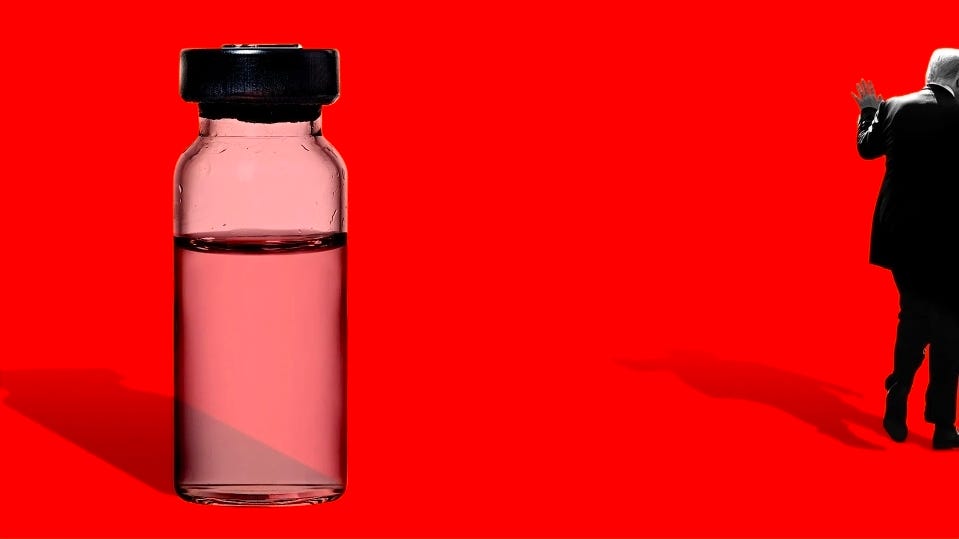
The AAP responded to Trump's order by calling it "unscientific and dangerous," and its president, Dr. Andrew Racine, said the science behind vaccines and their effectiveness has not changed. Trump has been talking about vaccines and autism for years despite decades of research finding no link, RFK Jr. is now running the Department of Health and Human Services, and those ideas are no longer coming from outside the American public health system. They are coming from the president and the man he put in charge of it.
The timing is pretty fucking incredible because measles is back. The United States declared measles eliminated in 2000, meaning the disease was no longer continuously spreading inside the country. Before the measles vaccine became available in 1963, an estimated three to four million Americans were infected every year. Around 48,000 were hospitalized, roughly 1,000 developed encephalitis, and between 400 and 500 died.
Most Americans under a certain age have never known a country where almost every child eventually got measles, which I think is part of the problem. It is much easier to become suspicious of a vaccine when you have never had to be particularly afraid of the disease it prevents.
As of August 6, the CDC had confirmed 2,465 measles cases in the United States this year, already more than the 2,289 cases reported during all of 2025. There have been 38 outbreaks so far this year, and 94 percent of confirmed cases have been associated with outbreaks. MMR vaccination among U.S. kindergartners has fallen from 95.2 percent in the 2019-20 school year to 92.5 percent in 2024-25, leaving an estimated 286,000 kindergartners at risk. The CDC says two doses of MMR are 97 percent effective at preventing measles.
And while all of this is happening, the president of the United States is telling parents that vaccines doctors have safely given children for decades should be separated into different shots and visits. States ultimately control school vaccination requirements, but presidential messaging matters.
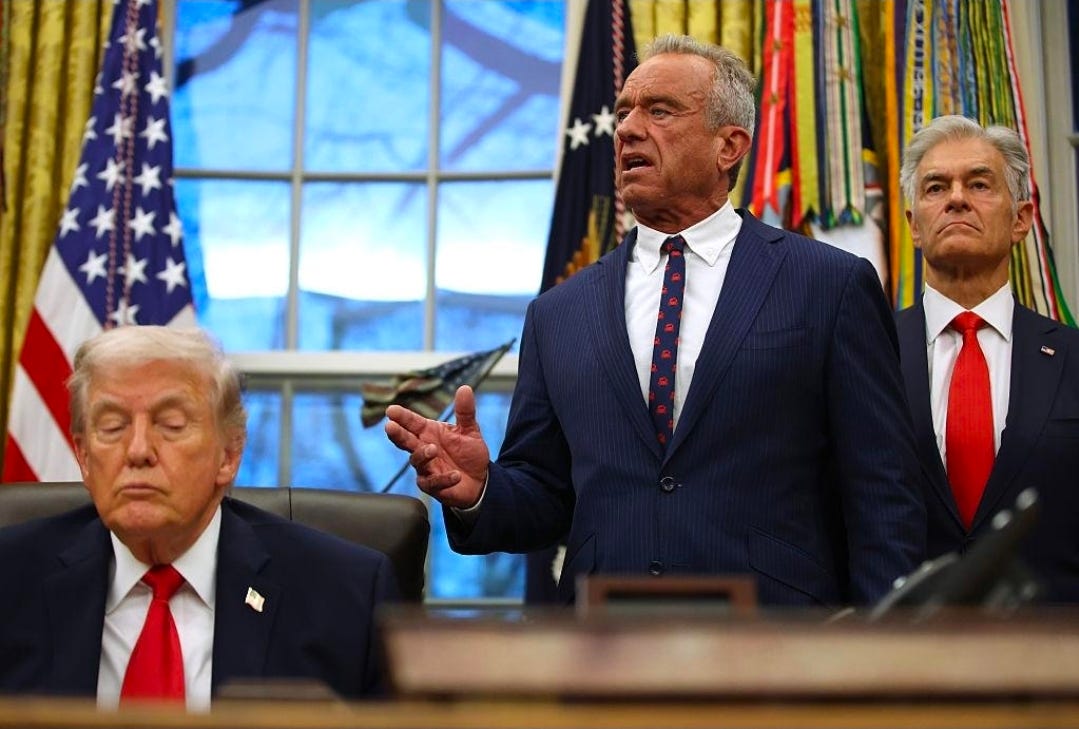
It especially matters when the president is sitting next to an HHS secretary who has spent years questioning vaccines, appearing to doze off while that secretary explains major changes being made to children's medical care. You really can't make this stuff up.
Which brings me to the very sophisticated title I chose for this article: Science Is Fucking Cool.
Because somewhere along the way, we seem to have forgotten just how much science has actually done for us. Human beings figured out that microscopic organisms we cannot see can move between our bodies and make us sick. We learned how to look inside cells, sequence genomes, transplant organs, replace joints, treat bacterial infections with antibiotics and keep babies alive who were born months before they were supposed to be.
HIV went from a diagnosis that killed enormous numbers of people to a condition that many people can now manage with medication. Smallpox killed hundreds of millions of human beings over the course of history, and after a global vaccination campaign, the World Health Organization declared it eradicated in 1980. We actually managed to remove a human disease from the planet.
None of those discoveries required scientists to be right all the time. Researchers test an idea, publish what they find and other researchers try to reproduce it. Sometimes they cannot. New evidence comes along and recommendations change. A drug that looked promising fails in a clinical trial. A treatment gets better because somebody discovers that the old one was not working as well as we thought.
Changing an answer when the evidence changes has somehow become one of the things people point to when they argue that science cannot be trusted, which has always seemed backwards to me. I would be considerably more concerned if scientists refused to change their minds when new evidence showed they were wrong.
Anthony Fauci has been wrong about things. So has the CDC, and so has every doctor who has ever practiced medicine. Of course they have. Science is being done by human beings trying to understand incredibly complicated things, sometimes with incomplete information. The important part is what happens when they get something wrong. We have clinical trials, peer review, control groups, replication and safety monitoring because other scientists are supposed to check the work, question the results and find the mistakes.
Robert F. Kennedy Jr. spent years promoting the claim that vaccines are connected to autism despite decades of research failing to establish that connection. Donald Trump then made him Secretary of Health and Human Services. In June 2025, Kennedy removed all 17 sitting members of the CDC's Advisory Committee on Immunization Practices, the independent group of experts that reviews vaccine safety and effectiveness data and makes recommendations to the CDC.
Kennedy said he was restoring public trust. Dr. Bruce Scott, then president of the American Medical Association, warned at the time that doing this while measles was spreading and childhood vaccination rates were falling would "further fuel the spread of vaccine-preventable illnesses."
And this wasn't a minor personnel change. This is the committee that looks at the evidence and helps decide how vaccines are actually used in the United States, including who should get them and when. Its recommendations are used by doctors across the country and can affect whether vaccines are covered by insurance.
All of this is happening only six years after more than a million Americans died during the COVID pandemic. Hospitals ran out of beds. Healthcare workers reused protective equipment because there was not enough of it. Families said goodbye through phones held by nurses because they could not be in the room. Refrigerated trucks were used as temporary morgues.
Scientists were trying to understand a virus that had never circulated in humans before while millions of people expected definitive answers immediately. They were sequencing the virus, studying how it spread and developing vaccines at the same time much of the country was sitting at home learning words like ventilator, antibody and mRNA for the first time. Some of the answers changed as scientists learned more. There are legitimate questions about decisions made during the pandemic and plenty that should be examined. That is different from deciding the scientific process itself was the problem.
Anthony Fauci was one of the people standing in front of the country during that period. He had already spent decades at the National Institute of Allergy and Infectious Diseases and had worked on HIV/AIDS, Ebola, Zika and other infectious disease threats before most Americans knew his name.
On August 6, the Republican-led Senate Homeland Security Committee voted to hold Fauci in contempt of Congress after he invoked the Fifth Amendment during questioning about COVID. Rand Paul has asked the Justice Department to pursue the matter criminally. Fauci has denied wrongdoing, and the committee fight is continuing while the United States is dealing with active outbreaks of diseases public health agencies are supposed to monitor.
I keep thinking about the scientists watching this who are at the beginning of their careers. Government infectious-disease work is not exactly the easiest way to become rich or famous. Someone can spend decades studying viruses most of the public never thinks about, work through outbreaks under presidents from both parties and then watch one of the country's most recognizable government scientists become the subject of years of congressional investigations and demands for prosecution.
Researchers and public-health experts have warned about what that kind of environment can do to recruitment and retention. We are going to need infectious-disease scientists again. That part is not really in question.
Fauci and vaccines are only one part of what has been happening to science in this country. The attacks on public health are happening alongside cuts to research, canceled grants, scientists being pushed out of government and programs that took decades to build being dismantled or thrown into uncertainty. We have been watching this happen across one part of the federal government after another for the past year and a half, and some of these programs took decades to build.
The National Institutes of Health is the largest public funder of biomedical research in the world. Its money supports work on cancer, Alzheimer's disease, heart disease, diabetes, HIV, infectious diseases, mental health, rare genetic disorders and thousands of other subjects. It pays researchers and technicians, keeps laboratories running and supports clinical trials. A treatment can begin with a federal grant years or even decades before anyone picks it up from a pharmacy.
Researchers inside NIH have described the past year in extraordinary terms. Scientists interviewed by Science described grants being disrupted, staff disappearing and research programs thrown into uncertainty. One NIH employee described what was happening as "dismantling and destroying everything." That is a pretty remarkable thing to hear from someone working inside one of the most important biomedical research institutions in the world.
Beginning in 2025, NIH terminated grants involving subjects the Trump regime said no longer aligned with its priorities, including research connected to DEI, transgender health and vaccine hesitancy. Researchers sued, and a federal judge ruled that hundreds of those terminations were unlawful and described the process behind them as “arbitrary and capricious.” Then this summer, Science reported that NIH had begun terminating grants again, this time using more detailed scientific justifications. An attorney following the cases told the magazine that eventually the regime was going to figure out how to do this "in a way that the courts will tolerate."
Congress has pushed back on some of Trump's proposed science cuts, which is important context. A president can ask Congress to gut an agency's budget, but that does not mean Congress has to do it, and lawmakers rejected some of the enormous cuts Trump wanted for 2026. That hasn't meant everything went back to normal. NIH researchers are still dealing with delayed grants, staff shortages and new layers of review that have left hundreds of research applications sitting there waiting for approval. NSF has had its own funding delays too.
And those funding delays have very real consequences inside a laboratory. Researchers still have salaries to pay, equipment to buy and studies that may already have patients enrolled. Graduate students may have built years of work around a project. If the money suddenly stops, the research does not politely freeze itself and wait for Washington to figure things out.
And medical research is only the beginning.
In May, the National Science Foundation began scaling back the Ocean Observatories Initiative, a network that has been collecting continuous ocean data for more than a decade. The plan called for removing in-water infrastructure from four arrays, including the Endurance Array off Oregon and Washington. Scientists use that equipment to study ocean circulation, marine ecosystems, climate and extreme weather, and some of it was already being removed when lawmakers and researchers began pushing back.
There is a detail from Oregon that stuck with me. Earlier this year, when part of the Endurance Array's data stream went offline, local fishermen contacted the scientists running it because they were using the information too. Ed Dever, the principal investigator for the array, said local fishermen actually contacted his team when the data went offline because they had been using it for "real-world decision-making and safety." People working on the water actually noticed when the science disappeared.
On June 18, NSF reversed course and announced it would stop removing equipment from the remaining arrays while it reconsidered the program. The Endurance Array had already been removed, so NSF began developing plans to service the equipment and put it back. I live in Oregon, and I am admittedly pretty interested in keeping the instruments that tell scientists and fishermen what is happening in the enormous body of water directly next to us.
There is another problem with shutting down long-term monitoring that seems incredibly obvious once you think about it. You cannot recreate the missing years later. If an instrument continuously measures ocean temperature, oxygen, acidity and currents for ten years and then stops, scientists cannot go back afterward and collect what happened during the gap. That information is just gone.
The same problem exists with climate and weather research. NOAA scientists collect information about hurricanes, tornadoes, drought, ocean temperatures and the atmosphere. Those measurements feed into weather models, disaster planning, agriculture and the warnings people receive before dangerous conditions arrive. Trump has repeatedly proposed major reductions to climate and environmental research. Congress has rejected some of those cuts, but scientists and agencies have spent much of the past year wondering which programs will survive and what funding they will actually receive.
The federal wildfire system has been getting pulled apart and reorganized too. The Forest Service lost about 20 percent of its workforce in 2025, and officials told the Government Accountability Office they were already feeling the strain from losing that many people. At the same time, the Trump regime has reorganized federal wildfire operations, created a new Wildland Fire Service inside the Interior Department and started restructuring the Forest Service itself.
The government says all of this will make wildfire response more “efficient.” But these are people and systems responsible for understanding our forests, preventing fires and responding when they start, and we are dismantling and rearranging parts of that infrastructure while wildfires are actively burning across the country.
This one has felt particularly close to home lately. For more than a week, wildfire smoke covered the sky outside my house in Oregon. I could smell it every time I walked outside, and the air quality was bad enough that I couldn't run outdoors, which is normally where I go to get away from the news and my own research for a while. And Oregon is obviously not the only place dealing with this. Wildfires are burning across different parts of the country, so yes, I am admittedly very interested in having enough people working in our forests while fires continue burning across the United States.
And then there is the World Health Organization.
Trump ordered the United States to begin withdrawing from the World Health Organization on his first day back in office, January 20, 2025, and the withdrawal became official on January 22 of this year. During that year, the United States stopped funding WHO, pulled American personnel and started moving some of that work into direct relationships with individual countries and other organizations.
The Trump regime says WHO mishandled COVID, failed to make necessary reforms and was too influenced by other countries. That is their reasoning for leaving. But infectious disease does not particularly care which international organizations Donald Trump wants the United States to belong to. An outbreak that starts somewhere else can become our problem very quickly. We literally just lived through that.
And somehow, after everything I've covered here, I still haven't come close to touching the surface of what has happened to science under the Trump regime. Scientists have been fired or pushed out across federal agencies. Research grants have been canceled or delayed. Climate programs have been targeted, scientific advisory boards have been remade and environmental monitoring has been threatened.
And now measles is spreading again in a country that eliminated continuous transmission more than twenty-five years ago.
We already know why these systems were built. People lived through the diseases. Scientists spent decades developing the vaccines and treatments. Governments built monitoring systems because they learned what happened when nobody was watching.
I would really prefer that we not decide to learn all of those lessons the hard way again.
Which brings me back to my original point.
Science is fucking cool.
I hope you guys enjoyed this one. Aside from, you know, all the dismantling of science. That part was less fun.
If you like what I do here and want to help me get closer to doing this full-time, please consider upgrading to paid for $5 a month. Every single one of you who does gets me a little closer.
And please like, comment and share this one so the algorithm will do its mysterious little algorithm thing and show it to more people.
Love you guys. Seriously. Thank you for being here.
— J❤️
No posts
Comments
Nothing yet. Say the first thing.
Sign in to join the conversation.