
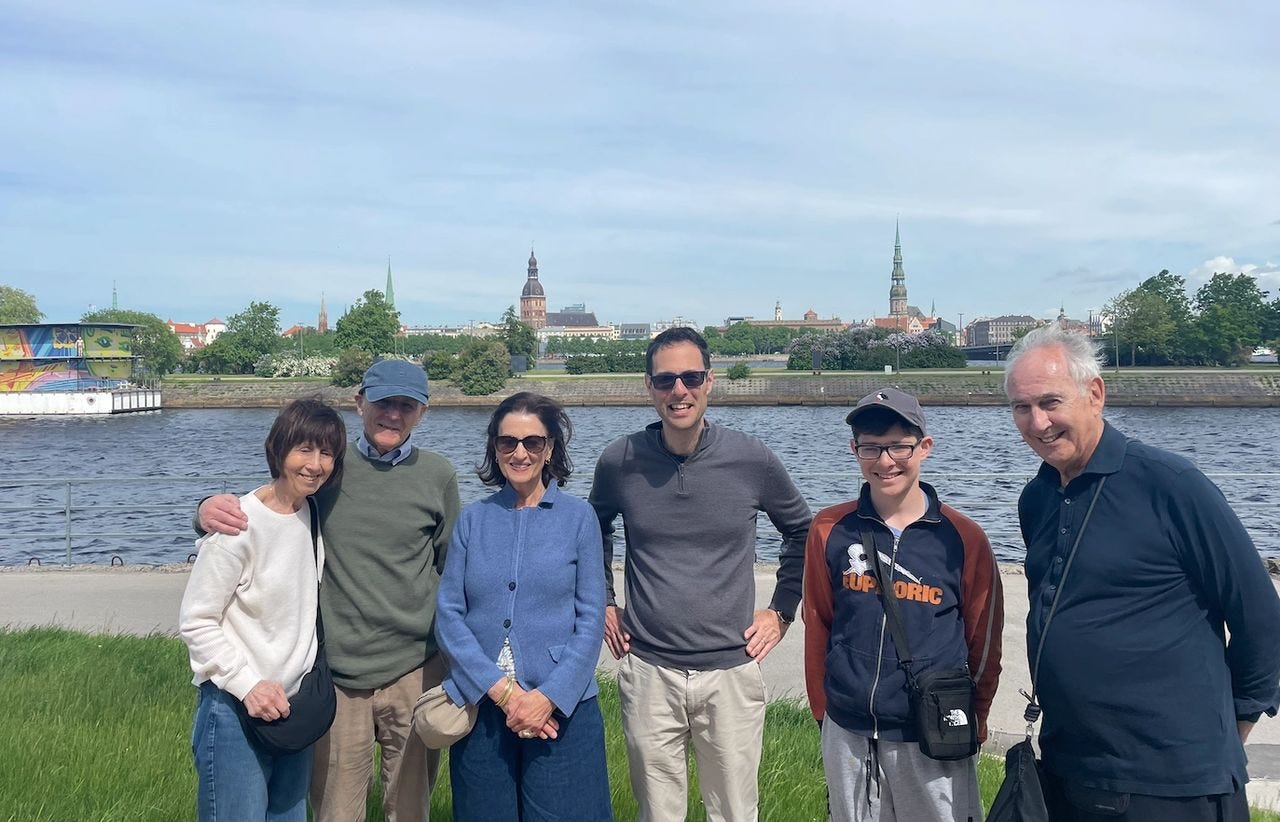
In late May, three generations of my family, including my father and my fourteen-year-old son, travelled to Latvia to find Ludza, the historic shtetl near the Russian frontier where my paternal family, the Sandlers, had lived from the late 1700s until the Second World War, when the family, like many others, was devastated by the Holocaust and Soviet exile to Siberia.
This week on the GraphicMEMOIRBlog, I’m stepping away from interviewing other creators to tell a story of my own. This journey came four years after I published The English GI: WWII Graphic Memoir., which told the story of my grandfather, Bernard Sandler, who grew up in Leeds before serving with the U.S. Army during the war. While the book primarily followed his wartime experiences, it only briefly explored his family’s Latvian roots.
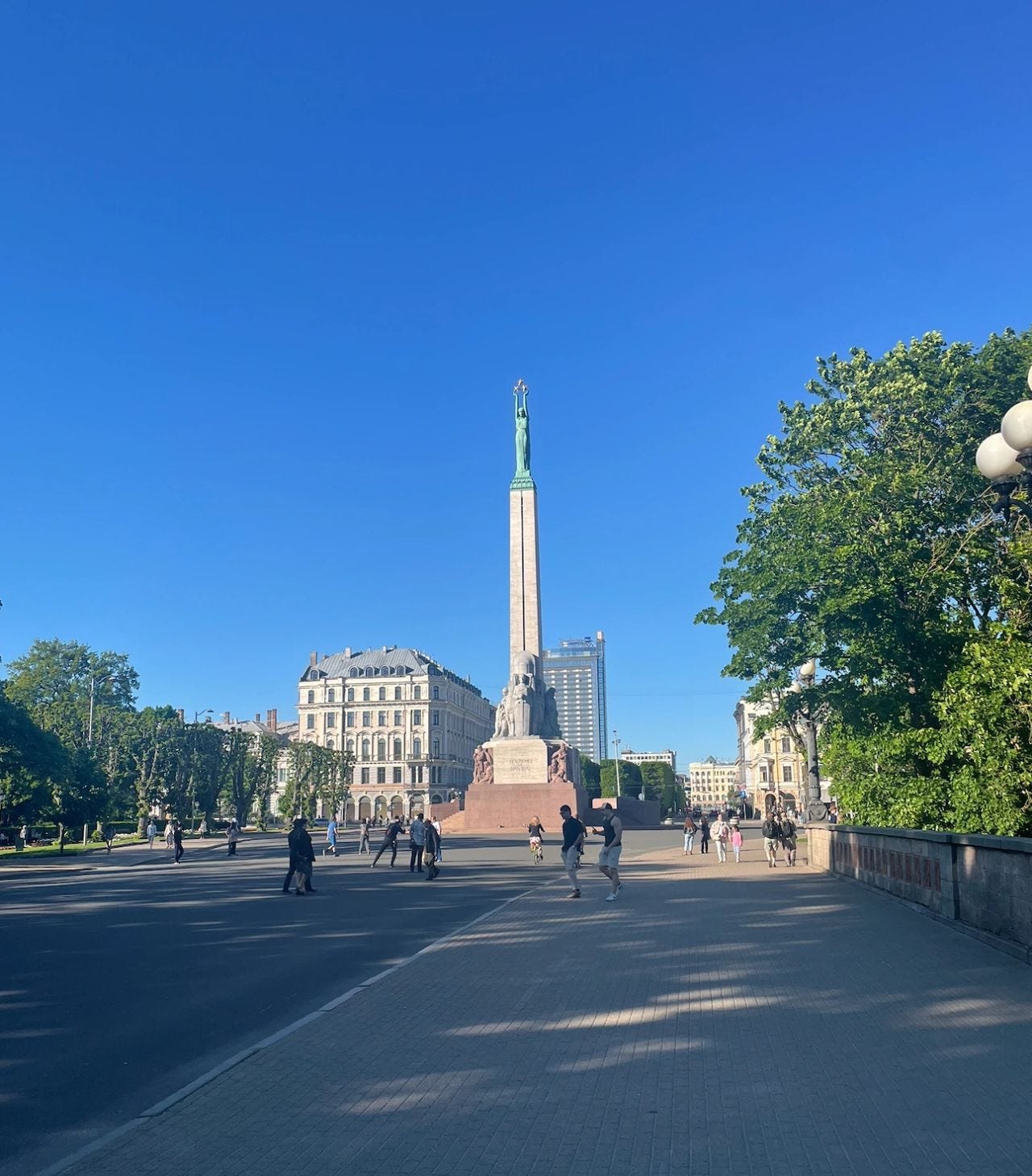
This 2026 visit completes a trilogy of family journeys—echoing my grandfather Bernard’s visits in 1937 and 1992. What follows is a reflection on those visits, the search for lost graves, a journey to the Holocaust memorial on the shores of Lake Cirma, and a visit to the oldest wooden shul in the Baltics, which featured in The English GI.
In 1910, my great-grandfather Hymie and his brother left Ludza at the age of sixteen. He helped build a successful clothing manufacturing business in Leeds and never looked back. He returned to Latvia only once, accompanying his son—my grandfather, Bernard—in the summer of 1937. Traveling through six countries, including Nazi Germany, they eventually reached Riga before continuing east to Ludza, the family home.
Now, 89 years later, I was returning with my own fourteen-year-old son, who was almost the exact same age Bernard had been on that momentous journey. During that 1937 visit, Hymie also tried—unsuccessfully—to persuade some of their relatives to leave Latvia and join them in Britain.
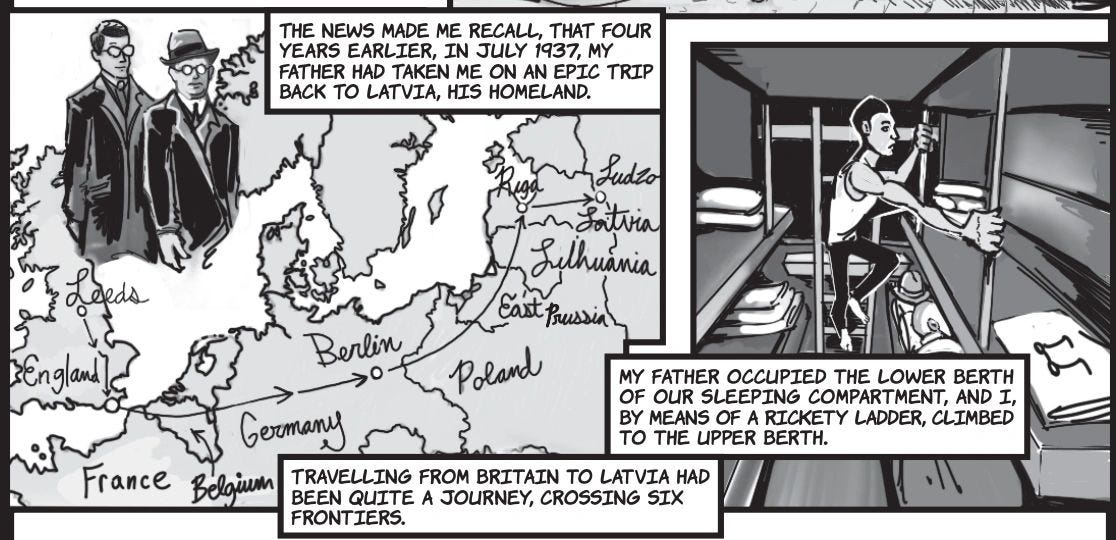
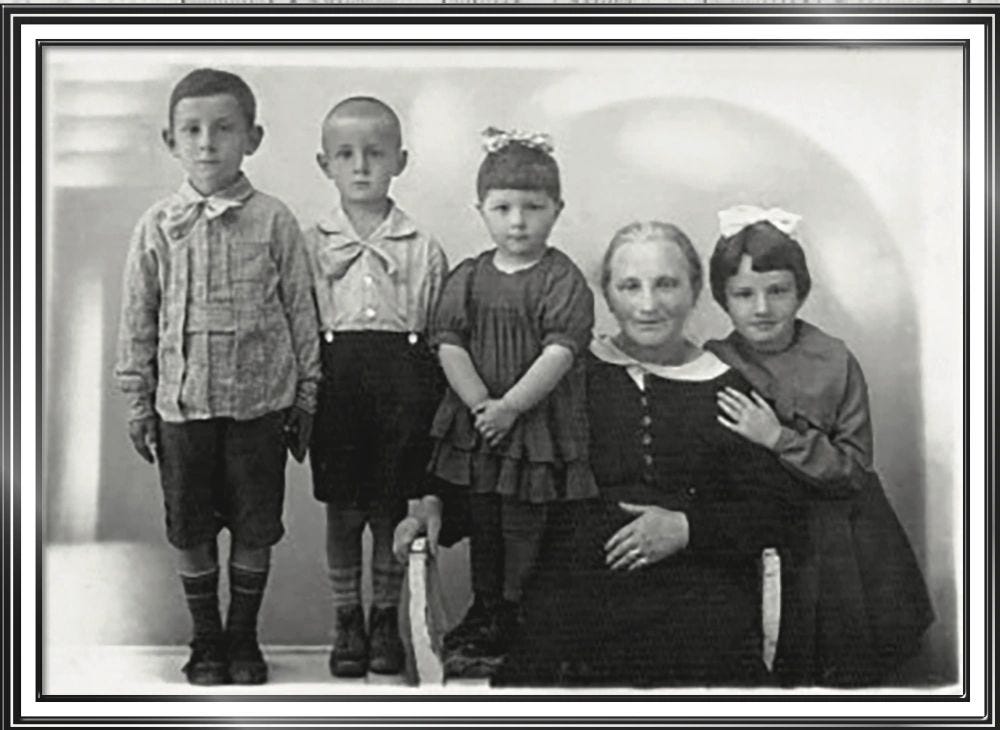
In Ludza, Bernard met his grandmother along with uncles, aunts, and cousins he had never known. Hymie was welcomed back by relatives and friends on Shabbat at the synagogue.
The years that followed brought sharply diverging fates for the Sandler family. Two of Bernard’s cousins, Isaac and Dora Sandler, were murdered during the Holocaust, along with his aunt. Grandma Rae, together with her daughter-in-law Scheina Doba Sandler and grandchildren Haja and Isaac, survived wartime exile in Siberia and eventually returned to Latvia after the war. Bernard’s uncles, Shmuel and Joseph (“Louis”) Sandler, died serving in the Red Army around 1943.
The Latvian Jewish world Bernard encountered in 1937 would soon disappear forever.
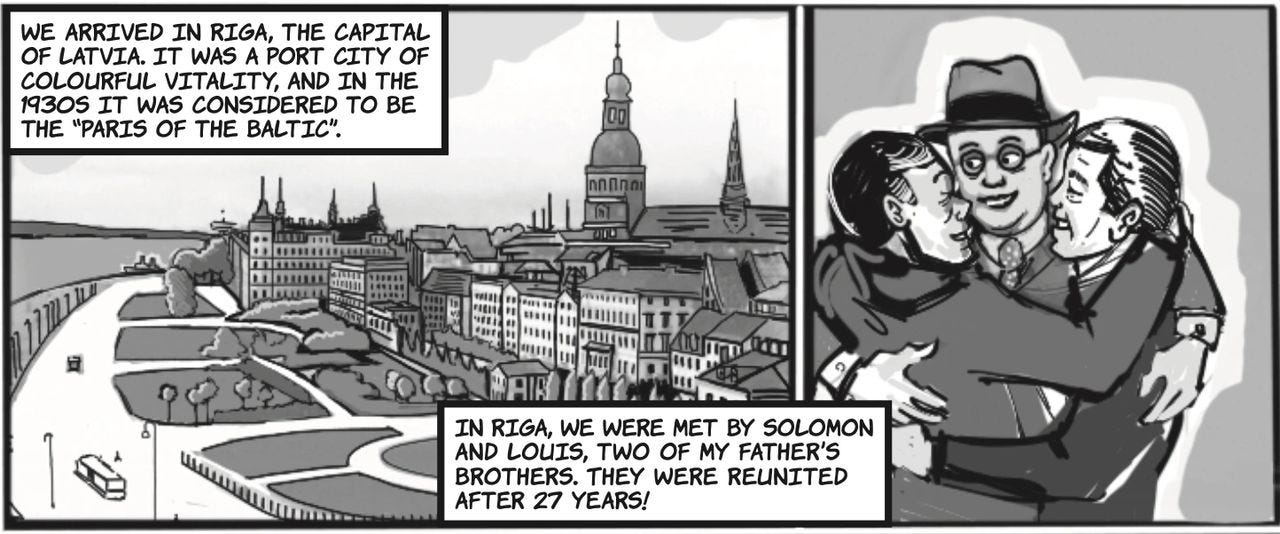
By 1992, there was only one surviving Sandler relative left in Latvia: Haja. She had survived wartime exile in Siberia and adapted to decades of displacement under Soviet rule. She lived alone in a small apartment in Riga, working at a local hospital, and spoke no English.
On my flight to Riga, in the comfort of Air Baltic, I read through the handwritten correspondence between Bernard and Haja from that era. Because Haja couldn’t speak or write English, a close friend penned the correspondence for her in beautiful handwriting. Reading those letters, her words spoke volumes of hardship and the raw realities of a country just emerging from behind the Iron Curtain.
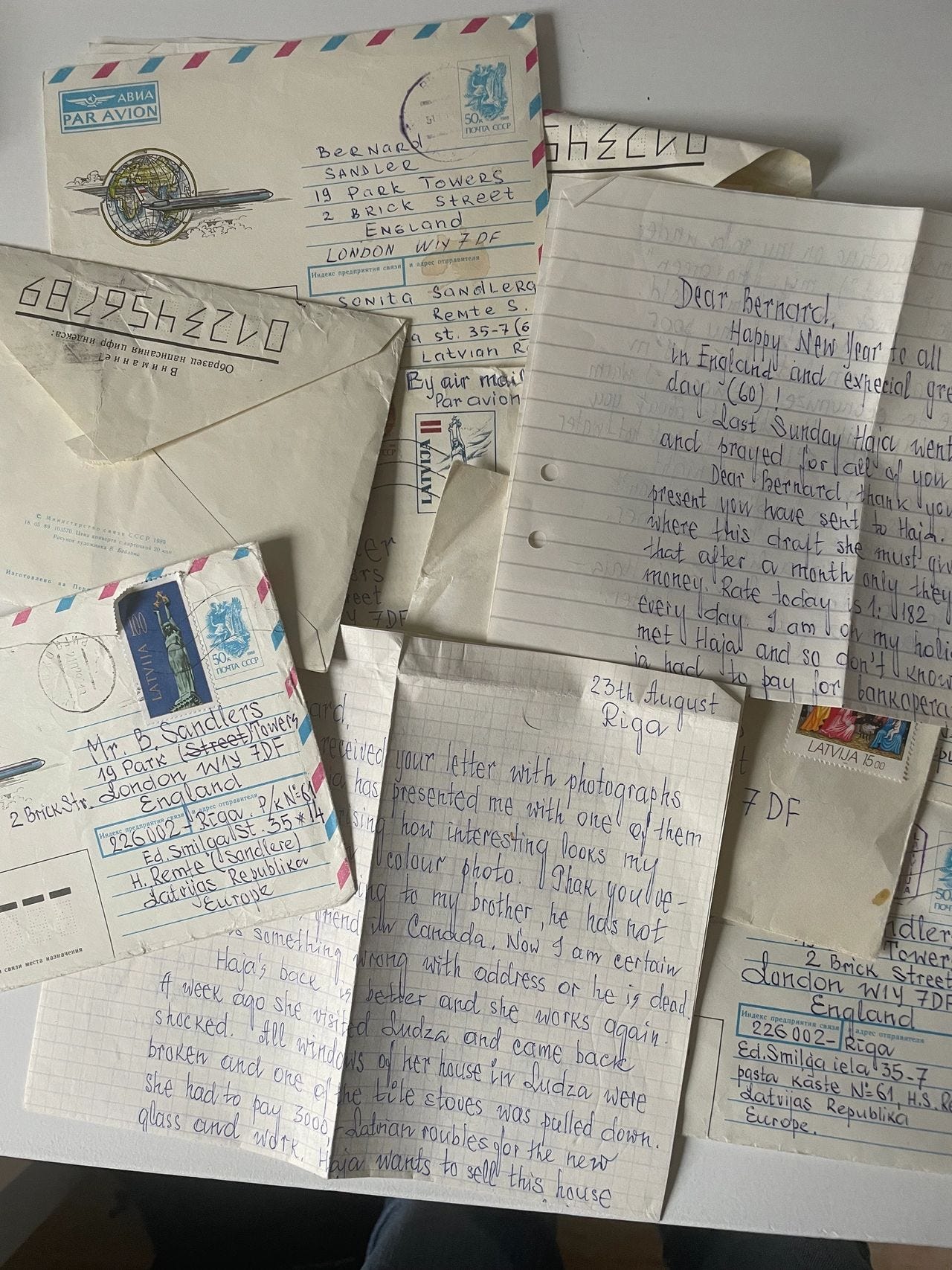
In an era long before email, social media, or online genealogy, arranging anything across a fractured Europe was a monumental task. Yet, Bernard managed to organize a visit to Riga in 1992 alongside my cousin Joel, arriving shortly after the collapse of the Soviet Union. There were no Jewish heritage tours or memorial sites yet; it was a whirlwind, deeply personal 24-hour family reunion.
The contrast between the two cousins could not have been more stark. Bernard was a retired, successful British businessman, his life filled with children and grandchildren in the West. Haja had spent her life enduring the heavy hand of 20th-century European history. Yet, despite their vastly different worlds, they remained profoundly bound by a shared family history rooted in Latvia.
Where Bernard encountered a fractured, post-Soviet city in 1992, our 2026 visit revealed a modern Riga filled with vibrant restaurants, cafes, and Art Nouveau architecture. We toured Jewish heritage sites connected to this painful history, visiting Rumbula Forest, where tens of thousands of Jews were shot and buried in mass graves, and the powerful, brutalist memorial at Salaspils. But the most intimate moment came when I stood directly outside the apartment building where Haja had once lived—the home of the very last close Sandler relative in Riga.
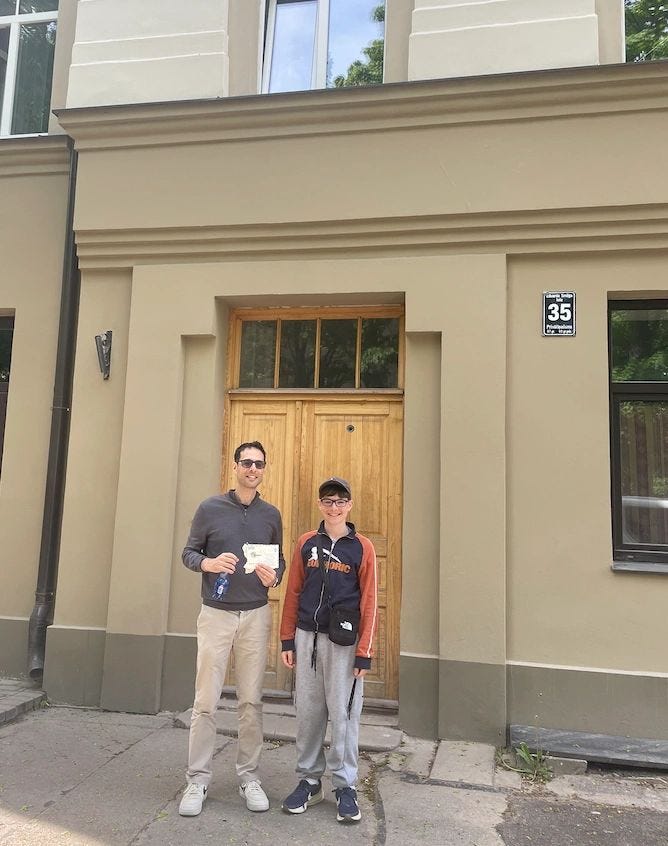
The Third Visit: 2026
If I was going to truly understand my family’s story, I needed to travel east to Ludza. On the eve of our trip, an undercurrent of tension rippled through the capital. The Latvian government had just resigned, and on the day we were due to head east into the Latgale region, our guide warned us of drone activity near the border from the previous day.
The warning lingered as we left Riga. The drive east took the best part of four and a half hours, and the closer we came to the Russian border, the more it felt as though we were traveling backward through time. As forests and lakes increasingly dominated the landscape, the scenery became quieter. Eastern Latvia is incredibly green; Hymie had swapped this lush expanse for a life in industrial Yorkshire, and looking out the window, you could easily see the stark geographical parallels.
We eventually arrived in Ludza on a beautiful sunny afternoon. The town felt eerily quiet—calm in a way that was almost disorienting. Before exploring, we stopped for coffee and cake in a small restaurant where time seemed to stand still. Ludza is surrounded by peaceful, atmospheric lakes, with historic wooden houses still lining many of the streets. As we walked through it, the stillness and intact wooden architecture gave the town an uncanny, cinematic quality. It has changed so little since the 1930s that it could almost serve as a living film set for The English GI. Walking those streets, we could easily imagine Bernard’s visit unfolding in real time.
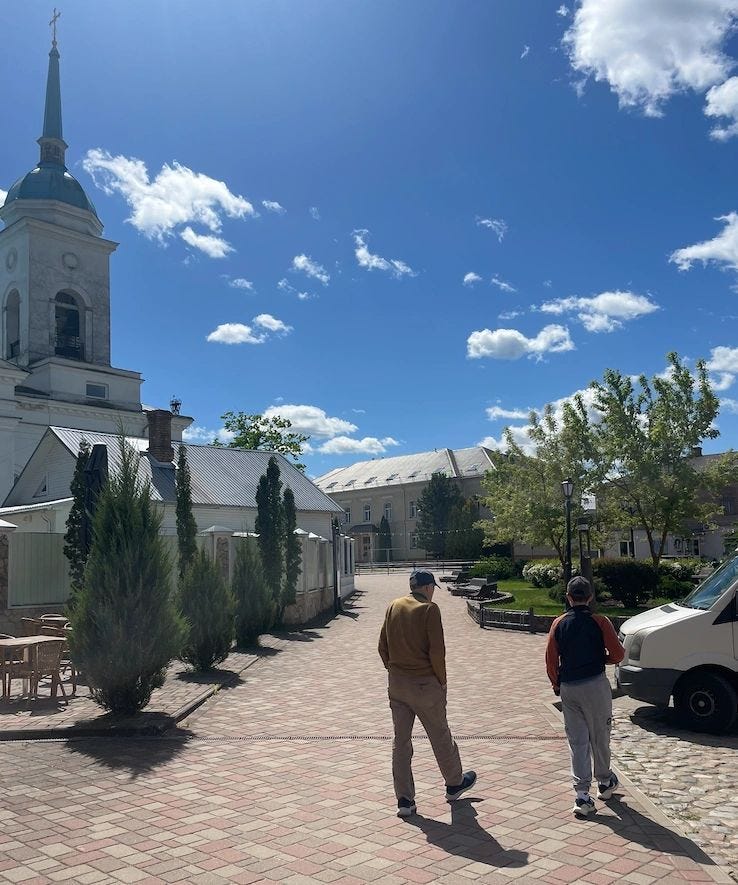
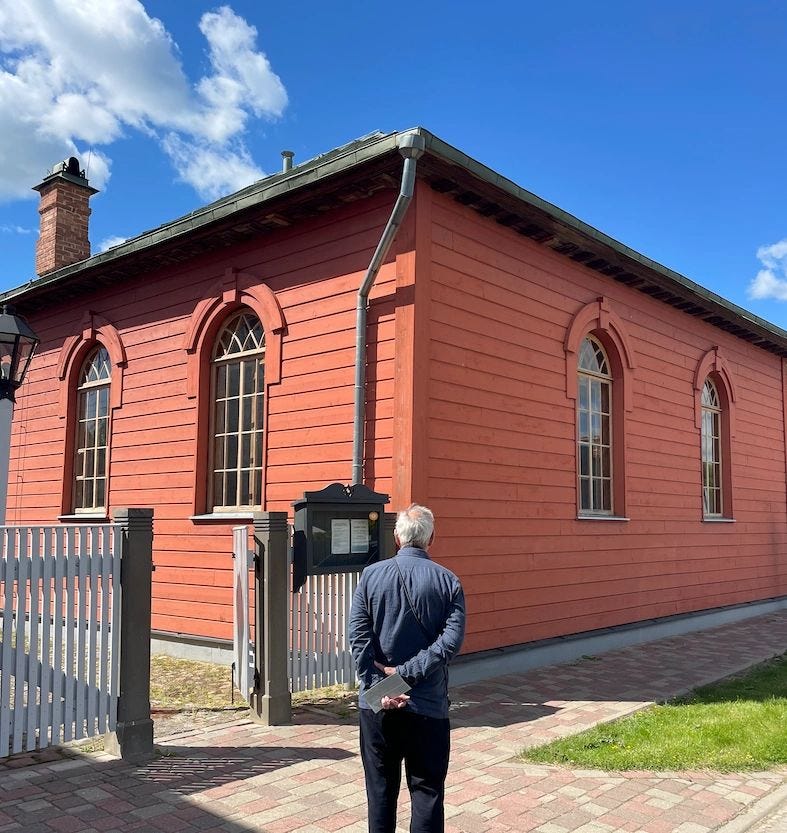
Our first major stop was the Great Synagogue. Built around 1783, it is the oldest surviving wooden synagogue in the Baltic states. Today it is beautifully restored as a museum and cultural center, a project made possible through European heritage funding via the EEA and Norway Grants program. The careful restoration of the wooden structure stood in stark contrast to the total absence of a living Jewish community in Ludza today.
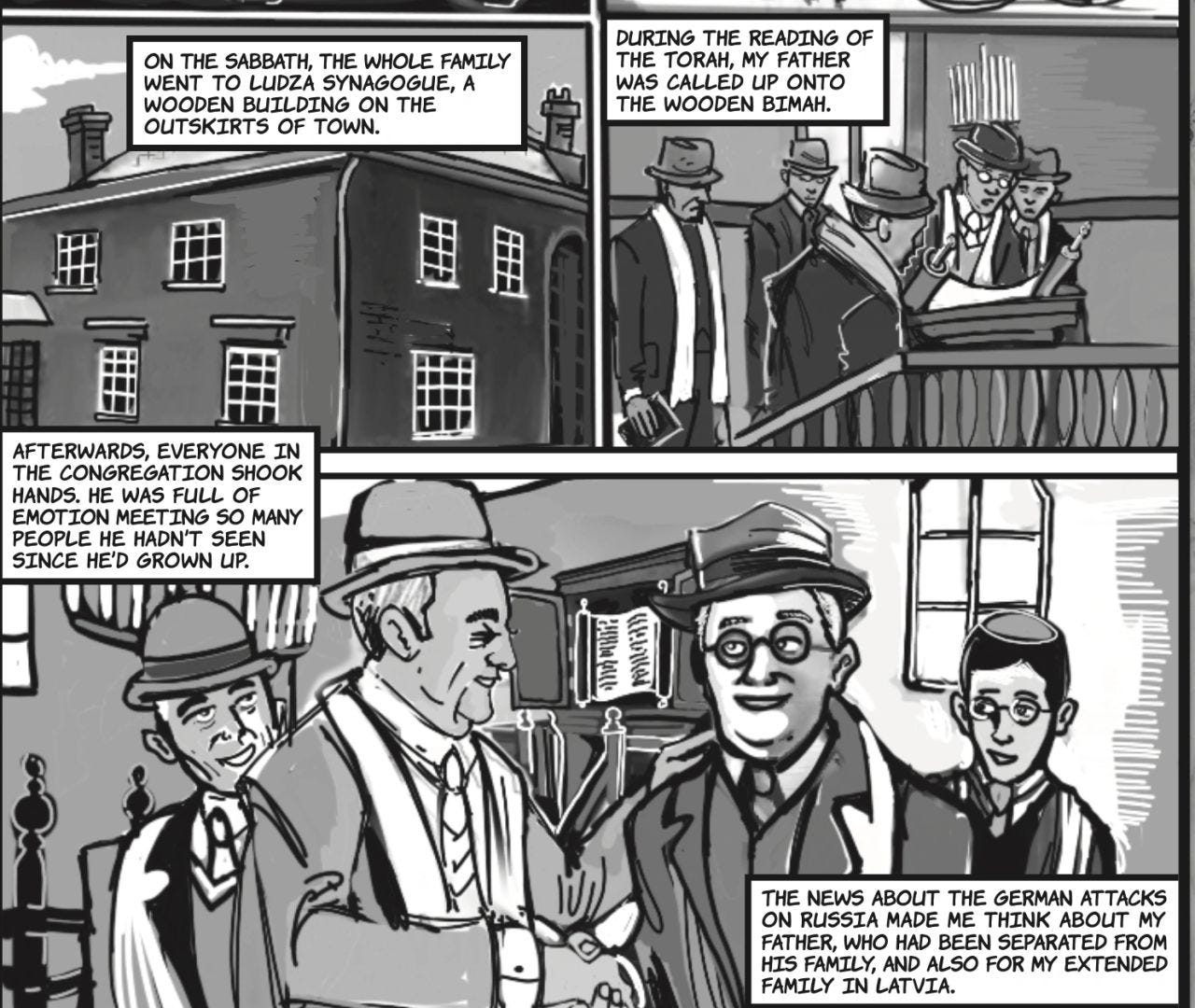
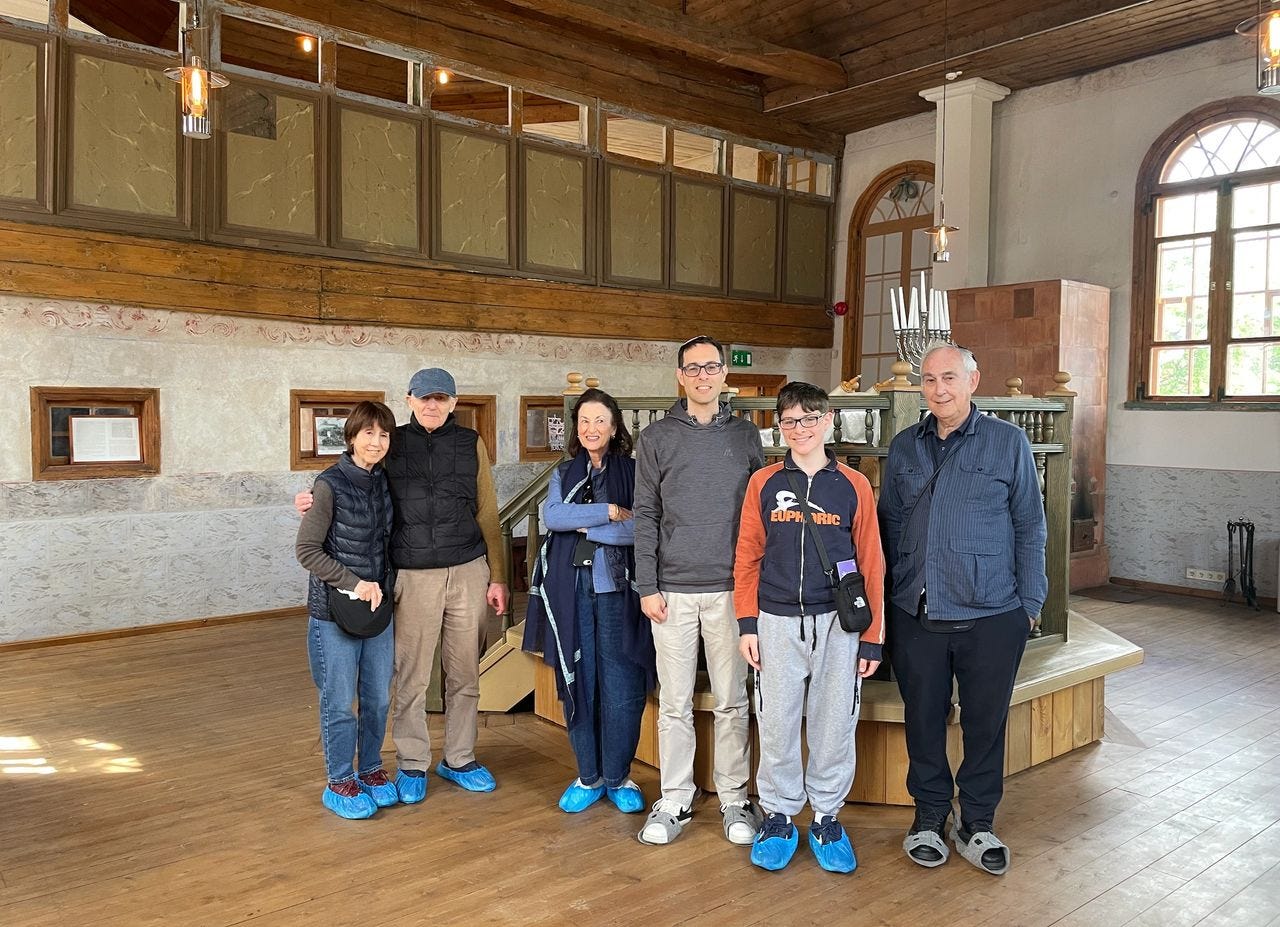
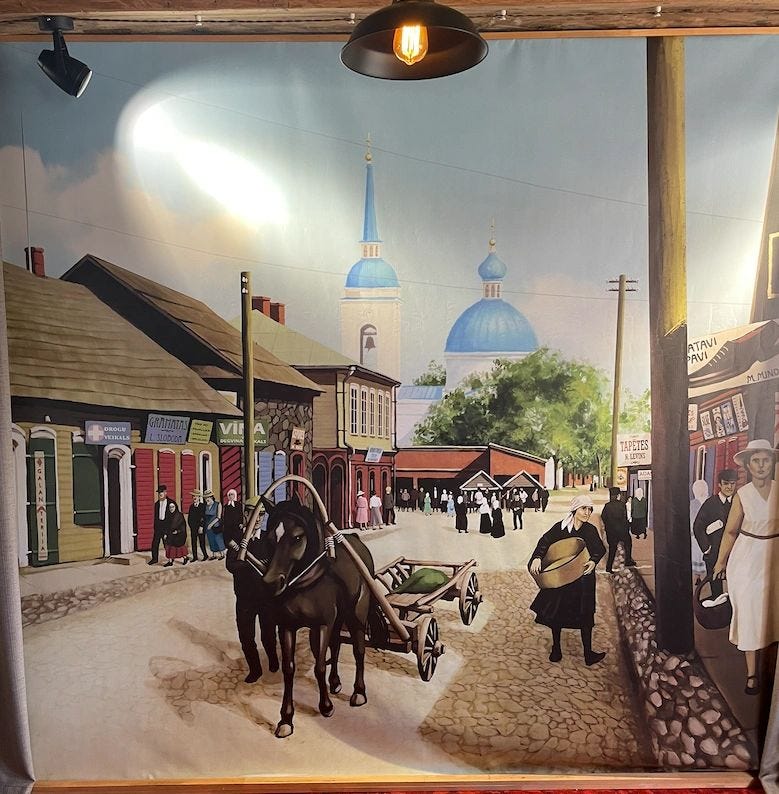
I was reminded of Dara Horn’s book People Love Dead Jews (see my interview with Horn), which explores why modern societies often preserve Jewish sites with such care precisely because the communities that once gave them life are entirely gone. While working on The English GI, I had relied heavily on archival photographs of this synagogue online, which became essential visual reference material as I reconstructed Hymie’s visit. There were once seven synagogues in Ludza; we will never know if this was the exact one he attended on Shabbat, but standing there was meaningful nonetheless. Inside, the synagogue contains exhibits on Jewish life in Ludza before the war, including photographs, artifacts, and a panoramic painting of the town.
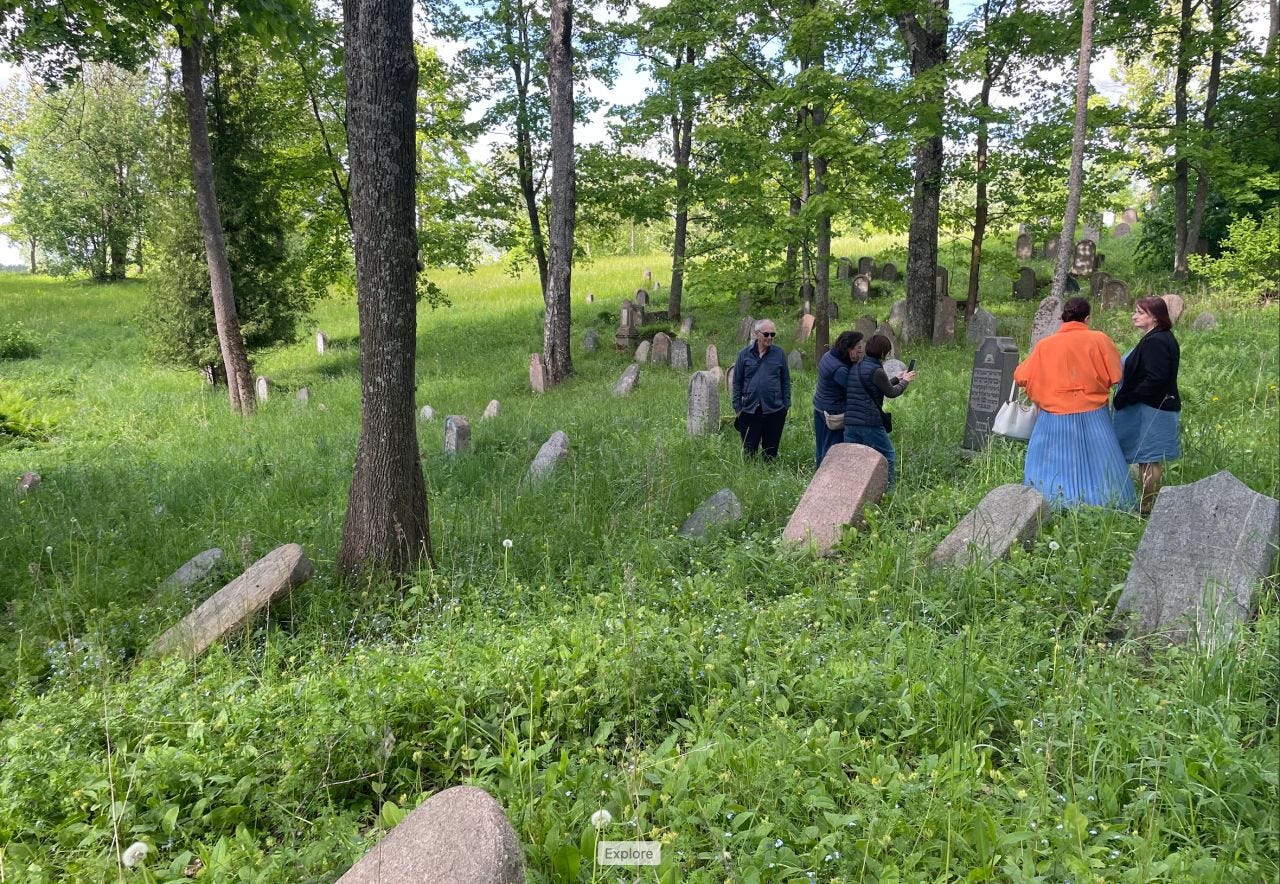
We next visited the Jewish cemetery. Through online archives and invaluable research assistance from Moira Ariev, we knew the exact plot numbers of relatives including my forefathers Kalman Dov Sandler, Movsha Behr Sandler, and Rochel (”Grandma Rae”) Sandler. But in the large, heavily wooded, and overgrown grounds, the specific graves were impossible to locate. The inscriptions were in Hebrew and Cyrillic, weathered by time and difficult to decipher.
Later, through the Jewish archives in Riga, we received photographs of all three gravestones. We would never have found them ourselves in the thick brush. Yet, walking through the cemetery overlooking the lake, the exact locations mattered less. What mattered was simply standing in the place where generations of our family had been buried, in the town they had called home for over a century.
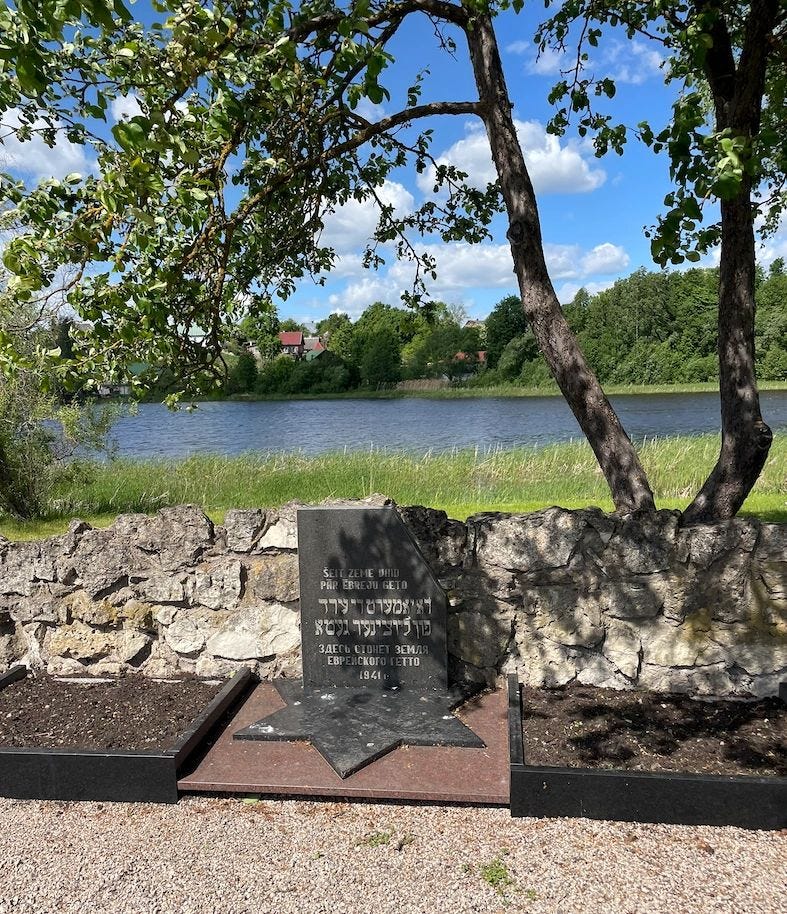
The most haunting part of the trip came at the end of the afternoon, when we traveled to the memorial at Lake Cirma. It was incredibly difficult to find—there was no clear GPS signal, and at one point we nearly turned back. Our guide was insistent: we had come too far not to see it. Eventually, we navigated past a lakeside house on private land to reach the memorial itself, marking the spot where many Jews from the Ludza region were murdered by the Nazis in the summer of 1941.
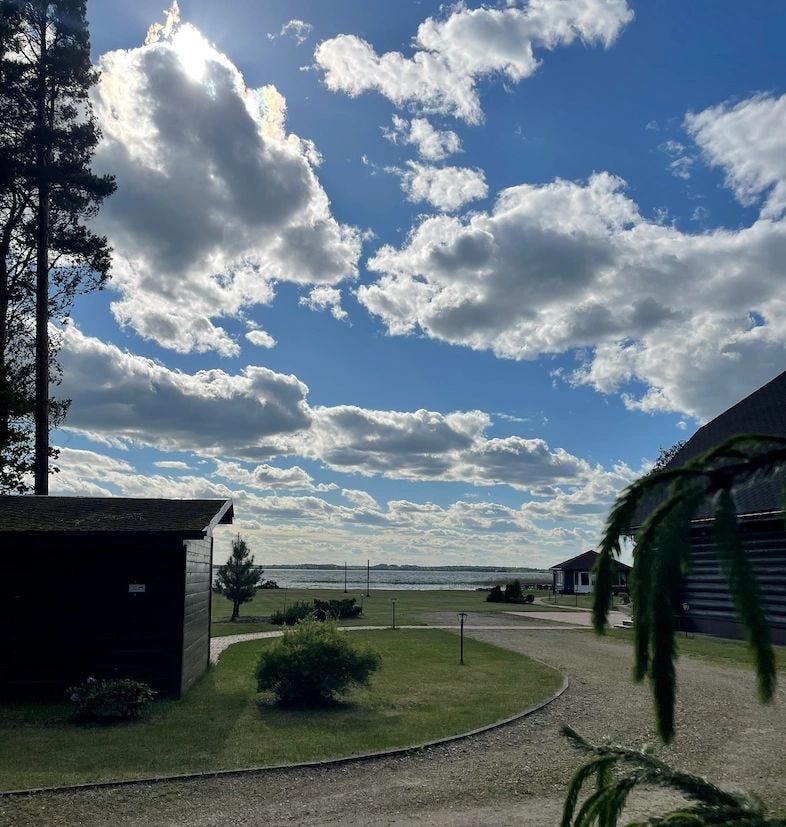
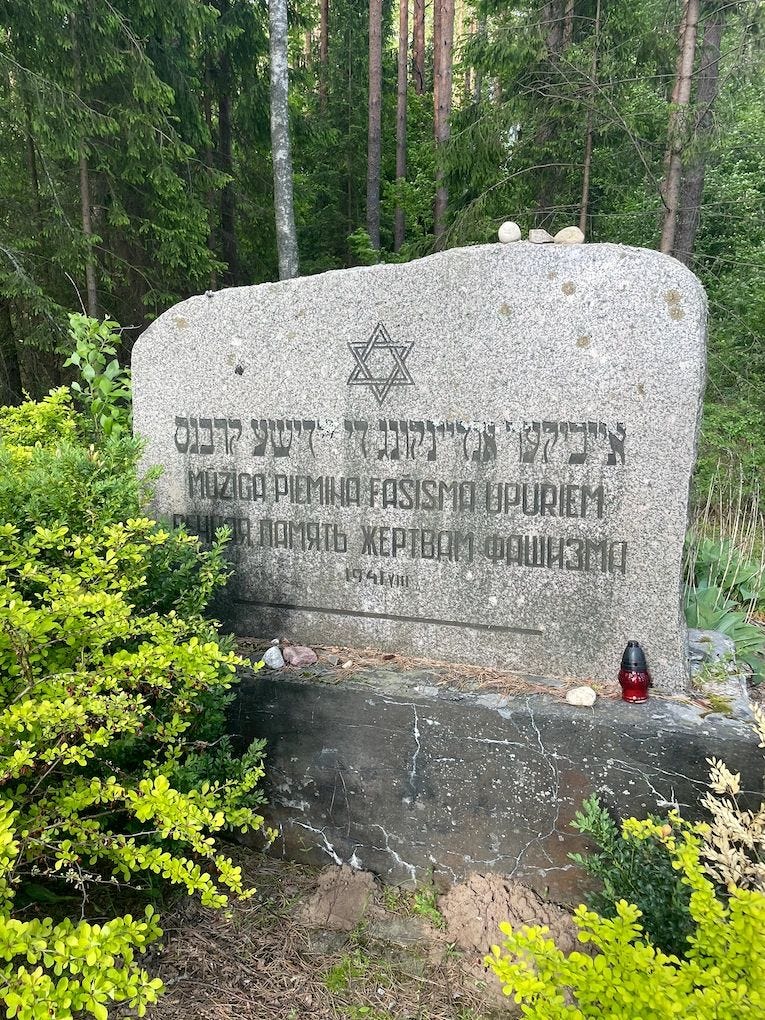
Standing in the quiet forest, I thought particularly of Bernard’s cousins, Isaac and Dora Sandler, who were mere children when they were killed. This was the “Holocaust of the Bullets”—mass shootings carried out in forests and near victims’ homes rather than in distant camps. I was reminded of similar sites I witnessed during a visit to Poland last year. At the lakeside, the contrast between the violence of the past and the serene beauty of the current surroundings was overwhelming. We placed a stone at the memorial and stood in silence.
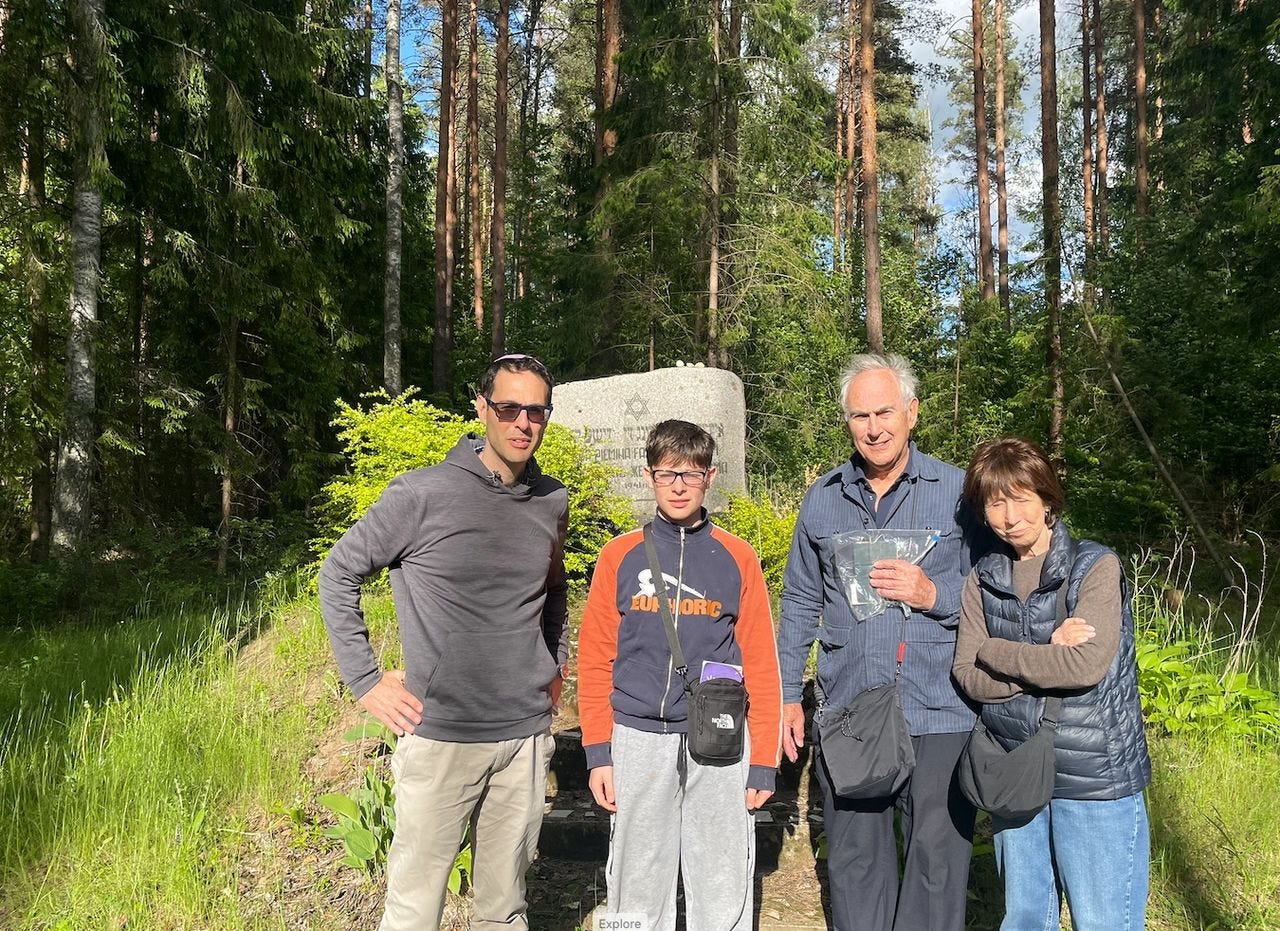
Over the past few years, I have interviewed creators such as Amy Kurzweil, Joanna Rubin Dranger, Jordan Mechner, and Astrid Goldsmith, whose graphic memoirs often involve physically retracing their families’ journeys. Visiting these places offers something no archive, photograph, or family tree can provide. Physical presence adds a layer of texture that the archive alone can never fully capture.
For generations, Latvia existed for me in archives, in my grandfather’s story, in the family tree, and in the pages Brian and I built for the book. Now it is a real place. And although the Sandlers left Ludza a century ago, for one day at least, we came back.
Note: Last year, I wrote an article about my visit to Poland: WWII, Holocaust Graphic Novels, and a Journey Through Poland [See Link].
Article written by Jonathan Sandler, author of The English GI: World War II Graphic Memoir, curator of the GraphicMEMOIRBlog, and Advisor to Mensch Publishing.
No posts
Comments
Nothing yet. Say the first thing.
Sign in to join the conversation.