
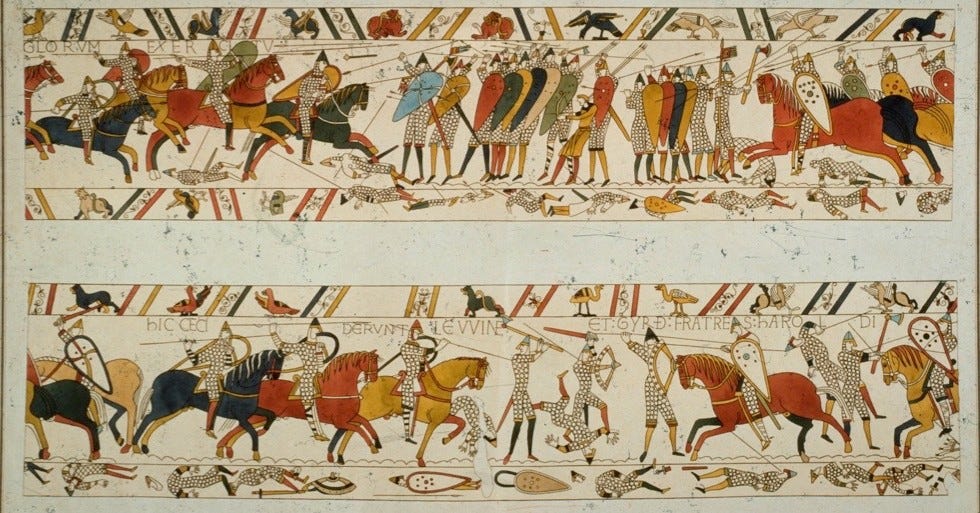
Whenever I stumble upon the word “tapestry”, it reminds me of our Medieval Europe history class back in my university days.
Apart from the Viking invasions and William the Conqueror’s victory over Harold Godwinson at Hastings in 1066 (which I later binge-watched in King & Conqueror), there was one topic that stuck in my mind. My professor had a long, albeit boring, discussion about the Bayeux Tapestry.
It was the fascinating story of that battle retold in this epic, handcrafted glory, illuminating battle scenes and highlighting key moments of that event that changed the course of history.
And now…
We’re in the age of AI, where writing can now be generated in just a few keyboard strokes and a mouse button press.
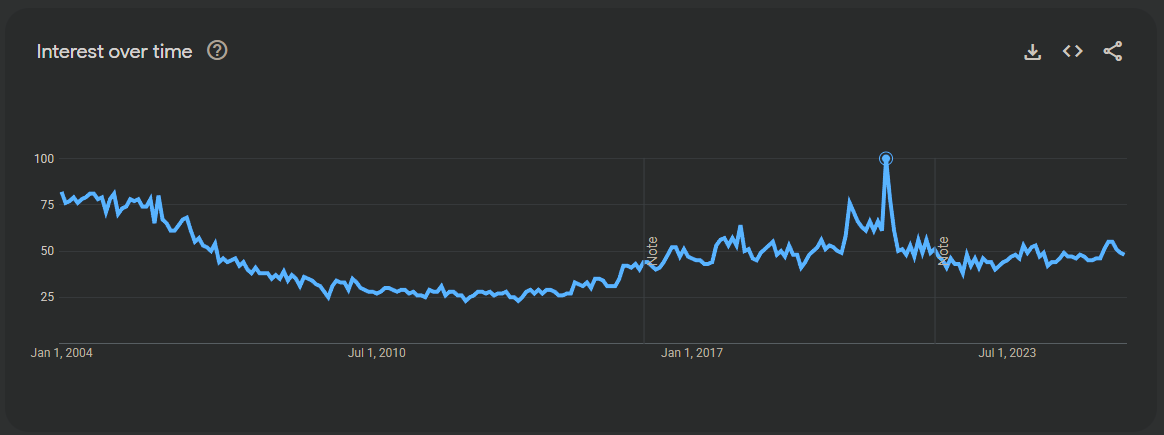
There was a widespread use of this word when AI-generated text started to take root. And if you happen to search for that word, you will be surprised how far it’s being used in AI-generated content. Many are using it without understanding the historical context. Now, most website copy you will encounter is propped up by fluff.
So, why is this word used in AI-generated text quite often?
The word is a versatile and elegant metaphor that suggests complexity, intricacy, and the weaving together of diverse elements (stories, cultures, experiences) into a cohesive whole.
The word has a long history in literature, and its usage by renowned authors gives it a certain gravitas that human feedback reward systems tend to favor during training. Yet, it falls flat since it is a literary word that most people don’t even know about. So when it’s used, we can’t help but flag it as AI-generated content, even if in some cases, it doesn’t.
AI models often default to a polished, “poetic” writing style in an attempt to be engaging and comprehensive, leading to the overuse of flowery phrases and strong imagery. You may want to use negative prompts that would prohibit AI from using it.
There is also a phenomenon known as “mode collapse,” where AI outputs become overly generic or repetitive by relying on high-probability, often ornate, word sequences that appear frequently in the training data.
This overuse has become a recognized tell or cliché that helps identify AI-generated content, with some publications even banning the word to encourage more human-like writing. Some platforms tried to ban the use of the word, along with the notorious offender - the em dash.
What can we do about it?
Perhaps, we may have to think it through when we want to explain something that requires certain complexity. But that doesn’t mean we’re not going to use the word at all. We just have to find the proper way to use it. It has to be in the right context.
Think about the amount of time and effort to make a very intricate tapestry (I’m referring to the real one). In fact, it takes over a year to make a good one, just like what they used to make a thousand years ago. Now, people are too lazy to write on their own, so they let AI spill out word after word of “tapestry” to emphasize their expertise in a particular subject or topic.
So the next time you write your school paper or update your website copy, think about the people who made these incredible pieces of work before you consider using tapestry in your written work.
Comments
Nothing yet. Say the first thing.
Sign in to join the conversation.