
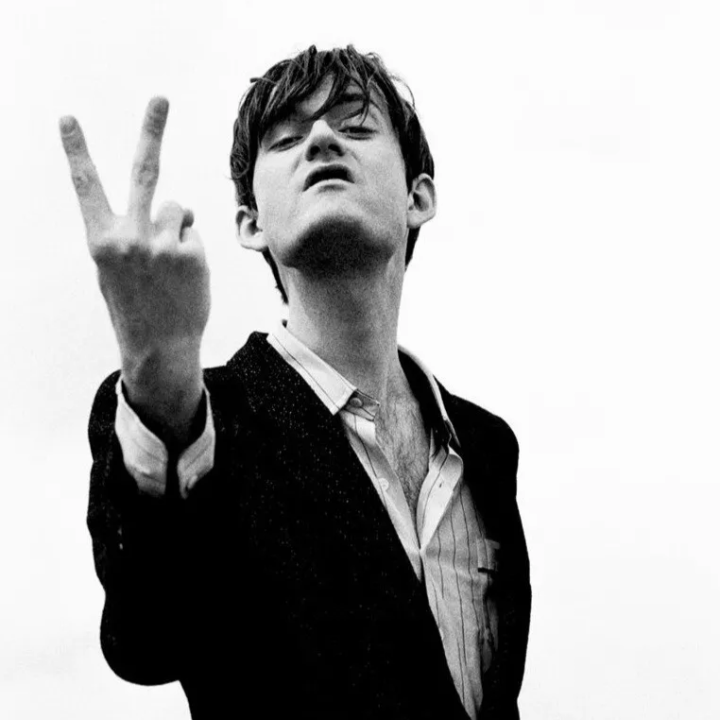
The two-finger “V” sign — and the modern day social media symbol: ✌ — is a fascinating example of how one hand gesture acquired three very different meanings: victory, peace, and an insult. The meaning depends especially on the direction of the palm and the historical context.
The modern V-for-Victory gesture emerged during World War II, rather than at the medieval Battle of Agincourt as is sometimes claimed.
In January 1941, Victor de Laveleye, a Belgian politician living in exile, encouraged Belgians to use the letter V as a symbol of resistance to Nazi occupation. The letter worked particularly well because it represented “victoire” in French and “vrijheid” (freedom) in Dutch. The BBC subsequently promoted the V throughout occupied Europe.
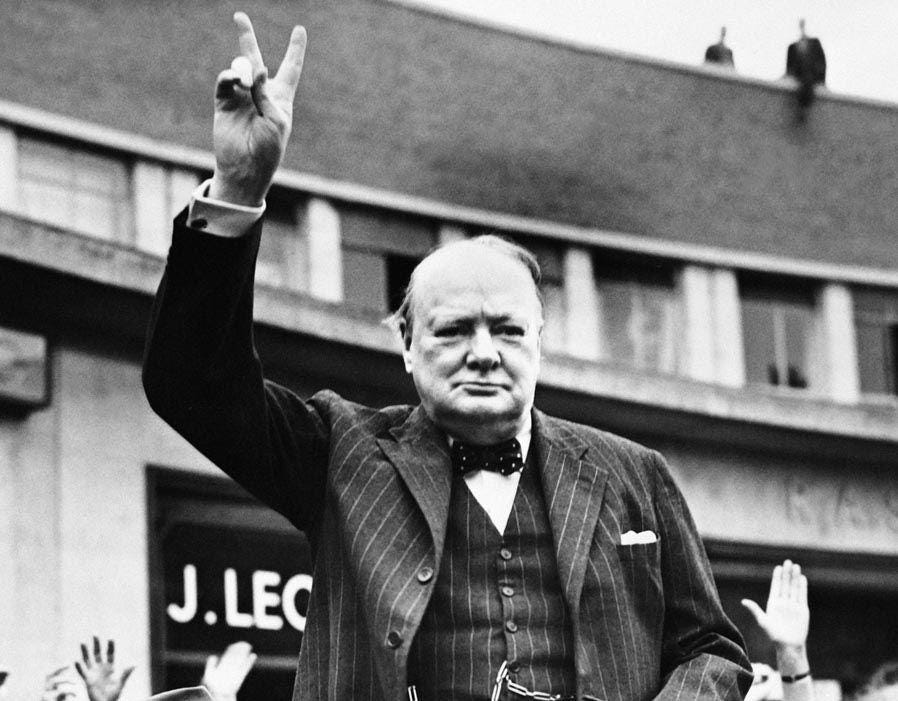
Winston Churchill became the person most closely associated with the gesture.
Churchill adopted the V enthusiastically, holding up two fingers with the palm facing outward. For him it meant:
“V for Victory.”
It became a visual expression of British determination during the darkest years of World War II—essentially, we will endure and we will win. Churchill’s frequent use of it helped transform a political resistance symbol into an internationally recognizable gesture.
The gesture subsequently entered American political culture.
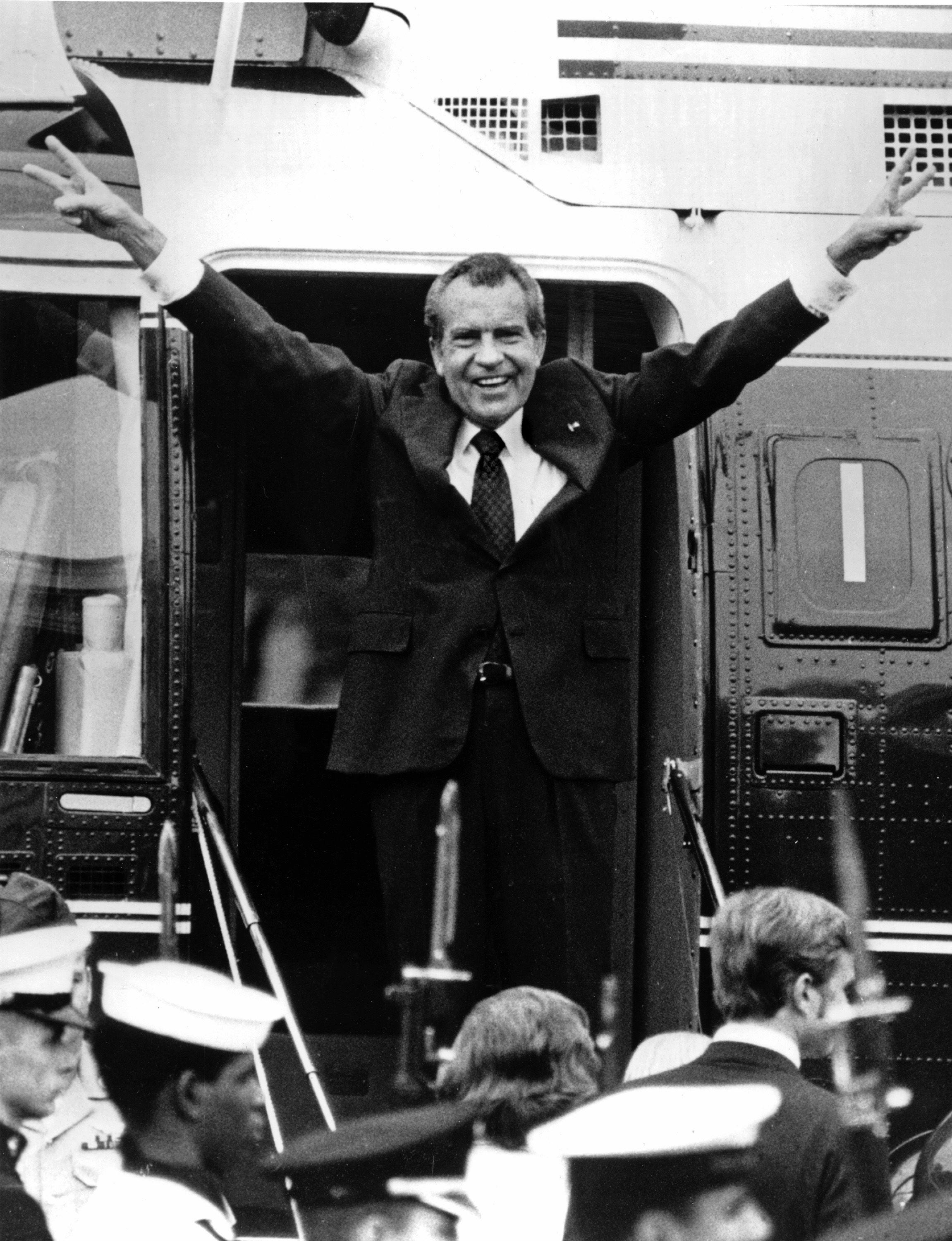
Dwight D. Eisenhower frequently used the V sign, and Richard Nixon adopted it from Eisenhower during his years as vice president. Nixon particularly associated the gesture with political victory.
Nixon continued using the V throughout his presidency. One of the most ironic examples came in August 1974, when Nixon left the White House after announcing his resignation in the wake of Watergate. As he boarded the helicopter, he raised both arms and made his characteristic double-V gesture.
The gesture that had traditionally meant “victory” therefore appeared at the end of a presidency that was ending in political defeat.
There was another layer to Nixon’s use of it. During the Vietnam era, young antiwar demonstrators had appropriated the V as a peace symbol. Nixon nevertheless continued to use it as victory, partly because he regarded the counterculture’s interpretation as a distortion of what he considered its original meaning.
By the 1960s, the V had undergone another remarkable transformation.
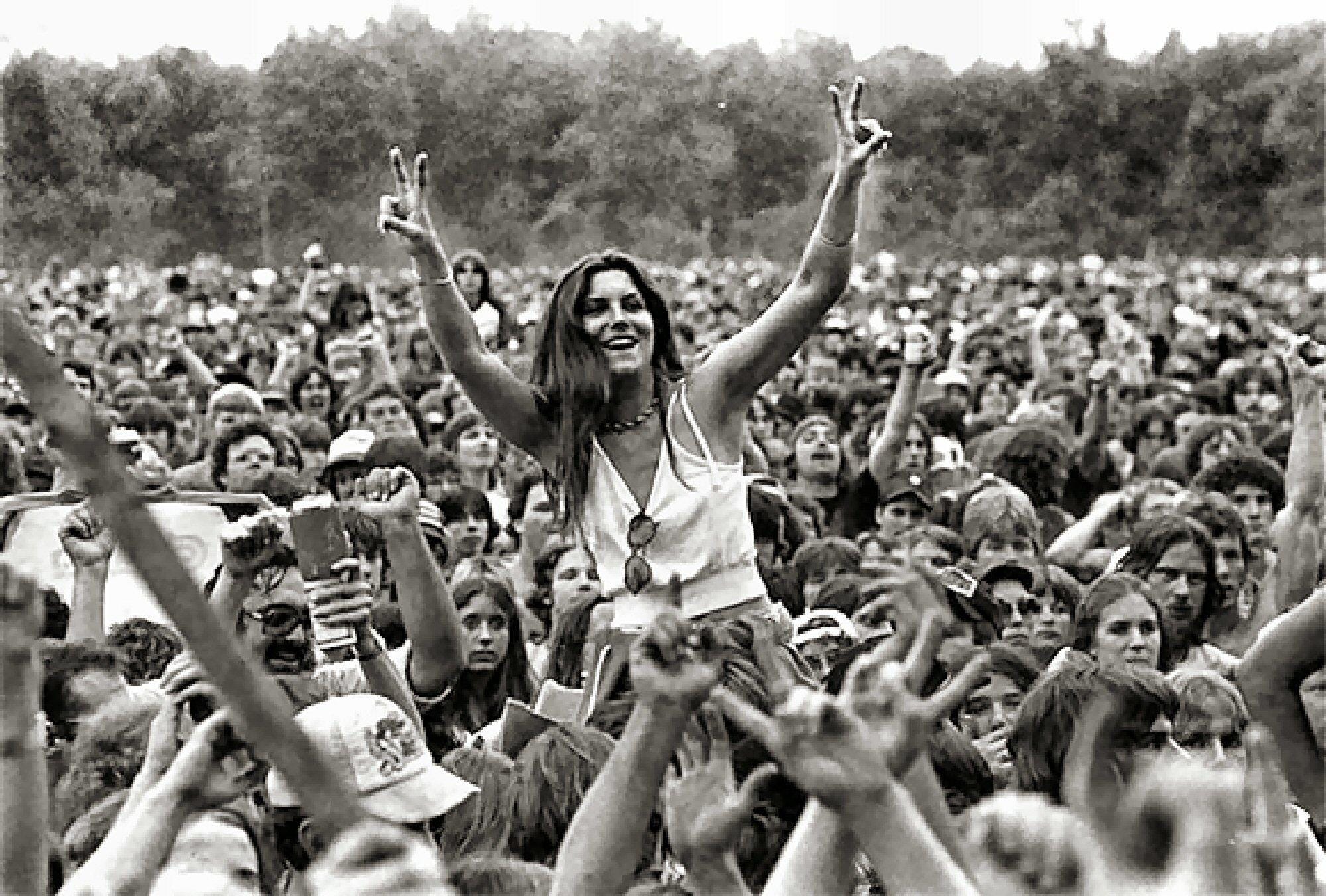
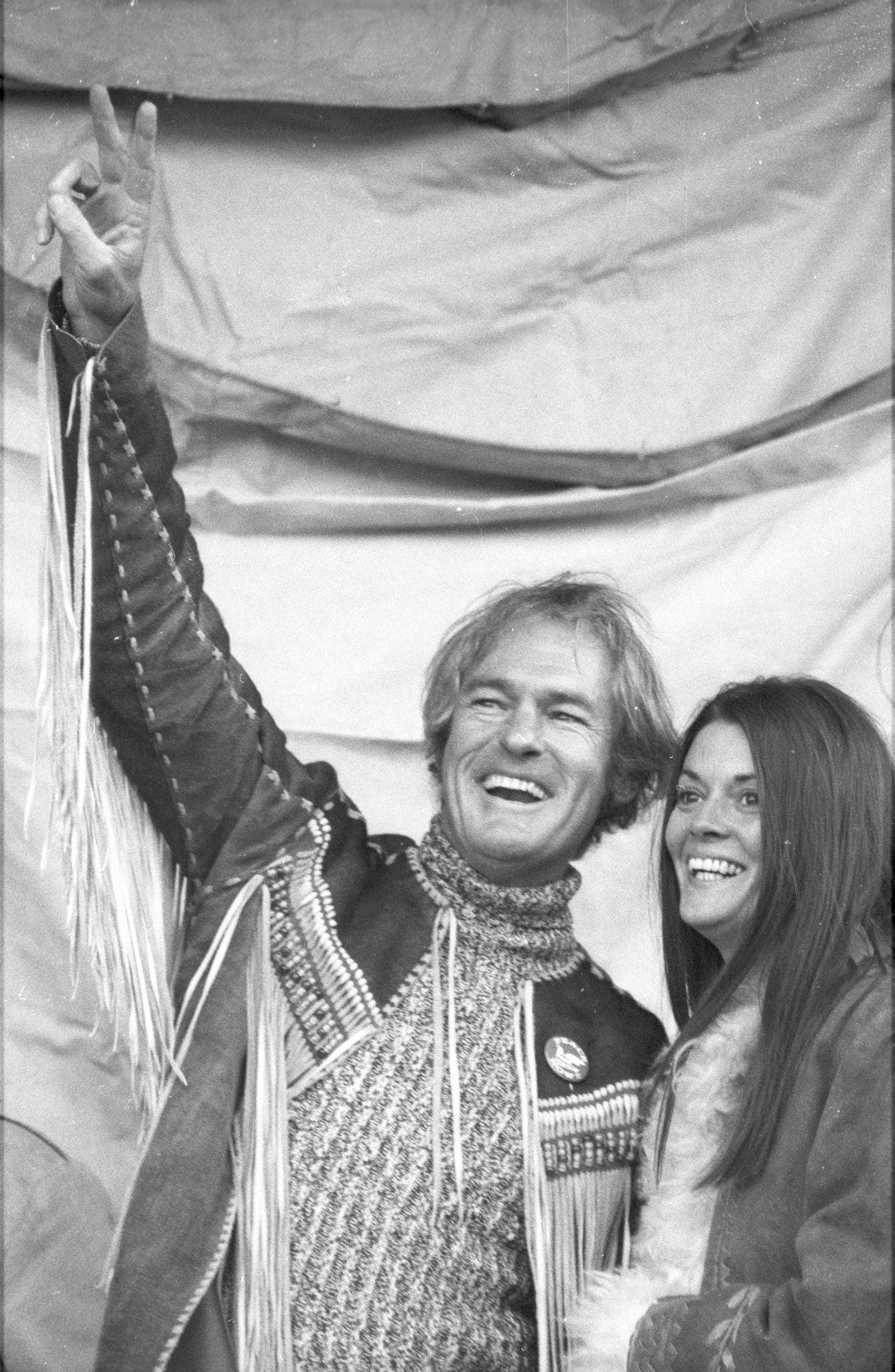
The counterculture and anti-Vietnam War movement adopted the V as a symbol of peace.
Thus, the same gesture that Churchill had used to say:
“Victory!” … could now mean … “Peace!”
The symbolism was particularly powerful because the antiwar movement was essentially turning the wartime victory gesture into an expression of opposition to war.
The peace meaning became so widespread that today many Americans automatically interpret ✌ as “peace”, particularly when it is held beside someone’s face in a photograph.
Here is where things become particularly interesting.
The same two fingers can mean something completely different in Britain and several other Commonwealth countries.
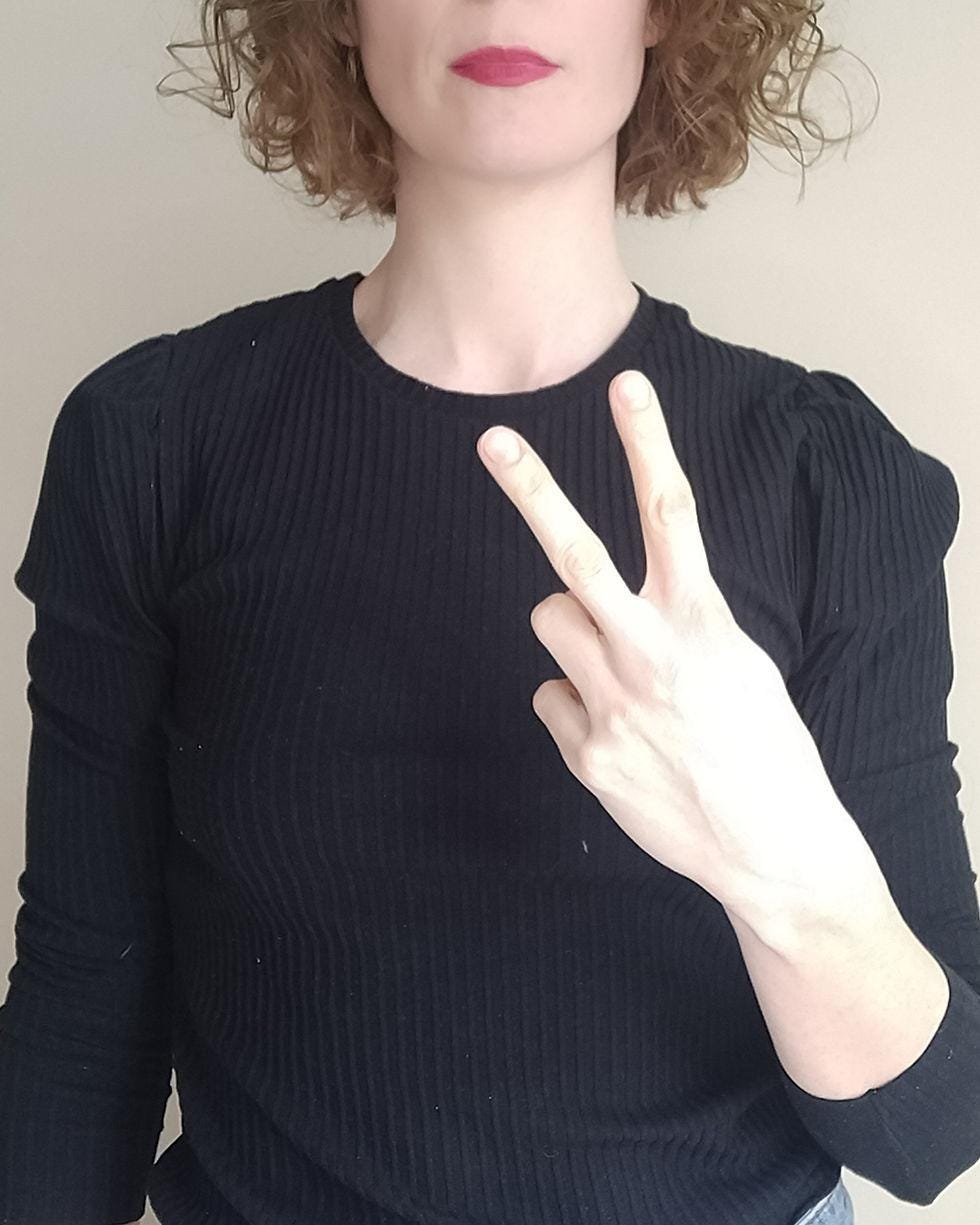
✌ = Victory / Peace
V = an insult — roughly “up yours” or “F-you.”
The distinction is important. Cambridge Dictionary specifically recognizes both meanings: the outward-facing V as victory/peace and the reversed gesture as an expression of extreme dislike or anger. Usually accompanied by raspberries.
The insulting version is particularly associated with Britain, Ireland, Australia, New Zealand and South Africa. In America we are a bit lazy and raise only one finger (the middle finger).
This is one of the great historical stories that sounds true but probably isn’t.
The popular story says that during the Battle of Agincourt in 1415, the French supposedly threatened to cut off the index and middle fingers of captured English longbowmen. Since those fingers were important in drawing the bow, English archers supposedly raised those two fingers afterward to taunt the defeated French: “You didn’t get my fingers!”
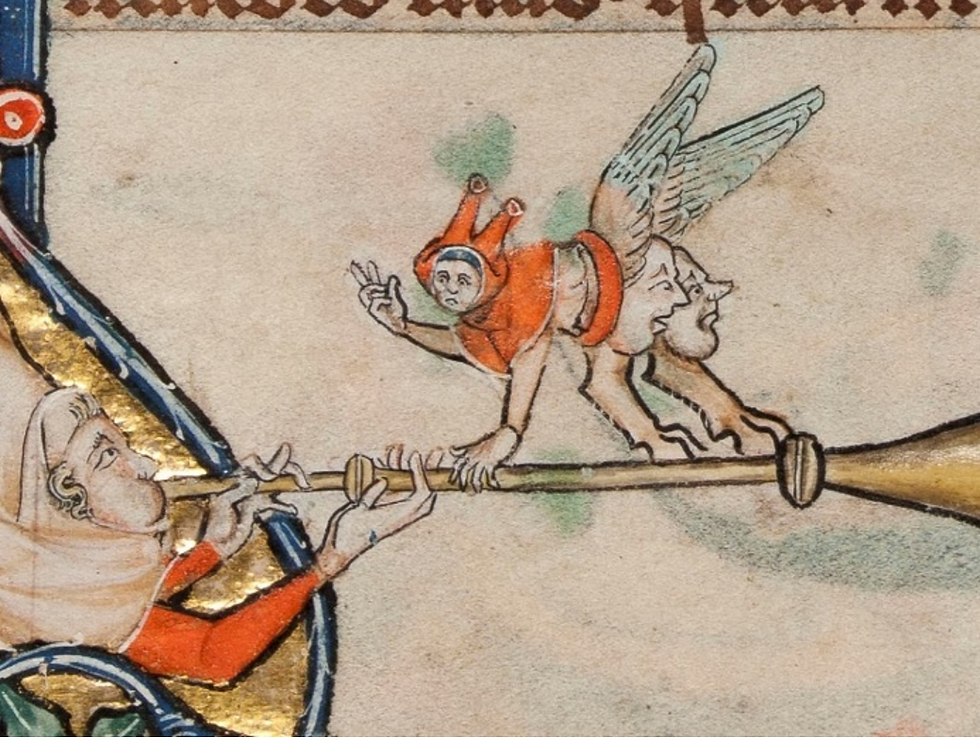
It’s a wonderful story—but historians have found no contemporary evidence that the V gesture originated at Agincourt. Medieval sources do mention a threat to mutilate captured English archers, but the reported threat involved three fingers, not two, and there is no contemporary account describing the famous V gesture being used afterward.
So, the Agincourt explanation should be treated as folklore rather than established history.
The insulting gesture itself is documented much later, with evidence of its use in Britain by the early twentieth century, while its precise origin remains uncertain.
The V has been used by an extraordinary range of historical and cultural figures:
Winston Churchill — Victory and resistance during WWII.
Dwight Eisenhower — Victory, particularly in political and military contexts.
Richard Nixon — Political victory, famously using the double-V; he continued using it even as he left office.
1960s hippies and antiwar activists — Peace and opposition to the Vietnam War.
Martin Luther King Jr. and civil-rights demonstrators — the V was sometimes used in the broader context of victory, solidarity and hope, although it was not uniquely a civil-rights symbol.
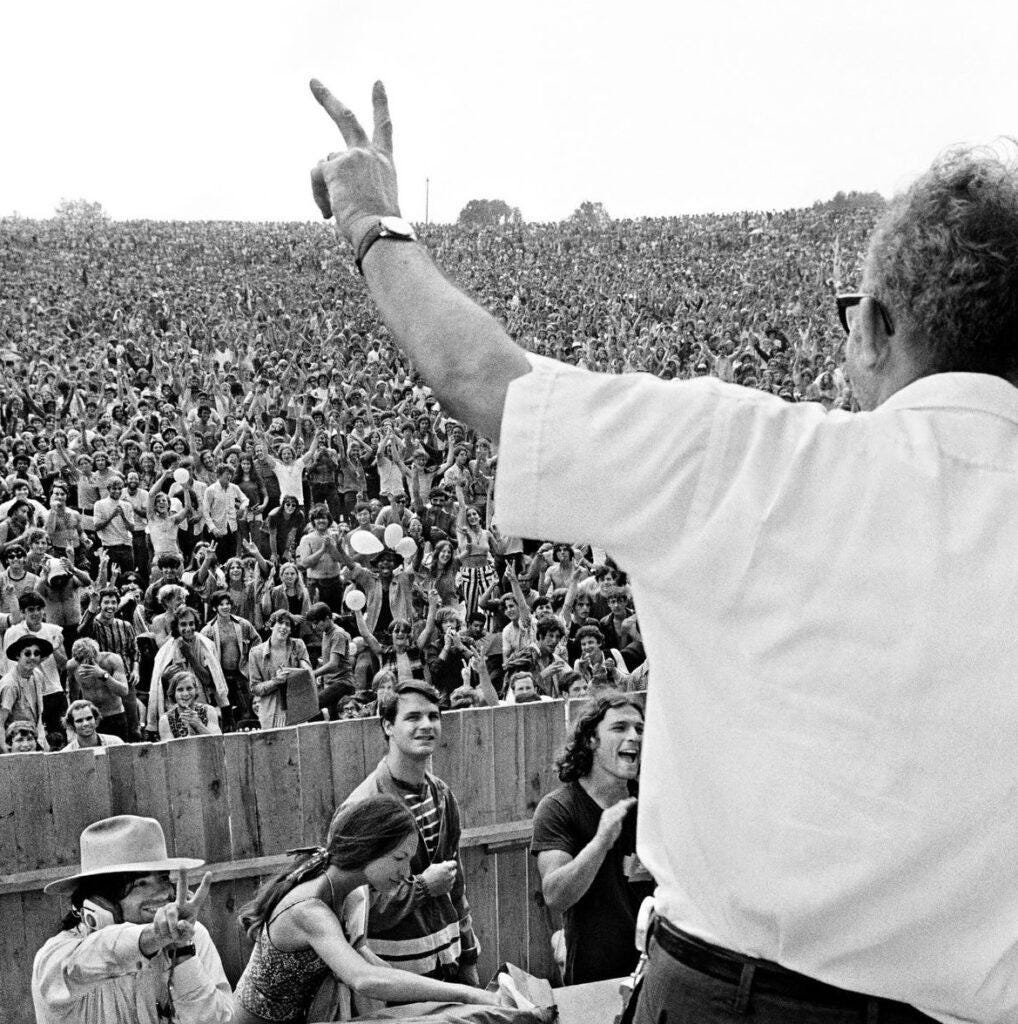
John Lennon and other counterculture figures — helped make the V synonymous with peace during the 1960s and 1970s. It was ‘‘cool’’ or ‘‘hip’’ back then.
Athletes and politicians worldwide — increasingly use it to mean victory, success, or triumph.
Me at Church, at the sign of the peace (post-COVID) so as not to transmit ‘‘germs’’ by shaking hands, I give the palm-forward “V” sign to those around me in the pews.
It eventually became almost universal in photographs: “We won,” “We’re happy,” “Peace,” or simply “Victory!”
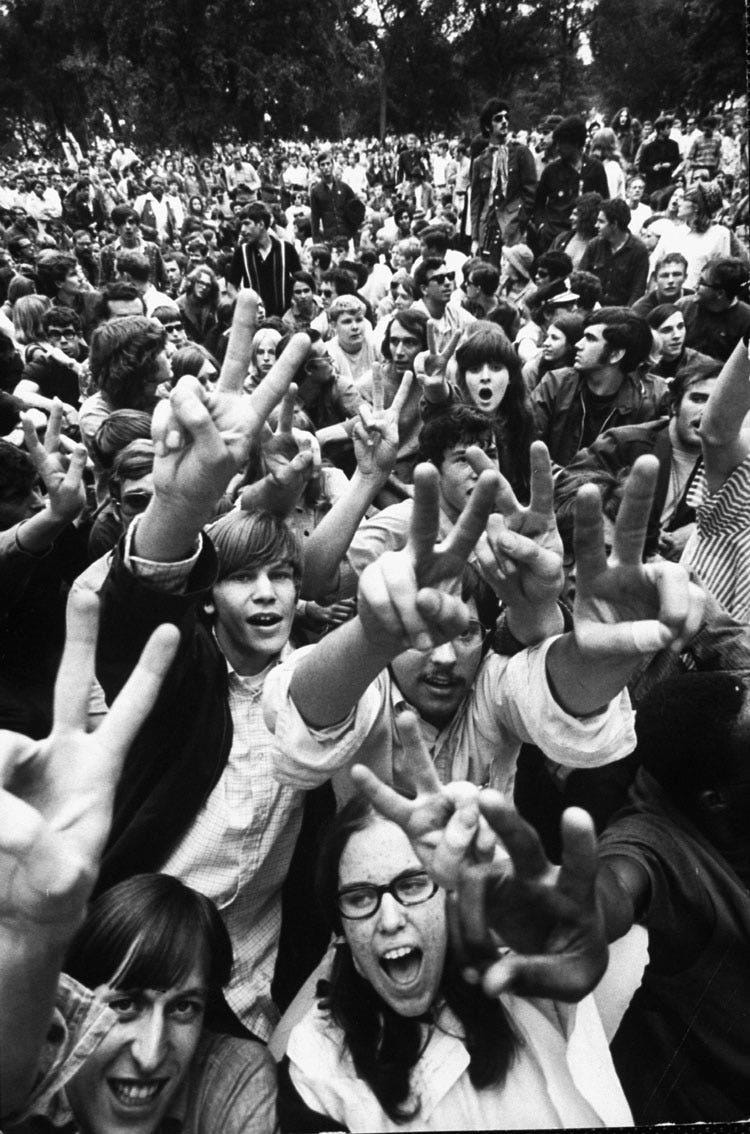
The history of the V sign is really a history of the twentieth century:
The fascinating part is that the fingers themselves never changed. What changed was the historical story attached to them.
Churchill used the V to tell a nation fighting for survival, “Victory.” A generation later, young Americans protesting the Vietnam War turned that same symbol into “Peace.” And in Britain, rotating the hand around could turn it into something much less peaceful: “Up yours.”
So, when someone flashes ✌, the direction of the palm, the country, the generation and the historical context can completely change what those two fingers are saying. Don’t be so quick to judge or smile or be insulted until you know the history and the culture and how it is offered to you.
Comments
Nothing yet. Say the first thing.
Sign in to join the conversation.