
It’s Saturday night and my boyfriend and I are making sushi together. He shows me how to dissolve sugar for the sticky rice in a small pan on the stove. He’s washed the skillet twice now to ensure there isn’t any residue. There are only a few ingredients, he says, so everything has to be right.
A. is gentle and specific and full of facts that do not irritate me.
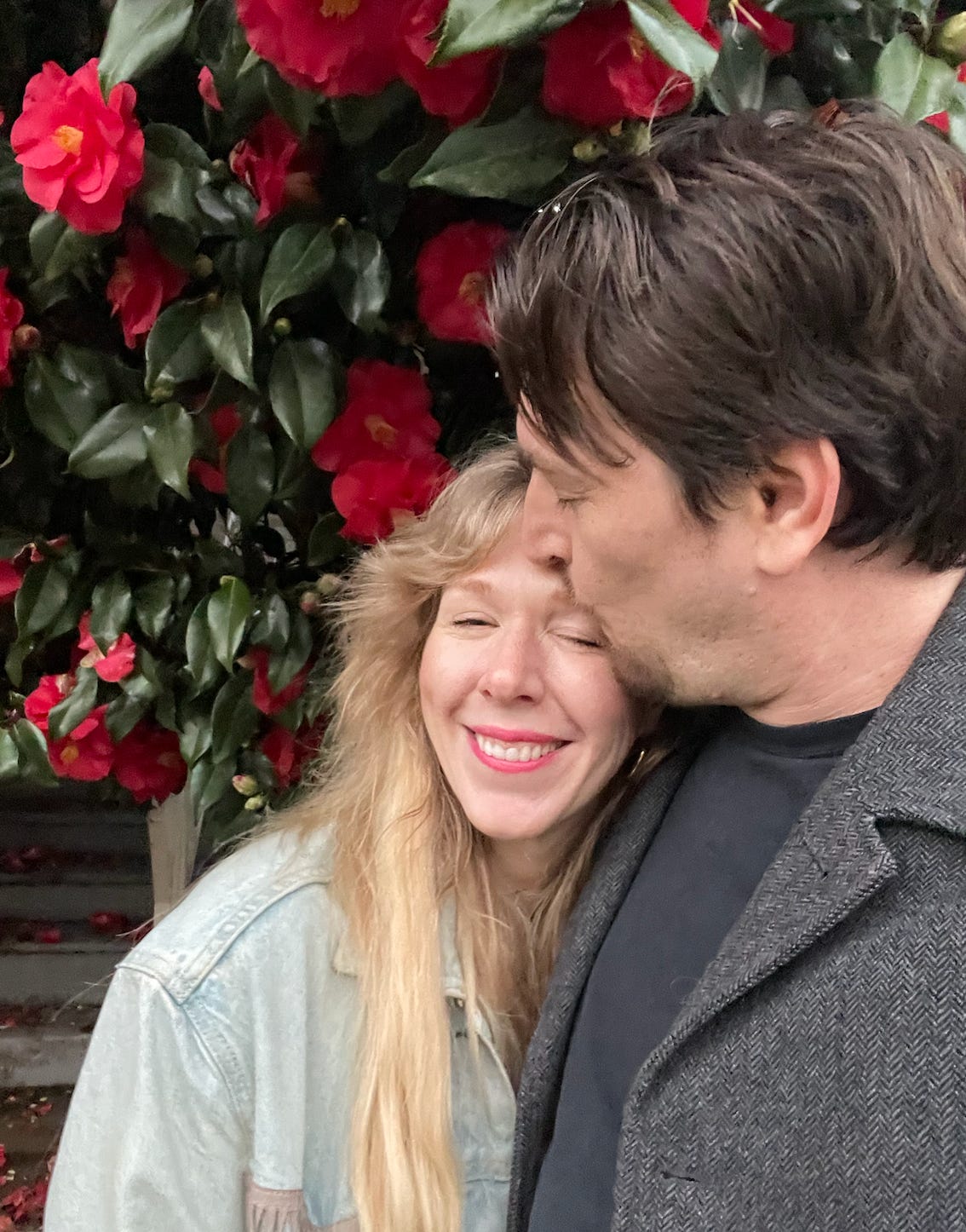
We’ve silenced our phones so we can’t keep watching the news, though we both feel the sadness—lingering like a pin bone in our throats. We pour leggy glasses of wine and pick out songs. Beach House drifts through the kitchen, and we slow dance around the stove as if cast in some terrible Hallmark movie. Except this one is a low-budget dramedy set in the apocalypse. The man and the woman are both scared, but learning to trust. The man puts his palm across the woman’s heart when her anxiety spikes. The woman gets chronic UTIs. Sometimes, they make sushi and dance and try not to despair.
Love feels like such a gamble these days. Culturally, we are in what experts call a relationship recession—a trend that shows how 50% of U.S. men and 41% of women aged 25-35 are not living with a partner. Dating apps, avoidance culture, Covid, rising economic costs, a gap in political ideologies, shifting gender dynamics, and social media are all listed as contributing factors. Most of the women I know (myself included) report feeling emotionally terrorized by the dating pool.
Collectively, it seems, we are giving up on love.
And beyond romantic love, it feels as if we are simultaneously losing the art of friendship. Research shows that our friend groups are getting smaller. On average, we lose about one friend each year. We rupture and do not repair. We avoid and call it self-care. We isolate and call it rest. We splinter and sequester, choose screens over skin. We are increasingly fragile creatures.
Meanwhile, the earth warms. We’re at war again. And the robots are everywhere.
And yet, love, as it always has, demands resilience. Love is inconvenient and inefficient and unhygienic and noisy and exhausting. Love is monstrous and obnoxious and too expensive. It requires gripping the silver goblet of our terror and swallowing it down.
Every time I see a couple on a date, I want to bless them—as if they are spiritual travelers now, laden with a fading light kept alive only in the shelter of their two bodies.
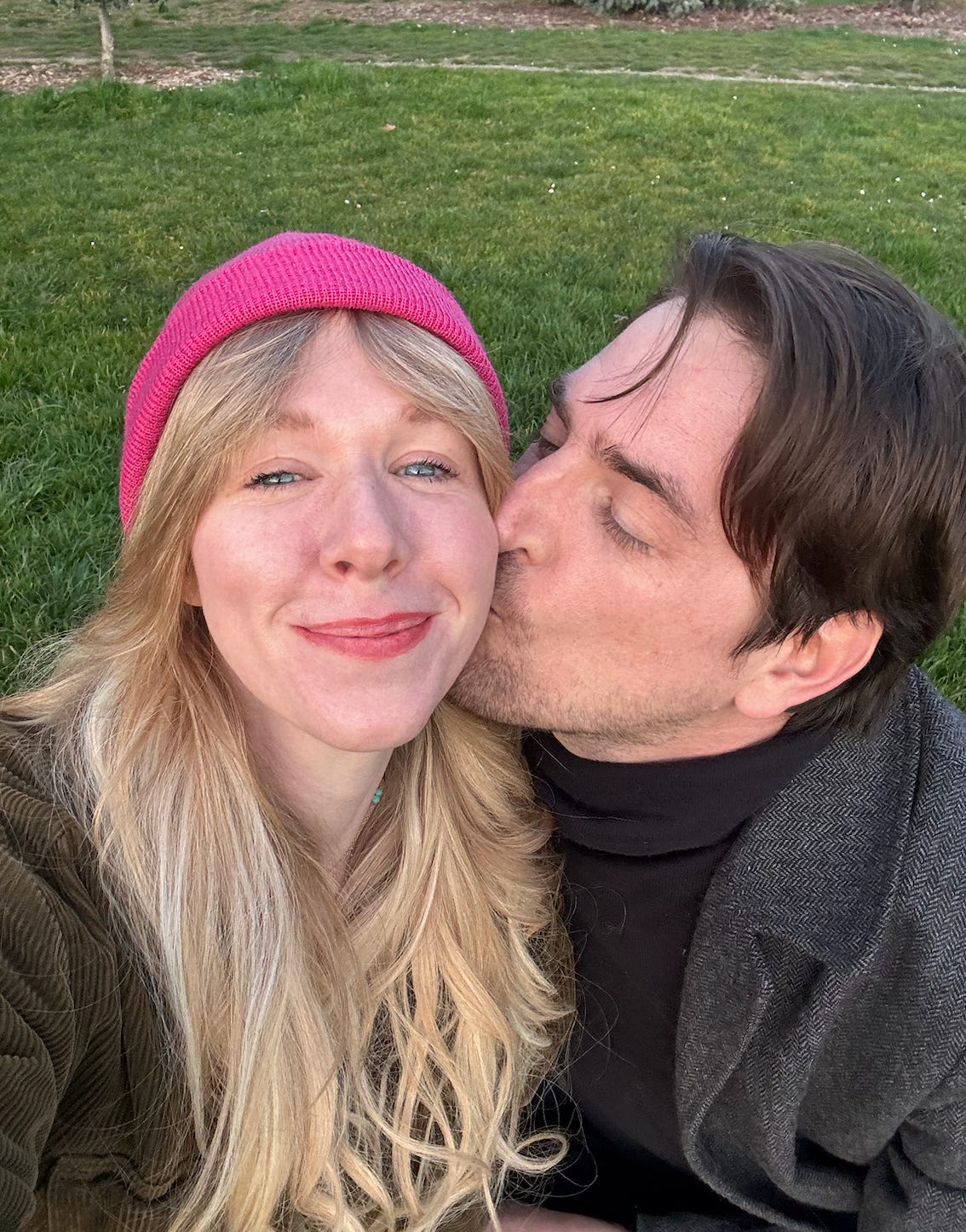
Yesterday, A. texted: “I want to build a nightstand for you so that in a small way, every day, you can interact with a positive impact I’ve had on your life.”
My therapist says the only reason to be with a partner is to evolve, to improve each other’s lives, to see the flaws in yourself and face them straight on. To square off with our fear, our inadequacies, to fail and try again. To partner, hand-in-hand, toward some better kind of world.
And (forgive my earnestness) but I still want that world. I want to be inconvenienced and wrong and exhausted. I want to get caught in all my lies and mortified by my cynicism. Give me cataracts from staring too long at love. Let me learn someone’s face like a new alphabet. Let me say sorry. Split me open, divide me like a daylily.
Maybe, these days, the most revolutionary, anti-fascist thing we can do is to still try to fall for one another.
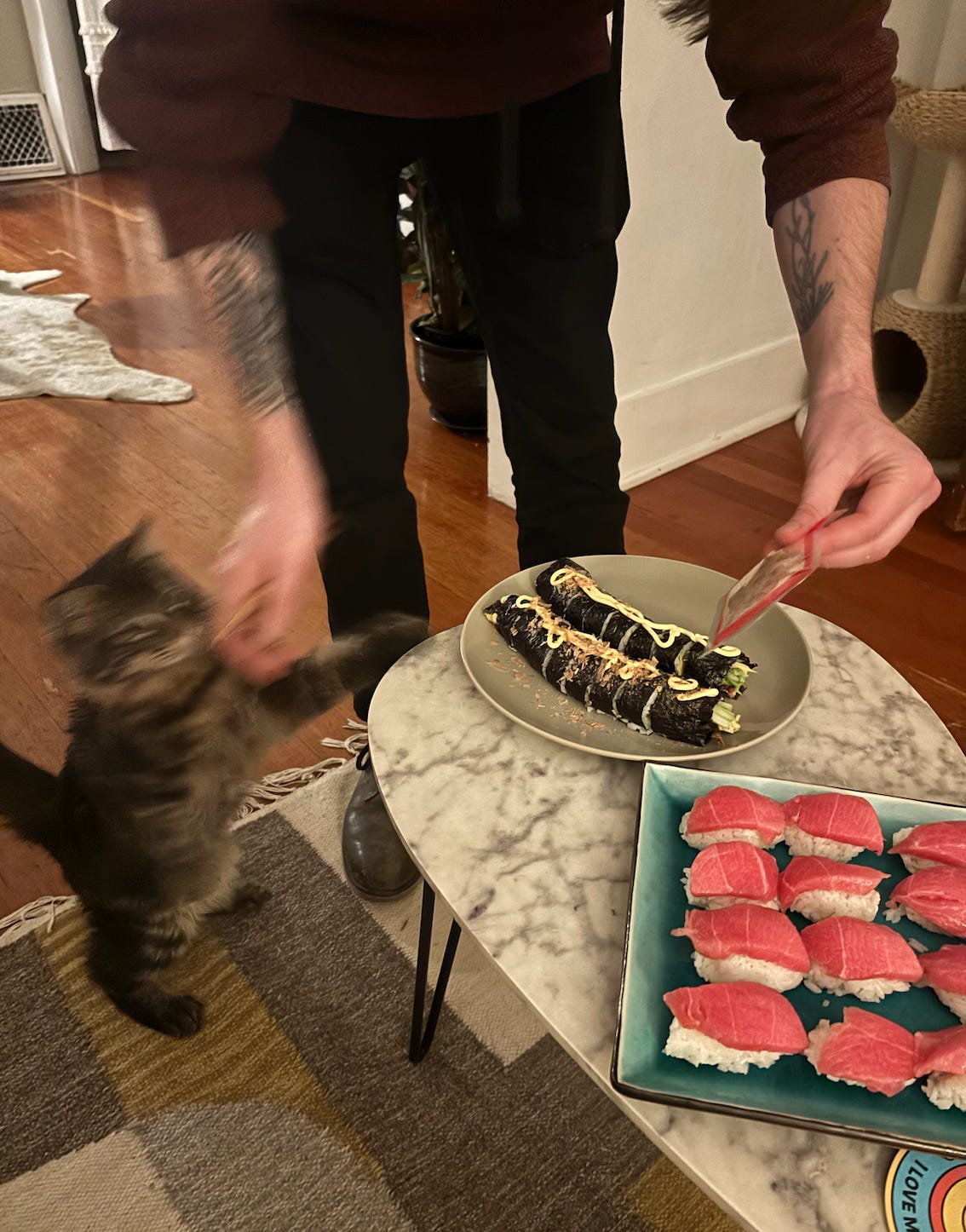
When the rice is done, A. scoops it onto a sheet of seaweed. He cuts thin strips of green onion, cucumber, avocado, and sets aside a little salmon for the cats. He rolls the sushi neatly and cuts it cleanly into even pieces. I don’t have a dining room, so we pull out the coffee table and pour soy sauce into the blue and white shoyuzara A. bought us. Before we eat, we take turns reading each other a poem to bless the food—as if covering one another for a moment in a very quiet prayer.
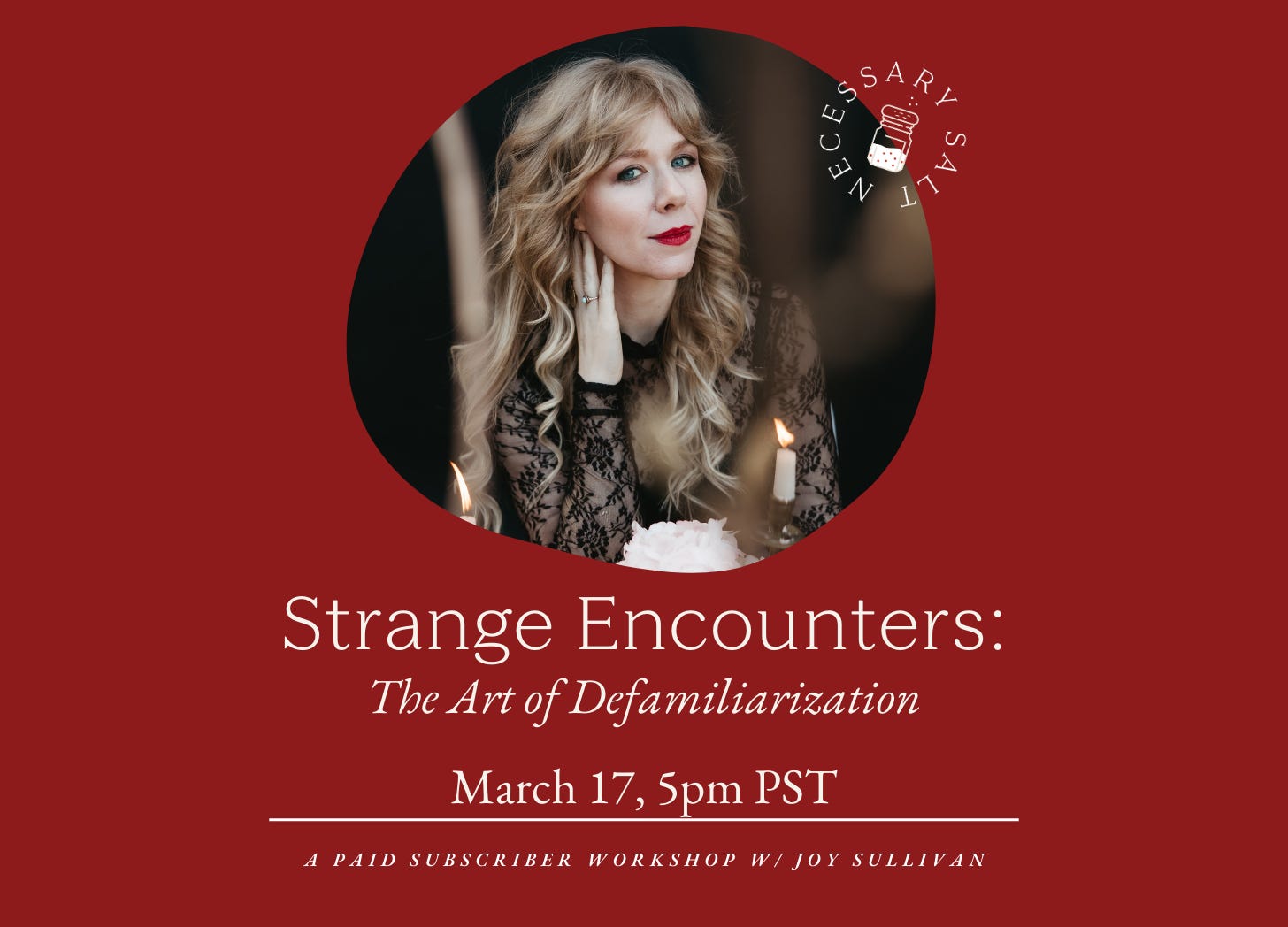
WRITING WORKSHOP NEXT WEEK!
My writing workshop for paid subscribers is next Tuesday! Learn the strange art of making your readers feel by transforming the ordinary into the unfamiliar. This is one of my favorite classes to teach!
Comments
Nothing yet. Say the first thing.
Sign in to join the conversation.