
Jesus said she would be remembered for all time, in all places — “wherever the gospel is proclaimed.”
But has she? How many Christians today know her name?
Mary of Bethany, the sister of Lazarus and Martha, is the woman who anointed Jesus with costly perfume shortly before his death. This extravagant act of love was “a beautiful thing,” Jesus said.
But today, at least in evangelical churches, Mary is better known for her supposed conflict with her sister Martha than for her beautiful offering.
For centuries, she’s also been confused with Mary Magdalene — thanks to Pope Gregory the Great, who in the year 591 preached a sermon conflating these two Marys with the sinful woman who anoints Jesus in Luke 7.1
Instead of remembering her, the church has tended to obscure her identity. But the more time I’ve spent with Mary of Bethany, the more I believe her story needs to be retold, reexamined, and remembered by the church today.
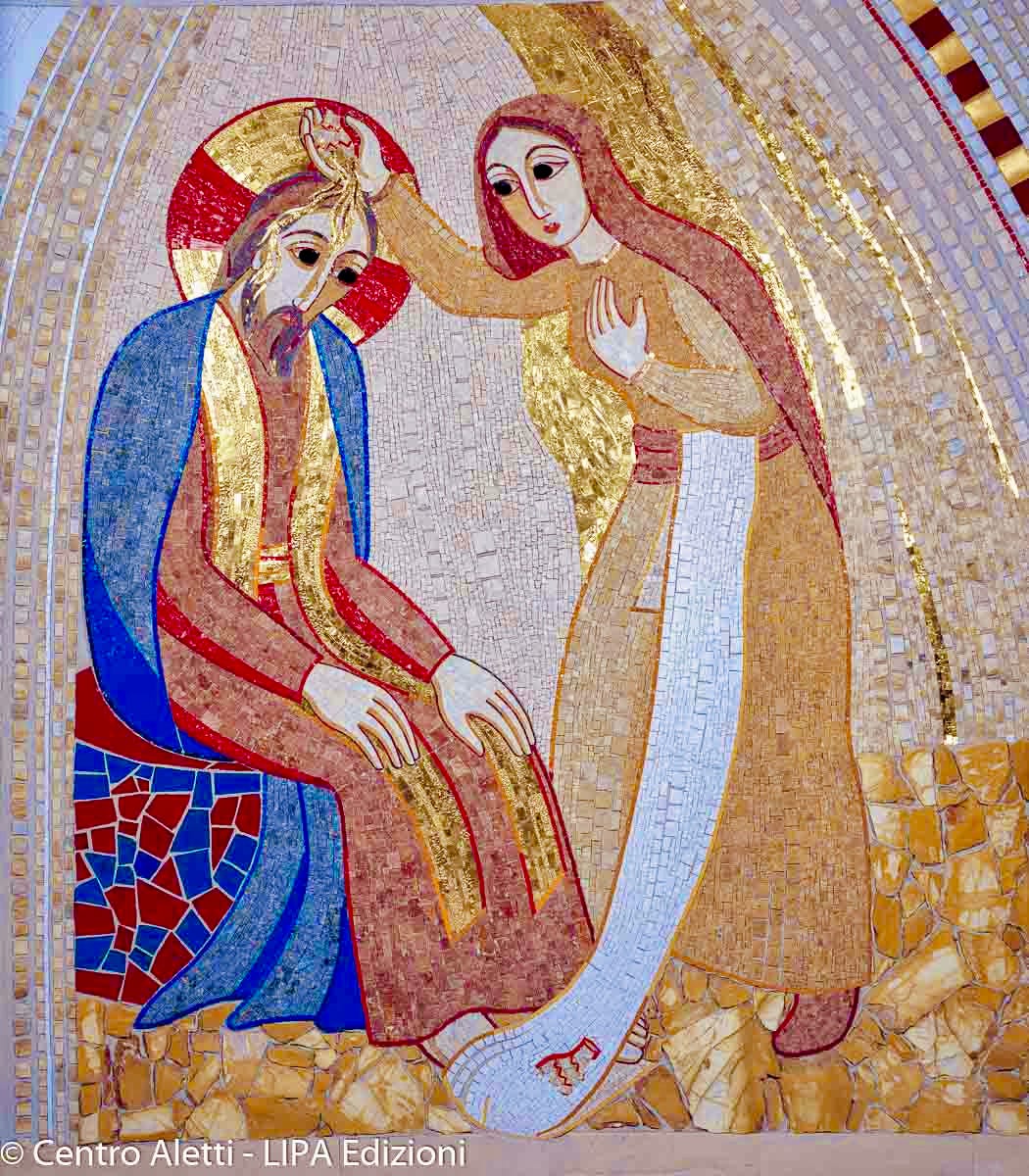
“Remembering Her” is what I hope to do here. But there are several layers of meaning to the phrase.
The story of Mary of Bethany is about much more than one woman and her love for Jesus.
Mary’s story helps us see Jesus. Her story challenges us to examine how we do “ministry” and relate to the church. And Mary shows us Jesus’s heart for women, which can help us reflect on how women are valued in our churches — or not.
Mary needs to be remembered, but so does the church. I believe the American church has been dis-membered. The church is supposed to be a “body,” but instead of members unified in service to Christ and one another, most of us are experiencing a disjointed and often dysfunctional organization.
The bride of Christ has been “dismembered” in many ways:
Instead of a body, we have a corporation — we’ve replaced a living organism with a manmade structure. We need to remember our purpose is healthy relationships with Jesus and one another, not numerical growth and “success.”
Instead of diverse parts building each other up in love, we are often cut off from those who are different, whether that means separation by race, class, marital status, political views, or — perhaps most fundamentally — our sex. The many and very different parts of the body of Christ need to be re-membered, to be unified in beautiful harmony.
Instead of a body where every part functions to serve the whole, we have built up the professional clergy and church staff through “leadership” culture, creating hierarchies and abuses of power. Meanwhile, the laity remain passive consumers, their spiritual gifts neglected. We have discarded and dismissed many while elevating and honoring an elite few. It’s time to re-member and honor every person in the church.
You may be wondering: what does all of this have to do with Mary of Bethany, a woman who shows up a handful of times in the gospels?
Well, that’s why I started writing here on Substack.
Mary has so much to teach us, starting with her first recorded interaction with Jesus — the Martha & Mary story of Luke 10.
From her place at Jesus’s feet, Mary shows us that our Lord welcomed women as disciples. Jesus refused to send Mary back to the kitchen. In this, he rejected the expectations of patriarchal cultures — then and now — that only value women for their service to men.
Thanks to Mary, we know that Jesus wept. Their interaction at Lazarus’s grave reveals his love, his humanity. (He treated a woman as a friend!) It was Mary’s grief that drew out Jesus’s tears, providing many believers with the comfort of Christ’s presence in our deepest pain.
And on the evening she anointed Jesus, Mary became a teacher to his disciples — not just the men reclining around the table, but all of us seeking him today. Her anointing identified him as Messiah, and pointed to the truth the men were unable to see: the Christ had come to die.
In pouring the perfume on Jesus’s head and feet, Mary ministered to Jesus. Although her humble service to his physical body was dismissed by the 12 men in the room, this woman minister invited them to see Jesus and his gospel more clearly, and she invites us to do the same today — which will include reexamining our definitions of “ministry.”
Rather than a job connected to a paycheck, Mary’s ministry was an extravagant gift without any expectation of return. Is “ministry” supposed to be a career, or is it a way of relating to Jesus that we’re all invited to?
In anointing Jesus ahead of his death, Mary was anticipating the needs of his body and “doing what she could.” Her ministry provided for Jesus what he could not do for himself. All the benefit went to him; she paid all the cost. Who is truly served by our acts of ministry?
Mary is presented as a contrast to Judas and the other disciples, who complain about her. She gives a lavish offering while they calculate how many good works they could do with it. In our goal-oriented, growth-minded church cultures, are we motivated by love for Jesus, or the lure of “success”?
The male disciples assume they should have control over Mary’s fortune. Her gift is a “waste,” they say, implying they’d do a better job handling it. But Jesus defends her, saying, “Leave her alone.” Do our leaders assume they know everything the church needs? If they tightly control volunteer roles, are they hindering other members from showing love to Jesus in their own unique ways? Could they be quenching the gifts of the Spirit?
As the men judge Mary, they talk about her — to each other and to Jesus — but never to her. They act as if Mary’s voice doesn’t matter; as if her gift is inferior to their own. Do church leadership structures privilege certain voices over others? Does our local body of Christ treat every member as necessary and valuable, or do we mimic patterns of cultural power and status, encouraging “the eye to say to the hand, ‘I don’t need you.’” (I Cor. 12:20) ?
I’ve spent years meditating on Mary and her story, and I haven’t reached the end of what she has to offer.
I can see myself in Mary of Bethany. As a woman who wanted to follow Jesus, she faced cultural resistance. She wanted to sit with him as a disciple, but was chastised for failing to follow the cultural script of “womanhood.” She wanted to serve Jesus, to give him a gift worthy of his glory, but she was condemned by men who wanted to speak for him.
Can we see ourselves in Mary’s story? Have we been discouraged from following or serving Jesus, criticized by his other disciples?
Or are we among the group of insiders, looking down on those whose service to Christ seems inferior to our own? Have we ever condemned another disciple’s offering to the Lord?
I suspect most of us don’t fit neatly into one group or the other. We can be encouraged by how Jesus responds with love for both Mary and his male disciples — even Judas — inviting them to draw near and receive the gift of His presence.
As the fragrance of Mary’s offering filled the room that evening, she testified to the beauty of Christ, who “loved us and gave himself for us, a sacrificial and fragrant offering to God.” (Eph. 5:2)
And just as Jesus said, Mary’s gift continues to minister to his body today… if we are ready to receive it. In remembering her, we can help to restore our dismembered churches.
I’ve been reading a beautiful new book over the last couple weeks: Elizabeth Berget’s “Love Like A Mother: How the sacred work of motherhood reveals the maternal heart of God.” Though its official publication date is May 5, I was able to get an early copy (and meet Elizabeth) at the Calvin Festival of Faith and Writing. “Love Like A Mother” would make a perfect gift for a mother (or just for yourself!)
I’d love to gift a copy to a reader this week. If you want to enter the giveaway, just leave a comment here! I’ll pick a winner at 9 p.m. EST on Wednesday, May 6, so the book can make it to you before Mother’s Day.

Jennifer Powell McNutt’s excellent book about Mary Magdalene, “The Mary We Forgot,” traces some of this history. Even the gospel writers make it a little tricky to figure out who’s who. Both Matthew and Mark portray the scene of Mary anointing Jesus’s feet with costly perfume shortly before his betrayal, but neither of them share her name, only explaining that the scene happens in Bethany. Luke does not include this part of her story at all, but describes a different woman anointing Jesus’ feet earlier in his ministry. Only because John names her in his gospel do we know that the woman anointing Jesus at Bethany is Mary, the sister of Lazarus and Martha.
No posts
Comments
Nothing yet. Say the first thing.
Sign in to join the conversation.