
The 2026 Red Sox season has been plagued by a series of bizarre, phantom-style injuries while baseball trends toward what has become a less hard-nosed game with potentially diminishing interest.
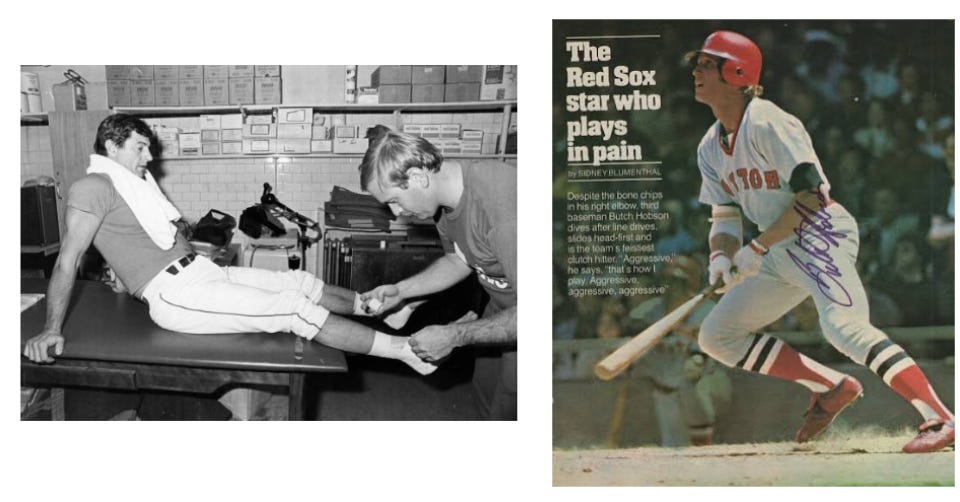
On July 28, 1978, Red Sox catcher Carlton Fisk broke several ribs leaping into the first few rows behind home plate at Fenway Park attempting to catch a foul ball. He still played in 157 games that season batting .284 with 20 homers while knocking in 88 runs. Fisk’s broken ribs caused him to alter his throwing style leading to elbow pain and a subsequent arm injury. Carl Yastrzemski, who would also play with broken ribs after crashing into Fenway’s left field scoreboard a few summers later, played the entire 1978 season with severely strained achilles tendons on both heels and also suffered from a torn wrist ligament, both injuries that required extensive taping by team trainer, Charlie Moss, prior to every game. Yaz also suffered from back spasms with pain so uncomfortable he sometimes reportedly wore a corset while playing. Third baseman Butch Hobson had bone chips floating in his elbow and was barely able to throw accurately to first base, while Hobson still played in 147 games. “I’d see him working those chips around between pitches,” Sox manager Don Zimmer later told ESPN. “There were times he’d get a double-play ball, but when he went to throw it, he couldn’t do it. The elbow had locked up on him.” With 43 errors in 1978, Butch Hobson would often throw so erratically the ball would sail into the crowd well past first base, but Zimmer honored Hobson’s desire to remain in the lineup. “I believed in Butch Hobson,” Zimmer said. “I knew what kind of player he’d been for me, going out there every day with that bad elbow and gutting it out.” Ready-for-battle shortstop Rick Burleson tore a ligament in his left ankle sliding into second base during an early July game against Cleveland. Barely able to walk, Burleson reluctantly missed 18 games before coming back prematurely and then going on a 17 game tear at the plate. Second baseman Jerry Remy chipped a bone in his wrist courtesy of a hard Rick Miller slide but still hung in there to play 151 games.
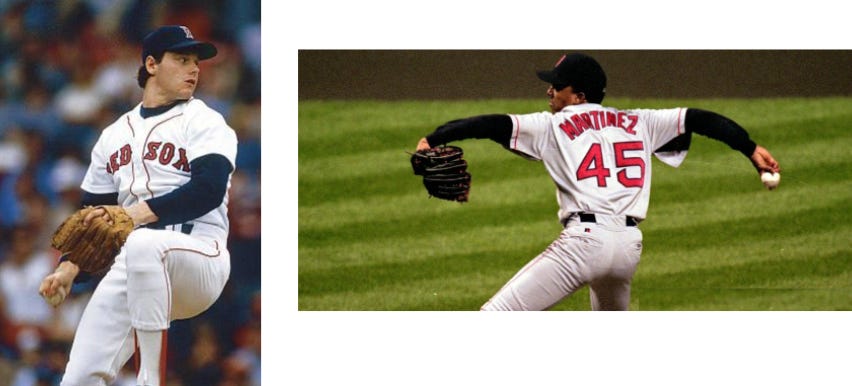
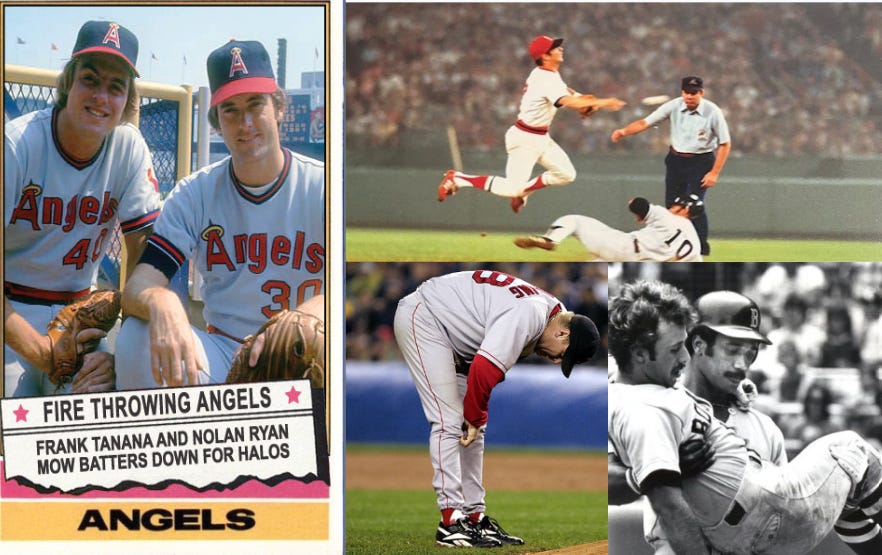
During the late 1970s while pitching for the California Angels, hard-throwing lefthander Frank Tanana once tossed 14 straight complete games. Both Tanana’s velocity, not to mention his competitive tenacity, would eventually destroy his arm, but Tanana continued pitching in the big leagues successfully for another decade redefining himself as a crafty southpaw, a far cry from the fireballing counterpart to Nolan Ryan he had been with the Angels. In 1993, Red Sox starter Roger Clemens nursed both a strained groin and an elbow injury. Having what was considered to be a subpar statistical season, Clemens drew criticism from the media and fans but refused to reveal that he was suffering from injuries. Later that summer when his medical situation became public, Clemens explained to reporters that it was his job to take the ball, that he gets paid a lot of money to pitch, and that letting the opponent know about an injury gives them an advantage which is why it had been kept under the radar. Clemens added that at 60% he was still better than most pitchers and believed that it was his job to be on the mound. Clemens managed to throw 191 innings that summer overcoming pain while making most of his starts. In the 1999 American League Playoffs, Pedro Martinez famously came in from the bullpen in Cleveland suffering from back pain and a suspected rotator cuff injury. Martinez pitched six innings of no-hit relief against the Indians in a heroic outing that comparatively resembled a Wiffle ball game as opposed to a typical Pedro Martinez appearance. And nothing symbolizes Red Sox resilience more than Curt Schilling’s “bloody sock” start in Game 6 of the American League Championship Series in 2004 against New York. To Schilling, taking the mound was not an option. Sox team physician, Dr. Bill Morgan, sutured a tendon in Schilling’s ankle just before the game meaning Schilling could, at least, attempt to pitch. Instead, Schilling shut out the Yankees over six innings while picking up the crucial win, his famous sock saturated with blood from the first inning on.
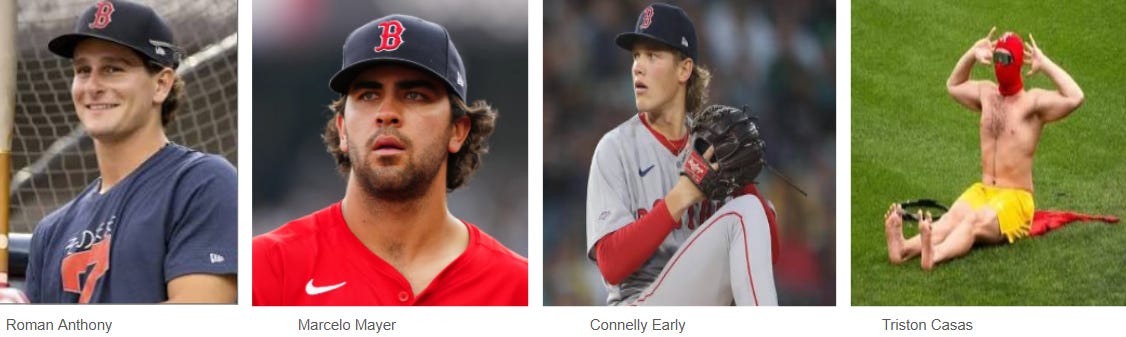
But times have apparently changed in baseball and specifically over at Fenway Park. Highly touted outfield prospect Roman Anthony has been out for most of the season due to what has been described as a partially torn tendon in his finger, an injury that makes it impossible for him to swing a bat, at least according to the team. Anthony’s injury is so debilitating that he is no longer traveling with the Red Sox and is instead rehabilitating his finger in Florida. First baseman Triston Casas has had a myriad of injuries despite his zen-like array of bizarre self-care rituals that include tanning and decorating his fingernails. Casas ruptured his left patellar tendon in early 2025, but along with the injured knee has also been marred by a torn rib cage muscle, an oblique strain, and most recently an additional wrist problem. Casas is also working out at the team’s complex in Florida. Can’t-miss prospect Marcelo Mayer is also out of the lineup, currently suffering from what the team is calling a bone stress reaction to his left ulna, an injury that sounds like a fancy medical term for an elbow bruise. There is no timetable for Mayer’s return. Pitching phenom Connelly Early left his last start with what is being described as elbow inflammation. For what seems to be a relatively simple diagnosis by the team’s medical staff, the young left-hander is in the process of seeking a second opinion. Isaiah Kiner-Falefa was on a torrid pace at the plate, the team’s hottest hitter, until being forced out of the lineup with a left forearm stress reaction believed to have been caused by swinging the bat too hard, a theory for which I would love to hear Jim Rice’s response, the former Sox slugger who once snapped a bat in half on a check swing. Pitcher Ranger Suarez succumbed to injury during the team’s final game in Anaheim with what the Red Sox have termed left adductor tightness, commonly known as a groin strain. $170 million staff ace, Garrett Crochet, has been unable to pitch for most of the season battling shoulder inflammation and, most recently, a lat strain. Now on the 60-day injured list, Crochet’s return in 2026 is unlikely. And then there is Kutter Crawford, the pitcher who made his last start for the Red Sox in 2024, a fixture on the injured reserve list after hurting his wrist while moving some items around in his Florida home. While rehabbing his wrist, Crawford has since been diagnosed with forearm tightness and flexor irritation.
I’m not attempting to knock the players here. The current Red Sox injury situation speaks more about the contemporary business of baseball than it does about the potential injuries that these players have. I’d be willing to bet that most players would choose to be in the lineup if given the chance. But gone are the days of Carlton Fisk, Carl Yastrzemski, and Butch Hobson, players who insisted on being on the field regardless of bone chips and broken ribs, a game-time scenario that was far more entertaining to fans than daily briefings regarding injury reports. Today’s players are financial investments, delicate property to be protected by ownership with pitch counts, 5 inning starts, and extended stays on rehab, with owners potentially stifling natural athletic talent in the process, a strategy that is potentially shortsighted from both the fan and player perspective.
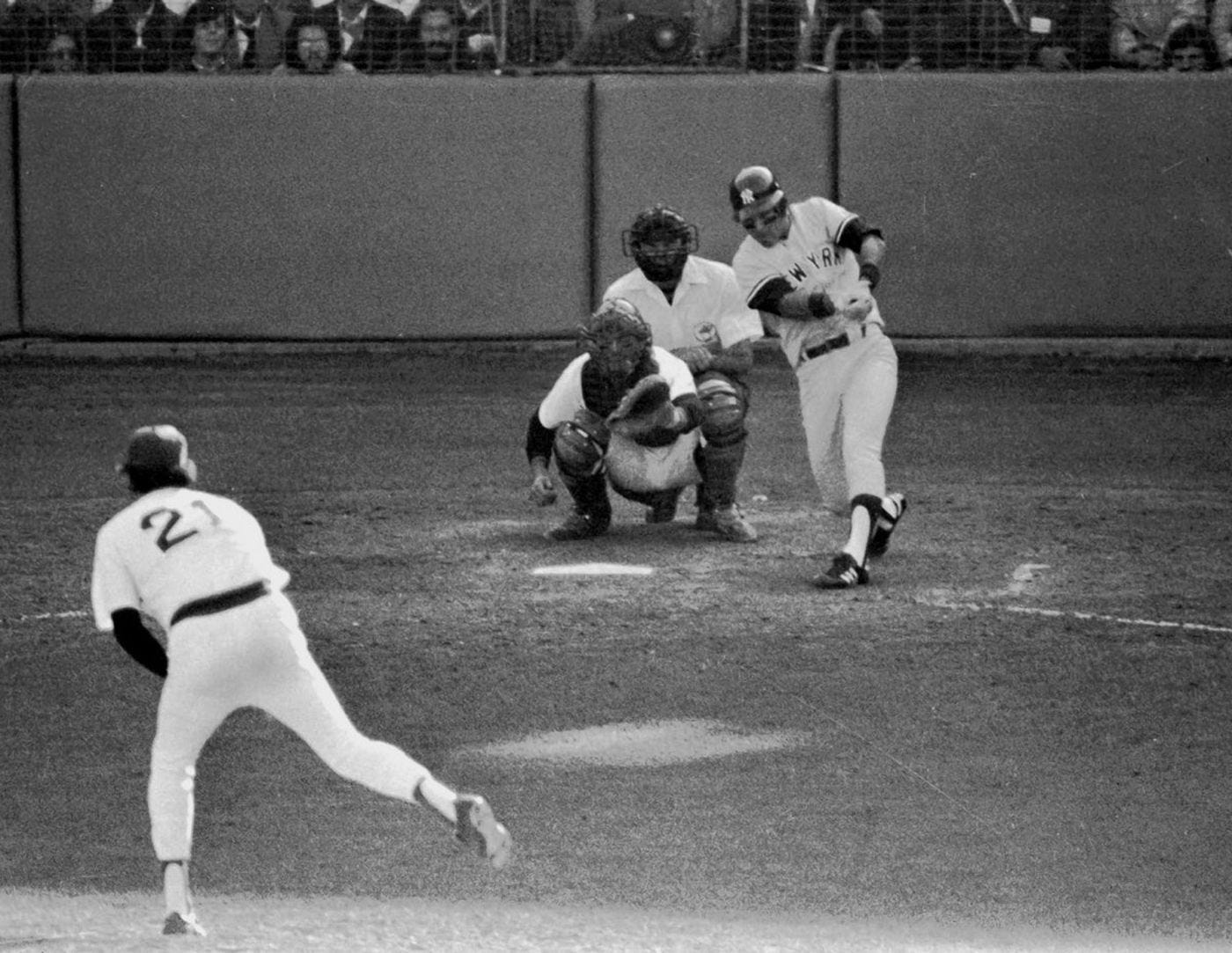
Although tragic in the end, the 1978 Red Sox season was still magical, something that would have been impossible if Carlton Fisk, Carl Yastrzemski, and Butch Hobson had spent the summer nursing their injuries down in Winter Haven.
If you like my articles, please hit the “LIKE” button. It will help to let me know that you are enjoying my writing.
I welcome and invite you to COMMENT.
And please SHARE these posts! This gives added support to my Substack page and also helps to add new readers.
Thanks so much to anyone who is reading Journeys with Jay!
No posts
Comments
Nothing yet. Say the first thing.
Sign in to join the conversation.