
America’s two-party system might be at a turning point in the country’s 250th year, a limited political system where voters have been shoehorned into voting for either one party or the other. In Germany’s representative democracy voters are offered several parties meaning government cooperation and compromise is essential, similar to England where every available party is represented in the House of Commons. The benchmark of 250 years wouldn’t have been a surprise to the visionaries who created the U.S. Constitution, a social contract that was purposely written to allow for change and the continual pursuit of a “more perfect union”, while they almost invariably would have had questions about America’s continued reliance on a two-party system.
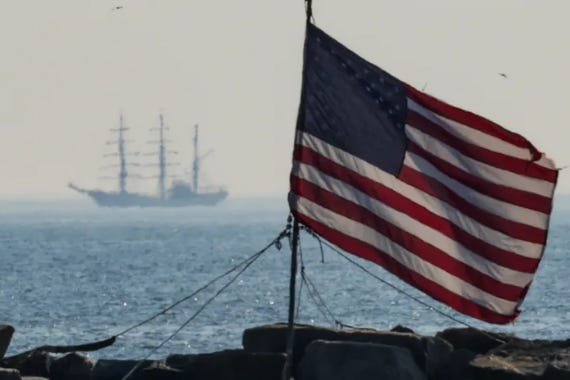
George Washington’s knowledgeable, humble, athletic, celebrity-like status made him a unanimous choice to lead the country’s newly formed Executive Branch, a department originally left out of the more idealistic Articles of Confederation due to a fear of despotism. Washington took the country’s initial reins largely out of responsible obligation while specifically warning against political parties, writing that they could “gradually incline the minds of men to seek security and repose in the absolute power of an individual.” By 1796, after Washington had served only one term, political parties were already in place with the Federalists and Democratic-Republicans. The Federalists represented the country’s educated class of bankers, merchants, manufacturers, and wealthy farmers which included the financial interests of many plantation owners. Those who owned small family farms, artisans, and shopkeepers, largely middle and lower class Americans made up the Democratic-Republicans.
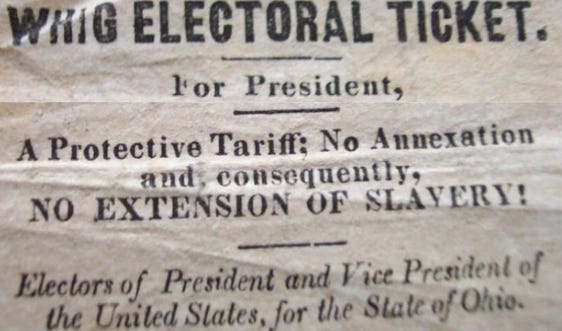
Only the Democratic-Republican Party remained after the War of 1812. This new single-party structure opened the doors for Andrew Jackson’s rise to power during the 1820s, the country’s first true Democrat. Opposition to Jackson’s egregious use of presidential powers led to the creation of the Whig Party. Originally a Whig, Abraham Lincoln shared Free Soil beliefs countering the expansion of slavery into the West especially with regard to the Fugitive Slave Act, an anti-slavery stance that would eventually be adopted by the newly formed Republican Party in 1854. But the Whigs were unable to find common ground regarding slavery splitting northern and southern beliefs and eventually dissolved, some Whigs moving to the Know Nothing Party also known as the “Order of the Star Spangled Banner” and then eventually as the American Party, a group that stood in opposition to Catholics, immigrants, expansion of the naturalization process, and the ability of non-citizens to vote or hold office. The Republican Party absorbed former members of both the Free Soil and Know Nothing Parties, softening its stance on the expansion of slavery in an effort to become more moderate entering the Election of 1860. With Abraham Lincoln running as a Republican candidate in 1860 against a split Democratic ticket that included Stephen Douglas of Illinois and Kentucky’s John C. Breckenridge, the Democrats created a north-south sectional divide over slavery leading to the nation’s first Republican in the White House.
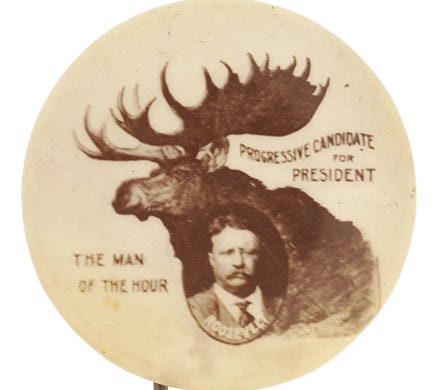
Following the political splintering of the 1850s, the United States has maintained a consistent two-party political system predominantly controlled by Democrats and Republicans since the Civil War, although not without some evolution of the parties. During Reconstruction and then well into the Progressive Age, Republicans dominated American politics pledging growth and industrialization while Democrats held strongly to positions involving states’ rights. In a span of 62 years, only two Democrats were elected president: Grover Cleveland and Woodrow Wilson. Wilson was only elected as a result of Teddy Roosevelt’s disagreement with the Republican Party, with Roosevelt souring over the party’s inability to support his progressive agenda, specifically land conservation. Roosevelt helped to make William Howard Taft his successor with the goal of continuing his policies. But when Taft fired Roosevelt’s Cabinet, Roosevelt decided to return to politics forming the Bull Moose Party to defeat Taft, but the divided vote had the opposite effect paving the way for Democrat Woodrow Wilson.
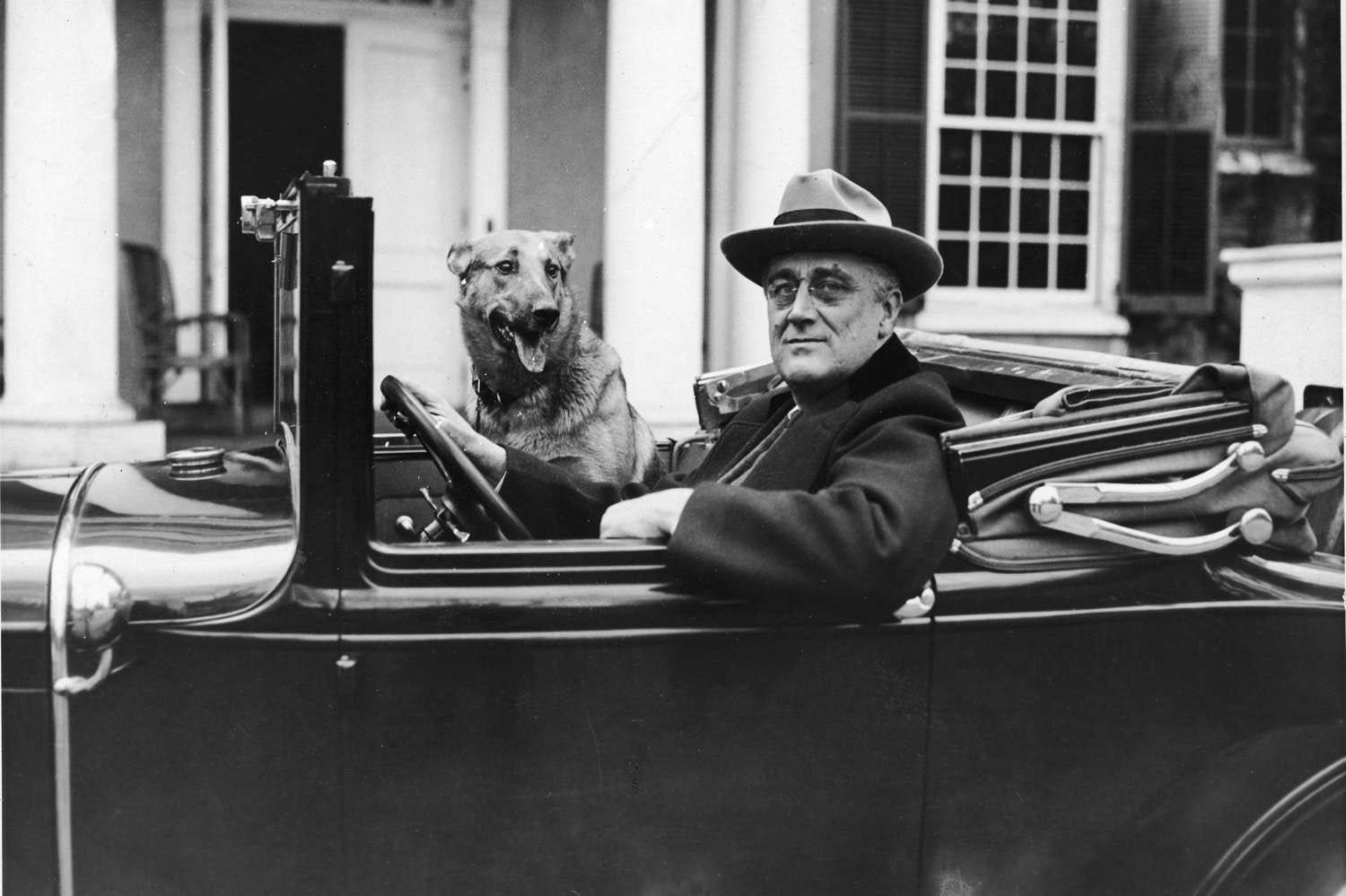
1932 represented a major shift in American politics. Franklin Delano Roosevelt ushered in what is considered to be the modern American presidency, creating a big government bureaucracy while expanding the powers of the Executive Branch, powers that would enable Roosevelt to effectively counter both the Great Depression and World War II during his years in the White House. Roosevelt re-envisioned the presidency out of necessity, taking on roles that altered many of the country’s hardened demographics with regard to voting. African Americans that had historically given their vote to the Republican Party of Lincoln switched to Roosevelt during the 1930s helping to begin a political transformation that started to crumble the influence of the politically powerful Southern Democrats clearing the way for Civil Rights.
Although historically non-partisan, General Dwight D. Eisenhower served two terms as a Republican leading the country through what many consider to be America’s finest decade. When John F. Kennedy was elected in 1960, he sought to perpetuate the idealistic vision of FDR’s Democratic Party of the 1930s and 1940s, while also continuing many initiatives put in place by Eisenhower. Kennedy took over a thriving America, largely complacent and resistant to change. Attorney General Robert F. Kennedy pushed hard for his brother and the Democratic Party to adopt the issue of Civil Rights. While President Kennedy was initially hesitant, Bobby convinced him to support not only the Freedom Riders testing the limitations of court ordered integration on public transportation but also to allow Martin Luther King, Jr. to speak in Washington, D.C. in 1963. It was Kennedy’s military missteps that would lead to more widespread political criticism, his failure to topple Castro’s communist government in Cuba and the policy of continued American involvement in Vietnam.
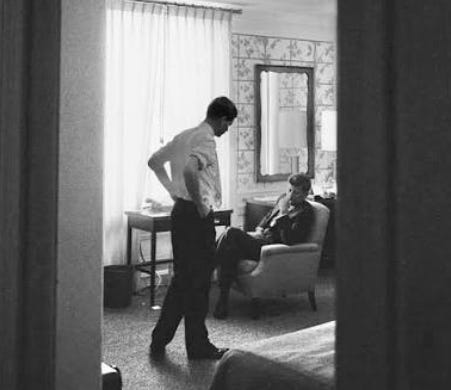
Kennedy’s tragic death gave Lyndon Johnson the emotional leverage to push through some of JFK’s more progressive agenda items. When LBJ campaigned for re-election in 1964 he ran against Republican Barry Goldwater’s ultra-conservative message that the war in Vietnam could be ended easily with nuclear force. Goldwater lost favor after the Johnson campaign broadcast a television commercial titled, Daisy Girl. Although shown only once on September 7, 1964, at 9:50 p.m., the frightening ad sent shockwaves through much of America regarding Goldwater’s threat to use nuclear weapons. Despite the success of Johnson’s domestic Great Society program, it was the escalating war in Vietnam and the political unrest at home that worked against the Democratic Party and Lyndon Johnson during the 1960s.
The Democrats were at a political crossroads. President Johnson appeared on television on March 31, 1968, rescinding his party’s nomination for re-election. Robert F. Kennedy, now a senator from New York, entered the race against Gene McCarthy of Minnesota and Johnson’s Vice President, Hubert Humphrey, but the catastrophic events of 1968 caused the electorate to fall into the hands of the Republican Party with the assassinations of Martin Luther King, Jr. and Robert F. Kennedy followed by the televised calamity at the Democratic National Convention in Chicago. With Richard Nixon finally becoming president in 1968, he continued to carry the scars of losing to John F. Kennedy in 1960, a political paranoia that would inspire him to form alliances within the White House to guarantee his re-election in 1972. Using sabotage, slander, and spying, Nixon was finally cornered when his knowledge of a botched break-in at the Watergate Hotel was made public, a story that eventually cost Nixon both the presidency and his political legacy.
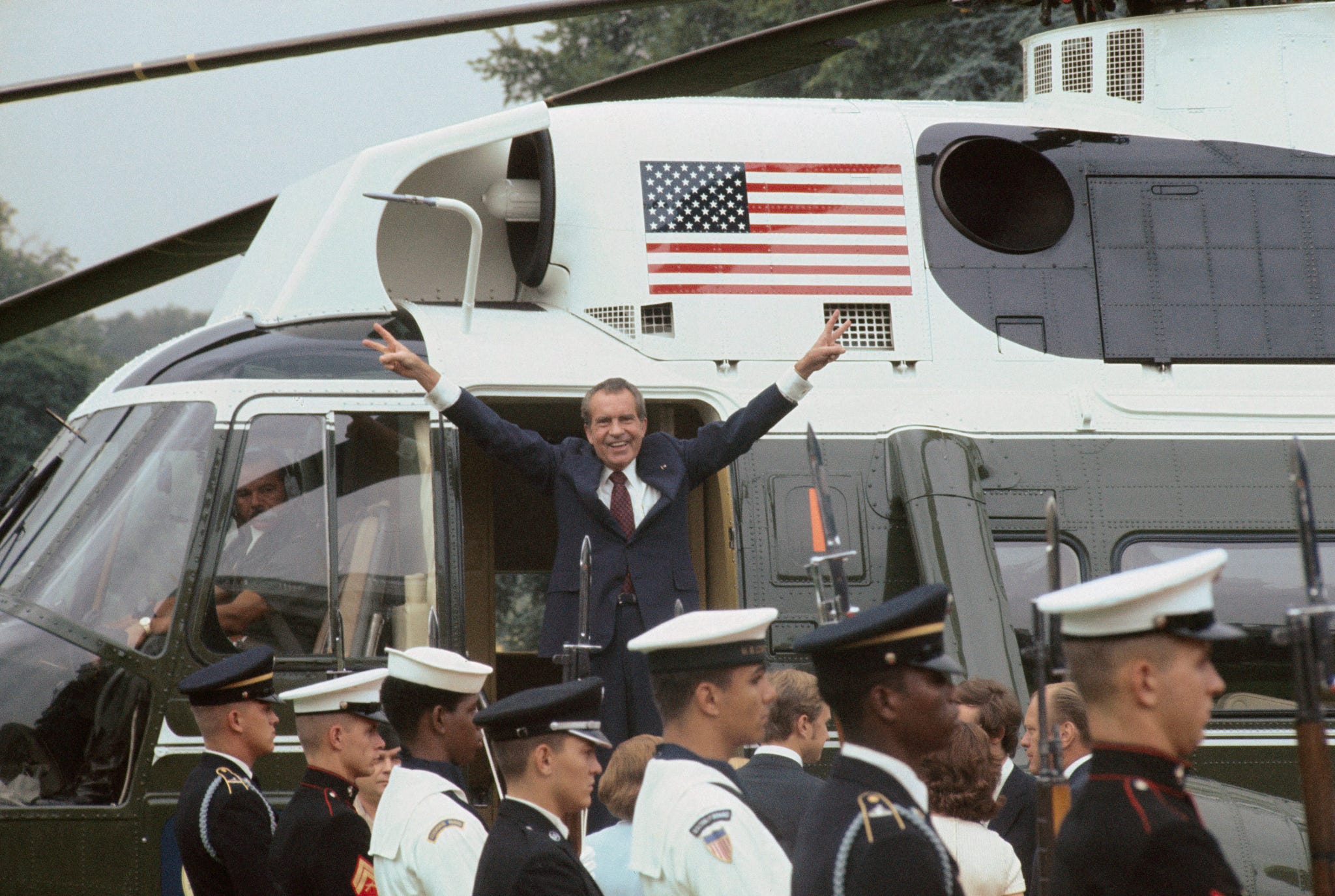
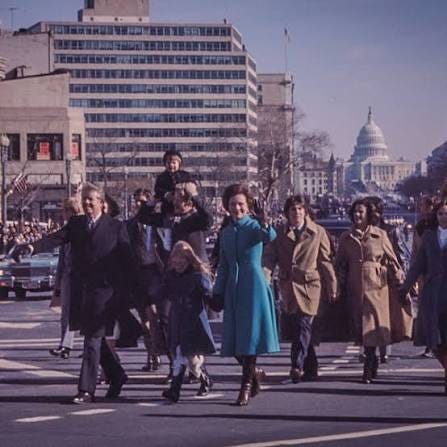
By the time of Nixon’s resignation in 1974, the White House wielded little power. Gerald Ford replaced Nixon and immediately pardoned him, pledging healing for the nation. When Democrat Jimmy Carter emerged from Georgia to win the presidency in 1976, he made it a point to walk to the White House strolling down Pennsylvania Ave. following his inauguration symbolically attempting to take the presidency back to its more humble origins. Carter’s humanitarian successes like the Camp David Accords were overshadowed, however, by his decision to allow the deposed Shah of Iran into the U.S. to receive cancer treatments in 1979 quickly resulting in the capture of 52 American hostages in Iran.
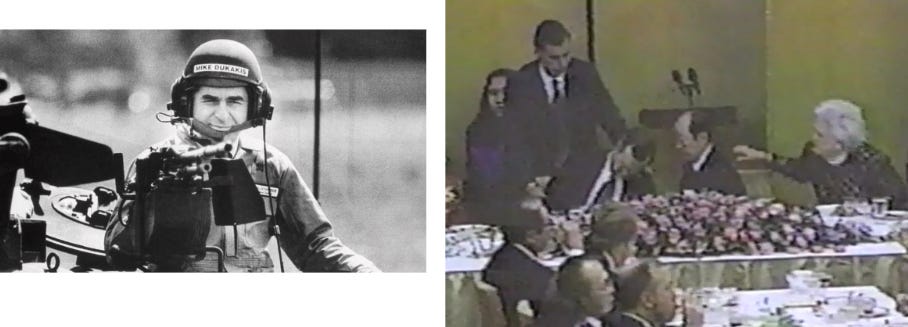
Former actor and California Governor, Ronald Reagan, managed to reestablish a Republican foothold in American politics in 1980. Reagan instilled political confidence in the nation while initiating a spending program that increased the federal deficit while simultaneously outspending the Soviet Union leading to its collapse, Reagan being credited with ending the Cold War. After Reagan served two terms, the Democrats nominated Massachusetts Governor Michael Dukakis to run against Reagan’s Vice President, George H.W. Bush, in 1988. The Bush-generated image of Dukakis driving a tank at a New England military base was detrimental to the Dukakis campaign. I once had the opportunity to ask Governor Dukakis why he didn’t retaliate with similar political advertising. Dukakis said that he didn’t consider it to be in good political taste, and added that whenever somebody mentions the tank, he tells them, “At least I didn’t throw up on the Prime Minister of Japan.”
George H.W. Bush successfully ended the country’s Vietnam Syndrome, fighting the Gulf War against Iraq meeting specific objectives that the U. S. military was able to accomplish helping to restore American credibility. But it was Bush’s claim of “No new taxes” that haunted him during the 1992 presidential election. Bill Clinton, the Democratic Governor from Hope, Arkansas, who labeled himself, “The Man from Hope” in an effort to introduce himself to America, and Independent candidate, Ross Perot, squared off against George Bush in the Election of 1992. A third party candidate, Perot was exceedingly popular with American voters. But on July 16, 1992, Ross Perot suddenly dropped out of the race, alienating many voters who had personally connected with his message. Perot claimed that he was concerned about the election eventually going to the House of Representatives, while Perot’s former Campaign Manager, Ed Rollins, told me one morning while the two of us traveled through Boston that it was his fear of the Bush campaign infiltrating his daughter’s wedding and conducting a smear campaign against her that caused him to drop out of the race. “They were going to smear her with a fake photograph that they had done with a computer where you put a head on another body and they were actually going to have people in church disrupt the wedding,” Perot told the Boston Herald. Rollins told me that Perot had called him early that morning for advice, to which Rollins said, “Don’t read the papers.” Although Perot re-entered the race later that October, much of his backing had disappeared in favor of one of the other two candidates. Bill Clinton was elected in 1992, while George Bush forever blamed his loss on Perot.
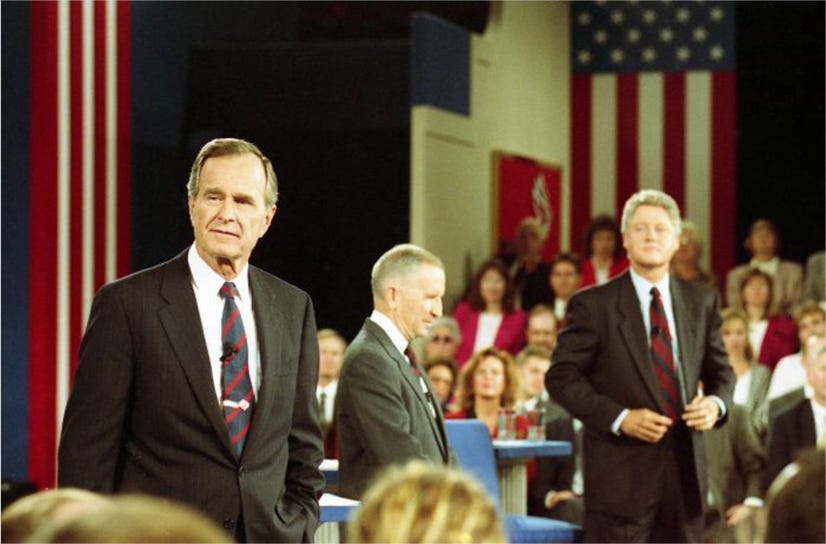
Bill Clinton’s successful presidency eventually found him embroiled in an extra-marital situation involving White House staffer, Monica Lewinsky, something once described to me by a Democratic operative as the long-awaited Republican retribution for Watergate. Clinton’s Vice President, Al Gore, ran against Texas Governor, George W. Bush in 2000. The election was close and came down to the state of Florida, where some voters claimed that their votes may not have been counted correctly due to the type of ballot that Florida used with “hanging chads”. With the nation in suspense, the election was finally decided by the Supreme Court. George W. Bush was named the country’s 43rd president and Al Gore humbly conceded. Gore said that while he didn’t necessarily agree, he accepted the decision of the Supreme Court quoting Stephen Douglas after his loss to Lincoln in 1860, “Partisan feeling must yield to patriotism.” Following George W. Bush’s two terms in office, the nation elected Barack Obama in 2008, a candidate that appeared destined for the job after exploding onto the political scene with a dynamic speech at the Democratic National Convention in Boston during the summer of 2004.
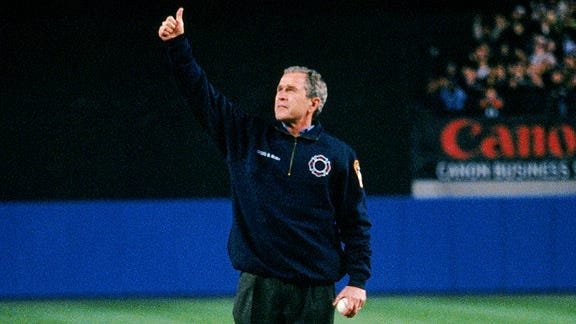
Party politics in the decade following the Obama administration have been tenuous at best, probably more resembling political party salvation rather than continuation, but like the 1850s in America, it is important to remember that while we withstand the required political turbulence necessary in considering change, we are forever in the process of working towards “a more perfect union”.
If you like my articles, please hit the “LIKE” button. It will help to let me know that you are enjoying my writing.
I welcome and invite you to COMMENT.
And please SHARE these posts! This gives added support to my Substack page and also helps to add new readers.
Thanks so much to anyone who is reading Journeys with Jay!
No posts
Comments
Nothing yet. Say the first thing.
Sign in to join the conversation.