
The term looksmaxxing has been around for over a decade, but it has only recently entered the mainstream, with figures like Clavicular receiving widespread media attention.
At first glance, looksmaxxing seems like little more than internet slang for improving one’s appearance. At its softer end, it offers familiar advice: go to the gym, improve your grooming, watch your diet, get a nice haircut. But in its more extreme forms, it promotes steroid use, plastic surgery, and even practices like “bone smashing.”
When we dive deeper into the strange world of looksmaxxing, we find ideas and beliefs that are pretty… disturbing, to say the least.
Whole online communities have formed around a deeply pessimistic worldview that underpins much of the darker side of looksmaxxing. These communities are made up largely of teenagers and young men in their early twenties. They often push each other toward extreme forms of self-improvement, while attacking and degrading those who fail to meet their beauty ideals, sometimes in deeply dehumanizing ways.
So why are so many young people drawn to looksmaxxing? What kind of society makes plastic surgery and steroids seem like reasonable answers to insecurity and feelings of inadequacy among young men? What ideas drive them in that direction? And does looksmaxxing actually solve the problems it promises to solve?
Imagine growing up and finding your way in modern society as a young man. You’re not particularly religious, nor do you subscribe to any strong ethical system. You just look around and see what works in life and what to pursue.
After observing those around you and spending lots of time on social media, listening to influencers, you’ve come to believe that a successful life is about status, money, and women. And that there’s one ingredient that helps to get all of that. Moreover, it’s a necessary ingredient to succeed at life as a man, especially when it comes to the opposite sex. Of course, we’re talking about ‘looks’.
Looking in the mirror, you suspect you might be lacking in the looks department. After all, you haven’t been very successful with girls or women, nor have you gained significant status or money. When searching the internet for what to do about this problem, you encounter an idea, a philosophy, a way of life: looksmaxxing.
Looksmaxxing aims to maximize one’s physical attractiveness, hence the term, which combines “looks” and “maxxing” (the latter is slang for maximizing).
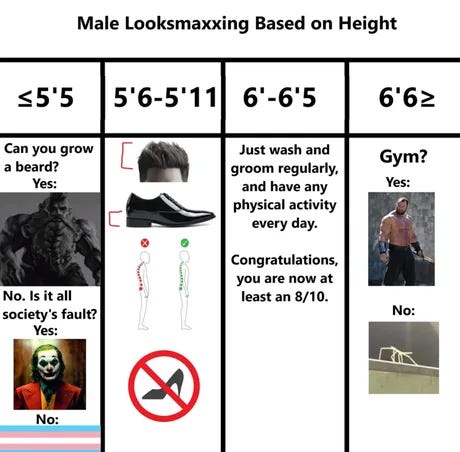
A system for improving one’s physical appearance is, of course, highly appealing in a world that treats good looks as the holy grail. Looksmaxxing promises a total life transformation: greater success with women, higher social status, and better career prospects. And it claims to provide the knowledge and methods needed to make that transformation a reality.
As you tumble down the rabbit hole, you discover that looksmaxxing is deeply rooted in the manosphere, particularly its incel and blackpill communities, which place great emphasis on physical appearance and promote the fatalistic belief that, without good looks, a man’s life is essentially over. After spending enough time in blackpill echo chambers, you’re convinced that looksmaxxing offers the path you seek.
Many looksmaxxers go to great lengths to attain their goals, far beyond going to the gym or eating healthy. Steroid use, cosmetic surgery, fillers, injections, and other unconventional methods like mewing, bone smashing, extreme calorie restriction (also known as starvemaxxing), and even using meth to suppress appetite seem to indicate that for looksmaxxers, the end justifies the means.
Hence, looksmaxxing is widely considered controversial, extreme, and toxic.
But is the belief underlying this obsession with looks entirely unfounded? Are blackpill claims that looks are essential for success completely false? Or is there some truth to them?
Looks count. I don’t think we can deny that. It is well documented that, across many social settings, good-looking people are judged and treated more favorably.
For example, a major meta-analysis by Judith H. Langlois and colleagues, combining dozens of studies involving thousands of participants, found that attractive children and adults were not only judged more favorably but also treated more favorably. Other studies suggest that good-looking people tend to earn more, while several have found a correlation between male height and income: taller men tend to earn more.
There is scientific evidence for the so-called halo effect, a cognitive bias that can lead people to assume that good-looking individuals possess other positive traits, such as intelligence, kindness, and competence. This may help explain why attractive politicians tend to receive more votes than less attractive candidates and why taller people are often perceived as more leader-like.
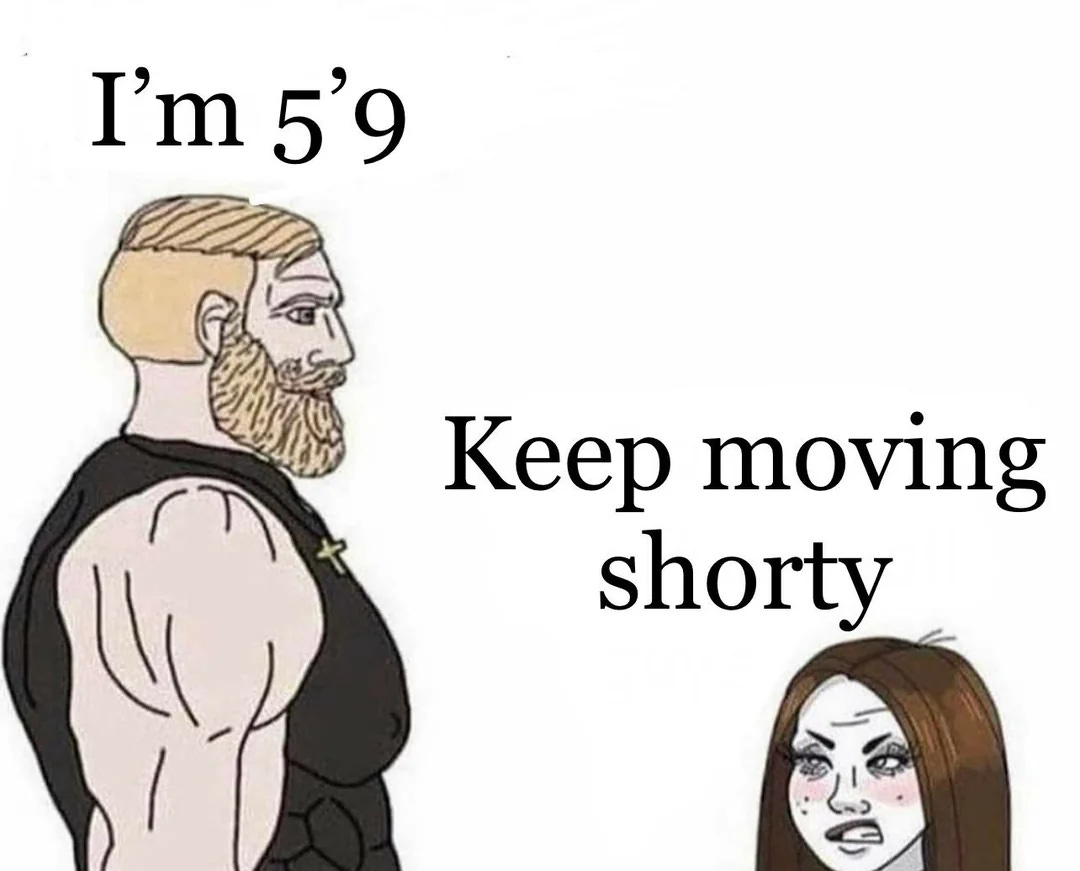
And looks matter especially on dating apps, where people make quick decisions based largely on photos. A recent study involving more than five thousand swiping decisions on dating apps found that physical attractiveness was by far the most important of the factors tested. It mattered much more than intelligence, occupation, height, or the profile bio.
Also, society has become increasingly visual. We constantly carry screens in our pockets, and much of the world now speaks to us in images: from Instagram and LinkedIn to YouTube and TikTok. We see people reduced to profile pictures, thumbnails, and Instagram Reels.
Philosopher Byung-Chul Han describes this as a “pornographic society,” by which he means that everything must be exposed. Just like in adult content, everything is on display. Social media, selfies, and the culture of “likes” encourage us to continually showcase ourselves. Within this logic, you’re only someone if you’re visible.
This pressure to put ourselves on display seems to have contributed to a growing concern among men about their appearance. Male beauty standards we come across today online, but also in movies and TV-series, often include tall stature, a muscular, V-shaped physique with low body fat, and a strong jawline. For many men, these standards are hardly attainable unless, perhaps, drastic measures are applied.
In a world where looks seem everything, looksmaxxing offers a seemingly reasonable and logical solution: maximizing one’s looks.
At first glance, looksmaxxing seems a harmless pursuit. But the deeper we go, the darker and more extreme it gets.
To understand what motivates many looksmaxxers, we first need to examine the dark worldview that often underlies the practice: the blackpill. The blackpill emerged from the broader red pill worldview, itself named after the red pill/blue pill metaphor from The Matrix.
Although the two are intertwined, looksmaxxing is primarily a practice, whereas the blackpill is an ideology.
The blackpill begins with what seems like a reasonable goal: to investigate, to see the world as it really is, particularly when it comes to physical attractiveness, women’s preferences, and romantic and sexual success. There is nothing inherently wrong with asking these questions and looking for evidence to answer them.
Unfortunately, the blackpill worldview is full of claims presented as established truths, ranging from poorly supported to demonstrably false.
A typical blackpill claim is summed up by the expression “It’s over,” which refers to the belief that if you fall below a certain threshold of attractiveness, your chances of finding love or having sex are close to zero. Where exactly this supposed threshold lies (in other words, how short or unattractive a man must be before he is believed to have no chance) is widely debated.
Some blackpillers claim, for example, that it is “over” for men shorter than five foot five. Such a claim may resonate with shorter men who have experienced greater difficulties in dating than their taller peers.
But even though research suggests that women, on average, prefer male partners who are taller than themselves, there is no credible evidence for a sharp cutoff at five foot five (or any other particular height) below which a man’s chances become virtually zero.
Those believed to fall below such thresholds are often described in dehumanizing terms as “subhuman” or a “genetic dead end.” At its darkest, men are even told to “rope,” which is slang for taking one’s own life.
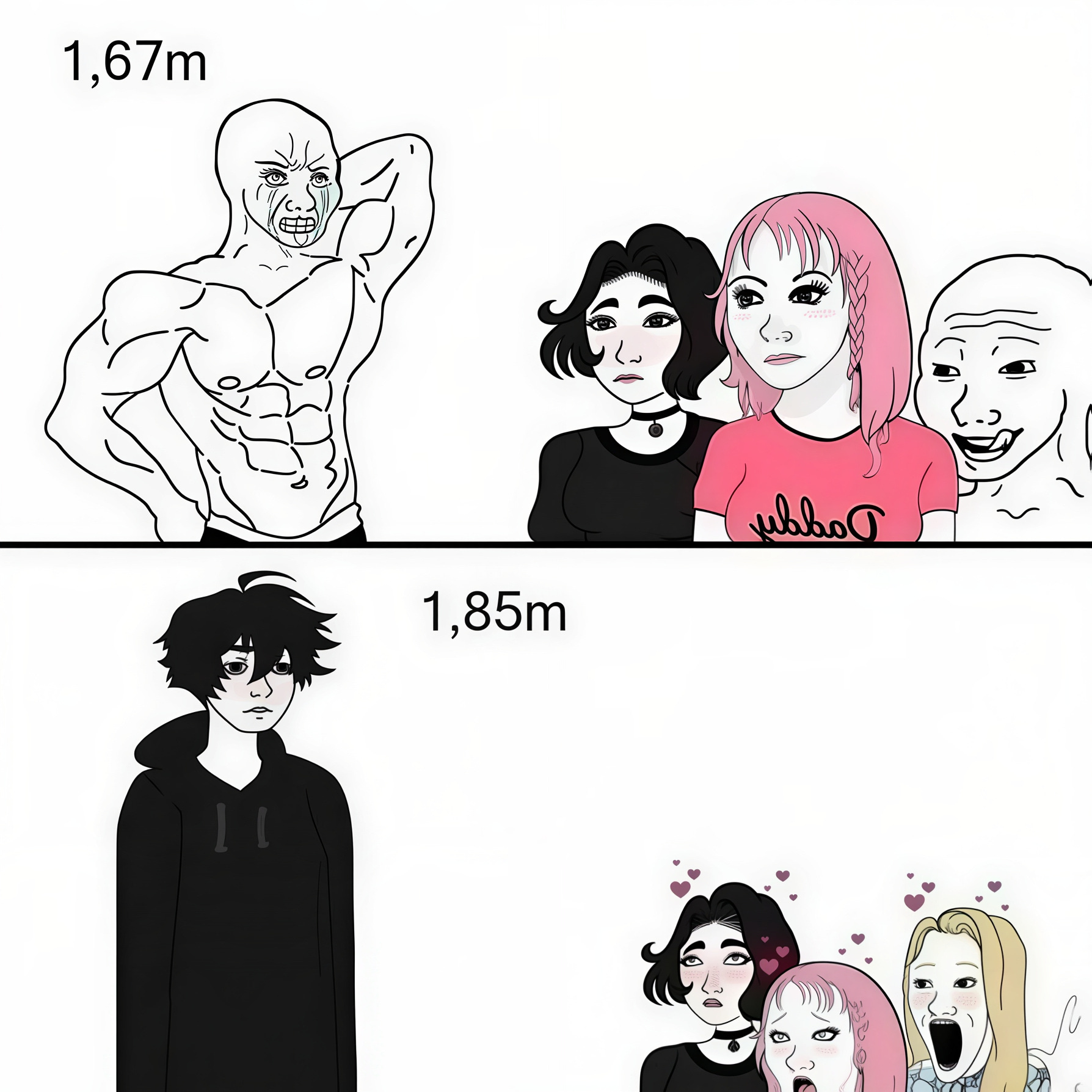
Another example is the 80/20 rule, which states that eighty percent of women are only interested in the top twenty percent of men. Some claim it is actually in the top ten or even five percent. This claim begins with a real inequality: good-looking men generally receive more attention, especially on dating apps.
But the reality unequal attention does not mean that eighty percent of women are exclusively interested in the most attractive twenty percent of men. Actual relationships show a more complex pattern. A 2024 secondary meta-analysis, based on 27 samples and 1,295 mixed-sex couples, found that partners tended to be similar in physical attractiveness, which kind of resembles a Dutch saying: “On every pot fits a lid.”
Blackpillers also draw on ideas from Darwinism and evolutionary psychology, often treating their own interpretations as biological facts. Genetics play a major role in this worldview, as inherited traits such as height and facial structure are believed to largely determine a man’s looks and, therefore, his romantic success.
It’s no surprise that blackpillers often see dating as a ‘sexual marketplace’ in which people have a certain value, largely determined by looks and status. One idea that fits into this view is female “hypergamy,” the concept that women naturally ‘date up’ to find the highest-status partner possible; a view also defended in some form by Jordan Peterson.
Some blackpillers take this even further and argue that women are incapable of genuinely loving men. Instead, they believe women are mainly interested in the value a man offers and will replace him when a better option appears. Some incels even refer to women as “femoids” or “foids,” short for “female humanoids”, which is language to put women in more of a sub-human category.
But although there is evidence that women, on average, prefer status, resources, and certain physical traits, research suggests that relationships are formed based on many other factors, such as mutual attraction, culture, and chemistry. And even though relationships aren’t entirely free of self-interest, it doesn’t follow that they are nothing more than transactions between people with a certain market value; it’s a highly reductionist way of seeing things.
So, blackpillers don’t invent their ideas out of thin air, but they often begin with something that is at least partly true, and then interpret and exaggerate it until it becomes an absolute claim. The result is a deeply pessimistic worldview that reinforces itself: evidence that supports it is accepted, while anything that challenges it is ignored, dismissed, or labeled as “cope.”
This worldview turns improving one’s looks into something close to a matter of life and death. The belief that one might be a “subhuman” or a “genetic dead end” and better off not existing may pressure men into taking extreme measures to change their supposed destiny.
Here’s where looksmaxxing comes in, which supposedly is the way to increase one’s value, become worthy of being chosen, and avoid being replaced.
But the blackpill may not be the only reason why looksmaxxing has become so appealing. The constant drive to improve the body also fits a broader trend in modern society: the urge to optimize ourselves.
Lately, I’ve been reading a lot of Byung-Chul Han’s work, and I think he made an observation that might be another reason why looksmaxxing has become popular.
In several of his books, he describes today’s human tendency to ‘self-optimize’ in virtually any way possible. Most, if not all, areas of our lives have become subject to optimization. We want to optimize our diet, optimize our daily schedules, optimize our sleep, optimize our productivity… and also optimize our bodies.
There’s a whole industry focused on optimizing the body, from fitness centers to supplements to cosmetic treatments. The body has become a project. And looksmaxxing is exactly doing that: it treats the body as a project. It objectifies it as something to measure, improve, and bring closer to an ideal.
Even its language reflects this obsession with optimization. “Gymmaxxing” means going all-in at the gym to maximize muscle growth and fat loss. But there’s also “skinmaxxing,” “hairmaxxing,” and “jawmaxxing,” each aimed at improving a specific part of one’s appearance.
The body is basically broken down into separate components that can all be assessed and improved. And if you manage to enhance your appearance enough, you may eventually be able to “mog” other men. “Mogging” means dominating or outshining other men through superior looks, height, or physique.
So, it seems that looksmaxxing is also a symptom of our time; a society where we are constantly encouraged to optimize ourselves, including our bodies.
Now, let’s take a closer look at what looksmaxxing actually promises. Looking better is rarely the final goal. So, what are looksmaxxers ultimately looking for? And is looksmaxxing actually a good way to get there?
Looksmaxxers are not just seeking to look better, but also what better looks supposedly promise: romantic success, social status, recognition, and more self-esteem. For some, looksmaxxing offers a sense of direction: a clear set of goals in a world where status, attractiveness, and success are highly valued.
But does looksmaxxing deliver what it promises? In a limited sense, perhaps. Improving one’s physique and grooming, or undergoing certain cosmetic treatments, may make someone more attractive. This could lead to greater success in dating, certain social or professional advantages, more validation, and perhaps greater confidence. These outcomes may all be worthwhile. But is it what they’re truly looking for?
It seems to me that beneath the hyperfixation on looks and the pursuit of status, money, and validation, many looksmaxxers ultimately want what most people want: to be happy. Or perhaps, more accurately, they want relief from their dissatisfaction, loneliness, and feelings of inadequacy. They believe that improving their appearance will give them access to a better and more fulfilling life.
Suppose, then, that what many looksmaxxers ultimately seek is happiness, or at least relief from unhappiness. Are they on the right track? Is looksmaxxing a reliable way to become happier?
First of all, not all looksmaxxing is the same. At its softer end, it can mean going to the gym, improving one’s grooming, and taking better care of one’s health, which could add to one’s happiness. It probably won’t make you unhappier if you improve your appearance through those means.
But the more blackpill-informed looksmaxxing is another story. One of the biggest problems with this form of looksmaxxing is that it makes happiness depend on meeting a narrow beauty ideal that is difficult, and sometimes impossible, to attain. And even if improving one’s appearance brings more attention or status, happiness still depends on external rewards and other people’s judgments; things we ultimately have limited control over.
The ancient Greek philosopher Epicurus believed that it is easier to rely on things that are widely available, particularly the satisfaction of natural and necessary desires, such as those for basic food and shelter. He also regarded friendship as one of the greatest sources of happiness. From his viewpoint, the less you need to be happy, the easier it is to be happy.
Blackpilled looksmaxxing seems to embrace the opposite view: without superior looks, attention from women, or alpha status, you supposedly cannot be happy. At its darkest, this worldview even suggests that if you are a so-called “subhuman,” there is no point in living. Happiness, therefore, needs a lot. And unhappiness seems to be considered the default state for many.

Epicurus would have regarded desires like alpha status, unnatural physical perfection, or social media fame as “vain desires”: unnatural to human beings, instilled by society and by false beliefs about what we need. These desires are also difficult to satisfy.
For example, once optimizing one’s looks becomes a goal, it may begin with a new haircut and going to the gym, but gradually escalate to steroids and plastic surgery. This seems to be the case with Clavicular, who never appears fully satisfied with his appearance and continues to optimize it in one way or another.
Aligning with Epicurus, philosopher Arthur Schopenhauer considered status, external validation, and wealth as inferior sources of happiness. “What a man is,” he deemed much more significant. If Schopenhauer were alive today and gave his opinion on looksmaxing, he might say that someone good-looking, famous, rich, and surrounded by beautiful women but still not satisfied is profoundly “mogged” by someone who doesn’t have all that but is, nevertheless, content.
Clavicular actually experienced a kind of reverse mogging during an interview on Channel 5. He asked the journalist whether he was 100% satisfied with everything he saw when looking in the mirror in the morning, and the journalist said that he was. Clavicular then accused him of being “completely disingenuous,” suggesting that he simply couldn’t imagine someone being genuinely content with himself; something he had been trying to achieve for years using increasingly extreme methods, without ever really succeeding.
I cannot look into Clavicular’s mind, though, so I don’t know how he feels. But I’ve seen many people comment about how unhappy he looks. And I must agree; he doesn’t seem like a cheerful person who’s comfortable in his own skin. And despite his efforts, he still comes across as very insecure. So, I’d say with caution that looksmaxxing doesn’t really seem to work for him in terms of happiness.
And maybe that’s also because he has basically outsourced his well-being to external things: his appearance, what people think of him, fame, money. The ancient Stoics already knew that letting your happiness depend on externals beyond your control puts you in a very fickle position. Circumstances will decide how you feel. We see Clavicular confronted with this when he tries to pick up women in Paris and faces rejection after rejection. After all those years of self-optimization, those rejections must have hit especially hard.
The more you depend on others to tell you that you’re enough, the harder it becomes to ever feel like you are. It’s a path of constant dissatisfaction, always striving to be more, always haunted by a sense of lack. “Never enough” is the motto of our time. And looksmaxxing takes it to the extreme.
Maxims or myths of beauty? A meta-analytic and theoretical review (National Library of Medicine)
Halo effect of faces and bodies: Cross-cultural similarities and differences between German and Japanese observers (National Library of Medicine)
The relative importance of looks, height, job, bio, intelligence, and homophily in online dating (ScienceDirect)
What makes you click?—Mate preferences in online dating (University of Amsterdam)
Dyadic secondary meta-analysis: Attractiveness in mixed-sex couples (ScienceDirect)
The Black Pill: New Technology and the Male Supremacy of Involuntarily Celibate Men (National Library of Medicine)
The Rage of Lonely Men: Loneliness and Misogyny in the Online Movement of “Involuntary Celibates” (Incels) (Springer Nature Link)
Clavicular Interview (Channel 5 with Andrew Callaghan)
Epicurus (341—271 B.C.E.) (Internet Encyclopedia of Philosophy)
The Essays of Arthur Schopenhauer: The Wisdom of Life (Project Gutenberg)
The Transparency Society (Byung-Chul Han)
No posts
Comments
Nothing yet. Say the first thing.
Sign in to join the conversation.