
When we look at history, we see that anger profoundly influenced human affairs. Anger has fueled personal tragedies, torn families apart, and started wars. In a fit of rage, Alexander the Great killed his close friend Cleitus. The Iliad tells the story of Achilles, whose anger drove him to commit terrible acts. The Buddha repeatedly warned about the destructive nature of anger, while the Stoic philosopher Seneca described it as a form of temporary madness.
And yet, after centuries of wisdom, human beings do not seem to have changed all that much.
Anger seems very prevalent in the online sphere today. We see it in comment sections, which have become spaces of ‘rage bait’ and attacks rather than meaningful, constructive dialogue. But there’s also plenty of anger outside of the internet, from ‘office rage’ to violent protests to nations in armed conflict. A significant number of people struggle with anger issues, and we seem to have become less tolerant and patient toward one another.
There’s a fair amount of anger involved with today’s politics, as it seems to play a major role regarding who people vote for. “Anger has come to define the public mood,” wrote psychoanalyst and emeritus professor Josh Cohen in an article in The Guardian, describing today’s society characterized by fear, insecurity and mistrust as a fertile breeding ground for anger, amplified by social media and used by populist leaders for their own ends.
All in all, today it seems more relevant than ever to discuss anger. So, what is anger? Where does it come from? Why is anger problematic? Can it ever be good or useful? How can we prevent or reduce it when it comes up? And how, if possible, can we use anger as a force for good?
To answer these questions, I’ve turned to the vast amount of insights and wisdom regarding anger that we find in philosophy. I’ve tried my best to find satisfying answers, based on a variety of thinkers, from ancient philosophers to monastics, as a means to compose a compelling philosophical guide on anger. But please note: This guide is not a substitute for professional mental health advice, diagnosis, or therapy.
When we think of anger, we usually think of someone shouting, throwing things, or completely losing control. But anger isn’t always loud. Sometimes it lingers quietly beneath the surface, or manifests as a slight irritation, hardly visible.
So, there seem to be different forms of anger, and I think it’s essential to first get a clear understanding of what anger is or, at least, an agreement on what we define as anger. So, what is anger? Is it an emotion? A way of thinking? And what types of anger can we distinguish?
To begin defining anger, let’s go back to antiquity, to the ancient Greeks, who gave birth to many great philosophers, one of whom was Aristotle. Aristotle had a great deal to say about anger. He believed that anger wasn’t just a feeling that comes and goes arbitrarily. Anger, he believed, comes from how we think about something; it’s an interpretation of the situation we’re in. In his work Rhetoric, Aristotle defines anger as follows:
Let us then define anger as a longing, accompanied by pain, for a real or apparent revenge for a real or apparent slight, affecting a man himself or one of his friends, when such a slight is undeserved.
Aristotle, Rhetoric II
In Nicomachean Ethics, one of Aristotle’s best-known works, he explains that there’s usually an underlying argument behind one’s anger, even if that argument is inaccurate.
When we’re angry, we might feel insulted or slighted. We might believe we’re being wronged or that some injustice is happening to our loved ones. So, there’s a reason. And the reason for becoming angry boils down to the idea or argument that something is happening that should not happen. Put differently, we become angry because our minds perceive certain aspects of what happened as problematic.
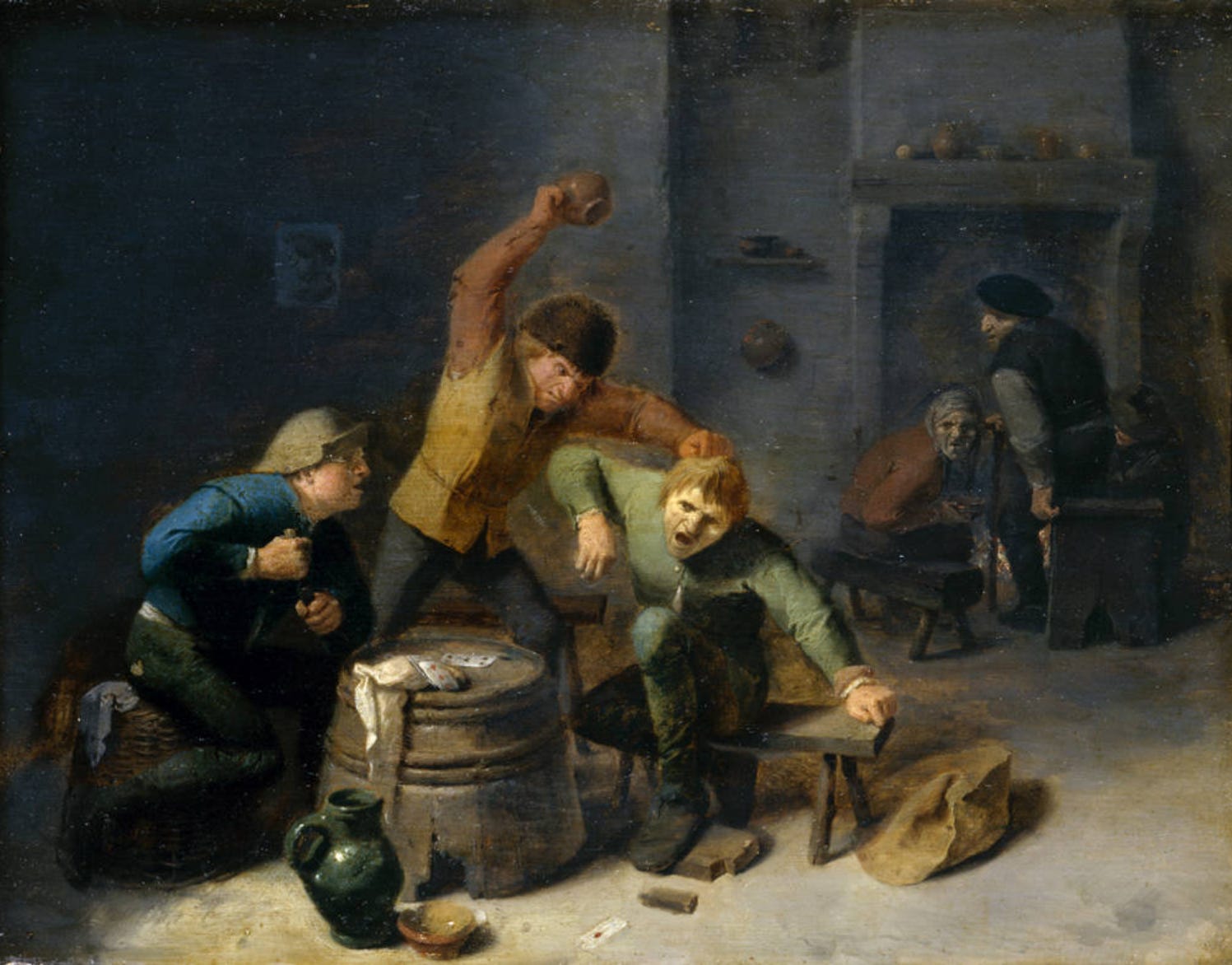
The ancient Stoics surely subscribed to the idea that any ‘pathos’ (meaning passion) arises from some form of irrational thought. In his work Of Anger, the Stoic philosopher Seneca argues that anger is indeed aroused by the appearance of an injury being done. He asks whether anger arises without the mind’s assistance or with it. Is the appearance of, let’s say, an injustice enough to rouse anger, or is there something thought about the appearance that causes it?
Our (the Stoics’) opinion is, that anger can venture upon nothing by itself, without the approval of mind: for to conceive the idea of a wrong having been done, to long to avenge it, and to join the two propositions, that we ought not to have been injured and that it is our duty to avenge our injuries, cannot belong to a mere impulse which is excited without our consent.
Lucius Annaeus Seneca, Of Anger, 2.1
Modern psychology seems to agree that anger stems from our thoughts and beliefs about something, rather than directly from an event without the mind’s assistance.
For example, the American Psychological Association describes anger as “An emotion characterized by tension and hostility arising from frustration, real or imagined injury by another, or perceived injustice.” And quite similarly, Harvard Health Publishing describes anger as “a normal emotional response to a person or situation you believe has treated you unfairly or has otherwise been hurtful or harmful.”
So, again, thoughts and beliefs play a crucial role in anger. It’s not simply a bodily reaction to injustice, unfair treatment, or harm. The event and anger are mediated by the mind. Anger seems to arise from what we think about the event, rather than directly from the event. In the words of Stoic philosopher Epictetus:
Remember that foul words or blows in themselves are no outrage, but your judgement that they are so. So when any one makes you angry, know that it is your own thought that has angered you.
Epictetus, Enchiridion, 20 (translated by P.E. Matheson)
Now that we have an idea of how anger starts, based on both ancient philosophy and modern psychology, let’s take a look at how anger manifests.
Seneca describes anger as “temporary madness.” According to him, people who are angry aren’t sane, as we can see from their appearance: angry people show signs of madness. Seneca describes these symptoms as follows:
Their eyes blaze and sparkle, their whole face is a deep red with the blood which boils up from the bottom of their heart, their lips quiver, their teeth are set, their hair bristles and stands on end, their breath is laboured and hissing, their joints crack as they twist them about, they groan, bellow, and burst into scarcely intelligible talk, they often clap their hands together and stamp on the ground with their feet, and their whole body is highly-strung and plays those tricks which mark a distraught mind, so as to furnish an ugly and shocking picture of self-perversion and excitement.
Lucius Annaeus Seneca, Of Anger, 1.1
In modern-day terms, Seneca seems to describe a temporary loss of self-control and emotional dysregulation. There’s high arousal, narrowed perception, aggressive hostility, greed for revenge. The body is ready to attack, ready to punish. Seneca’s description of anger fits the definitions of wrath, one of the seven Christian sins, and of rage.
During rage, we experience anger intensely. We are emotionally dysregulated so much that we experience bodily symptoms, from trembling to tension of the muscles to heavy breathing. We, more or less, ‘explode’ in anger. In a fit of rage, people may damage objects or even physically harm other living beings, including themselves.
Anger comes in different intensities, though, ranging from mild irritation or annoyance to fury and the out-of-control rage described by Seneca.
Aristotle also recognizes differences in how anger manifests. He speaks of “quick-tempered” people who become angry quickly and openly, but whose anger also subsides quickly. He also describes surly or “bitter-tempered” people who, by contrast, keep their anger inside and remain angry for a long time, bringing us into the territory of ‘resentment’: a lingering fixation on an injury and the person responsible for it.
Because resentment has its own causes and mechanisms, I think it deserves a separate treatment, so I won’t treat it in this guide.
An interesting phenomenon regarding anger is that, in some cases, people are hardly aware they’re angry. From Carl Jung’s perspective, anger may hide in the unconscious, outside conscious awareness, and emerge subtly through projection, sarcasm, or sudden, expected bouts of rage. We can see this, for example, in people who claim never to get angry. And sure, their anger may never erupt openly, but instead, it leaks out through subtle put-downs, casual name-calling, and snide remarks.
Now, what is wrong with anger? What makes anger problematic? Let’s find out.
We don’t have to look far to see the destructiveness anger can bring about. As I’ve mentioned before, lots of human tragedies begin with anger, from wars to terrorist attacks, from domestic abuse to homicide. Anger, therefore, is justly met with distrust and skepticism. As the fire within is capable of so much suffering, wouldn’t the most logical course of action be to curb it?
Seneca was a fierce opponent of anger. In great detail, he describes the destructiveness of anger in his work, arguing that no plague has cost humanity as dearly as anger. But, typically Stoic, he also observed how anger comes at the expense of the most important human feature: our ability to reason. According to Seneca, reason becomes useless as soon as we’ve allowed anger into our minds. At that point, we’ve given anger authority, and it will do as it pleases, without our consent. He wrote:
“[In the next place,] Reason herself, who holds the reins, is only strong while she remains apart from the passions; if she mixes and befouls herself with them she becomes no longer able to restrain those whom she might once have cleared out of her path; for the mind, when once excited and shaken up, goes whither the passions drive it.”
Lucius Annaeus Seneca, Of Anger, 1.7
So, the lack of control over anger once we’ve admitted it to our minds makes it an enemy rather than a companion. Why would we use anger for any cause if we end up unable to restrain it, which can lead us to act in ways that are destructive to both ourselves and others, often resulting in irreversible damage?
The harsh reality of irreversible damage caused by letting ourselves be consumed by anger is portrayed in a Buddhist story about a father and a son with anger issues. To help him, the father makes a couple of rules. Every time the son gets angry, he must hit a nail into the fence. But on days he can prevent himself from getting angry, he can remove a nail.
In the weeks that followed, the son had to hammer many nails into the wall, unfortunately. But eventually, he could keep his anger in check for a full day, which allowed him to remove a nail. As his condition improved, the son removed more and more nails from the fence, until they were all gone.
The good news was, of course, that the son had overcome his anger for a long stretch. But the father also confronted him with the bad news: the fence was now full of holes. And these holes won’t disappear by removing the nails. In other words, damage already caused by our angry outburst cannot be undone. Changing our ways, though, can prevent more damage in the future.
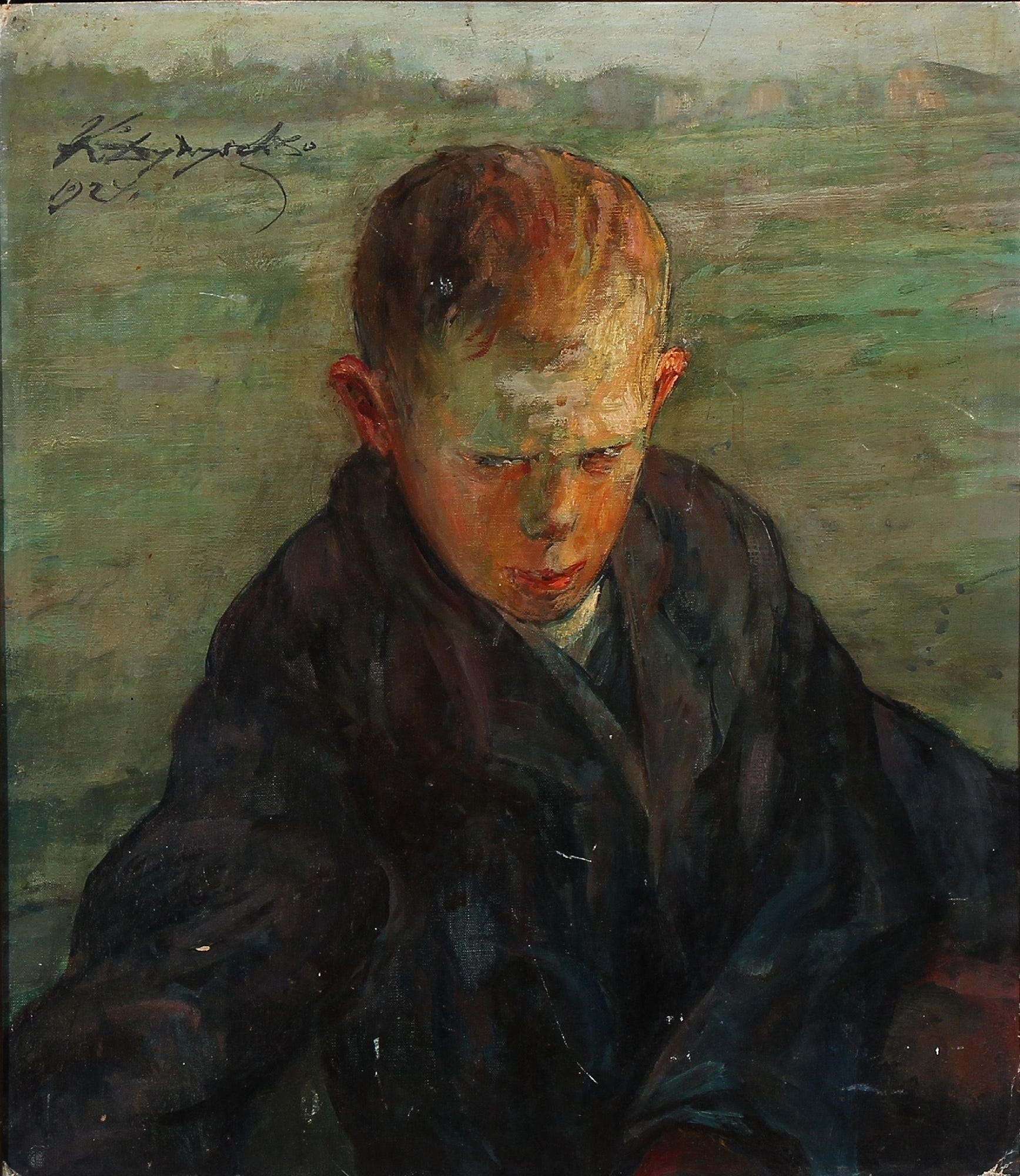
From a Buddhist perspective, our anger not only hurts other people or damages external objects; it also hurts ourselves, often in ways we tend to overlook.
The ironic Kodhana Sutta from the Pali canon shows how anger can destroy us in ways our enemies in the world can’t even get done. By being angry, the sutta argues, we’re actually doing our enemies a favor, as we potentially let seven things happen to ourselves that would please our enemies: we may become ugly, sleep badly, feel dissatisfied, lose our wealth, lose our reputation, lose our friends, and, finally, have a bad rebirth. So, our enemies love our anger. We’re doing the work for them, as we’re harming ourselves as they’d wish us to be harmed.
The Mahayana Buddhist text The Way of the Bodhisattva, written by the Buddhist monk Shantideva around 700 CE, also discusses the negative effects of anger, saying that “no evil is there similar to anger”. According to Shantideva, people tormented by anger never have a tranquil mind, are strangers to every pleasure, and neither sleep well nor feel secure. “No one is there, all in all, who, being angry, lives at ease.”
In the Theravada Buddhist tradition, anger is one of the five hindrances, known as ill will (vyāpāda), which are mental states that block the path to spiritual progress and interfere with daily life. In one of his talks, Theravada Buddhist monk Ajahn Sona explains the effect of anger on the mind by using water as a simile. When the mind is pure, the water is clear: you can see the bottom of the pot through the water, without distortion. Anger, however, is like boiling water. Because of the bubbles, you no longer see the bottom. Reality has become distorted. “So, what happens to the mind in anger? The mind unwisely attends to the fault,” says Ajahn Sona.
In this case, “fault” means some aspect of life we deem wrong, which could be our own actions, actions of other people, sometimes the world in general, all the injustices, things we see on TV, or even the universe as a whole. We experience aversion. We don’t like or even hate reality as it is. We want things to be different or even destroy what we don’t like, which gives way to cruelty, revenge, and rage. Attending wisely, on the other hand, means seeing reality as it is (so seeing it clearly), acknowledging when something is wrong without allowing feelings of aversion to distort our perception or cloud our judgment.
When it comes to how we feel, we may have noticed that anger just doesn’t feel good. I quote:
Anger is very similar to a sickness. It does not feel well. Anger never arises coincident with a pleasurable feeling. It always arises with an unpleasant negative feeling.
Ajahn Sona, Problematic Emotions (2): Anger
Ajahn Sona also clarifies that, contrary to what many believe, “letting anger out” or “venting” doesn’t improve it. We may feel relief afterward, but that’s because anger has subsided. We’re not suffering from that horrible feeling of being angry anymore. However, we’ve set ourselves up for more anger. Buddhist monk Thích Nhất Hạnh explains this mechanism effectively in his book Anger: Wisdom for Cooling the Flames:
When you vent your anger, you simply open the energy that is feeding your anger. The roots of anger are always there, and by expressing anger like that, you are strengthening the roots of anger in yourself. That is the danger of venting.
Hanh, Thich Nhat. Anger: Buddhist Wisdom for Cooling the Flames
According to Thích Nhất Hạnh, when we try to vent anger by pounding a pillow or hitting the wall or screaming and yelling, it may seem that we have released it, but we’re actually just exhausted. We haven’t solved or reduced our anger. Instead, we’ve been rehearsing it. By doing so, the seed of anger has become stronger, and when we encounter something to be angry about, we’ll practice what we’ve learned.
Modern science seems to agree on the harmful effects of venting anger. As I mentioned in a previous video on the matter, scientific research shows that venting anger doesn’t reduce it; it makes it worse. An example of this is the Hornberger experiments in the fifties, which showed that pounding nails after receiving insults made people more hostile and aggressive than those who didn’t pound nails.
Senior author Brad Bushman, professor of communication at Ohio State University, who spent years researching this topic, stated:
I think it’s really important to bust the myth that if you’re angry, you should blow off steam–get it off your chest. Venting anger might sound like a good idea, but there’s not a shred of scientific evidence to support catharsis theory.
Professor Brad Bushman, Breathe, don’t vent: Turning down the heat is key to managing anger, published in Science Daily (2024)
So, no, breaking stuff in a ‘rage room’ doesn’t solve our anger; it may even reinforce it.
Aristotle had another interesting observation regarding the downsides of anger. In Nicomachean Ethics, he recognizes anger as “hasty”, comparing it to hasty servants who run out before they’ve heard the whole of what one says, or to dogs that bark at the knock at the door before seeing if it’s a friend. In other words, anger is hasty to draw conclusions. In anger, we respond prematurely to an argument, without knowing the full details or mishearing it. And so, due to a flawed understanding fueled by our imagination, we quickly conclude that we’ve been insulted or slighted and that we must fight it.
So, aligning with both the Stoics and Buddhists, Aristotle essentially points to a disturbance in our thinking. We don’t perceive things clearly, rush to premature conclusions, and act accordingly.
A more recent philosopher, Martha Nussbaum, wrote an essay titled Anger and Forgiveness, in which she is critical of anger. Even though she finds anger understandable and sometimes even instrumentally useful, she regards it generally as problematic.
Her essay begins with the Furies, the ancient goddesses of revenge who appear in Aeschylus’ Greek tragedy The Oresteia. The Furies are hideous, dark, and vindictive. They are obsessed with past wrongs and demand that offenders suffer, thereby perpetuating a cycle of blood vengeance. The Goddess Athena seeks to replace the cycle of blood vengeance with legal institutions, so that blood guilt will be settled by law, not by the Furies.
The unbridled anger of the Furies, while perhaps understandable as an emotion to set things right, was a destructive force, leading to an unending cycle. “Revenge made it impossible for anyone to love anyone,” Nussbaum wrote in her essay. Moreover, anger and the desire for revenge arise from the mistaken belief that retribution can somehow compensate for the original wrong. It cannot. Punishing the offender does not undo the harm or restore what was lost.
The Furies are eventually given a place within Athena’s new legal order, but they do not maintain their original form. They undergo a profound transformation: their unbridled anger becomes calm, reasonable, and measured.

Still, Nussbaum doesn’t rule out every form of anger. She recognizes one borderline exception, which she calls “Transition-Anger”: a form of anger without the desire for revenge or payback. Rather than wanting the wrongdoer to suffer, it is forward-looking and constructive. It’s saying: “How outrageous. Something should be done about that.” However, Nussbaum considers this pure form rare, since the desire for retaliation easily creeps in.
The Enchiridion of the Stoic philosopher Epictetus highlights another problem related to anger, rooted in the central Stoic idea that some things are within our control and others are not. From Epictetus’s viewpoint, we get ourselves into trouble if we either desire or have an aversion to things not in our control.
Now, the problem we create for ourselves here is that when we’re inclined to respond with anger to unwanted situations, we make ourselves dependent on the whims of fortune. When the uncontrollable universe presents us with something we don’t like, we become angry and later suffer anger’s destructive consequences.
Although I’m aware that Epictetus points to the underlying roots here, which are desire and aversion, rather than anger itself, it’s still important to see what mechanisms we subject ourselves to if we’re prone to anger. We’re essentially walking around with a loaded gun without being able to control when it fires.
At this point, looking at its destructiveness, anger may seem like an emotion we should avoid at all costs. But is this really the best advice? Could it be that anger, sometimes, can become a virtue? Can anger actually be useful?
We may think that, in some situations, anger is actually the right response; that there’s ‘righteous anger’. We may also think that, in some cases, anger serves a function; that it assists us. Several philosophers regarded certain forms of anger as useful, even virtuous. Aristotle was one of them.
Despite his criticism of anger, Aristotle didn’t write it off. Moreover, he criticized people who never get angry, calling a man who doesn’t get angry at things or people one ought to be angry about “foolish”. He argued that such a man seems to be pained by nothing; he doesn’t seem to care when he or his friends are insulted. And because he never gets angry, he seems to lack the spirit to defend himself. He’s “slavish” according to Aristotle. An important detail here is that he suggests that some things justify and even necessitate anger.
Contrary to other thinkers, Aristotle saw value in anger, as long as it’s the right kind. Anger could even be useful and virtuous when applied correctly in his view. He wrote:
He then who is angry on the right occasions and with the right persons, and also in the right manner, and at the right season, and for the right length of time, is praised; we will call him gentle, therefore, since gentleness is used as a term of praise.
Aristotle, Nicomachean Ethics, 4.5
From Aristotle’s view, what sets “good temper” or “meekness” apart from excessive anger is that it’s not led by passion but by reason. It’s measured, directed at certain things, for a certain amount of time.
Seneca responded directly to Aristotle’s ideas about anger, claiming that anger is wholly useless and destructive and something we should get rid of. Interestingly, Seneca’s work, Of Anger, offers more insight into Aristotle’s views. For example, Aristotle thought that anger is necessary, as we can’t win any fight on the battlefield…
..unless it fills the mind, and kindles up the spirit. It must, however, be made use of, not as a general, but as a soldier.
Aristotle (as quoted by Seneca), Of Anger, 1.9
He saw anger as potentially useful, as a tool, as a weapon to wield. He associated ‘good’ anger with ‘spirit’ or ‘spiritedness’, resembling Plato’s idea of thumos; another form of useful, righteous anger, specifically against injustice. As written by Van Bryan on Classical Wisdom:
Thumos, in the context of ancient Greece, refers to a sense of righteous anger, a need and desire to fight against the perceived injustice of the world. Thumos can refer to the rage, grief, horror or sorrow of any individual who is faced with insurmountable atrocities.
Van Bryan, Righteous Anger or Dedicated Spirit? Understanding “Thumos, published on Classical Wisdom (Substack)
To illustrate the concept of thumos, Plato used a metaphor in his dialogue Phaedrus: a chariot pulled by two horses. The charioteer, representing reason, is the controlling part. The two horses are eros (or appetite) and thumos, which are both subjugated to reason. Everyone’s psyche consists of these three parts: reason, eros, and thumos.
When governed by reason, thumos can be a source of bravery and determination and a force for upholding justice. A lack of thumos can lead to an unwillingness to defend what is just or to stand up for anything, including our own goals. A thumos too strong is also problematic, as it could result in excessive anger, violence, and rage. The latter we see in Achilles in Homer’s Iliad, whose uncontrollable anger leads to devastation.
Like Aristotle and Plato, the Dominican friar, priest, theologian, and philosopher Thomas Aquinas also believed that anger isn’t intrinsically bad. In his work Summa Theologiæ, Aquinas challenges the idea held by, for example, the Stoics, that anger is always bad. He argues that passions in themselves aren’t sins. “Anger is not a sin,” he claims. However, anger can be sinful.
Aquinas distinguishes between “zealous anger” and “sinful anger”. Zealous anger is a desire for revenge in accordance with reason, while sinful anger is the desire for punishment of one who hasn’t deserved it, contrary to the order described by law, and not for maintaining justice and the correction of faults. So, once again, anger governed by reason is presented as a virtuous form of anger.
Aquinas also argues that never getting angry can be wrong if it leads to injustices remaining unanswered. He quotes St. John Chrysostom, who said:
He who is not angry, whereas he has cause to be, sins.
St. John Chrysostom (as quoted by Thomas Aquinas), Summa theologiae, II–II, q. 158, a. 8.
Aristotle, Plato and Thomas Aquinas certainly weren’t alone in seeing anger as potentially useful and even virtuous.
In her essay The Aptness of Anger, philosopher Amia Srinivasan argues that anger can be “apt”: a fitting and proportionate response to genuine injustice, even when it is counterproductive. Apt anger has value because it accurately recognizes the reality of an injustice or moral violation. I quote:
[Many] philosophers argue that anger can be a source of moral and political knowledge; by reflecting on our anger, and the reactions of the powerful to our anger, we can come to know something about the existence and structure of previously unrecognised injustice.
Amia Srinivasan, The Aptness of Anger
For example, large-scale government corruption often harms the poor and disadvantaged most, provoking public anger and protest. Even if these protests fail to bring about reform, the anger may still be an apt response to genuine injustice. And if protesters are met with violent repression, that response may reveal how the existing power structure protects itself.
The emotional meaning of anger is also important here: it expresses something distinct from other negative emotions, such as disappointment. According to Srinivasan, disappointment at a betrayal implies that one wishes it had not happened, whereas anger implies it shouldn’t have happened.
Unlike Nussbaum and many other philosophers, Srinivasan argues that anger does not necessarily involve a desire for revenge or for the wrongdoer to suffer. Instead, we may desire recognition. We want people to recognize the pain they have caused us, the wrong they have done to us.
In summary (and with a broad brush), when anger serves as a form of strength, guides us toward justice, protects us from wrongdoers, or offers a fitting response to genuine injustice, we might consider it a “good” form of anger, according to the philosophers we’ve just explored.
Now we’ve looked at the nature of anger, and both its destructiveness and potential usefulness; how do we deal with anger in ourselves? How can we prevent destructive or excessive anger from arising? And how could we use anger in good ways?
When it comes to dealing with anger, we’ll begin with several approaches for preventing anger from arising or calming it once it has arisen. From what I’ve seen, we can roughly divide approaches to dealing with anger into two types.
The first is primarily reflective: it involves changing the way we think and correcting our perceptions of reality. The second is more somatic: it involves working with the body, stepping out of our thoughts, and allowing ourselves to cool down. I’ve selected a bit of both. We’ll also revisit the idea of using anger in useful ways and how we could pull this off.
We’ll start with the Stoics, who believe that anger, in whatever form, just isn’t a reasonable response to circumstances.
Both Marcus Aurelius and Epictetus came up with practical advice for dealing with situations that upset us, in the form of a visualization exercise. Marcus Aurelius’ version of the exercise is widely known among modern Stoics as the negative visualization, or “praemeditatio malorum.” Epictetus’ one, shown in the Enchiridion, is less well-known, but similar.
I personally prefer Epictetus’ version to Marcus Aurelius’, because its reasoning is more secular, so to speak. Aurelius’ version is based on a passage from his Meditations that includes several assumptions that many modern readers may find difficult to accept (for example, that we all share in the divine and are naturally meant to work together), derived from Stoic cosmology.
Epictetus’ version, on the other hand, doesn’t include all that, while essentially tackling the same issue, which is why I chose to follow Epictetus on this one.
So, how do we deal with what usually makes us angry? How do we deal with people misbehaving in traffic or spewing their political views wherever they go? According to Epictetus, we should remind ourselves of “what nature the action is”. He uses the example of bathing, saying:
If you are going to bathe, picture to yourself the things which usually happen in the bath: some people splash the water, some push, some use abusive language, and others steal.
Epictetus, Enchiridion, chapter 4
For some people, such a visualization may sound pessimistic. But it confronts the problem of going into a situation with high expectations and optimism. Because if we do, we’ll soon experience things not going as we wish, which is usually a source of anger. In contrast, if we already expect and accept that people will cut us off, disregard traffic rules, or drive dangerously when we go somewhere by car, such behavior will be less upsetting because we recognize it as part of the nature of traffic, which reduces the fuel for anger. It also depersonalizes the behavior; instead of it being personal, it’s just something that happens regularly in traffic.

Of course, it may still be difficult not to get angry at certain things, even though we intellectually accept that they’re natural. People talking loudly on their phones, walking at the speed of a turtle in front of you when you’re in a rush, being stuck in an AI chat with customer service, buffering videos because of a slow internet connection… These things, even though they’re inherent to their nature, can be infuriating. Therefore, Epictetus shows us an anchor; a way to keep calm amidst these annoyances.
Thus you will more safely go about this action if you say to yourself, “I will now go bathe, and keep my own mind in a state conformable to nature.” And in the same manner with regard to every other action. For thus, if any hindrance arises in bathing, you will have it ready to say, “It was not only to bathe that I desired, but to keep my mind in a state conformable to nature; and I will not keep it if I am bothered at things that happen.
Epictetus, Enchiridion, chapter 4
In other words: to make inner peace at least as important as the action we engage in. For example, in traffic, we have two goals: to arrive at our destination safely and to maintain our inner peace. When going to the swimming pool, we have two goals: to swim and to maintain our inner peace. When watching videos online, we have two goals as well: to watch videos and to maintain our inner peace. And so forth.
Setting inner peace as a ‘second goal’ shifts our focus from obtaining something from the external world to what we truly control: how we respond to things. We could even treat obstacles as moments of practice. Instead of becoming angry or frustrated, we could think: “Let’s see if I can handle this without losing my composure.”
However, what if we fail to maintain inner peace? What if we’re on the verge of an angry outburst? The next Stoic piece of advice from Seneca may be useful.
As mentioned before, Seneca fiercely opposed anger, as he saw it as a source of destructiveness and a passion that clouds reason. Anger can be overwhelming; it makes us feel justified in committing the most horrible actions, which we often regret later.
According to Seneca, the best remedy for anger is delay, because if we manage to delay anger, we allow its “first glow” to subside. The cloud that darkens the mind will either disperse or, at least, become less dense. It’s usually in an angry outburst that we resort to violence and say hurtful things to our loved ones. How often has domestic abuse been the consequence of a fit of rage that could have been prevented if the abuser had delayed his anger?
Seneca wrote:
Of these wrongs which drive you frantic, some will grow lighter after an interval, not of a day, but even of an hour: some will vanish altogether. Even if you gain nothing by your adjournment, still what you do after it will appear to be the result of mature deliberation, not of anger.
Lucius Annaeus Seneca, Of Anger, 3.12
Of course, the advice of delaying anger makes a lot of sense, but it’s easier said than done. The theory behind it is solid, but how can we put it in practice? Here’s where the Buddhists come in.
In a similar vein, Ajahn Sona offers advice on anger. He goes against the common advice to let anger out which, as we’ve already discussed, will do more harm than good. Instead, we should prevent it, by bringing down the temperature if anger arises.
In his YouTube series Cool Head, Warm Heart, he offers several forms of distraction, such as trying to replace thoughts – angry thoughts in this case – with better, wholesome thoughts that improve one’s mood. These could be about one’s loved ones or pets, or memories of when we felt serene and content. We could even use imagination. By driving wholesome thoughts in, as we drive in nails with a hammer, we drive the bad ones out.
Another way is reminding ourselves that these angry thoughts make us ugly. It’s like wearing a dead snake around our necks, which diminishes our beauty. Not wanting to carry the ugliness of anger can be highly motivating. “This is the nature of humans. They don’t want to be ugly,” said Ajahn Sona. Getting rid of anger means getting rid of the dead snake around our necks.
The next method Ajahn Sona gives is turning away from anger. He gives the example of monks cleaning up their little purses to shift their focus away from irritations. As non-monks, we could think of distracting ourselves by focusing on neutral things, such as washing hands or tidying up the bed. Diverting our eyes is also important: don’t look at the people who irritate or anger you.
A fourth method is bringing anger down in stages, which seems a doubling down of the previous one. If we cannot shift our focus away quickly, then we could try to do it gradually, by distracting ourselves with various activities so the anger goes down in stages. These activities could be going for a walk or reading a book. Duration is important here. We might go from almost exploding, to being upset, to being irritated, to feeling calm.
But what if all of these methods don’t work? In that case, Ajahn Sona offers some rather unconventional advice: ‘suppression’. Suppression is the last resort to prevent anger from coming out. This shouldn’t be confused with ‘repression’, which is more of an unconscious way of blocking things. Suppression, on the other hand, is a conscious action of keeping something (anger in this case) from happening.
Ajahn Sona brings forth a simile comparing the suppression of anger to a stronger man holding down a weaker man, which assumes the strength we have, or can develop, to actually do this. Suppressing anger aligns well with Seneca’s proposal of delaying anger. To delay anger, we must exhibit mental strength to keep the outburst from happening, which is difficult, as many people prone to anger will probably know.
Thích Nhất Hạnh approaches the delay of anger a bit more subtly, even though it boils down to (no pun intended) the same thing: preventing angry outbursts from occurring.
In his book on anger, Hanh advises us that, when we get angry, we should go back to ourselves and take “very good care” of our anger. He mentions explicitly that when we feel anger, we should not say or do anything, because of the potential damage it may cause. He uses a simile of a burning house: when our house is burning, the most urgent thing to do is to put out the fire, not to chase after who we believe is the arsonist.
Now, what does take “very good care” of our anger mean? Hanh says anger needs to be treated with tenderness. It has to be cooked, like we cook raw ingredients into a meal.
You cannot eat raw potatoes. Your anger is very difficult to enjoy, but if you know how to take care of it, to cook it, then the negative energy of your anger will become the positive energy of understanding and compassion.
Hanh, Thich Nhat. Anger: Buddhist Wisdom for Cooling the Flames
It’s interesting that Hanh mentions a transformative potential here. If we take care of it with tenderness, instead of acting it out, it can turn into something good: understanding and compassion. Hanh takes the treatment of anger further than simply delaying; he wants us to be kind to it, to take care of it as we’d take care of a baby. This may sound a bit vague, so let’s move on to the main methods he proposes for doing this: mindful breathing and mindful walking.
According to Hanh, staying on the level of the intellect is dangerous when we’re caught in a strong emotion like anger or fear. So, we should shift our attention from the mind to the body by focusing on the breath in the abdomen, “just giving all of our attention to its rise and fall.” This is mindful breathing. Mindful walking means walking slowly and consciously, with complete attention to every step, the breath, and bodily sensations of moving, which is another way of grounding our attention in the body.
These practices aren’t only helpful when we’re about to explode. Practiced in calmer moments, they can also help us notice aversions and angry thoughts associated with them, understand their roots, and prevent them from gaining strength.
Both Ajahn Sona’s and Hanh’s advice aligns well with today’s scientific evidence, as researchers analyzed over 150 studies to conclude that what really works to reduce anger is lowering physiological arousal, and that among effective arousal-decreasing activities are deep breathing, mindfulness, meditation, diaphragmatic breathing, and taking a timeout.
So far, we’ve looked at ways to prevent or ease anger. But how about the idea of useful, righteous anger? Are there methods to use anger for good? To find out, let’s go back to Aristotle.
As mentioned before, Aristotle’s good temper means getting angry on the right occasions, with the right people, in the right manner, at the right season, for the right amount of time. Aristotle considers this a “middle state” of anger: not too much and not too little. He also mentions it’s difficult to define what “right” exactly is in terms of how, with whom, at what, or how long, which is also subject to people’s opinion. To me, this seems to imply that what “good temper” is lies, at least partly, in the eye of the beholder.
The appreciation of anger also seems cultural: in some cultures, an angry outburst is frowned upon, in others it’s respected. So, before even trying to find out “how” to be good-tempered in the Aristotelian sense, we’re already running into some problems defining what it exactly looks like. But let’s just say we’ve succeeded in determining what “good temper” is, perhaps based on the country we live in. How can we practice it?
Aristotle’s explanation of good temper doesn’t come with a specific method. However, he does provide a more general description of how virtues are made and destroyed, which he compares to art. Skills grow through practice, which is true for musicians, construction workers, but also for the development of virtues. He wrote:
[By] doing the acts that we do in our transactions with other men we become just or unjust, and by doing the acts that we do in the presence of danger, and being habituated to feel fear or confidence, we become brave or cowardly. The same is true of appetites and feelings of anger; some men become temperate and good-tempered, others self-indulgent and irascible, by behaving in one way or the other in the appropriate circumstances.
Aristotle, Nicomachean Ethics, 2.1
And so, we learn good temper by practicing it; by repeatedly behaving good-tempered when circumstances are appropriate, which is slightly ironic, as it’s what Thích Nhất Hạnh advises against: rehearsing anger. The difference is, though, that it’s not just rehearsing anger, but rehearsing anger of a certain kind.
Even though the idea of mastering “good temper” by practicing sounds pretty logical, there might be a risk here. As not only the Stoics but also the Buddhists point out, anger clouds the mind; it hijacks reason. So, when we practice or rehearse anger, aren’t we deliberately disturbing our thinking and ability to reason? Aren’t we playing with fire? Aren’t we just “controlling” our anger until we aren’t? Is reason really in charge as Aristotle and Plato seemed to think? Something to reflect on.
From what I’ve learned during my search across philosophical ideas on anger, I’ve noticed that most philosophers are critical or, at least, cautious when it comes to anger. Anger may be understandable and justified and even be useful sometimes. But making the angry outburst a default tool at our disposal is rarely recommended. Even Aristotle, proponent of good temper, argues that bad-tempered people are “the most troublesome to themselves and their dearest friends”, which aligns with the Buddhist calling anger “a great stain” on the personality.
Yet, we cannot deny that, when looking at human history, anger has also accompanied struggles for justice, particularly for those whose suffering was ignored. Anger has also given people courage and strength to defend themselves against perpetrators, despite the risks. For these reasons, I find it difficult to dismiss anger completely, despite its destructive nature.
However, this philosophical examination has strengthened my conviction that anger is not a skillful response in many, if not most, cases, mainly because of its effect on our minds. It distorts our thinking, often causing unnecessary harm to others and ourselves. The number of people who have acted under the spell of anger and later regretted it is surely beyond measure.
However justified we may feel in saying or doing something terrible when angry, there is usually a better path: one that rage hides from us, and that often becomes visible only when it is too late.
Nichomachean Ethics (Aristotle)
The Way of the Bodhisattva (Shantideva)
Of Anger (Seneca)
The Enchiridion (Epictetus)
Anger and Forgiveness (Martha Nussbaum)
The Aptness of Anger (Amia Srinivasan)
Anger: Wisdom for Cooling the Flames (Thich Nhat Hanh)
Phaedrus (Plato)
We’re living in the age of rage. I’m a psychoanalyst – here’s what we need to do to calm down (The Guardian)
thymos (Oxford Academic)
Thumos (Wikipedia)
Of Anger (Seneca, Wikisource)
Aristotle, “Art“ of Rhetoric (Loeb Classics)
Phaedrus (Plato, Project Gutenberg)
The Nicomachean Ethics of Aristotle (Internet Sacred Text Archive)
Nicomachean Ethics (The Internet Classics Archive)
The Enchiridion translations (tasuki.org)
The nature of anger (Harvard Health)
Kodhanasutta—Bhikkhu Sujato (Sutta Central)
The Five Mental Hindrances and Their Conquest (Access to Insight)
Problematic Emotions (1): Anger (Ajahn Sona)
Cool Head, Warm Heart (Ajahn Sona)
Righteous ANGER or Dedicated Spirit? (Classical Wisdom)
Summa Theologiae (New Advent)
Forgiveness in the History of Western Philosophy (Stanford Encyclopedia of Philosophy Archive)
Breathe, don’t vent: Turning down the heat is key to managing anger (Ohio State University, Science Daily)
Seneca On Anger (Massimo Pigliucci, Philosophy Now)
No posts
Comments
Nothing yet. Say the first thing.
Sign in to join the conversation.