
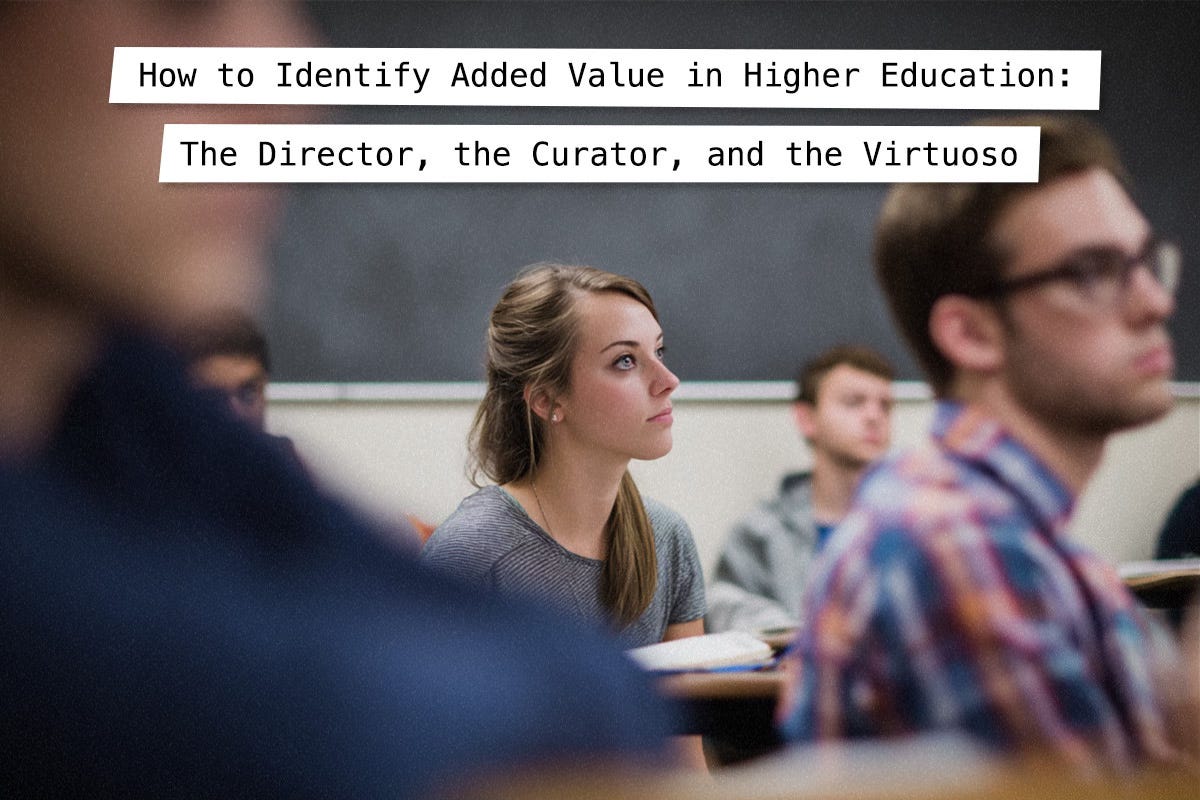
More Americans than ever are questioning the value of college today, with a record-low 35% saying a college education is “very important.” As debt loads continue to rise, they wonder whether the exorbitant cost of tuition is worth it––and what the actual value of the college experience is.
In my interviews with over 150 college leaders while writing Capitalizing on College, I discovered a question that can help educators identify and better communicate the value of the college experience.
For many university leaders and faculty members, it was difficult to answer when I asked: “What is the one thing a person will learn from you that they will not encounter anywhere else within the university?”
And yet, for those who offered an answer, they seemed to respond instinctively as though it were second nature. Three responses stood out: the theater professor who urged “presence,” the art professor who claimed “the skill of curating,” and the musician-turned-senior administrator who mentioned “multi-plane thinking.”
These three responses suggest that the most compelling value propositions aren’t found in career placement statistics, and they offer a model for how any educator might articulate theirs.
When I asked an accomplished theater director and professor about the value formation a person would gain from taking her course, she offered a few benefits that would not appear on many syllabi. “I would say things like emotional intelligence, or awareness,” she said. “Theater students have to be aware of themselves and others, and the way both occupy the same space.”
She paused for a few moments when I asked her to elaborate, then reached across her desk and picked up her iPhone and started to make a scrolling motion with her finger atop the phone while saying, “I offer my students the opportunity to learn presence. Because of technology, a major challenge today is that very few people know how to be fully present. I think on a very practical level that is a skill that almost nobody has anymore.”
After setting the phone back down, she motioned her hand back and forth between us and emphasized, “Because…we are here, you know? And a theater person is forced to be open, listen, and react. They are forced to engage physically with others in the world.” She drew a contrast between her approach and other programs:
Some of the other academic programs don’t have that kind of interaction ever. You are in the classroom with your laptop. I think developing presence and awareness is unique to a theater program; even if you are training as a stage manager or as a technical theater person, it is the most collaborative of professions.
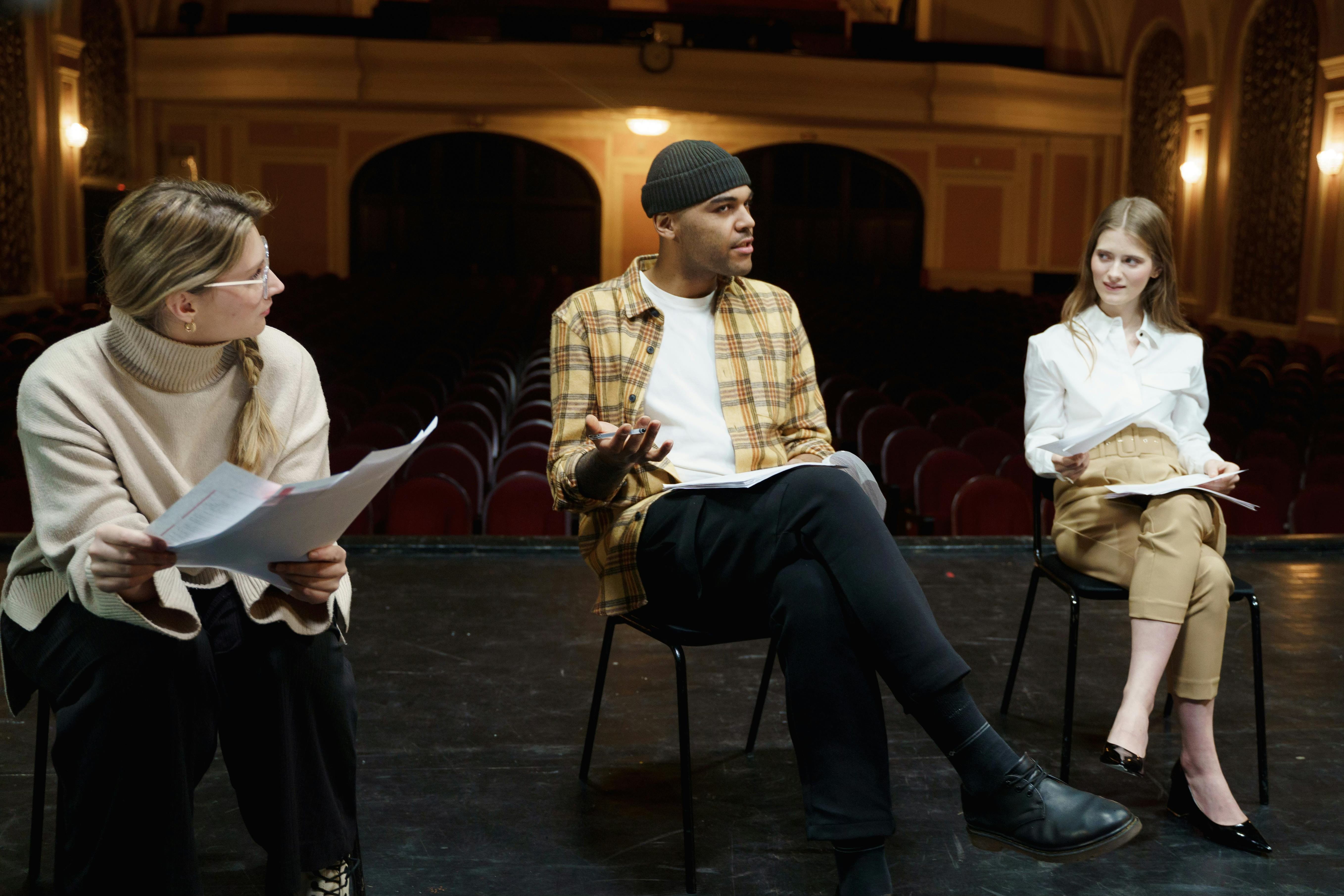
Students who develop a strong sense of awareness and the skill of being fully present can go on to nurture collaborative teams across industries. Their clients will feel seen, and their colleagues will feel heard. Persons with presence demonstrate attention to detail, possess greater focus, and exhibit emotional regulation under pressure, all of which contribute to higher-quality decision-making.
Presence may not appear on any syllabus, but it shapes how graduates lead meetings, navigate conflict, and build trust. How many of your faculty are teaching similar skills without naming them?
At another university, I sat down with a dean trained in art history. When I posed the value-added question to him, he responded without pause, “I am a curator; I develop curators.” He must have seen the look of confusion on my face and continued:
When you curate an exhibit, you bring together disparate elements and ensure they work aesthetically and conceptually. You are developing and moving toward an overall message—what that specific show or exhibit is about, whether you’re trying to show that person’s history, the influence, or progression of styles.
Just as he would in a museum, he described how he uses this skill every day as the leader of an academic division: “I feel as though I read people visually, in terms of how they engage with me, how they talk; I think those are aspects of art education and really important.” He continued, “Too often, we fail to notice what is going on in the room. As a curator, as an administrator, you want to be able to put the right people in the right places to get us toward the main message or goal.”

Our conversation covered dozens of topics that day, but as we concluded, he returned to the idea of “curating” as an important professional skill—bringing together diverse elements to convey a cohesive meaning. He proudly noted the culture and community he had curated: “The type of faculty you bring around you, and the type of folks, what kind of person you are, what kind of organization, what kind of mission you are working toward…I was a curator; I did that.”
Students who develop the ability to curate can assess disconnected ideas, processes, people, and objects, bringing them together to create something bigger and of greater value. These curators can see and build the common threads necessary for productive teams and healthy organizational cultures. Learning to curate transforms a student from someone who simply gathers information into someone who shapes meaning, direction, and value for an organization.
The curator’s framing redefines synthesis as a professional skill. Where else on your campus are students learning to assemble meaning from chaos?
I spoke to a senior leader at another university who was an accomplished musician and Juilliard graduate. Her answer to the question of unique value reflected her background and training: “As a musician, I think differently,” she admitted. “We learn to think on multiple planes.”
She went on to describe how she approached issues both horizontally and vertically, which often gave her a distinct advantage when developing complex solutions to institutional challenges.
[Musicians] learn how to produce a sound; we are looking at mathematical descriptions on a page… I’m doing that in my brain in this horizontal plane. Then when I play in an ensemble, I’m doing it on another plane, because now not only do I have to calculate the equations and symbols, [but also] produce the sound and stack it rhythmically, vertically. And then you add the acoustics of the space, when you’re adding all those other pieces together.
Drawing a through line from that process to her role at the university, she noted “It’s the same thing here—I do my job, but my job is fitting into fifty thousand million other things that are going on.”
She recounted myriad conversations in which her unique training and multi-plane perspective enabled her to find creative, holistic approaches to problems, rather than acting impulsively in response to perceived urgency. By considering past and future outcomes—horizontal and vertical—she was able to offer solutions that were more strategically comprehensive than the “whack-a-mole” approach of some of her colleagues.
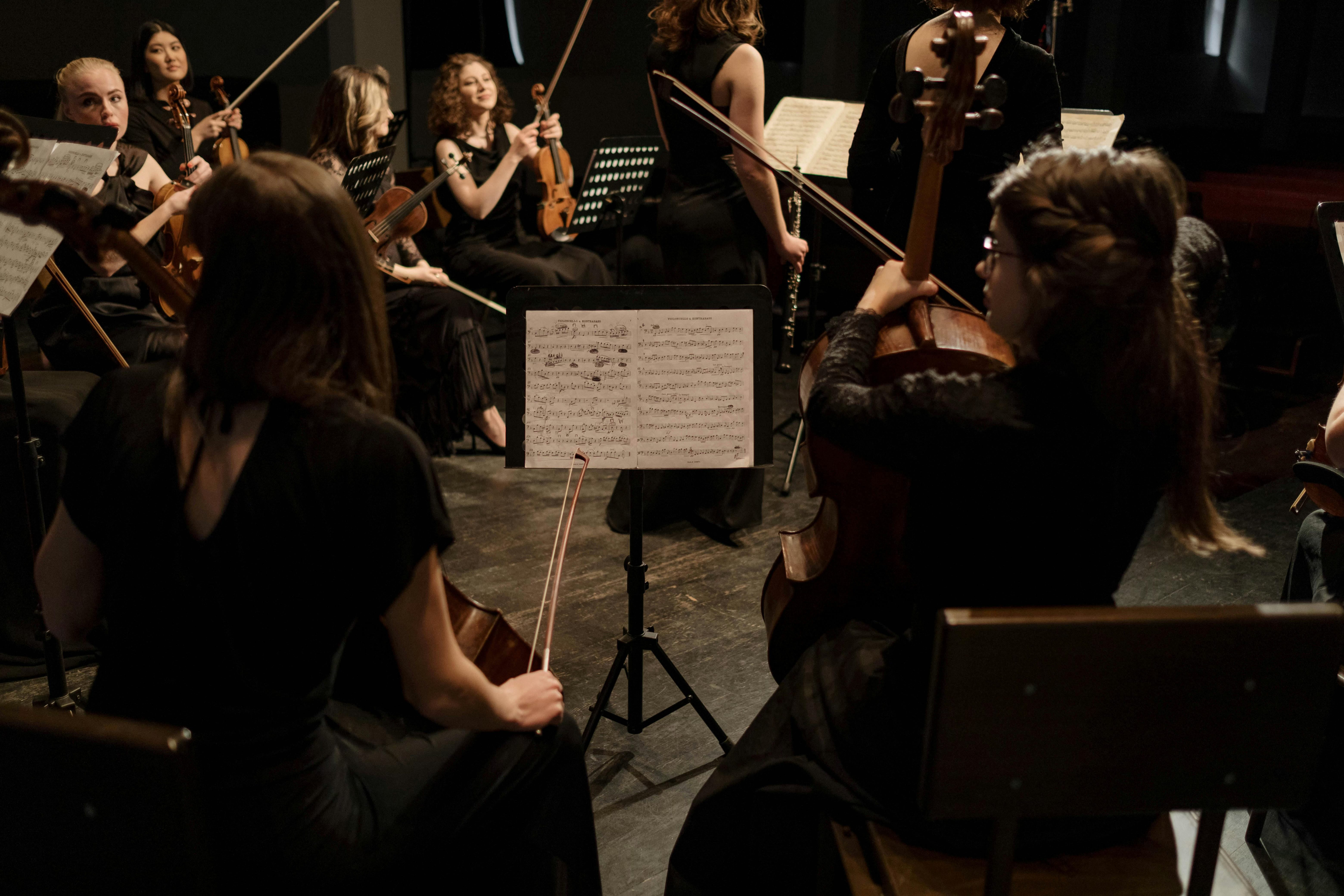
She recognized that her orchestral sensibilities were unique in her administrative circles: “I don’t see that happening in how the university runs itself. It doesn’t see how all those pieces fit,” she noted. “I think it’s so overwhelming to most people to think and feel on all those levels simultaneously that they don’t.”
The ability to think on multiple planes is the mental equivalent of playing 3D chess instead of checkers; students learn not just to complete the task in front of them but also to consider the strategy behind it, the people involved, and the long-term ripple effects. An employee with this skill doesn’t just “do their job”; they optimize the environment around them. They move from being a passenger in an organization’s journey to being a navigator who understands the engine, the weather patterns, and the destination all at once.
The virtuoso’s advantage is a trained capacity to process complexity in real time. Few campuses recognize this as teachable—fewer still know who’s already teaching it.
In the face of all-time-low confidence in the value of a college education, we must focus on identifying and communicating the full value of what students gain from their degree.
I’ve previously highlighted that some institutions have embraced this challenge by blending mission and innovation as “value entrepreneurs” that bring educational access to new groups of students. I want to suggest that another way is to ask members of the university community to specify the added value they offer students.
I encourage senior university leaders—presidents, provosts, vice-presidents, and deans—to walk your campus on a listening tour, asking “What is the one thing a person will learn or gain from you that they will not encounter anywhere else within the university?” Listen for the different voices of your university that add genuine value to a student’s degree. See if you can identify the invaluable skills students might gain by engaging with the talented faculty and staff you employ.
Once you begin identifying these value-added elements, consider assigning a team to establish a communication strategy to promote this important aspect of your institution and its culture. Honing the specific value your university offers can go a long way toward overcoming public skepticism and reminding people why the college experience remains indispensable.

Issue Soundtrack: Symphony by Maggie Rogers
This one’s for the audio(book)philes: You can now pre-order the audiobook version of Capitalizing on College narrated by Mitch Crawford—who has also narrated the below best-sellers. Pre-order on Amazon or Audible.

Let’s Connect: Please drop me a note on Substack, LinkedIn, X, or my website if you are interested in the “other 99%” of colleges and universities, or to tell me what you are reading and why. I would love to hear. You may see your name/suggestion here in a future issue.
Writing Playlists: Need some new energy for your own writing project or workday tasks? I’ve made the up-tempo music playlists I use for writing available for others, too! Each of the six lists has a different theme: Eclectic Hope, Ambient Sunshine, Energetic Focus, Belief with Bass, Rhythmic Confidence, and Inspired by Anime.
Comments
Nothing yet. Say the first thing.
Sign in to join the conversation.