
Before every Gifts from Spirit event, I go through a process that still feels strange to me, even after all these years of doing this work.
I say a prayer, get into my car, and start driving. As I drive along, I begin receiving instructions about the gifts I need to buy. I might be led to a toy, a particular food, an item of clothing, or some completely random object that makes absolutely no sense to me at the time. I then order the gifts in the order I receive them, bring them to the event, and cover each group with a tapestry.
Then we get together and figure out what any of it means.
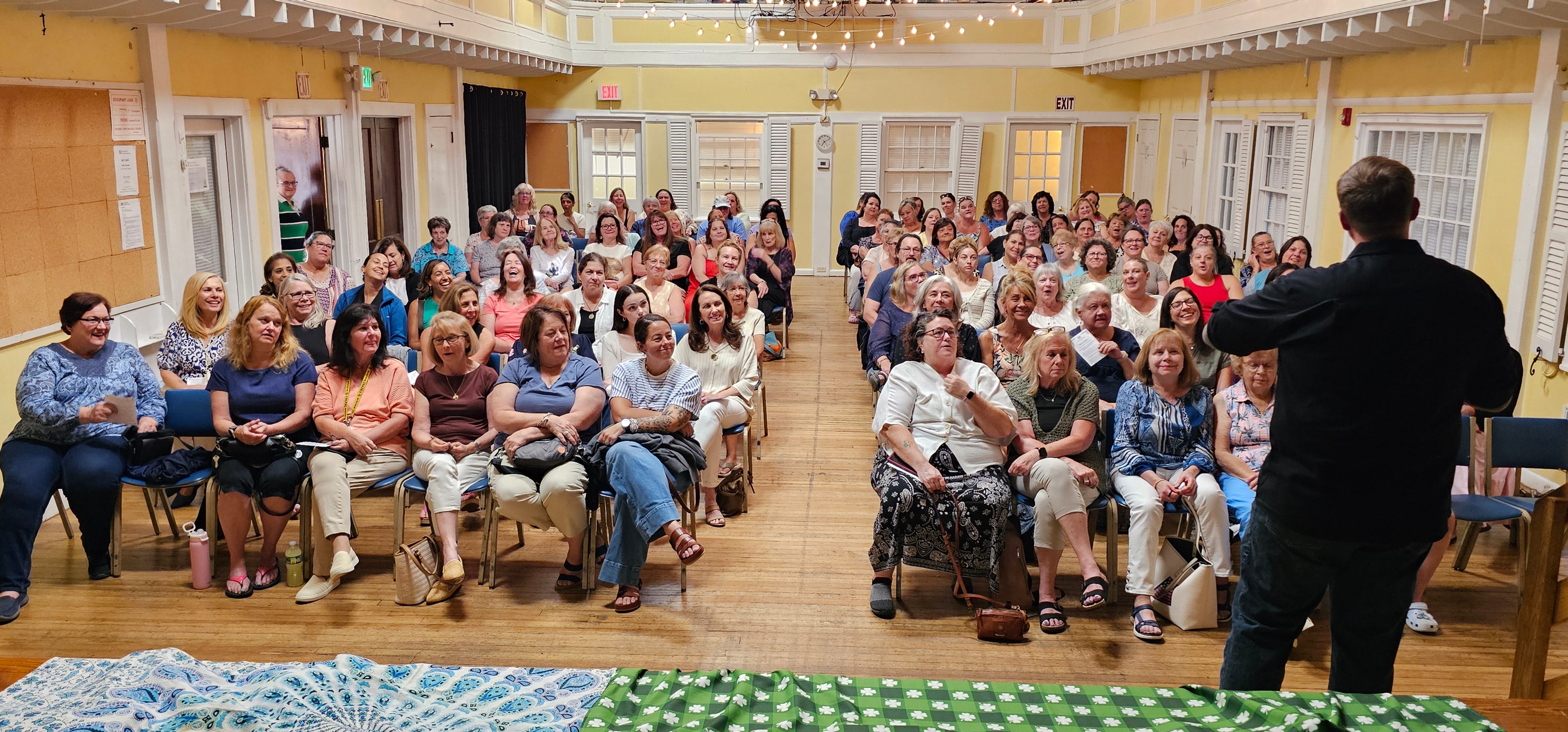
Over the years, I’ve noticed that there’s always a theme connecting the people who receive these gifts. Sometimes they’re teachers. Sometimes they’re nurses, counselors, or mothers. More often than not, they are people who have spent much of their lives helping everyone around them, usually without receiving much acknowledgment for what they do.
That was certainly the case when I arrived in Hamden, Connecticut, for Gifts from Spirit. I had seven groups of gifts waiting beneath the tapestries, along with my “opener,” a spirit who comes through before I begin to uncover them. By the time I had finished the first three readings, the message of the evening was already becoming clear.
These were women who knew how to take care of other people, yet their loved ones in spirit wanted them to learn how to take care of themselves.
The opener felt like a father.
He showed himself to me wearing a white shirt and a black tie, and there was something around him that initially made me think he had been involved with a church. I wondered whether he had been a deacon or some other sort of holy man, although I could also feel that the person I was looking for might not understand that part of the description.
He wanted to thank his daughter for taking care of her mother after he died. Alongside that gratitude was an apology. I could feel that he regretted things he had done to her mother, or perhaps things he had failed to do while he was alive.
Then he gave me the part that would make someone in the audience have to speak up.
His daughter was smoking a lot of reefer.
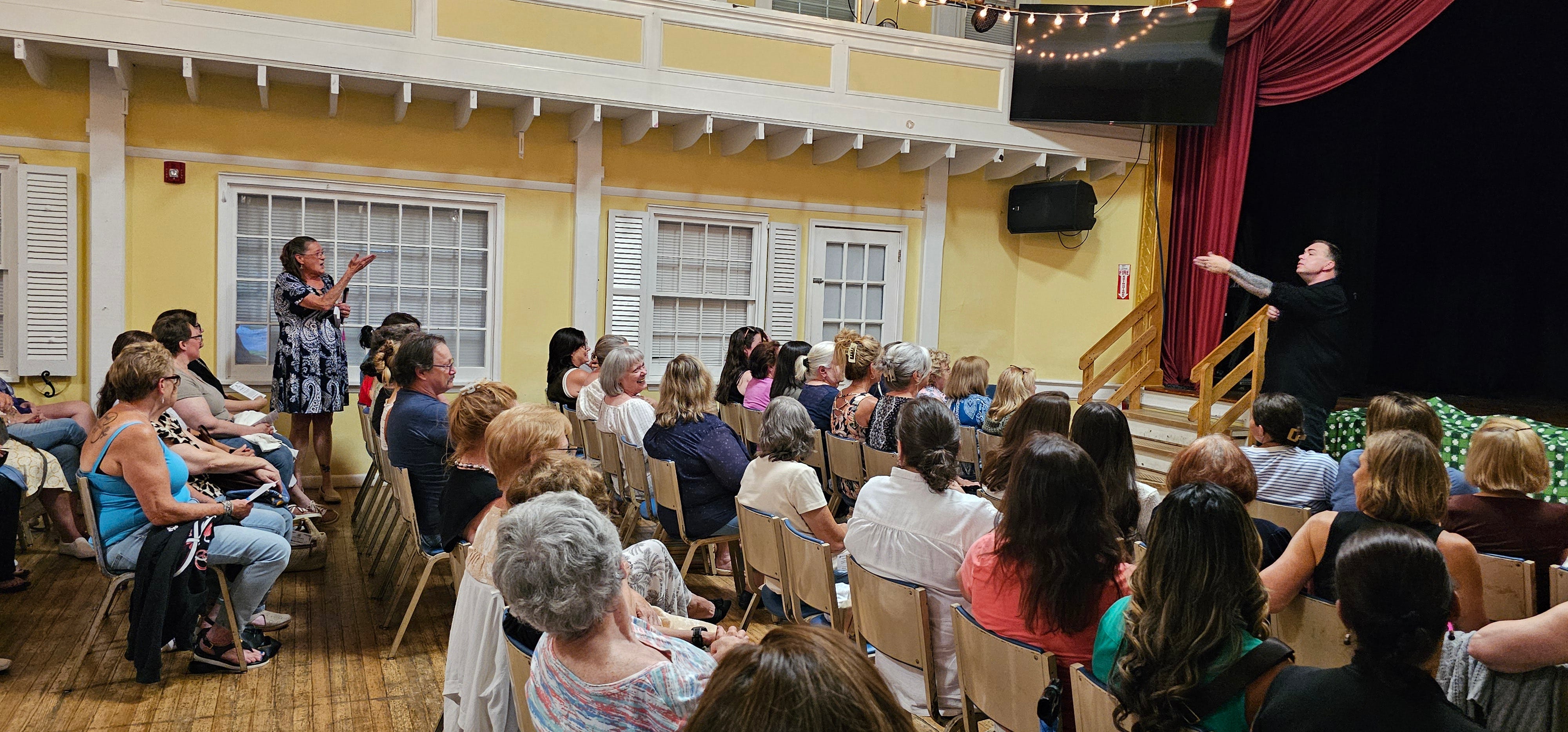
I could feel trouble in my lungs as he brought this through. The woman I was looking for already had a lung or chest condition, and her father was not trying to scold her or make her feel like a bad person. He was worried because she was scorching lungs that were already struggling.
After a little awkward silence, which is perfectly normal when I have just asked a room full of strangers who is smoking too much cannabis, Traci spoke up.
Her father had not been especially churchgoing, although his family had been. More importantly, he had been buried wearing the white shirt and black tie I kept seeing.
Traci also had COPD.
Her father had died from COPD.
That was why he was so determined to get through to her. He knew where this road could lead because he had already traveled it himself.
There were other pieces of evidence. He showed me a lilac tree, which Traci recognized from the family yard. He showed me a belt buckle he had left behind, and Traci confirmed that her mother still touched it. He was proud of Traci for reinventing herself after leaving her husband, moving from state to state and eventually returning to Connecticut.
Most of all, he thanked her for taking care of her mother.
As we continued, I began to feel numbness and cold in different parts of Traci’s body. She told me she was already seeing a neurologist and had an MRI scheduled. She had also seen a cardiologist that very morning.
Her father was not telling her to stop using something she felt helped her cope with the enormous amount of stress in her life. He was asking her to change the way she used it. Gummies, tinctures, or another method would allow her to receive the benefit without doing further damage to her lungs.
Then I asked Traci what she had done with her life.
She told me that she was the caretaker of everyone.
She was caring for her mother. She had an older sister with dementia and had become something of a mother to her sister’s children. She was involved with nieces, nephews, and younger people who depended on her.
There it was: the helper.
Traci had limited energy to get through each day, and she was spending most of it caring for others. Still, inside her own mind, she constantly criticized herself for not doing enough. She was distracted. She was tired. She had too many responsibilities, yet she continued telling herself that she should have accomplished more.
Her father had watched her become an extraordinary caretaker while being an absolute bitch to herself.
That was the part he could not stand.
I asked Traci whether she wanted her father to rest in peace. Of course she did.
The message was that if she wanted him to rest in peace, she had to live in peace as well.
Our loved ones do not go into some distant heaven where they forget about us. They remain connected. They know what is happening in our lives and in our minds and hearts. Her father could see every loving thing she did for others, but he could also see how she treated his daughter when nobody else was listening.
Traci needed to take care of her father’s daughter.
She needed to make changes to stay here for the nieces, nephews, and other family members she loved. She needed to follow through with her medical care, protect her lungs, and stop expecting one tired human being to carry the weight of the entire world, all while beating herself up for having a hard time doing so.
For her gifts, Traci received signed copies of my first two Down-to-Earth Spirituality books, The Secret to Life Ain’t So Secret and You Are the Crossroads.
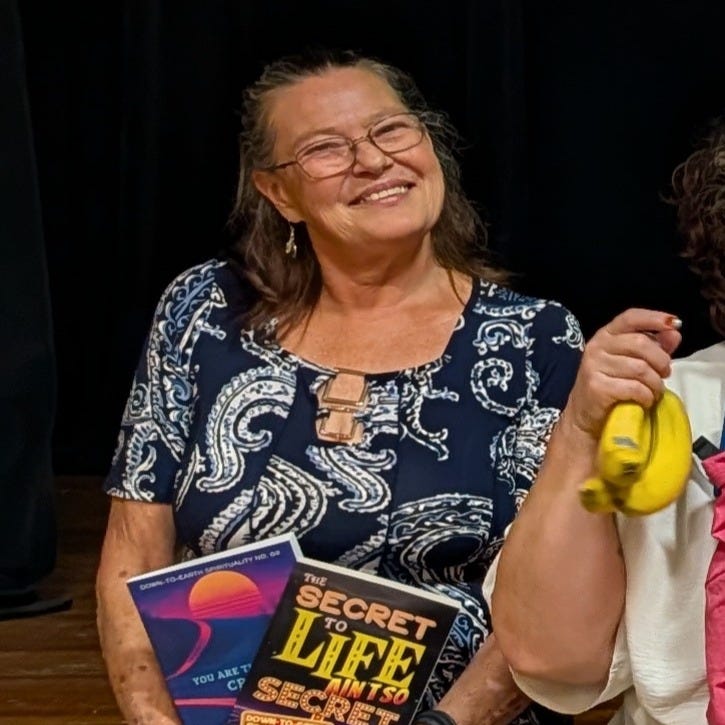
She had already been following my work and suspected that books might somehow be involved.
Apparently, her father knew that, too.
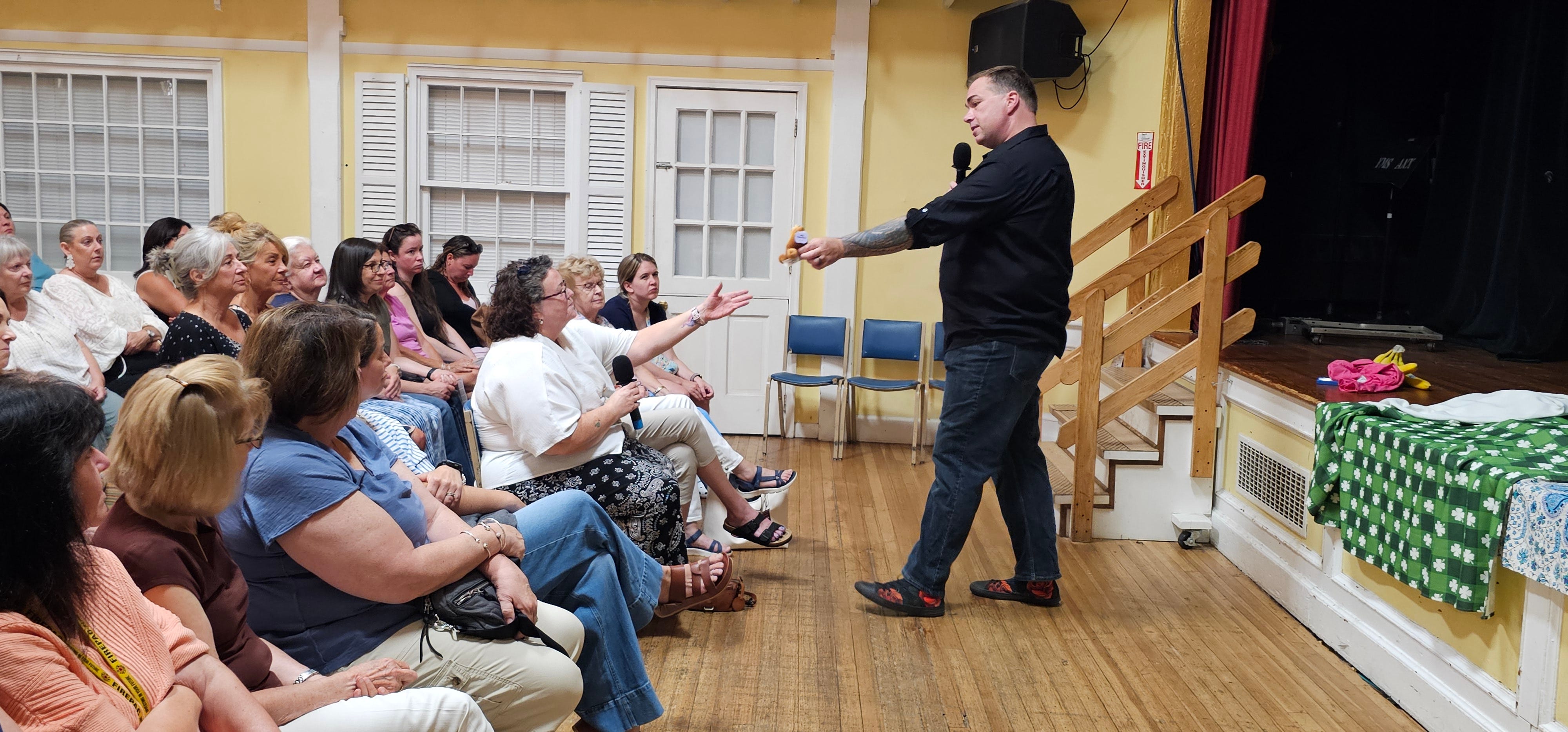
When it was time to uncover the first group of gifts, things got strange.
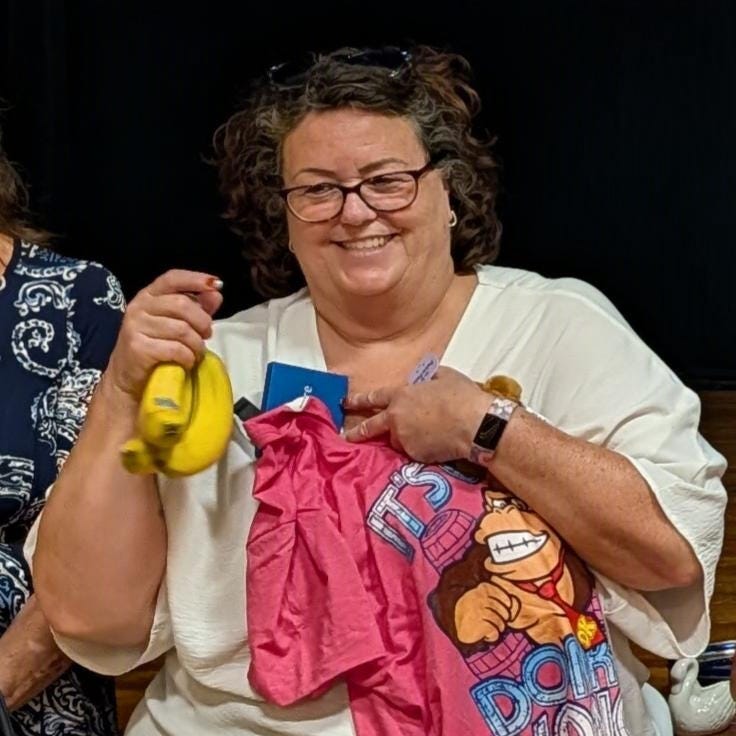
There was a monkey or Donkey Kong connection, a bunch of bananas, something that looked to me like a baseball glove with a face and a gold chain.
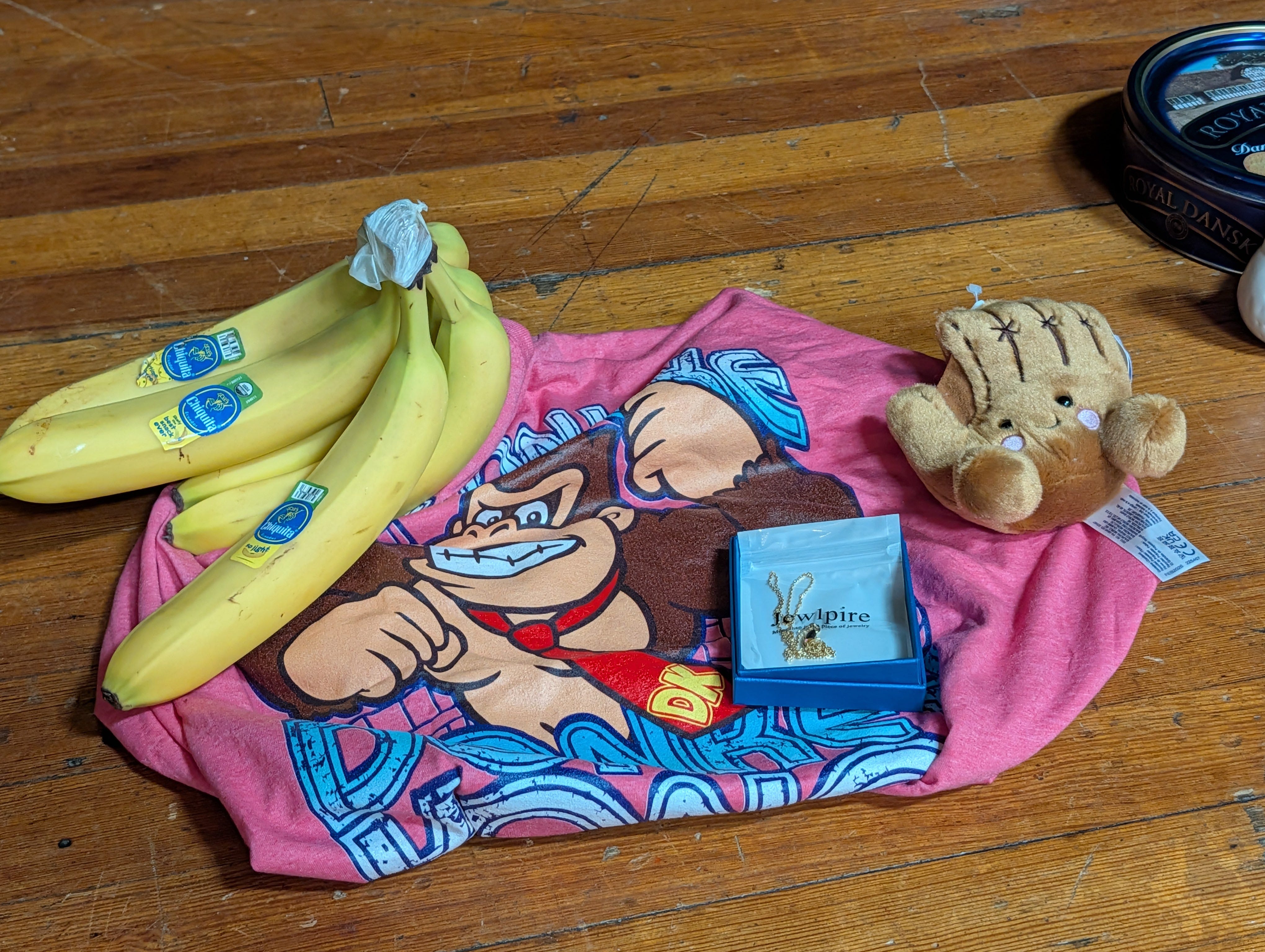
This is the part of the process where I have to stand in front of a room full of people, holding bananas and asking whether someone can connect them to Donkey Kong, baseball, and jewelry.
This is my career now.
Tina, in the front row, began putting the pieces together around her father.
She was obsessed with monkeys, and there was a funny banana story involving him. The gold chain connected with a chain and cross she’d given him that he had worn and rarely removed. The baseball imagery also belonged within the larger collection of memories and connections that allowed her to recognize him. After college, she’d played semi-pro baseball.
Once we had established the spirit, I asked Tina what she had done with her life.
She was a nurse working in a clinic that served underserved people, including those who might not have anyone else to help them.
Another helper.
Like Traci, Tina had spent her life giving care and support to people who desperately needed it. She had also made difficult decisions in the past and continued to revisit them in her own mind. She beat herself up over choices she had made, even though those choices had been made by the version of herself who was trying to survive the circumstances she faced at the time.
I asked her a question.
Had she raised a daughter who survived everything she had survived, made it through all the difficulties she had faced, and then devoted her life to caring for vulnerable people, would she be proud of that daughter?
Of course she would.
The trouble was that Tina could recognize the strength, devotion, and goodness in an imaginary daughter while refusing to recognize those same traits in herself.
Her father was watching his daughter build a better world for people, all while telling herself a terrible story about who she was. She would never have wanted one of her patients to speak to themselves that way. She would never have wanted a friend, child, or stranger to carry that amount of shame. Yet she had somehow decided that cruelty became acceptable when she was the person receiving it.
Physical information also came through. Tina confirmed that she had reactions to inexpensive jewelry. She dealt with digestive concerns, diabetes, and previous trouble with her feet, including plantar fasciitis. The physical details mattered, but her father kept bringing us back to the condition of her mind and heart.
We understand that diabetes needs care. We understand that feet need care. We understand that our bodies sometimes require medicine, adjustments, and attention. Why do we act as though our emotional health should survive on insults?
Tina’s spirits wanted her to understand that she was never alone. She was watched, loved, and accompanied, even when she could not feel it. The people she loved would be there to receive her when her own life ended, but they did not want her spending the rest of this life punishing herself for the parts that were already over.
She needed to stop beating up on her father’s daughter.
The bananas, monkey, baseball imagery, and gold chain had gotten our attention, but the real gift was the chance to see herself through the eyes of someone who loved her.
The next set of gifts included porcelain swans, “tea cakes” or cookies, and a rainbow decoration.
I could feel that someone in the room was hesitating to speak. That happens frequently during these events. People recognize pieces of a reading but convince themselves that the connection is not strong enough, or they become nervous about talking in front of a crowd.
Eventually, Darlene began explaining the connections.
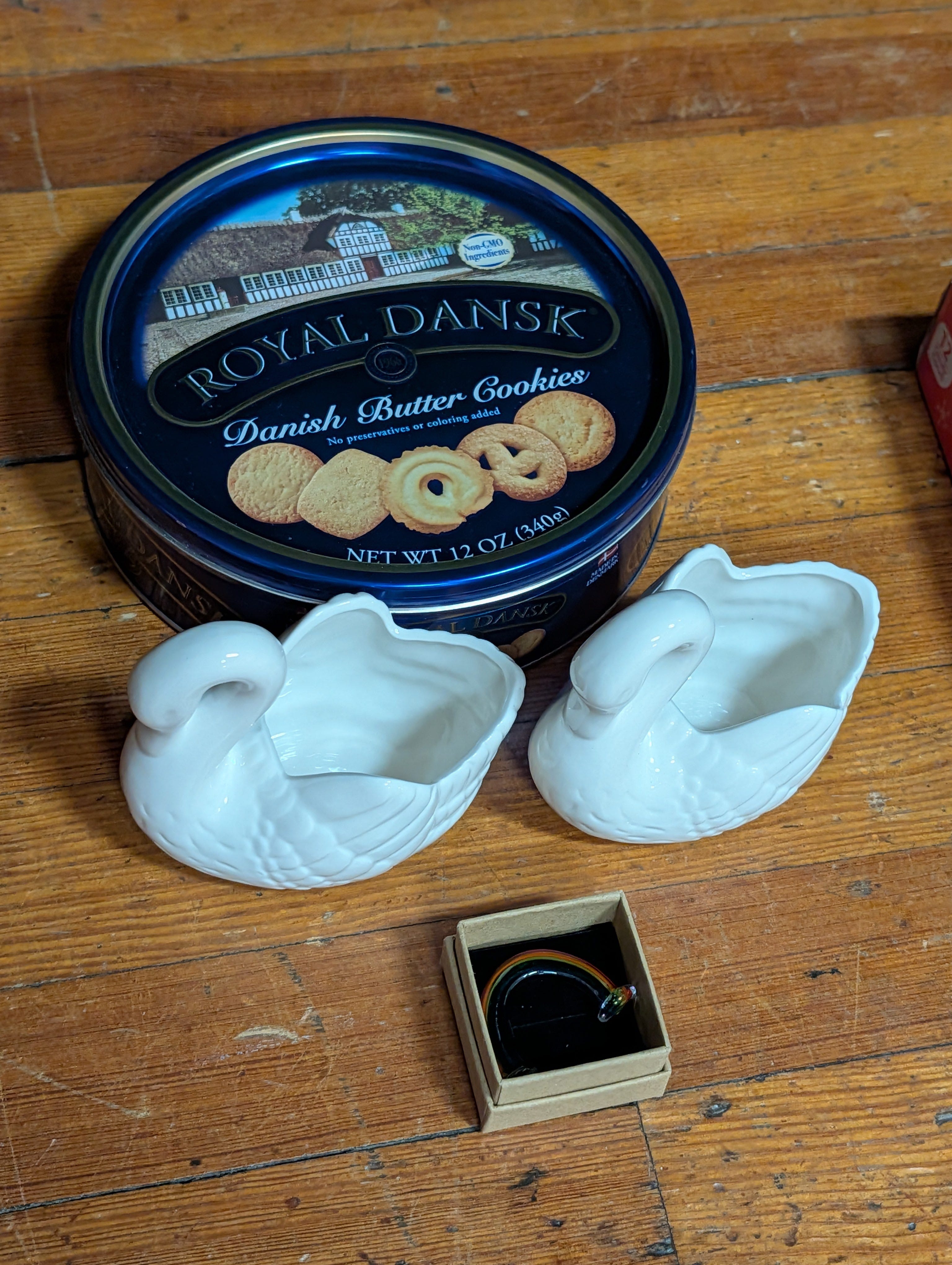
The porcelain birds belonged within her family story. The cookies had been a favorite of her mother who used to buy porcelain birds for loved ones, especially when they lost someone. The rainbow connected with a gay uncle.
Once Darlene came forward, another spirit began showing himself.
This man had something of a Fonzie quality. I saw a leather jacket and felt a rebellious personality. He had missing teeth, drank, and died young. Darlene had been thinking about getting a tattoo in memory of the people she had lost, and this spirit wanted her to go through with it.
There was also a connection with a boy Darlene had known in middle school who was killed when he was sixteen. His last name was Kelly.
I told Darlene to keep talking to the people she loved in spirit. They could hear her.
Her best friend was sitting in the audience, and I discovered that Darlene drove professionally. Her friend confirmed that Darlene drove too fast and had a habit of passing people. Apparently, the dead were keeping an eye on that, too.
She was encouraged to slow down, especially because our loved ones in spirit cannot prevent every accident or save us from every choice we insist on making. The safety lecture continued as I saw Darlene walking through winter weather in shoes inappropriate for snow and ice. She admitted that she had slipped before.
She also confirmed that she experienced cramps in her calves.
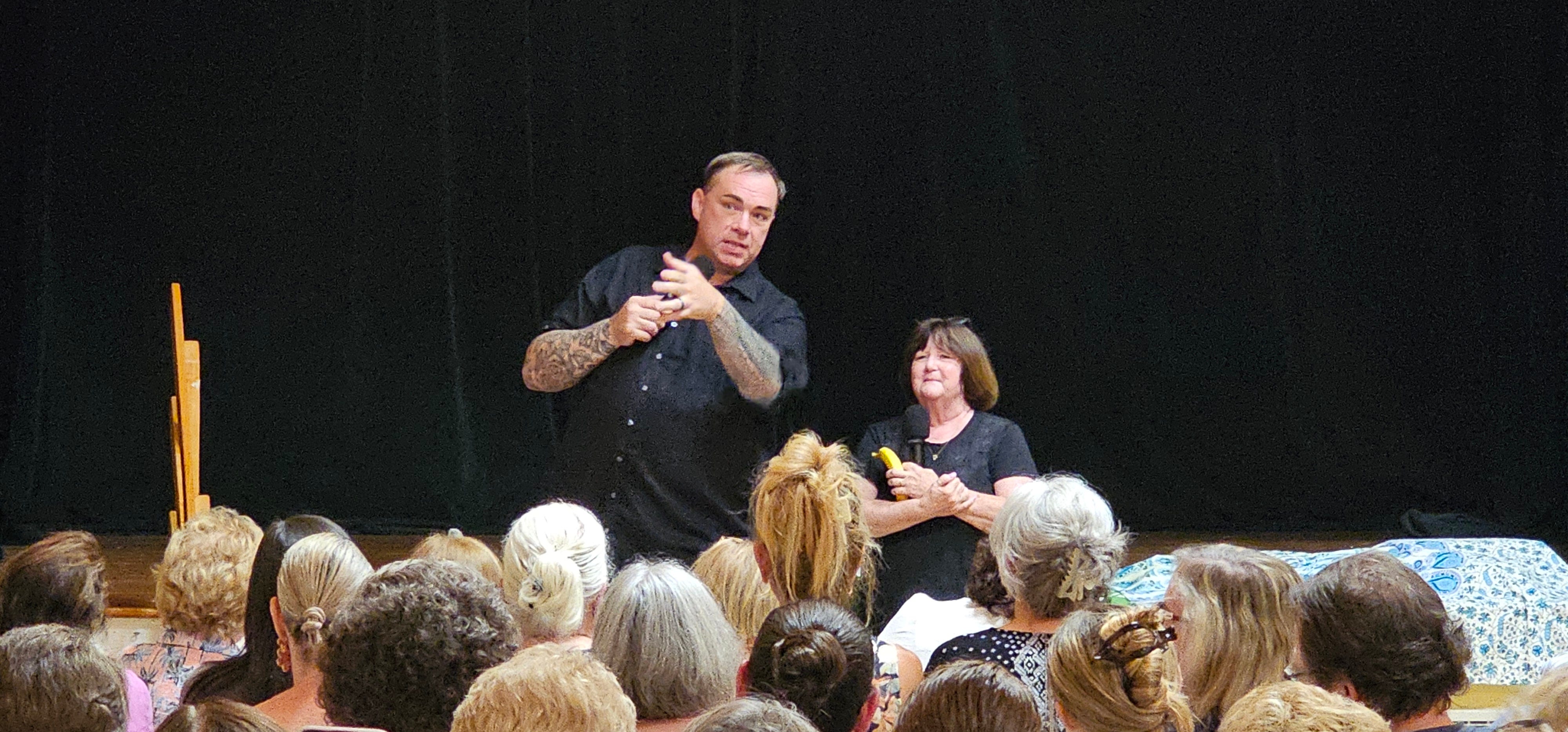
Spirit communication is not always mysterious. Sometimes your dearly departed appear from beyond the veil to tell you to slow down, eat a banana, and put on a decent pair of winter boots.
The reading then shifted toward her mother.
Her mother thanked Darlene for the practical care she had given her, including feeding her cottage cheese. She knew that Darlene expressed love through actions. She brought people food, bought them gifts, and found ways to show her affection through her actions.
Her mother’s regret was that she had not always said enough while she was alive.
That became the central message of the reading.
Tell people what they mean to you while they are still here.
When people return to spirit, they go through what I sometimes describe as a washing machine. They review their lives with a much broader understanding than they had while living them. They recognize the love people gave them, but they also recognize the moments when they should have opened their mouths and said something.
I love you. I appreciate you. Thank you for taking care of me. I am proud of you.
Darlene’s mother did not want her daughter carrying the same regret someday. Acts of service were a beautiful love language, but the people in Darlene’s life also needed to hear the words. That included the best friend sitting beside her.
Darlene had recently lost someone and was still moving through that grief. She was reminded that there is no guarantee about how long any of us will be here. She could die decades from now, or none of us could make it home from the event. That was all the reason she needed to hear to stop withholding love.
Her mother knew how much Darlene loved her. Now she wanted Darlene to make sure the living knew it, too.
Before the reading ended, Darlene’s best friend also received a moon-related gift. She worked with emergency department fellowship programs, training and supporting people who would go on to care for patients.
She tried to downplay the importance of her work, but supporting caregivers is a form of caregiving in its own right.
Once again, another helper had been acknowledged.
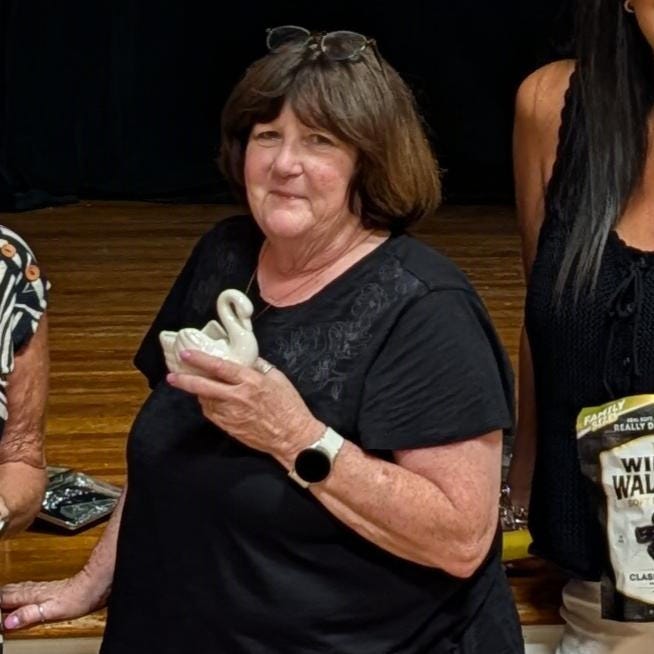
By the time Darlene returned to her seat, the message of the first part of the evening was impossible to miss. Traci, Tina, and Darlene had each spent so much of their lives caring for other people, yet the people who loved them in spirit kept bringing the same lesson back around: they were worthy of that same care.
Protect your health. Stop punishing yourself for the past. Say the loving words while there’s still time to say them. The dead were not asking any of these women to grieve harder, work harder, or carry more.
They were asking them to remember that they, too, were somebody’s beloved daughter.
No posts
Comments
Nothing yet. Say the first thing.
Sign in to join the conversation.