
Sometimes I can’t help but roll my eyes.
Working in the spiritual field can be a struggle, and not always for the reasons you might imagine. Yes, there are imposters. Some people make promises they cannot keep, claim abilities they have not developed, and happily take advantage of anyone frightened, grieving, or desperate for answers. Some gatekeepers behave as though spirituality is an exclusive club, and they alone have been handed the clipboard at the door.
Then there are the costumes.
Somewhere along the way, people became convinced that being psychic or working as a medium requires heavy eyeliner, flowing black clothing, an elaborate collection of jewelry, and the ability to speak as though every ordinary conversation is the opening narration of a fantasy movie. Apparently, for some folks, the veil between worlds is easier to cross when they’re wearing enough velvet.
I understand branding. I understand presentation, atmosphere, and the value of creating an experience. I am a performer in certain parts of my work, especially when I am standing in front of an audience, and I would be lying if I claimed I never think about how something looks or feels. Presentation can be beautiful, meaningful, and fun. The problem begins when the presentation becomes more important than the person standing underneath it, or when costuming is used to establish a spiritual hierarchy.
This brings me to the word “namaste.”
Namaste comes from Sanskrit. It combines namaḥ, associated with bowing, reverence, or respect, and te, meaning “to you.” It’s commonly understood as “a bow to you” and is used as a greeting in Indian culture, often accompanied by palms pressed together and a slight bow. Through the worldwide spread of yoga, the word became closely associated with yoga classes, meditation practices, wellness spaces, and Western spiritual culture.
I have heard plenty of people say it who do not practice yoga, have never studied the traditions surrounding it, and could not explain what the word means or where it comes from. It’s become an accessory in some spiritual circles, like a singing bowl, a string of prayer beads, or a carefully positioned statue in the background of a social media video. People use it because they believe it makes them sound peaceful, enlightened, or spiritually sophisticated.
I refuse to use it.

That’s not because I believe the word is wrong, dangerous, or forbidden. I’m also not interested in making rules about who’s permitted to say a word. I simply know that it isn’t mine. I am not Indian. I wasn’t raised within a Hindu tradition, nor have I studied Sanskrit in any way, and I have not been trained within the cultural or philosophical traditions that gave the word its life.
I have perfectly good words already. I can say hello. I can say goodbye. I can say thank you, I respect you, I honor what you have shared with me, or I am glad you are here. Those words may not sound especially exotic, but sounding exotic has never been the purpose of my work.
I want spiritual practice to be understandable and accessible. I want people to know that they can approach Spirit without first learning the correct vocabulary, buying the approved supplies, dressing the right way, or receiving permission from someone who has declared themselves more enlightened than everybody else.
Many spiritual practitioners are not interested in accessibility because it threatens their authority. They depend upon convincing people that they possess a rare or secret trait, surrounding themselves with followers who repeat their language, and defend their behavior. They do not always want students who will eventually trust themselves.
Most often, they want groupies.
They want followers, admirers, defenders, and sycophants. They want people who will quote them, purchase everything they offer, overlook every contradiction, and feel grateful for whatever attention they receive. They may talk endlessly about personal empowerment while quietly creating communities in which their own authority is never to be questioned.
That is dangerous because spiritual authority reaches into sensitive and tender places. People seek spiritual help when someone has died, or when a relationship is ending. People seek spiritual guidance when they are frightened about the future, or when they have lost their sense of identity. A practitioner who wants power more than they want to be useful can easily turn that vulnerability into dependence.
The greatest danger likes with the person who slowly convinces you that your own soul requires their interpretation and approval. They persuade you that every instinct must be checked with them, that every life decision needs to be filtered through whatever they’re teaching.
I do not want that responsibility, and I certainly do not want that kind of control. I do not want people to follow me.
I want people to follow themselves.
That does not mean we cannot learn from one another. Teachers matter, as do traditions. Books, classes, rituals, and spiritual communities can give us language for experiences we have struggled to understand. There is great value in sitting with someone who has spent years developing a skill, studying a tradition, or serving people through difficult moments.
A good teacher should help you become more capable of hearing your own wisdom. A good teacher should not make you afraid to live without them.
I also understand why some people need the fantasy, the costuming, and the sense of entering another world. Life can feel painfully ordinary. Many people have spent years working jobs they hate, caring for everyone around them, and surviving grief. They’ve spent years hiding pieces of themselves and living according to other people’s expectations. A room filled with candles, beautiful fabrics, and strange symbols may offer permission to step outside the identity they have been forced to wear.
There’s nothing wrong with enchantment, and ritual can help us mark transitions and focus attention. Costumes can help us explore parts of ourselves that we hid away because we never felt safe enough to emerge. Fantasy can often restore wonder to a life that has grown dull from responsibility, disappointment, or pain. The fantasy becomes a problem when it’s mistaken for evidence.
A person can wear white linen, speak softly, burn expensive incense, and be absolutely cruel. Some people can memorize the names of every chakra and still refuse to apologize for hurting others. They can climb mountains and sit with gurus, they can attend retreats and spend thousands of dollars, they can dedicate years of their life to spiritual study all while continuing to search outside themselves for the approval they’ve never learned to find inwardly.
I’ve met people who have done all of those and still dislike themselves. These individuals have collected certifications, initiations, and photographs from sacred places, all while believing that the next teacher, ceremony, or journey will finally reveal the missing piece they’ve been searching so long for.
The missing piece is usually not waiting at the top of another mountain.
In the first book of my Down-to-Earth Spirituality series, I wrote that the secret to life and the solution to most every problem can be found by answering one question:
“What would you tell your child?”
When we imagine speaking to a child we love, especially one who is frightened, ashamed, heartbroken, or uncertain, we reach for the strongest and wisest answer available. We don’t tell that child they are worthless because they made a mistake, and we don’t tell them they must earn the right to be loved. We don’t tell them their body makes them unworthy, their fear makes them weak, or their mistakes prove they have failed.
We tell them to try again. We remind them of what they have survived. We tell them they deserve kindness, safety, dignity, and the opportunity to become more fully themselves.
Then we must learn to turn that wisdom toward ourselves.
Some of us are stronger or wiser in certain areas than others. Some have lived longer, studied more, healed more, or survived experiences that have given them a particular kind of understanding. None of us possesses perfect wisdom, but our own strength and wisdom must count for something. It’s what we have, and where we begin.
We’re exposed to forces that teach us to distrust ourselves almost from the moment we enter the world. Religion can tell us that our natural desires are sinful, and advertising can tell us that our bodies are problems requiring expensive solutions. Families can hand us shame that began long before we came into the world. Schools and communities can teach us that belonging depends upon becoming quieter or smaller, prettier or straighter, thinner or easier to control.
For me, the spiritual path includes identifying those influences. They are the variables in the algebra equation of our lives. We may not have chosen them, and we may not have known they were there, but they still affect the answer.
Spiritual work asks us to examine those variables. Can this belief be healed or removed? Does it belong to me at all, or was it handed to me by some system that wanted to capitalize on me or by someone who was carrying their own fear? If it cannot be removed entirely, can I learn to recognize it when it appears and refuse to let it make every decision?
Beneath those influences, buried under the shame, expectation, and fear, we find our glorious soul, carrying its own wisdom, its own history, and its own understanding of why it came here.
Some of the most spiritually enlightened people I have ever met would never describe themselves that way. They have not lived in monasteries or spent years on their knees in church. They might not know what Reiki is. They may have never heard anyone discuss chakras, energy fields, or vibrational frequencies.
They know how to sit beside someone who is grieving without trying to fix them. They bring food when a family is struggling, and tell the truth without enjoying the damage it can cause. They know how to apologize and they help without making the person they helped feel small or as if they owe them something.
We can call that spiritual maturity.
You don’t need crystals to be spiritual. You don’t need sage, incense, tarot cards, prayer beads, singing bowls, sacred geometry, or a certificate from someone who calls themselves a master. You don’t have to meditate, perform rituals, study ancient texts, or travel to holy places.
All of those can be wonderful, and I use some of them myself. They’re only tools, though, and tools can help us direct our attention toward what matters. Still, the tool is not the soul, and owning the tool does not make someone wise.
I believe we are already spiritual because spirit is what we are made of before we incarnate as human beings, and it is what we return to when this human life is over. Our spirituality is present from the first breath we take until the last one leaves us, and will never require us to complete enough lessons or purchase the right supplies.
This belief has gotten me into trouble with almost everyone.
Certain Christians don’t like me because I question religious authority and refuse to believe that love requires fear. Certain witches don’t like me because I will not pretend that every rule, correspondence, title, or inherited tradition must be followed without question. Certain psychics don’t like me because I challenge ideas that have become profitable, familiar, and almost impossible to discuss without someone becoming defensive.
I have questioned the modern idea of being “an empath,” especially when it is used to create another spiritual hierarchy. Sensitivity is real, but declaring ourselves spiritually special because we feel other people’s emotions can prevent us from examining poor boundaries, anxiety, learned vigilance, or our habit of assuming we know what everybody else is feeling. It can also create the convenient belief that we are the deeply feeling ones surrounded by people who are less compassionate, less aware, or less evolved.
I am always going to question any belief that requires us to elevate ourselves by diminishing everyone else.
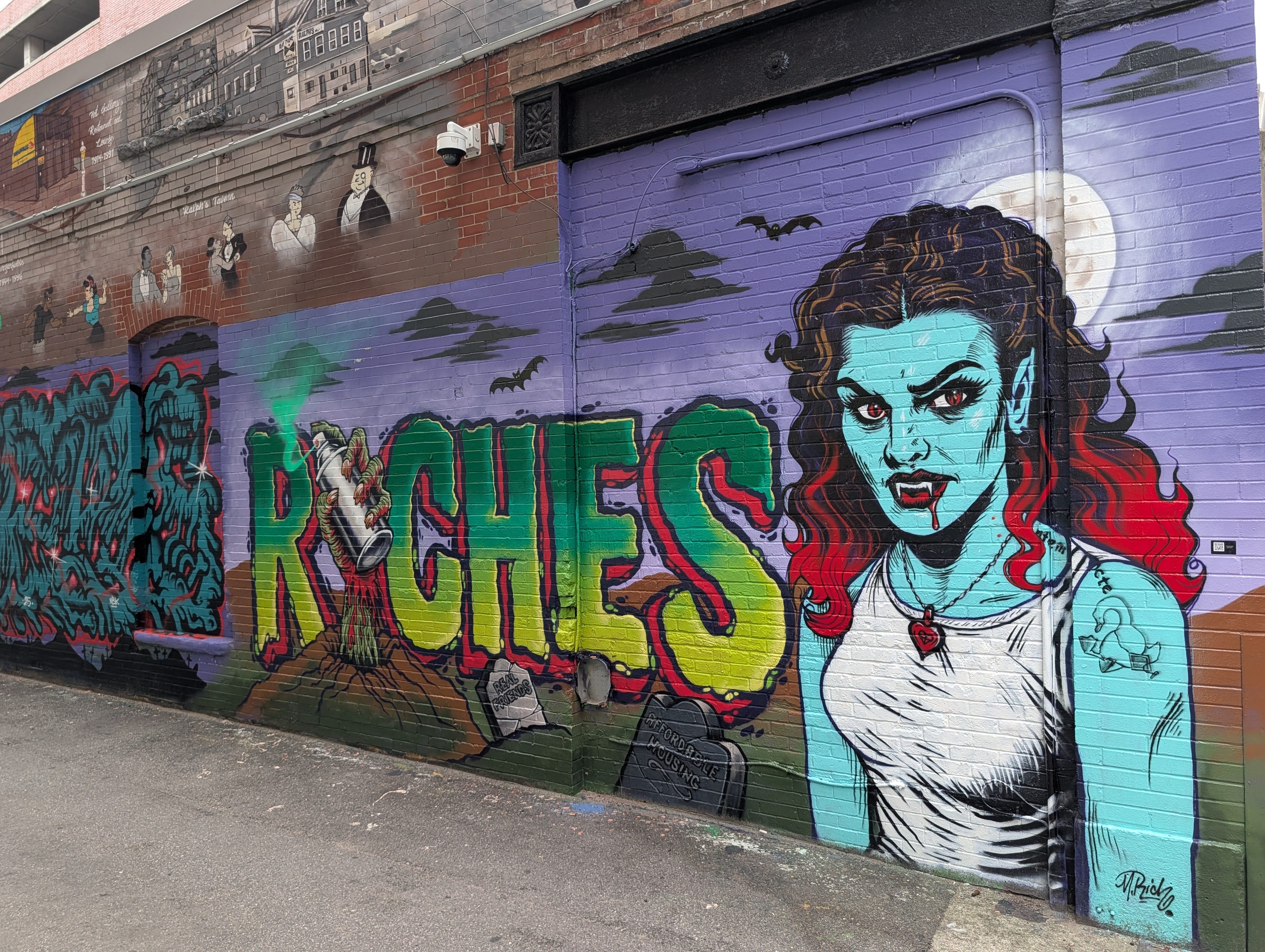
Keeping this work down-to-earth means I will probably disappoint anyone looking for a flawless spiritual figure. I have tattoos. I swear. I talk about sex, bodies, and money. I talk about anger, jealousy, grief, politics, relationships, and all the complicated experiences that come with being human. I do not believe Spirit becomes offended when we acknowledge the realities of the world Spirit allowed us to enter.
Sometimes the most spiritual experience of your life happens in a truck-stop diner, like when a tired waitress refills your coffee and tells you exactly what you needed to hear. It may happen beside a hospital bed, in a grocery store parking lot, or while sitting alone at your kitchen table.
Sacredness does not require impressive scenery.
Turning toward Spirit or God is not necessarily a search for something far outside us. It can be the process of moving inward, beyond everything that has clogged our minds and hearts, until we reach the part of ourselves that has never forgotten its divine nature.
We don’t have to prove that divinity. We don’t have to achieve it, display it, certify it, or dress it in dark eyeshadow and flowing robes. We don’t need followers to confirm that our soul has value, and we don’t need to become followers because someone else has convinced us that theirs has more.
I would much rather remind you that the wisdom you have been searching for may already be waiting inside you, beneath the noise, ready for you to stop following everyone else long enough to hear it.
So I’ll continue staying in my own lane, questioning what deserves to be questioned and keeping my feet planted on the ground while I do this work. I will say hello when I mean hello, thank you when I mean thank you, and I love you when I am fortunate enough to mean that too.
But you’ll never hear me say “namaste.”
No posts
Comments
Nothing yet. Say the first thing.
Sign in to join the conversation.