
0:00
-10:48
My wife forwarded me an episode of The New York Times’ The Daily entitled What A.I. is Actually Doing to The Economy. (Short answer: we don’t know yet.) In it Ben Casselman, the chief economics correspondent, looks at the arrival of the internet in the 90s as a way to understand how A.I. might change work. Change is hard, and many people like Ben are looking for a way to make predictions.
The printing press, railroads, the internet. Technological innovations throughout history have elevated living standards, but also caused massive disruptions to existing systems and power structures.
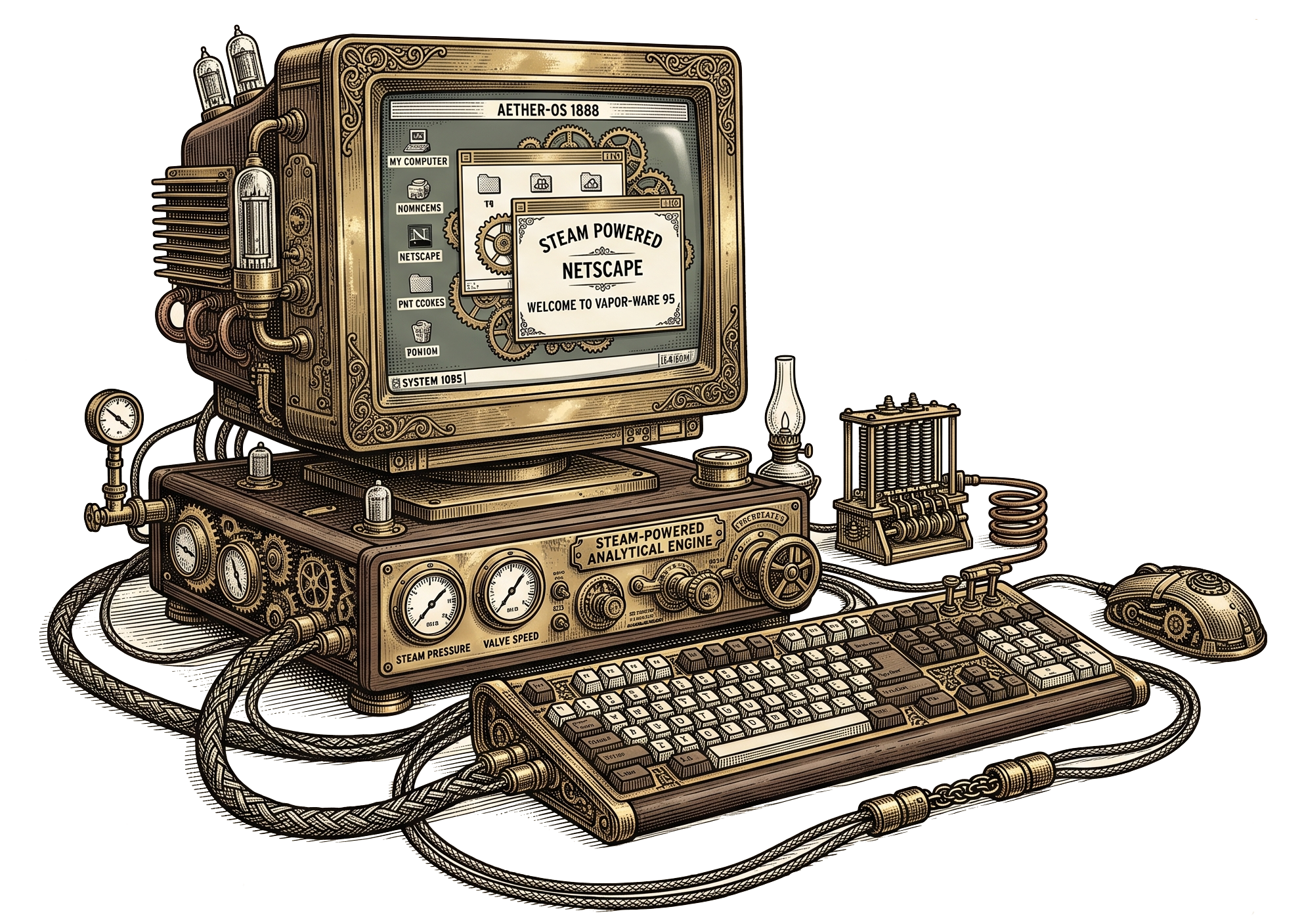
Mary Daly, President of the San Francisco Fed, referred to electricity adoption when she spoke to the Silicon Valley Leadership Group in February 2026. She was explaining that we don’t know the effect that A.I. will have on the economy. Yet.
Let me start with a simple maxim—transformations take time. Think about electrification. Sitting here with lights, computers, and fully electric vehicles, it’s easy to imagine it just happened with the flip of a switch. The truth is, it took nearly 100 years to move from Michael Faraday’s and Joseph Henry’s generation of the electric current in the 1830s to electricity boosting productivity growth and transforming the economy.
Another anecdote that’s everywhere is the Luddites. In 1811 English clothworkers started smashing looms and frames, but only at specific factories, owned by the bosses who paid the least and abused workers the most. They weren’t against the machines. They were against being replaced by cheaper, untrained hands, often children. One part of the story that gets lost in the retelling is that they spent almost a decade petitioning Parliament for a minimum wage unsuccessfully before they raised their hammers.
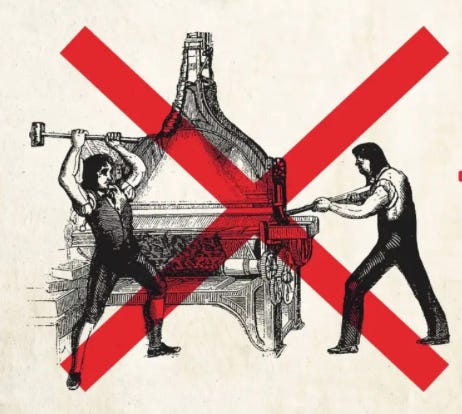
Tech journalist Brian Merchant wrote a book about the whole thing called Blood in the Machine in 2023, now reports the reemergence of the story in conjunction with A.I. in his post Understanding the Luddites in the age of AI. He points to the ‘yes you are a Luddite’ and ‘No I’m not’ going on around Bernie Sanders’ data center moratorium. The Washington Post editorial board, Ben Shapiro, and a Newsweek op-ed all used the same insult. Sanders shot back in a Fox News article.
All sides here are relying on an old story and its outcomes to bolster their arguments.
Each analogy can tell a different story. Daly’s story is about patience. Wait, reorganize, retrain. Merchant’s is about power. Organize, regulate, demand a seat. Which one a leader reaches for tells you what they think their job is.
Whichever you prefer, and whatever lesson you take from it, I thought it was a good week to share a project I created a few months ago. I used A.I. to draft a timeline of historical disruptions for a talk I was giving to a group of communications designers in Seattle. They’re grappling with their futures, as much as any industry, and it seemed useful to provide perspective.
For them, and myself, I thought it’d be useful to take an expansive look at disruptive technologies over time, what the specific fear was, how resistance took shape, and approximately how long the transition took.
As for the accuracy of the timeline, I checked every date and claim against named sources. Three of the best known anecdotes about technological panic turned out to be folklore. I left them in and labeled them.
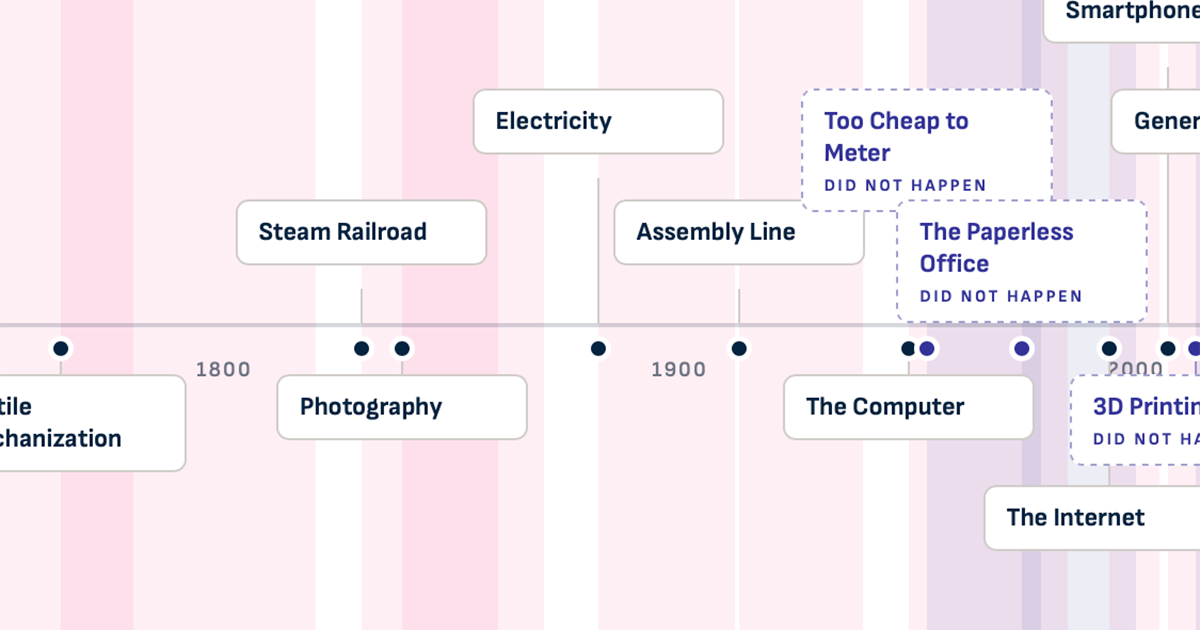
Here’s my timeline. I’m going to use this construct in the next few weeks to continue exploring how A.I. is reshaping business and leadership. I doubt I’m going to come to any conclusive predictions about what is going to happen, but the chart does show that just because it’s happened before in a certain order with a specific outcome doesn’t prove it will happen like that again. Nuclear power, the paperless office, and 3D printing were all confident forecasts by serious people that failed to materialize.
Comments
Nothing yet. Say the first thing.
Sign in to join the conversation.