
People fantasize about killing people they hate all the time. Coworkers, exes, politicians, drivers, in-laws, the man who ruined their childhood. The fantasies are vivid, often detailed, often repeated for years. Almost none of them ever happen. The standard explanations — deterrence, conscience, the basic decency of most people — don’t really account for the gap. The gap is too large. Something else is doing the work, and it’s worth saying clearly what it is, because the public conversation about hatred and violence almost always gets it wrong in the same direction.
The implicit model running underneath most of that conversation is an intensity model. Enough hate, sustained long enough, eventually crosses a line into action. “I want to kill him” sits one notch below pulling the trigger; raise the volume and you get the act. This is wrong, and most people privately know it’s wrong, because everyone has said something like that without meaning it and without ever coming close to meaning it. But the public model keeps running as if the private knowledge weren’t there. Pop psychology assumes it. Large parts of policy discourse assume it. Most online moralizing assumes it. The strength of the feeling is treated as the variable doing the work.
It isn’t. Expression and action don’t run on the same line. They run on largely separate systems and the coupling between them is weak by default. Expression handles discharge, bonding, identity, the felt sense of agency when real agency is constrained. “I want to kill him” is closer to “I am furious and I need you to know I am furious” than it is to any planning statement. The expression is the function. It already fired. It isn’t a precursor that failed to escalate; it did the thing it was for. The cost asymmetry makes the ratio rational on top of that. Talk is free. Action costs prison, retaliation, the destruction of every relationship that gives a life its shape, and — for most people, most of the time — the empathic residue you can’t shed once a body is in front of you. Price those in and the talk-to-action ratio isn’t surprising. It’s exactly what you’d predict from any creature whose verbal system runs faster than its motor system and whose social life depends on broadcasting affect more than executing it.
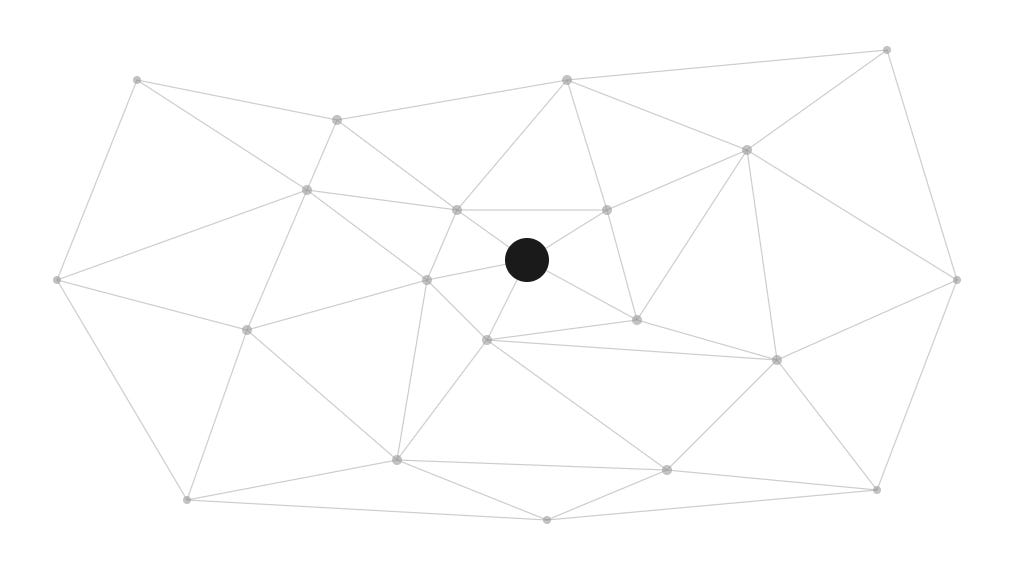
The rare actor — the one in some absurdly small fraction of people who hate someone and then actually does something about it — isn’t distinguished by stronger hate. This is the part most worth getting right. They’re distinguished by different wiring around the same feeling. Hate is a single point. What determines whether it goes anywhere is what it’s connected to and what sits on those connections. In most people, “I hate him” is wired into a dense web: self-concept, the future self that has to live with the act, the relationships that would shatter, the ability to picture the actual body in front of you, the inherited prohibitions, the imagined faces of people whose opinion you can’t bear to lose. The whole web acts as a brake. The hate sits inside a network that absorbs it, dissipates it, lets it run as expression and stop there. In the rare actor, that web has been disrupted. Ideology has cut some of the connections by licensing the act. Isolation has stripped the social brakes by removing the people whose imagined faces would have stopped it. Psychosis or intoxication has collapsed inhibition by weakening every connection at once. Or — most quietly and most dangerously — the self-concept has reorganized so that the act now feels coherent with identity rather than alien to it. Same content. Different topology. Different outcome. The intensity of the hate is not the variable doing the work. The shape of the network around it is.
This isn’t an argument that hateful talk is harmless. It’s a precision claim about where the harm actually lives. Violence isn’t intensity traveling down a continuum until it tips into action. It’s network reorganization. Talk matters not because it’s almost-action but because, for some listeners under some conditions, it can participate in rewiring what their hate connects to — what gets licensed, what brakes get cut, what new self-concept becomes available. That’s a more specific claim than “talk leads to action,” and it points at different interventions. Not policing intensity. Not measuring how loud someone is. Attending to the conditions that disrupt the inhibitory web. Isolation. Ideology that licenses. The slow reorganization of identity around grievance. Those are the variables that matter. Loud talk among people whose networks are intact is mostly affect regulation and always has been. Quiet talk inside a network being stripped for parts is the dangerous kind. The two look nothing alike, and treating them as points on the same scale of “concerning rhetoric” is how the conversation keeps missing.
Most people don’t act on their hate because most hate isn’t a plan and was never trying to be one. The expression already did what it was for. Asking why so few people act on what they feel is like asking why people don’t eat their daydreams — a category error about what the daydreams were for in the first place. The real question isn’t why so few act. The real question is what happens to a network when one of the few starts to.
No posts
Comments
Nothing yet. Say the first thing.
Sign in to join the conversation.