
I’ve begun a play group for adults, which is causing me to explore play from a lot of beautiful directions. I’ve been playing (and teaching) for years with kids and families, but this is different. In this group, I’m trying to help adults re-access or awaken play in their daily lives - because I think it feeds us.
Much of this work is simply goofing around and playing, but what I’ve come to discover is all the resistance and awkwardness we, as adults, often bring to being openly innocent and playful. In a sense, it’s hard work. But it’s dear to my heart and I’m diving in pretty deep.
Part of that has been exploring a working definition of play:
play (noun): the natural state of the mind and body at the growing edge of experience.
play (verb): unrestrained behavior in order to learn.
It’s easy to see play as child’s play, and that is an important component, but being the super-geek I am, I’m exploring the big umbrella views at the same time as the little specific things that make us smile. And grow. Laugh with each other. And rest.
Play comprises many things. It is incredibly diverse and personal, so any definition we try to apply will be limited. I’m not attached to this definition or any other, but I’d like a chance to explain why these definitions help me, support this group I’m working with, and ideally might help you discover the edges and joys of your own playful body.
It’s been about a month with this group. We have 35 people, and as I dive deeper into it, I’m finding all sorts of jewels. But they’re not always the type of jewels you’d expect. While most of us orient to play as fun and laughter, the reality is that for adults seeking to earn this silliness back - one of the first steps is creating safety with any discomfort and uncertainty we feel.
Many of us want to play more, but the second another person, even a child, says something or does something that isn’t to our liking - it can induce discomfort, painful memories, feelings of not being wanted, and on and on. Even when we’re alone, most of us face these voices and feelings inside of us. Often it’s enough to prevent us from really engaging in playful ways. The truth is that it’s very vulnerable.
Playing with kids is one thing, but what I’m taking on now is helping adults who often feel shy, hedged in, and uncertain to find playfulness in their own style and their own bodies. This is not easy work. To cultivate enough safety for adults to let down some of their walls and resistance in order to access free-hearted and open play - it takes guts for all of us. Oddly enough, I find that trauma and grief are immediately part of the process.
So many of us want to reacquaint ourselves with that silly space inside of ourselves that we know exists, that used to exist, that can and will be found. But to get there, we quickly notice the brambles, the discomforts and quick reactions we have when we encounter something we’re not yet ready to do.
It’s exactly the same for children, but by and large children rebound faster than we do. They get into arguments and feel excluded and judgy all the time. Watch a group of kids in the backyard or on the playground. Their games are constantly disrupted with conflict and argument, resistance and complaint. But they’re invested in it, so they more readily put irritation aside and get their hands back in the dirt.
Many of us as adults are ready to get our hands back in the dirt, but after decades of distrust and discomfort that arose from experiences in play yards, school days, and so much responsibility and work, playfulness often feels inaccessible.
How do we get back there?
It’s a real question, and I think there are as many answers as there are people on the planet.
What is crucial, I believe, is softness. Trust. Building a slow repertoire of safety in oneself and one’s own experience. It’s also important to notice obvious boundaries, like, “Nope, I’m not doing that.” If we meet these edges with something like force or pushing through, maybe some of us can work with that, but most of us are going to face a flood of memories, sensations, emotions, even fear, freeze, or flight. Hopefully not fight!
I’m developing a structure that looks something like this:
practice the building blocks of play (simple joys)
identify what play is for you
develop confidence in solo play first
practice attunement when playing with others
The building blocks are things like playing with stones, using sticks to tap and listen to sound, recalling silly things that immediately make you laugh, setting up dolls or figures - the foundational skills of playing with your senses, your imagination, with characters, with words, and all the bits and pieces that make you the human you are.
Now, hopefully, we can understand my attempt at a definition a little better: play is the natural state of the mind and body (the whole human) at the growing edge of experience.
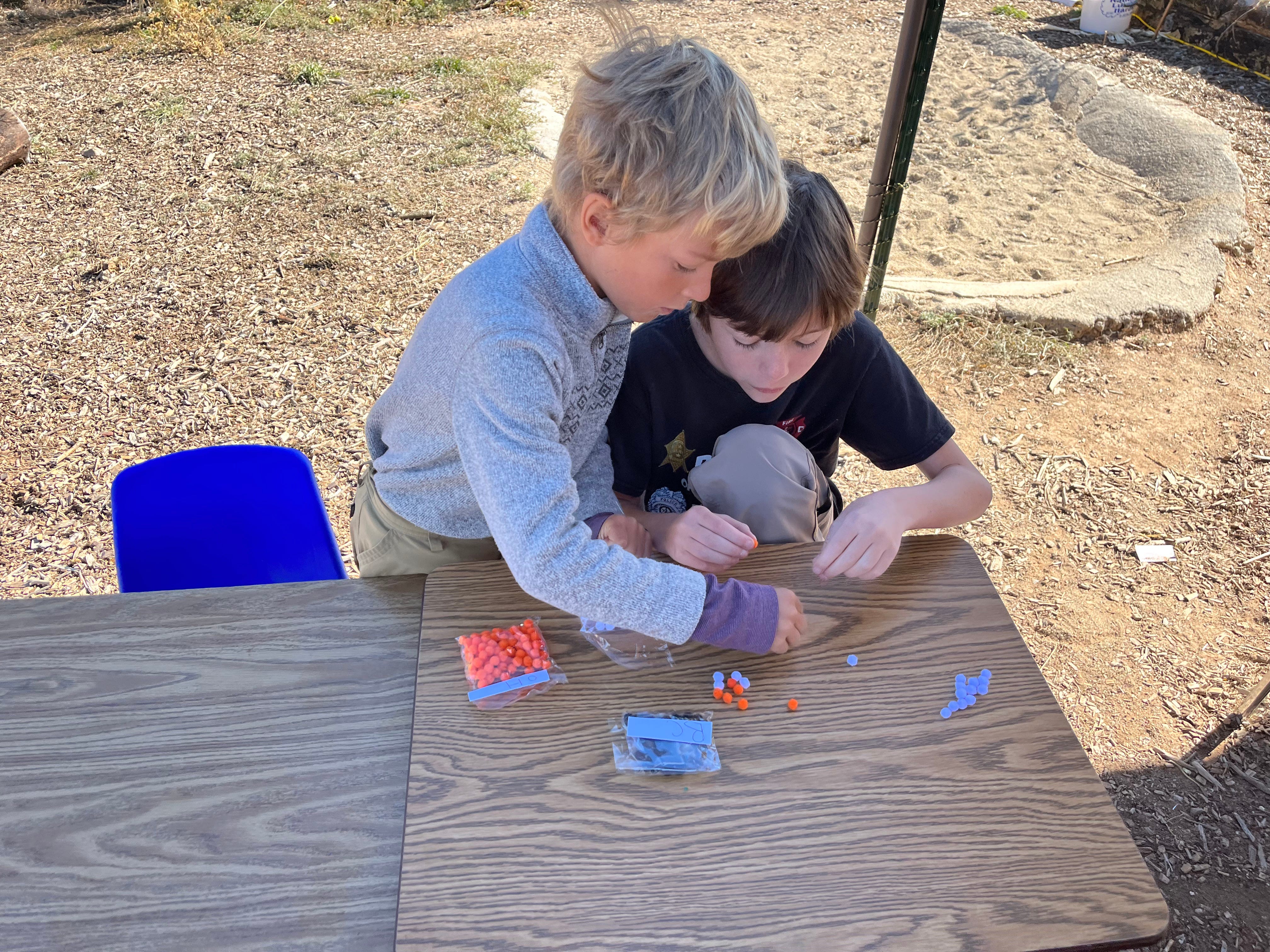
It’s what fingers do when they are trying to learn how to hold a cup (at age 2). They play their way into learning how to do it. Oops! That didn’t work. It fell. Let’s try again. Cry if you need to.
It’s what eyes do when they are adjusting to new patterns of color and movement (like watching a fish under water). Eyes literally have to play their way into seeing correctly. It’s an adjustment, a learning that requires a bit of guessing at first.
It’s what voices do when they are unconstrained and share the laughter and joy of sound. They’re playing.
It’s also what we do when we’re at the edge of difficult and new experiences, like fixing a leaky faucet or speaking with our teen about friendships and growing responsibilities. If we seek the immediate and correct completion of a task we have not yet mastered - we’re usually in for a big disappointment. Faucets are tricky. Teens are complex.
Play is the thing we do, literally the neurological process, that brings our mind and body to the edge of an experience and futzes around with it in order to learn about it.
This is why, as adults, play can be so challenging. Because the wild and free flow of neurons and their playful ways of testing the waters of new experiences are often constrained by traumas, memories, and other experiences that prevent us from giving ourselves freely to the moment (because what if somebody sees me). Play becomes, in many ways, restrained.
Understanding this is crucial, not so much for kids, but for us as adults. To be more playful, we have to gently tease apart the thick knots of restraint that we’ve acquired over the years, so that the threads of experience are loose and free, and ready to play again. This is real work! It needs to proceed sensitively.
Like exercise, if we want to learn how to play, we can’t just imagine a hulk of a guy or a model’s body and then give it a day or two, feel disappointed, then go home and say we’re just not cut out for this. That’s leaping too far, too quickly. We’re likely going to injure ourself, or just give up. If we want to build strength and resilience back into our play muscles, we have to learn how to be with ourselves just as we are, trust our edges, welcome the discomfort, and ease into play in digestible doses.
For example, I wouldn’t recommend flinging yourself into a playground with a bunch of kids. They don’t care about you. I’m serious. I don’t mean that in a rude way, just as a reminder that kids aren’t there to make us feel good. They’re there for themselves. They’re playing with THEIR edges. How are you engaging yours? If you’re a mother or father and you want to play with your kids more, don’t try to bench press 400 lbs right off the bat. Build comfort with the foundational skills of play in your own body first.
Why?
What we’re trying to do is develop confidence in our play so that when kids or others respond to it awkwardly, negatively, or just apathetically, we aren’t crushed by their lack of validation. As adults we need to bring something more to the table than just our playfulness. And that is confidence. Needing someone else, especially a child, to feel happy about how we’re playing is potentially a recipe for disappointment. Rather, we practice enjoying play on our own, so that we become more confident and can bring that playfulness into other’s lives and withstand the bumps and bruises that are often part of the process.
After this comes attunement, which is the ability to recognize how one’s playfulness is landing on others. This is a step many of us do not perceive. We might get to a place where we’re thoroughly enjoying what we’re doing, but sometimes we have little to no awareness of how it’s impacting others. Are we being wild and forceful? Are we small, secretive, and demanding of someone’s intimate attention? Is it pushing someone else into an edge of experience that they’re not comfortable with yet? Or are we freely playing with one another, with that beautiful sense of permission that makes the coming and going pleasant?
So much to explore in all this. I’m enjoying it thoroughly. It’s play for me. I’m at the growing edge of my experience, trying to learn not just how to play, and not just how to play with kids, but how to share the rudiments and structure of play so that more adults and families of all ages and sizes might find more laughter and pleasure in life.
I believe our culture needs this work in order to balance the intensity and seriousness many of us feel in life. Play is free, a no-cost method to cultivate connection, joy, and laughter with ourselves and with others. It also helps us learn new things! Used skillfully, it is an incredible tool to build intimacy and connection in our lives.
play (noun): the natural state of the mind and body at the growing edge of experience.
Subscribe to Juniper Heartwood
Joseph Sarosy is the author of Off Grid Kids, Juniper Heartwood, and How to Tell Stories to Children (now in 22 languages). He is the creator of the Juniper School, a forest school in northern New Mexico, a founder in the VELA Network, and an innovator of Indie Education. He is currently facilitating a project called Play Ground, a no-cost WhatsApp group for adults who want to reawaken playfulness in their daily lives.
No posts
Comments
Nothing yet. Say the first thing.
Sign in to join the conversation.